
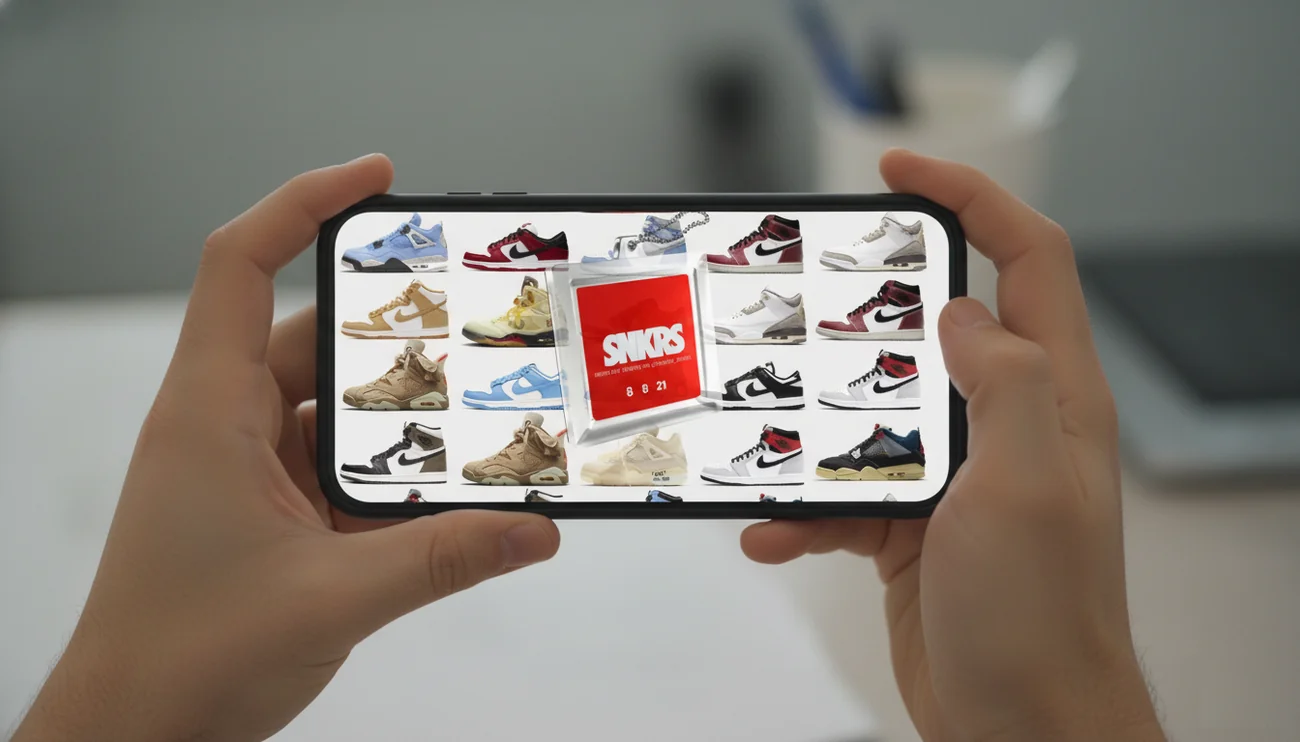
A restock is a replenishment of inventory. In sneakers, it usually means a sold-out shoe or size has become available again at a particular store, website, or app. It might involve a full size run or just one pair.
The shoe doesn’t need a new color, a different SKU, or another launch. Often, it’s exactly the same release returning to the system because of a canceled order, an unclaimed reservation, an approved return, or a new delivery to the retailer.
What does restock mean in sneakers?
To restock means to replenish or add inventory again. In sneakers, the term applies when a shoe, colorway, or size that had sold out becomes available again online, in an app, or at a physical store.
Think of restock as inventory replenishment or a return to stock. The idea isn’t limited to community slang: Nike Brazil itself has published official product pages with “RESTOCK” in their titles.
Nike Brazil examples include the Women’s Dunk Low “Restock” Gym Red and the Union LA x Dunk Low “Restock” Union Blue. These document the brand’s use of the term; they don’t indicate current stock.
Once you understand the definition, explore more terms in the Sneakerhead Dictionary. Drop, raffle, retail, and resale often come up together, but they don’t mean the same thing.
Why can a sold-out sneaker come back in stock?
An online store’s inventory isn’t a static snapshot. While a page says “sold out,” payments are being processed, orders may be canceled, boxes are moving between distribution centers, and new deliveries may enter the system.
A pair reappearing therefore doesn’t tell you where it came from. Without a statement from the brand or store, you can’t say whether that restock came from three canceled orders or hundreds of pairs received from a supplier.
Canceled orders or declined payments
When a purchase is stopped before shipment, the reserved unit can return to inventory. E-commerce platforms let canceled items go back into stock; Shopify’s documentation, for example, describes restocking as an option for the merchant.
Approved returns
A returned product may go back into stock if it meets the store’s policy and condition requirements. That doesn’t mean every return is automatically resold as new. The retailer may inspect it, reject it, send it to another channel, or choose not to restock that unit.
Unclaimed reservations
For releases involving in-store pickup, raffles, or reservations, pairs not collected by the deadline may be made available again. Redistribution depends on the retailer: an in-store sale, another selection process, a return to the website, or another approach.
A new delivery or second allocation
A store may receive a product in more than one shipment. The first delivery sells out, the second arrives days or weeks later, and the same release goes back online. Stock may also move between stores, distribution centers, or regions.
Planned replenishment
Some products are replenished repeatedly as part of a store’s regular operations. That’s why restock doesn’t necessarily mean a limited or hard-to-buy release.
Restock, drop, and rerelease: what’s the difference?
These terms describe different moments in a sneaker’s retail life. Store and social media language can blur the boundaries, but there is a useful distinction.
Drop
A drop is the moment a product becomes available. It can be the initial launch or a specific release at a particular store or in a particular region. Many drops are announced, but there are also shock drops, early access, and surprise releases. See the full explanation of drop in sneaker culture.
Restock
A restock follows a period of unavailability: the same product or release returns to that channel’s inventory. It doesn’t require a change in design, colorway, SKU, or packaging.
Rerelease
A rerelease brings back a previously released product, often in a new retail cycle with fresh production, a campaign, or a release date. It can happen months or years later and may receive a different SKU, although that isn’t required in every case.
A practical clue is the context. Stock reappearing soon after launch under the same SKU and on the same page is generally treated as a restock. New production announced years later is more likely to be described as a rerelease, reissue, or retro. Still, retailers may use “restock” promotionally for broader returns, so the label alone doesn’t tell the whole story.
Restock and retro aren’t the same, either
Retro describes a new edition of an existing silhouette. Restock describes inventory availability. An Air Jordan Retro can launch in a drop, sell out, and later get a restock. They’re different parts of the same story.
To understand why a new edition of an old design isn’t simply “stock coming back,” read our guide to what retro means in sneakers.
Do restocks always happen without notice?
No. There are announced restocks and unannounced restocks. A brand may put a replenishment on its calendar, share the date on social media, send an email, or issue an app notification. In other cases, the inventory simply reappears.
Nike maintains an official U.S. SNKRS launch calendar for scheduled releases. That doesn’t mean every restock will appear there. Nike’s U.S. help page explains that there is no fixed restocking schedule for all items; inventory is replenished as stock becomes available.
Don’t confuse a surprise with a restock, either. A shock drop can be a product’s unexpected first release; an unannounced restock is the unexpected return of something previously available.
How long does a restock last?
There is no standard duration. A restock can sell out in seconds, minutes, or hours, but it can also remain available for days and even lead to later discounts. The timing depends on the relationship between available quantity and demand.
A collab with two returned pairs is one situation. A general release receiving hundreds of pairs is another. Calling both restocks is correct; expecting the same level of competition isn’t.
Does a restock include every size?
Not always. A full size run (FSR) is the complete range of sizes offered for that release or channel; other restocks release just one size or a handful of pairs.
A partial restock may not include your size. An alert reports an observed change in stock, but availability can change before you open the page.
Why does a product look available but fail at checkout?
On competitive releases, two people may try to buy the same unit. There may also be a delay between actual inventory, the product page, the cart, and the payment system. The result is sometimes informally called “ghost stock”: an option appears available, but the purchase can’t be completed.
That doesn’t prove the store invented a restock. It may be a synchronization issue, a temporary cart hold, or another purchase finishing first. In general, adding an item to your cart doesn’t guarantee the pair, either; the rule depends on the retailer.
How do restock alerts work?
Alerts try to shorten the time between an inventory change and the news reaching your phone. They can come from the brand itself, an authorized store, or services and communities that monitor product pages.
- Official sources: the brand’s or retailer’s app, favorites, email, newsletter, calendar, and social media.
- Third-party sources: monitoring accounts, release calendars, and sneaker communities.
- Authorized retailers: they may receive stock on a different date from the brand’s own channel.
The official SNKRS app page describes following upcoming drops and setting notifications for pairs you’re interested in. Nike also recommends “Notify Me” and push notifications for releases. These features help, but they don’t guarantee an alert for every restock or reserve inventory for you.
Third-party alerts can be fast and useful, but they aren’t official confirmation. The product might be region-specific, available in a different size, or sold out between detection and your opening the link. Before entering personal details, check the store’s domain or open its official app.
Communities also help share alerts and local experiences, as explained in our article on the sneakerhead community. Use them as a resource, not a guarantee of inventory or authenticity.
Does SNKRS restock?
Yes, products can become available again through SNKRS channels, and Nike Brazil has maintained pages officially labeled as restocks. That doesn’t mean every sold-out shoe will return or that there is a complete calendar of replenishments.
The purchase method can change, too. A release may use regular checkout, a queue, a draw, a raffle, or a reservation, depending on the product and region. Restock describes the return of inventory, not the method used to distribute it.
Availability varies by country. A pair might restock in the United States while remaining sold out in Brazil, or appear first at an authorized retailer. That’s why restock information should always identify the channel, region, and date.
My experience with the Nike SB Dunk Low StrangeLove
One experience in Brazil captures how even a small restock can get your attention. I was on my phone when an email arrived saying the Nike SB Dunk Low StrangeLove was back in stock.
The collaboration between StrangeLove Skateboards and Nike SB released in February 2020. The official Nike SB archive highlights the velvet and the hearts in the outsole.
When I opened the restock page, only a Brazilian size 39 remained. It wasn’t my size, but I tried to buy it with the idea of trading for the right size later or reselling the pair. I couldn’t complete checkout: that unit disappeared first.
That restock was fast and partial. My attempt failed, but the episode doesn’t represent every restock: duration depends on quantity and demand for each size.
How can you improve your chances without becoming obsessed?
No formula guarantees a purchase, but some preparation can keep you from wasting time when a genuine opportunity appears.
- Create accounts only with trusted brands and stores.
- Check your address, size, and payment details in advance.
- Keep the official app updated and enable only the alerts that interest you.
- Save the product to favorites or a wish list when that feature is available.
- Follow authorized retailers, since allocations can arrive on different dates.
- Check that the alert applies to the United States, your size, and the correct store.
- Set your spending limit beforehand; urgency doesn’t improve your budget.
Choose the channels and products you want to follow. You don’t need every alert enabled or a full day of refreshing pages to take part in a restock.
If you broaden your search to another retailer, check its identity, current sales policies, and the protections that apply to that purchase.
Does a restock return at retail price?
In a primary-retail restock, the product generally returns at that store’s current price. That doesn’t guarantee the same retail price charged at the original launch.
There may be a price increase, a sale, a regional difference, or new purchase terms. Shipping and other costs can also change. “Restock” tells you the inventory is back; it doesn’t freeze the price in time.
Can a restock affect resale prices?
Yes, because replenishment increases available supply or changes the expectations of people considering a secondary-market purchase. But there is no rule that every restock lowers resale prices.
- A large batch can reduce immediate price pressure.
- A few units in isolated sizes may barely affect the market.
- The prospect of more restocks can encourage buyers to wait.
- Demand, region, size, and time since release still matter.
An asking price isn’t the same as a completed sale, either. To decide whether to wait for retail or buy on the secondary market, do a sneaker price check using the correct release, size, and recent transactions.
Is it worth waiting for a restock?
Waiting can make sense if you don’t want to pay resale, aren’t in a hurry, and have reliable signs of replenishment. It can also be worthwhile when the product belongs to a regularly replenished line.
On the other hand, nobody can guarantee that a sold-out model will return, in which country, at which store, or in your size. A restock rumor isn’t a brand commitment. Compare the current price, set your limit, and accept that passing is a valid decision, too.
Sources
- Merriam-Webster: definition of “restock”.
- Nike Brazil: Union LA x Dunk Low “Restock” Union Blue.
- Nike Brazil: Women’s Dunk Low “Restock” Gym Red.
- Nike Help: size availability and restocking.
- Nike: SNKRS app features and notifications.
- Nike SB: official SB Dunk Low StrangeLove archive.
- Shopify Help: canceling orders and returning items to inventory.
For the context behind these releases, explore Sneaker History and Culture.