
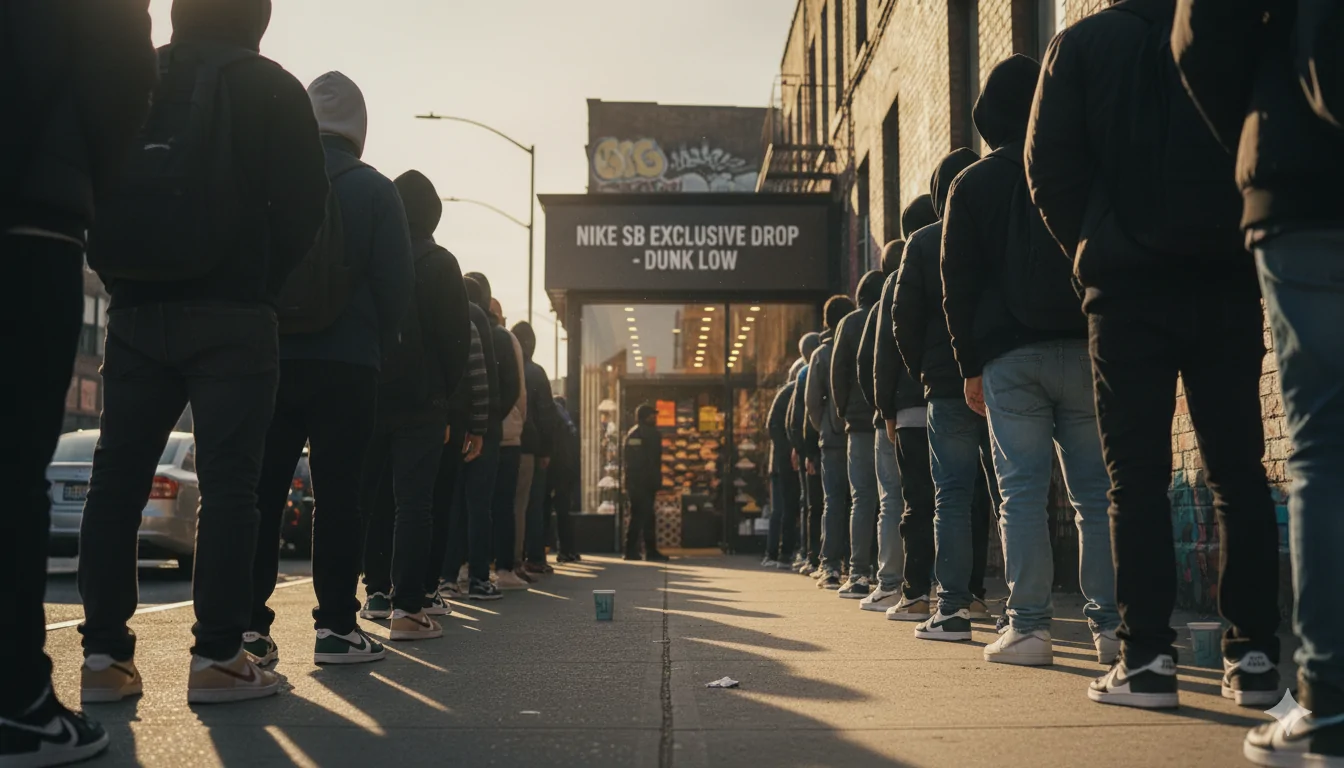
A sneaker drop is a release: the point when a sneaker or collection becomes available to buy. It can happen online or in a store, with direct sales, a draw, or another allocation method. The word alone does not tell you how limited the product is.
A much-anticipated drop can bring plenty of excitement: people compare colorways, plan which retailers to try, then share their Ws and Ls. That experience is part of sneaker culture, but a release does not have to sell out to count as a drop.
What Is a Drop in the Sneaker World?
A drop is the term used to describe the release event of a new sneaker or collection. Typically, this release happens on a specific date and time, previously announced by brands or stores. During the drop, pairs are available for purchase until stock runs out.
Limited collaborations and anticipated colorways can attract more buyers than a store has pairs. Other drops have broad distribution and remain available. Always look at the specific release rather than treating “drop” as a scarcity label.
Why Are Drops So Competitive?
The main reason for the intense competition during a drop is scarcity. When the number of available pairs is lower than the number of interested people, a competitive scenario is created. This factor is amplified by the popularity of the model and the cultural relevance of the release.
Terms such as QS or Quickstrike may appear in a Nike release description, but they do not establish a universal production count. Missing one launch also does not necessarily mean paying resale: another authorized retailer or a later restock may offer a chance.
Most Common Types of Drops
A direct release puts the product on sale through a website, app, or store, often at an announced time. Availability, queues, checkout rules, and eligibility all affect whether an order goes through; reaching the page first is no guarantee.
A raffle or draw allocates purchase opportunities among eligible entrants. Check whether selection creates an order automatically: in the US SNKRS Draw, entry authorizes a purchase if selected. Retailers set their own rules; a raffle is the purchase method, while the drop is the release.
Online Drops vs. Physical Drops
Online drops can reach shoppers in different places, but a release may still be restricted by country, shipping address, membership, or local eligibility. Use the official product page to check where and how you can participate.
Physical drops usually take place at select stores and often involve lines, tickets, or wristband distribution. For many sneakerheads, this type of drop is part of the cultural experience, bringing back the social side of the sneaker scene.
Drops and Sneaker Culture
Drops are key moments in sneaker culture. They create stories, mobilize communities, and set trends. A memorable drop can define a model’s success and its relevance over the years.
Additionally, drops help strengthen a sense of belonging. Participating in a release, discussing strategies, and sharing results are all part of the sneakerhead experience.
What Happens When You Lose a Drop?
Losing a drop is common, especially for highly contested releases. In sneaker lingo, this is called taking an L. While frustrating, it’s part of the market’s dynamics.
After missing out, you can check other authorized retailers, wait for a possible restock, compare resale listings, or pass. A restock is a replenishment of an already-released product. A shock drop is a surprise release with little advance notice; neither is a promise of another chance for every model.
Drops and the Resale Market
Drops can affect resale supply and demand, but a sellout or a busy launch does not guarantee a higher later price. Size, condition, restocks, seller fees, and changing interest all matter. Some pairs trade below retail.
For the end consumer, this means understanding the dynamics of drops helps decide whether it’s worth trying to cop at release or waiting for a better moment in the secondary market.
How to Prepare for a Drop
Preparation helps you avoid preventable mistakes rather than guaranteeing better odds. Confirm the official time and time zone, regional eligibility, sizes, price, and purchase method. If you decide to participate, check your account and shipping details before the release.
Read the entry, payment, cancellation, and return rules before joining a raffle, and set a total budget before the countdown begins. Official brand and retailer channels are the best starting point for release details; community posts can alert you to them.
Is a Drop Worth It?
A drop is worth your time when you want the pair at the stated price and are comfortable with the rules. You do not need to enter every release to be part of the community. Missing a pair can be disappointing without creating a reason to overspend.
In “cop or drop,” the word has a different meaning: drop means pass on the purchase. Deciding to pass is different from taking an L after trying to buy. Context tells you whether someone is discussing a launch or a buying decision.
What Is a Sneaker Drop?
It’s the release event of a new sneaker model or collection. It usually happens on a specific date and time and can take place in physical stores, official websites, or brand apps.
Are All Drops Limited?
No, but most highly contested drops involve limited production. When quantities are low and demand is high, the product tends to sell out quickly.
Are Drops and Raffles the Same Thing?
No. A drop is the release; a raffle is one way to allocate purchase opportunities. Some releases use raffles, others use direct sales, and a release can use several channels with different rules.
Is It Common to Lose a Drop?
Yes. Due to high competition and the limited number of pairs in many releases, taking an L is part of sneaker culture. It’s especially common in highly hyped releases.
Conclusion
The most useful questions are practical: when does it release, where can you buy it, what does entry commit you to, and does the pair fit your budget? Those answers matter more than the hype around the countdown.
A release can be exciting without becoming a race you have to win. Choose the pairs you actually want, read the rules, and leave room to pass.
Find related release and buying terms in the Sneakerhead Dictionary.