
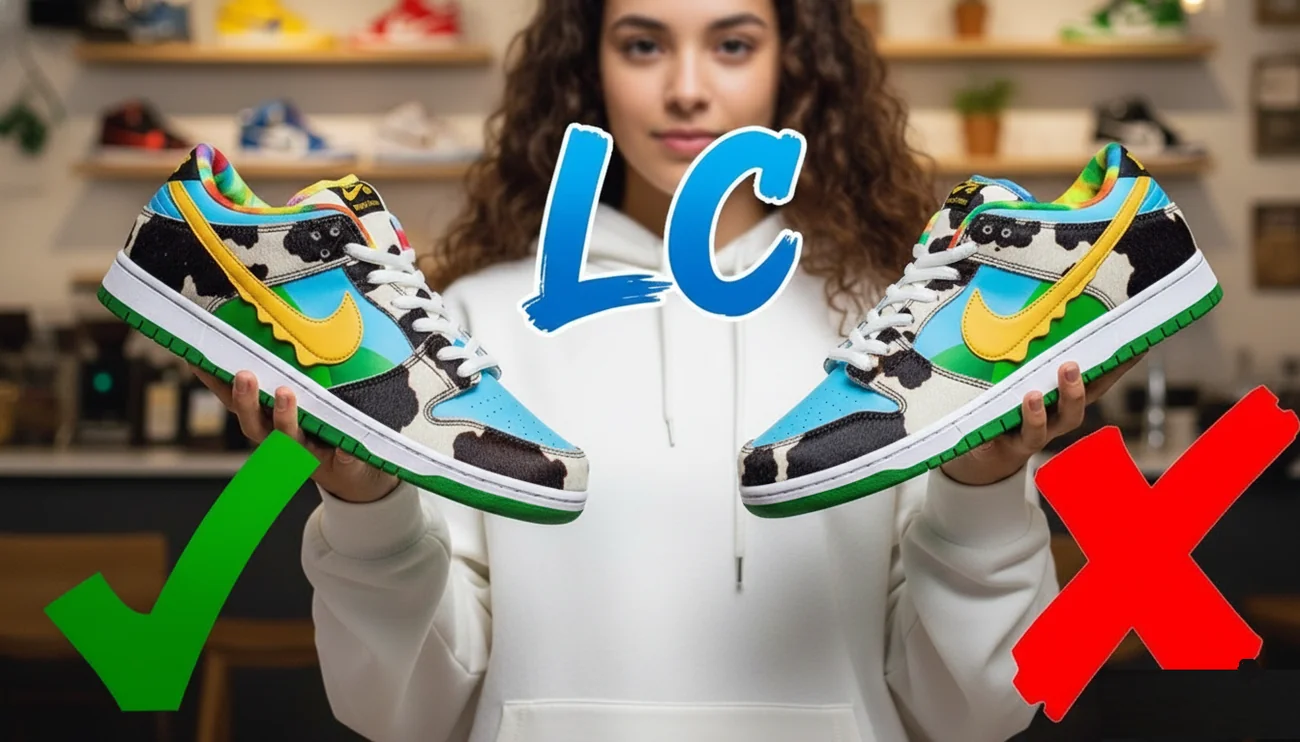
Someone posts photos of a sneaker in a group and writes only: “LC?” Two letters, one very large question. LC stands for Legit Check: an evaluation used to determine whether a product shows evidence consistent with an authentic item or a counterfeit.
A Legit Check can combine visual inspection, comparison with trusted references, physical examination, provenance, documentation, data, and digital tools. The most important point is simple: there is no single magic detail that authenticates every sneaker. Stitching, SKU, box, receipt, QR code, and smell may contribute evidence, but none can carry the entire conclusion by itself.
What Does LC Mean in Sneakers?
Legit is informal English for legitimate or authentic; check means verification or examination. In sneaker culture, asking for an LC is essentially asking, “Does this pair appear genuine?” or “Are there signs that it may be fake?”
The expression is not exclusive to sneakers. It also appears in streetwear, handbags, clothing, watches, and collectibles. In sneakers, however, LC became especially important as the resale market grew and buyers increasingly purchased from sellers they would never meet in person.
Doing an LC does not place an invisible certificate on the pair. It means collecting evidence, looking for inconsistencies, comparing the item with trustworthy references, and reaching only the level of confidence that the method and available material can support.
How “LC?” Became Part of Sneaker Culture
Before dedicated verification centers and authentication apps became common, forums, message boards, Facebook groups, and sneaker communities already worked like giant collective comparison tables. One person posted photos; another knew that Jordan, Dunk, or adidas release better; someone else found retail photos or compared a known authentic pair.
That community knowledge is still valuable. Some collectors study particular brands, silhouettes, factories, or eras deeply enough to notice inconsistencies that a casual buyer would miss. At the same time, group opinion is not automatically professional authentication: people can disagree, use the wrong reference, or confidently evaluate a release they do not actually know well.
As sneaker resale became more professional, paid services, image databases, marketplace verification systems, trained specialists, and data-driven tools emerged. The old “LC?” never disappeared; it gained more ways to be answered. For the cultural side of that exchange, see what the sneakerhead community is.
LC is only one abbreviation that grew through these conversations. The Sneakerhead Dictionary covers more terms used in releases, collecting, condition, and the secondary market.
Is a Legit Check the Same as Authentication?
The terms often overlap, but they can imply different expectations. In community conversation, “LC” usually means an informal request for someone to judge whether an item looks legitimate. “Authentication” may refer to a more structured process performed by specialists, marketplaces, companies, or dedicated services.
There is no universal border between the two. A service may call a remote photo review a Legit Check; another may call the same type of work authentication. More important than the label is understanding:
- who performs the evaluation;
- whether the item is examined physically or only through photos and data;
- which references and methods are used;
- what conclusion or confidence level the service provides;
- what limitations, policies, refunds, or dispute procedures apply.
How Does a Good Legit Check Work?
A responsible LC starts before anyone counts a stitch. First identify the exact product; then collect equivalent references; only after that should you compare the evidence.
- Identify the pair: confirm model, colorway, style code or SKU, release year, version, and size.
- Find the right references: use official product pages, trustworthy images, archives, and—when possible—known authentic pairs from the same release.
- Check provenance: understand where the product came from, who is selling it, and what documentation exists.
- Evaluate the full object: shape, materials, construction, labels, packaging, and accessories should tell a coherent story.
- Investigate differences: a mismatch can indicate a counterfeit, but it can also come from legitimate variation, size, aging, defects, or restoration.
- Recognize uncertainty: when the photos or references are insufficient, “unable to determine” can be the correct result.
The conclusion comes from convergence of evidence, not mechanical point scoring. Three weak clues do not automatically become one strong proof. If authentication were only a stitch-count equation, a calculator could replace experience.
Why There Is No Universal “Real vs. Fake” Sneaker Checklist
Brands manufacture thousands of products across different factories, countries, materials, sizes, and time periods. The same silhouette can return as a retro with a new mold, different tag format, different box, or subtle shape changes. A rule that helps on one Air Jordan may be useless on an adidas Samba—or even on another Air Jordan released years later.
Counterfeits do not follow one universal template either. Some contain obvious mistakes; others reproduce visual details carefully. Rules such as “clean stitching means authentic,” “strong glue smell means fake,” or “the QR code works, so it is legit” create confidence that the individual clue cannot justify.
A checklist can organize the photos and make sure important areas are not forgotten. What it cannot do is authenticate every sneaker with identical yes/no rules.
Compare the Same Release—not Just the Same Model Name
A serious comparison should match the exact model, colorway, style code, release year, version, and preferably a similar size. Comparing a 2015 retro with a 2025 retro can create a long list of supposed “fake flaws” that are actually legitimate production changes.
Also pay attention to the product category:
- Adult vs. GS: Grade School versions can use different proportions, components, tooling, or details.
- Men’s vs. women’s: style codes, size runs, shape, and construction can differ.
- PS and TD: Preschool and Toddler products should not be judged as miniature copies of adult construction.
- Different sizes: geometry, spacing, and visual proportions can change with size.
- Sample vs. retail: development samples should not be compared blindly with the final commercial product.
The SKU helps you locate the correct reference, but it remains printed information. A counterfeiter can copy letters and numbers too.
Which Parts of a Sneaker Can Help With a Legit Check?
Almost every part of a sneaker can provide evidence, but the value of each detail depends on the release. If terms such as upper, midsole, outsole, tongue, strobel, and insole still feel like an unlabeled map, our sneaker anatomy guide shows where each component is located.
Shape and Proportions
Toe-box geometry, upper height, heel profile, curvature, panel placement, and overall proportions can matter. Compare the same release and, when possible, the same or nearby size. Stiffer materials, wear, storage deformation, camera angle, and lens distortion can all change how the shape appears in a photo.
Materials and Textures
Leather, suede, mesh, knit, rubber, foam, and surface finishes can provide clues when trustworthy references exist for that exact product. “It looks cheap” is not a method. Counterfeits can use visually convincing materials, while authentic products can vary across releases, factories, and production runs.
Stitching, Glue, and Finishing
Stitch paths, density, placement, spacing, and panel junctions may be useful on specific releases. Still, authentic does not mean handmade perfection: minor asymmetry, loose threads, excess glue, or cosmetic defects can occur. A well-made fake can also have clean stitching. The value is in the pattern of the exact release, not in a universal rule of perfection.
Inside Label, SKU, and Country of Manufacture
Style code, sizes, typography, layout, production dates, and country of manufacture can be compared when reliable references exist. A correct code proves only that the printed information corresponds to the product you researched; it does not prove that the physical object came from an authorized factory.
The same caution applies to QR codes and barcodes. A code can scan correctly, resolve to plausible information, and still be copied. Country of manufacture is not a shortcut either: “Made in China” does not mean fake, and “Made in Vietnam” does not automatically mean authentic. Global footwear brands manufacture across multiple countries and facilities.
Box, Accessories, and Receipt
The box label, printing, size, SKU, tissue, inserts, extra laces, hangtags, and accessories can strengthen or weaken the overall consistency of a pair. But the box does not authenticate the shoe. Counterfeit products can arrive in convincing packaging, while genuine pairs can lose the original box, receive a replacement box, or have damaged packaging.
A retail receipt, digital invoice, or order confirmation can strengthen provenance, but it does not authenticate the photographed object by itself. A document can belong to another pair, and an authentic resale purchase may no longer have its original receipt. Clear provenance increases confidence; it does not replace the physical or visual analysis.
Outsole, Midsole, Insole, and Internal Construction
Mold shape, outsole pattern, texture, paint, joins, and finishing can matter in release-specific comparisons. Internal components such as the insole and strobel may also provide evidence when they are accessible without damage. Do not tear out a glued insole or dismantle a sneaker just to satisfy a remote checklist.
Smell, Weight, and UV Light
These can be supplementary clues under tightly controlled comparisons, never universal authentication tests. Authentic sneakers can smell like adhesive, rubber, leather, or packaging. Weight changes by size and material. Marks visible under ultraviolet light can appear for legitimate manufacturing reasons as well as other causes. Without a release-specific reference, the tool often adds noise rather than certainty.
What Photos Should You Send for a Legit Check?
Remote evaluation depends heavily on what you provide. Photograph the actual pair—not only catalog images—and try to include:
- the lateral side of both shoes;
- the medial side;
- front and toe box from above and in profile;
- rear and heel views;
- tongue, branding, and the complete inside size label;
- outsole and midsole details;
- insole front and back only if it can be removed without damage;
- interior and strobel when naturally accessible;
- box, box label, and packaging;
- extra laces, hangtags, inserts, and other accessories;
- close-ups of any area that created doubt.
Use neutral or natural light, accurate focus, and enough resolution to zoom in. Avoid filters, beauty mode, strong saturation, hard colored lighting, and extreme compression. A warm orange photo can turn a lighting problem into an imaginary “wrong colorway” in seconds.
If you are buying from another person, ask for current photos that help show the seller actually possesses that specific pair. Official product photography helps you understand the release; it does not show the condition or details of the item that will arrive at your door.
Does a Photo Legit Check Work?
It can be useful, but it has limits. Clear photos can reveal shape, labels, placement, apparent materials, packaging, and many construction details. They can also reveal enough inconsistencies to stop a risky purchase before money changes hands.
A photo cannot perfectly reproduce texture, stiffness, weight, odor, depth, or all internal construction. Color changes with lighting, camera processing, lens, screen, and compression. Important areas may be hidden, and the photos shown before purchase may not even belong to the item later shipped.
A responsible online LC therefore should not claim more certainty than the evidence supports. Asking for additional photos or concluding “unable to verify” is better than filling missing information with theatrical confidence. Physical inspection can add evidence, but it also depends on method, references, and evaluator expertise.
Can Authentic Sneakers Have Factory Defects or Variations?
Yes. Large-scale production can create minor differences in stitching, glue, alignment, texture, paint, and finishing. That does not mean every defect should be ignored; it means imperfection is not automatic proof of a counterfeit.
StockX’s current condition documentation still recognizes B-Grade sneakers in its Verified Marketplace. That is one practical reminder that “authentic product” and “perfect product” are not identical concepts.
Variation has to be evaluated in context: factory, production period, size, category, and release. At the same time, do not accept “factory variation” as a magic excuse for a long list of major inconsistencies. The conclusion still comes from the evidence as a whole.
Aging and Restoration Can Change How a Pair Looks
Older sneakers can yellow, oxidize, dry, crack, separate, or change color as adhesives, rubber, foams, coatings, leather, and other materials age. A pair photographed years later does not need to look identical to launch-day images in order to be authentic.
Restoration also requires context. Repainting, reglue work, replacement laces, sole swaps, or replacement components do not automatically turn a genuine base pair into a counterfeit. They do change originality, condition, and potentially collectible value, so they should be disclosed in a transaction.
A sneaker can be authentic and restored, authentic and used, authentic without its original box, or counterfeit and apparently brand-new. Authenticity and condition are different questions.
How Do StockX and GOAT Verify Products in 2026?
StockX and GOAT both add their own verification systems, but they do not operate identically—and not every order inside one platform follows the same path. The marketplace name alone is not enough; read how that specific transaction is processed.
StockX
On StockX’s Verified Marketplace, new and unworn items are either verified by StockX or shipped directly from a StockX Verified Seller. Standard seller shipments can route through a Verification Center before the item is sent to the buyer.
StockX says its verification process reviews whether an item meets category condition standards before fulfillment. Its current seller guidance also makes an important point for anyone obsessed with receipts: proof of purchase does not expedite verification and is not required for the StockX review.
The newer U.S. Listings Marketplace works differently. Used, New, and New – Other items can ship directly from an identity-verified seller, while eligible purchases can add StockX verification at checkout. Verification is therefore optional only for certain Listings items—not a universal step for every transaction on the platform.
GOAT
According to GOAT’s current Assurance of Authenticity, products can be verified through one or more methods that include digital authentication, in-hand verification, and machine-learning technology. GOAT explicitly states that some products are verified through methods that do not include physical examination.
For Ship-to-Verify products, GOAT says trained authentication specialists inspect details ranging from labels and stitching to texture and color, supported by a large internal set of product data. That describes GOAT’s process; it does not turn those four characteristics into a universal checklist for every sneaker.
These systems add verification layers and buyer-protection policies, but neither should be described as metaphysically infallible. GOAT’s current Buyer Protection covers qualifying claims such as items deemed inauthentic or materially not as described, while StockX applies its own verification and Buyer Promise rules.
Community LC, Remote Service, and Physical Inspection
Each format solves a different part of the problem:
- Community LC: can draw on collectors with deep knowledge of specific models, but expertise and accountability vary.
- Remote authentication service: organizes photo submission, references, and a result, but remains limited by the material submitted and the service’s methodology.
- Physical inspection: lets an evaluator assess more dimensions of the item, although the conclusion still depends on method, references, and expertise.
- Marketplace verification: integrates verification into a transaction, with platform-specific eligibility, shipping, refund, and dispute rules.
You do not need to dismiss community knowledge to recognize the value of a structured process. Sneaker expertise grew precisely because people compared pairs, corrected one another, archived differences, and learned release history. Maturity means knowing how much weight each opinion can carry.
Common Legit Check Mistakes
- Deciding from one detail: stitching, smell, box, or tag alone does not settle authenticity.
- Using a different release as the reference: retros from different years can vary substantially.
- Comparing GS directly with adult: size categories may use different shapes, tooling, and proportions.
- Expecting perfect authentic products: legitimate factory variation and cosmetic defects exist.
- Assuming every fake is badly made: visual quality alone is not proof of authenticity.
- Trusting only the SKU, QR code, or barcode: correct information can be copied.
- Treating the box or receipt as a certificate: either can be replaced, reproduced, or unrelated to the physical pair.
- Judging poor photos: filters, compression, and bad angles can hide or invent differences.
- Ignoring size and version: geometry and construction can change across size categories.
- Confusing restoration with counterfeiting: repair changes originality and condition, not necessarily the authenticity of the underlying pair.
- Believing “UA authentic” or “same factory” claims: seller language does not turn an unauthorized product into an authentic branded release.
- Accepting confidence without references: a strong opinion is not a substitute for demonstrated knowledge of that exact release.
How to Reduce Risk Before Buying Sneakers on the Resale Market
The best Legit Check starts with a well-structured purchase. Before paying:
- confirm the model, style code, release, size, and version;
- request current, complete photos of the exact item;
- review the seller’s reputation and transaction history;
- ask about replacement boxes, missing accessories, repairs, restoration, and provenance;
- prefer payment methods and marketplaces with meaningful buyer protection;
- be cautious when a seller pressures you to leave the protected sales channel;
- compare the price with the market without assuming that a low price proves a scam or a high price proves authenticity;
- when meaningful doubt remains, use an authentication method appropriate to the risk—or walk away.
Provenance, evidence, and buyer protection work best together. None should carry the full weight of the decision alone.
Is Paying for a Legit Check Worth It?
It can be, especially when the seller is unknown, provenance is weak, you do not know that release well, or the transaction offers little buyer protection. Product value matters, but it is not the only factor; ordinary sneakers can be counterfeited too.
Before paying for a service, check which brands and models it accepts, which photos it requires, whether physical inspection is available, how inconclusive results are handled, and what guarantee or policy accompanies the decision. A paid LC does not replace a trustworthy seller, protected transaction, and basic due diligence.
Authenticity, Condition, and Price Are Different Questions
Legit Check evaluates authenticity. Condition check evaluates the state of the item. Price check estimates a market range. Mixing those questions leads to poor conclusions.
Terms such as NWT, DS, and VNDS describe claimed condition, not authenticity. A counterfeit can be new with tags; an authentic sneaker can be used, restored, or missing its box.
Being authentic does not determine what a sneaker is worth either. Price depends on the release, size, condition, demand, supply, and recent comparable sales; that is the role of a sneaker price check.
Sneaker Legit Check FAQ
What Does LC Mean in Sneakers?
LC means Legit Check: an evaluation used to determine whether a sneaker shows evidence consistent with an authentic product or a counterfeit.
How Can You Tell if Sneakers Are Authentic?
Identify the exact release, gather equivalent authentic references, and evaluate shape, materials, construction, labels, packaging, accessories, and provenance together. No single detail provides a universal answer.
Is a Photo Legit Check Reliable?
It can reveal inconsistencies and increase confidence when the images are complete and clear. It cannot reproduce every physical property and remains dependent on photo quality, references, and evaluator expertise.
Do Sneaker Authentication Apps Work?
Different services use different methods, which may combine specialists, image comparison, data, and automation. Before paying, review the accepted products, required photos, inconclusive-result policy, and the service’s own guarantee or buyer-protection terms.
Does a Correct SKU Prove Authenticity?
No. The correct SKU helps identify the model, colorway, and release, but it can be reproduced on a counterfeit label. It has to be interpreted alongside the rest of the evidence.
Do QR Codes or Barcodes Authenticate Sneakers?
Not by themselves. A code can be copied and still scan correctly or lead to plausible information. Scanning verifies data behavior; it does not fully authenticate the physical object.
Do the Box and Receipt Prove the Sneakers Are Real?
No. They can strengthen provenance, but boxes can be replaced or reproduced, and documents can belong to another pair. The sneaker and its documentation have to be evaluated together.
Does Crooked Stitching Mean a Sneaker Is Fake?
Not automatically. Authentic mass-produced footwear can show minor factory variation or defects. Stitching becomes useful evidence when compared with reliable examples from the same release.
Does Every GOAT Product Receive Physical Inspection?
No. GOAT says it uses methods that can include digital authentication, in-hand verification, and machine learning, and explicitly notes that some products are verified without physical examination.
Does Everything Sold on StockX Pass Through a Verification Center?
No. On the Verified Marketplace, items can be verified by StockX or ship directly from a StockX Verified Seller. On the U.S. Listings Marketplace, verification is optional only for eligible items when the buyer adds it at checkout.
Can an Authentication Service Guarantee 100% Accuracy?
Do not assume any method is infallible unless the company explicitly documents such a promise. Professional services have methods, policies, guarantees, and dispute procedures of their own. Read exactly what each service commits to provide.
Legit Check Is Investigation, Not Guesswork
A good LC does not hunt for one random flaw and use it to call a pair fake. It identifies the exact product, compares equivalent references, accounts for legitimate variation, and looks for consistency across construction, labels, packaging, accessories, provenance, and condition.
That discipline preserves something valuable in sneaker culture: curiosity about details without turning every loose thread into paranoia. Responsible authentication combines knowledge, humility, evidence, and buyer protection. When the evidence is not enough, admitting uncertainty is part of doing the check correctly.