
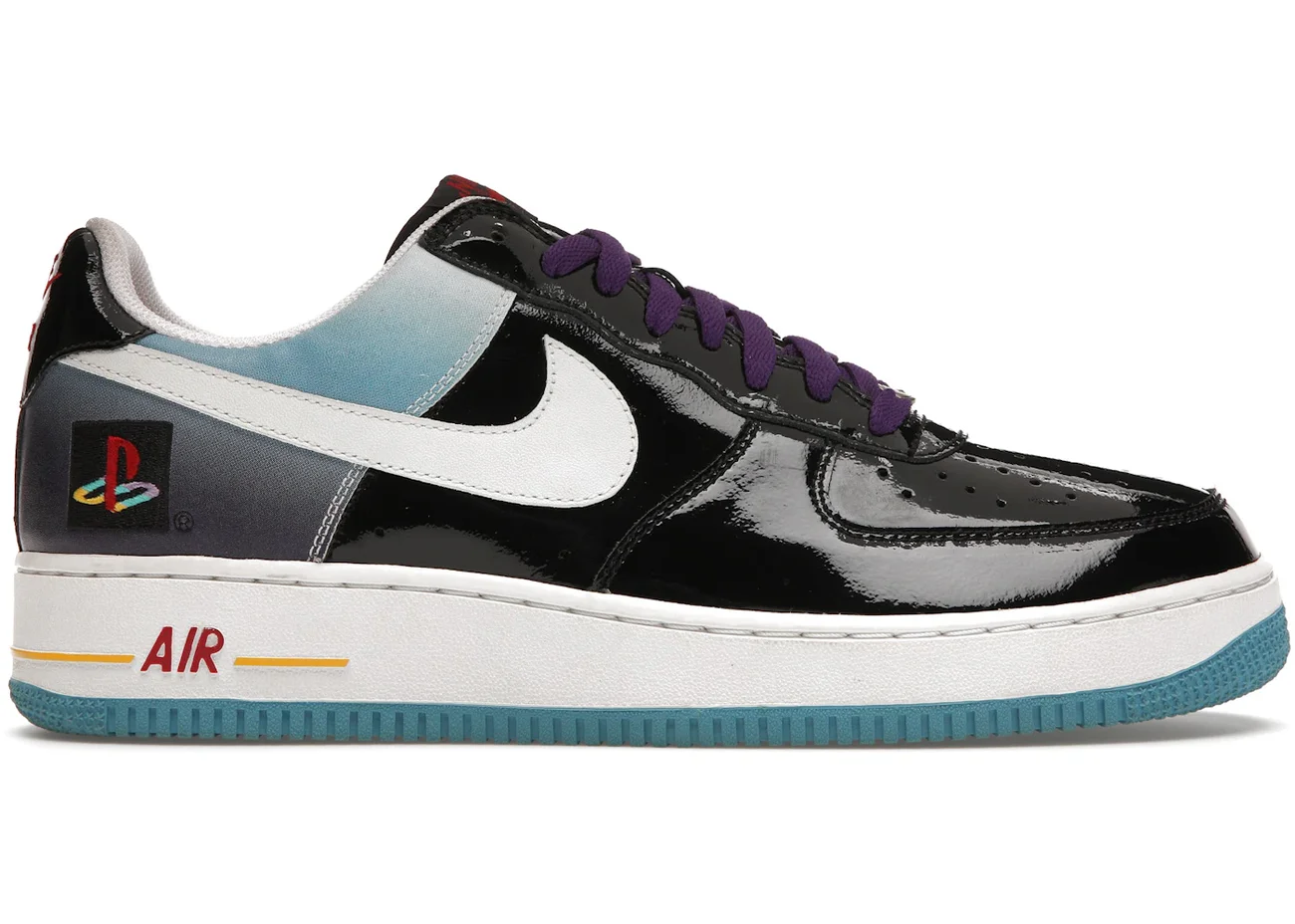
HS is commonly used in sneaker culture for Hyperstrike, a name associated with some of Nike’s most tightly distributed and historically elusive releases.
The reputation comes largely from the 2000s, when certain Hyperstrike projects were created in extremely small quantities, distributed to friends and family, connected with special events, or kept outside ordinary retail channels.
But Hyperstrike should not be turned into a universal mathematical formula. There is no safe rule that every HS has 24 pairs, every Friends & Family shoe is a Hyperstrike, or every Hyperstrike sits at the top of an official GR → QS → HS pyramid.
The best way to understand HS is historically: identify the documented release first, then investigate quantity, distribution, provenance, and authenticity separately.
What Does HS Mean at Nike?
HS is commonly interpreted as Hyperstrike.
In sneaker culture, Hyperstrike became associated with extremely limited Nike projects, especially during the 2000s.
For other Nike and resale abbreviations, see the Sneakerhead Dictionary.
Is Hyperstrike an Official Nike Term?
Hyperstrike has clearly existed in Nike release history and appears in established product archives, collector records, and specialist documentation.
What we did not find for this 2026 update is a current public Nike glossary defining HS or Hyperstrike as a universal corporate category with fixed rules.
That distinction matters because historical use can be real even when no modern dictionary page survives.
For older products, release-specific documentation is more reliable than applying a modern blanket definition.
How Did Hyperstrikes Become Famous in Sneaker Culture?
Hyperstrike became legendary during an era when online sneaker information was much more fragmented than it is today.
A product could surface through a boutique, friends-and-family network, promotional event, forum post, or a tiny group of collectors.
That scarcity of information amplified the scarcity of the shoes themselves.
By the time photos spread through forums and early sneaker blogs, many people had already missed any realistic chance to obtain the pair.
Is Hyperstrike the “Most Exclusive Level” at Nike?
It is understandable why collectors describe Hyperstrike that way: some documented examples are extraordinarily scarce.
But the safer language is historical rather than hierarchical.
- Some Hyperstrikes were produced in extremely small numbers.
- Some were Friends & Family releases.
- Some promotional Nike products were scarce without being documented as Hyperstrikes.
- Some Player Exclusives can be rarer than famous Hyperstrikes.
- Some samples are one-offs or near one-offs without using HS.
- Rarity belongs to the specific object and release history.
Is There an Official GR, QS, and HS Pyramid?
Sneaker communities often summarize older Nike distribution as GR → QS → HS.
That shorthand can describe how certain releases felt in the 2000s: General Releases were broad, Quickstrikes more targeted, and Hyperstrikes exceptionally difficult to access.
What it should not become is a permanent Nike corporate chart applied to every category and every year.
Modern Nike naming is far more varied.
Use the pyramid as historical collector shorthand, not as a universal technical standard.
What Is the Difference Between Hyperstrike and Quickstrike?
QS/Quickstrike has been used on many targeted releases that can still receive official release dates, SNKRS pages, and retail distribution.
Hyperstrike is associated with a much more extreme historical scarcity in famous examples.
That does not mean every QS has more pairs than every HS by a known numerical threshold.
Compare the documented release histories rather than the suffixes alone.
Are HS and SP Levels on the Same Scale?
No universal scale should be assumed.
SP is associated with Special Project naming, while Hyperstrike describes a different historical release context.
A Special Project can be widely available or very scarce; the suffix alone does not tell you where it sits relative to a Hyperstrike.
Are Hyperstrike and Tier Zero the Same Thing?
No.
Tier Zero is historically associated with highly selective Nike retail distribution and accounts.
Hyperstrike is associated with exceptionally limited release/product contexts.
The two ideas can overlap in the same era without being synonyms.
Are Hyperstrike and Friends & Family the Same Thing?
No.
Some famous Hyperstrikes were distributed only to Friends & Family.
But Friends & Family describes who received a product, not a universal Nike suffix.
A Friends & Family pair can exist without being documented as Hyperstrike.
Likewise, the words should not be swapped automatically in marketplace listings.
Are Hyperstrike and Player Exclusive the Same Thing?
No. PE means Player Exclusive and connects a product with an athlete, team, or program.
Hyperstrike is a different historical release concept.
A Player Exclusive can be incredibly rare without becoming HS.
Is Every Promotional Nike Product a Hyperstrike?
No.
Nike has produced promotional products for events, partners, media, athletes, and campaigns that were never necessarily classified as Hyperstrike.
Low production does not automatically assign the HS label.
Use contemporary documentation or reliable archives for the exact product.
How Many Pairs Does a Nike Hyperstrike Have?
There is no universal number.
Some documented historical examples are famous precisely because their quantities were tiny.
The number must be established release by release.
- 24 pairs is documented for some specific Hyperstrike projects.
- Other releases can have different quantities.
- Some production totals were never publicly confirmed.
- Never copy one pair count into the definition of Hyperstrike itself.
Is Every Hyperstrike Numbered?
No.
A very limited product may be individually numbered, but numbering is not a universal requirement.
The absence of a number therefore does not automatically disqualify a well-documented Hyperstrike.
Does Hyperstrike Mean Premium Materials or Better Quality?
No. Some historic Hyperstrikes used distinctive materials or handmade details, but scarcity and material grade are separate questions. The exact release can include:
- special embroidery;
- unique color blocking;
- premium materials;
- hand-finished details;
- the same basic material platform as a related retail release.
HS does not guarantee better comfort, durability, or factory quality.
Historical Nike Hyperstrike Examples
HUF x Nike Air Max 1 Hyperstrike — 2004
The HUF x Nike Air Max 1 Hyperstrike is one of the clearest documented examples.
GOAT catalogs the 2004 HUF x Nike Air Max 1 Hyperstrike “Friends & Family” and states that only 24 pairs were created.
The shoe used an Anthracite, Dark Apple, and Medium Grey palette with a San Francisco skyline stitched on the heel.
That skyline detail helps separate the legendary Friends & Family Hyperstrike from the broader 2004 HUF Air Max 1 story.
When Nike and HUF revisited the Air Max 1 in 2024, the standard retro returned—but the original 24-pair Hyperstrike itself did not simply become a mass retail reissue.
Nike Dunk Low Premium “Splatter” Hyperstrike — 2002
The 2002 Dunk Low Premium “Splatter” belongs to the same early-2000s world of extremely obscure distribution.
Patta’s Archive DNA research describes a 24-pair Hyperstrike special makeup associated with Metro.Pop and sold through Undefeated in Los Angeles.
The history is complicated because multiple Splatter Dunk versions and later marketplace descriptions can easily be mixed together.
That is exactly why old Hyperstrike research should rely on release-specific documentation rather than a nickname alone.
A rare pair’s story can be more difficult to authenticate than the shoe itself.
Nike Air Force 1 PlayStation — 2006
The 2006 PlayStation Air Force 1 is another release strongly associated with the Hyperstrike era and extreme scarcity.
Nike’s official archive confirms that the original PlayStation-inspired Air Force 1 was produced in 2006 after Nike’s design team worked closely with PlayStation.
Nike later explained that the first release was given to friends, family, and contest winners, with additional pairs circulating in 2009.
The official archive does not need the word Hyperstrike to prove the extraordinary distribution story.
When Nike created the 2018 Air Force 1 PlayStation ’18 QS, it explicitly called that version the first PlayStation AF1 released to the public.
That contrast is valuable: historical Hyperstrike-era exclusivity and later QS retail availability are not the same thing.
Why Are the 2000s So Important to Hyperstrike History?
The early 2000s combined boutique culture, limited collaborations, local retail networks, and an internet that had not yet made every release instantly visible.
A tiny project could become legendary precisely because almost nobody had access to reliable information or inventory.
HUF, Undefeated, Nike SB, Air Force 1 projects, and special Air Max releases all helped define that period.
Hyperstrike is therefore as much a piece of sneaker-distribution history as it is a suffix.
Does Nike Still Use Hyperstrike in 2026?
For this update, we did not find a current 2025–2026 Nike U.S. product marketed as Hyperstrike.
That does not prove Nike has issued a formal statement permanently ending the term.
Today, Nike more visibly uses other launch language across SNKRS, collaborations, special projects, and limited partner releases.
The historically safest conclusion is that Hyperstrike remains an important archive and collector term even though it is not prominent in current consumer-facing Nike naming.
How Do You Verify That a Release Was Really a Hyperstrike?
Start with the release history, not with the seller’s title.
Look for:
- period documentation or archived reporting;
- official Nike history where available;
- reliable specialist archives;
- a matching style code and release year;
- documented distribution or production information;
- provenance for exceptionally rare individual pairs.
Does HS Need to Appear on the Box or Inside Tag?
No.
Historical Hyperstrike classification is often documented through release records and collector archives rather than one universal “HS” field on every label.
Packaging changed across years and product lines.
A seller cannot prove a Hyperstrike merely by pointing to two letters—or disprove one because those letters are absent.
Is HS Encoded in the SKU or Style Code?
No universal style-code formula identifies Hyperstrike.
A style code helps match a product to an archive record.
It does not automatically reveal the distribution category.
Is Identifying a Hyperstrike the Same as Authenticating the Pair?
No.
First you establish that the documented release existed.
Then you determine whether the physical pair matches an authentic example.
A counterfeit can reproduce the colorway, packaging, style code, and even rare-release storytelling.
Why Does Provenance Matter So Much With Rare Hyperstrikes?
Because the rarer the claimed product, the more important its ownership history becomes.
A strong provenance trail can support where the pair came from and how it entered the market.
Useful evidence can include:
- original recipient information;
- period photographs;
- store or event records;
- documented collector history;
- original packaging or supporting materials;
- credible chain of ownership.
Provenance does not replace physical authentication, but it can make an extraordinary claim much more believable.
Does Hyperstrike Always Sell for Much More on Resale?
No universal guarantee exists.
Famous Hyperstrikes can command extraordinary prices because supply is tiny and collector demand is high.
But asking prices are not completed-sale prices.
Condition, size, authenticity, provenance, cultural importance, and buyer availability all matter.
Hyperstrike should not be treated as a guaranteed investment category.
Not Owning a Hyperstrike Does Not Make Anyone Less of a Sneakerhead
Hyperstrikes are historically fascinating precisely because most people never had access to them.
Sneaker culture is much larger than owning the rarest possible object.
Knowledge, memory, design interest, sport, music, and everyday pairs all belong to the same culture.
My Experience: I Have Never Seen a Hyperstrike in Person
I have followed sneaker culture for years, and I have still never seen a genuine historical Hyperstrike in person.
That absence is part of what makes the topic feel different from ordinary limited releases: some of these pairs were never meant to become normal retail objects.
It also reinforces why I prefer documented history over pretending that every rare-looking pair on social media is a Hyperstrike.
Nike HS and Hyperstrike FAQ
What Does HS Mean at Nike?
HS is commonly used for Hyperstrike, a term associated with exceptionally limited historical Nike releases.
Does HS Mean Hyperstrike or Hyper Strike?
Hyperstrike is the most common spelling in sneaker archives and collector terminology.
Does Nike Officially Define HS as Hyperstrike?
We did not find a current public Nike glossary providing a universal HS definition. Historical release documentation and specialist archives establish the term’s use.
Is Hyperstrike Rarer Than Quickstrike?
Many famous Hyperstrikes were dramatically scarcer than typical QS releases, but there is no universal numerical threshold covering every product.
Is There an Official GR < QS < HS Hierarchy?
Treat that as historical collector shorthand, not a permanent universal Nike corporate hierarchy.
Is Every Hyperstrike Friends & Family?
No. Friends & Family and Hyperstrike can overlap but are not synonyms.
Is a Player Exclusive a Hyperstrike?
No. PE and Hyperstrike describe different product contexts.
Are Tier Zero and Hyperstrike the Same Thing?
No. Tier Zero relates to selective retail/distribution history; Hyperstrike refers to a different ultra-limited release context.
How Many Pairs Does a Hyperstrike Have?
There is no fixed number. Production quantity must be documented for the specific release.
Are There Hyperstrikes With Only 24 Pairs?
Yes. The HUF x Air Max 1 Hyperstrike from 2004 is documented at 24 pairs, and Patta records a 24-pair Splatter Dunk Hyperstrike makeup.
Is Every Hyperstrike Numbered?
No. Individual numbering is not a universal requirement.
Was the 2004 HUF x Nike Air Max 1 a Hyperstrike?
Yes. The Friends & Family HUF Air Max 1 Hyperstrike is well documented, including a 24-pair production figure.
Was the 2006 PlayStation Air Force 1 a Hyperstrike?
It is widely cataloged within the Hyperstrike-era ultra-limited history. Nike officially confirms the original 2006 pair was distributed to friends, family, and contest winners rather than ordinary public retail.
Does Hyperstrike Always Appear as HS on the Box?
No. There is no universal box-label placement rule.
Can You Identify Hyperstrike From the SKU?
No universal SKU pattern reveals Hyperstrike status.
How Do You Authenticate a Hyperstrike?
First verify the documented release, then authenticate the physical pair using release-specific construction and strong provenance. See our Legit Check guide.
Does Nike Still Use Hyperstrike in 2026?
We did not find a current Nike U.S. product marketed as Hyperstrike in 2025–2026. That is not the same as a formal announcement that the term is permanently retired.
Is Hyperstrike an Investment?
No. Scarcity can create collector value, but authenticity, provenance, condition, demand, and liquidity make prices unpredictable.
Hyperstrike Is Sneaker History, Not a Formula
Hyperstrike became legendary because certain Nike projects genuinely were almost impossible to obtain.
The 24-pair HUF Air Max 1 Friends & Family release is a perfect example of why that reputation exists.
But rarity does not become more accurate when we turn it into mythology.
Not every Friends & Family product is HS, not every promotional shoe is Hyperstrike, and no fixed pair count defines the term.
The most useful approach is historical documentation.
Identify the release, verify the quantity when possible, trace the provenance, and authenticate the physical pair.
That preserves the real story—which is rare enough without inventing extra scarcity.