Nike’s history does not begin with the Swoosh or Michael Jordan. It begins in 1964, when Phil Knight and his former University of Oregon coach Bill Bowerman formed Blue Ribbon Sports to distribute Japanese running shoes in the United States. Over the next six decades, the company moved from importing footwear to creating its own products, technologies, athlete partnerships, and one of the most recognizable brands in sport.
The story also includes conflict and correction: supplier disputes, labor criticism in the global factory network, environmental impact, shifts between wholesale and direct-to-consumer retail, and periods when growth slowed. In fiscal 2026, NIKE, Inc. reported $46.4 billion in annual revenue and was led by President and CEO Elliott Hill, with Nike, Jordan, and Converse forming the company’s core brand portfolio.
1964: Blue Ribbon Sports Before Nike
Phil Knight had run track at the University of Oregon under Bill Bowerman before traveling to Japan and pursuing the idea that Japanese running shoes could compete in the U.S. market. On January 25, 1964, Knight and Bowerman formalized their partnership with a handshake, and Blue Ribbon Sports (BRS) was born. The business began as a distributor rather than as the Nike manufacturing and marketing giant people know today.
The first inventory arrived at Knight’s parents’ house in Portland: 300 pairs of shoes stacked in a basement laundry room. Knight sold directly to runners and at track meets, while the young business depended heavily on its distribution relationship with Onitsuka Tiger, the footwear brand of Onitsuka, which merged with GTO and JELENK to form ASICS in 1977. The company’s earliest identity was therefore built around running communities, personal sales, and product feedback rather than mass retail.
Jeff Johnson, Nike’s First Employee, and the Name “Nike”
Jeff Johnson, BRS’s first full-time employee, did much more than sell shoes. He corresponded with runners, collected product feedback, opened early retail operations, and helped create the close relationship with athletes that became part of Nike’s product culture. His role helps explain why the company’s early development cannot be reduced to only Knight and Bowerman.
Nike corporate history also credits Johnson with suggesting the name Nike, after the Greek goddess of victory. The shift away from Onitsuka and toward Nike’s own identity was not one clean break: it involved deteriorating commercial relations, contract disputes, and a growing need for BRS to control its own products and future. The new name arrived as the company was becoming something more than a distributor.

1971: Carolyn Davidson and the Swoosh
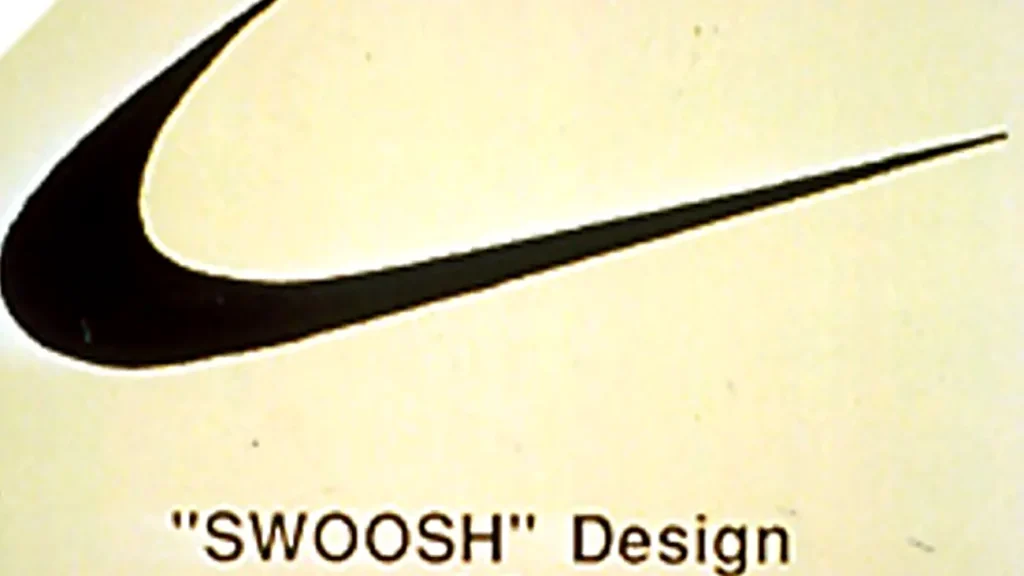
In 1971, Phil Knight asked Portland State University design student Carolyn Davidson to create a graphic mark for the company’s own footwear. She produced several concepts and was paid $35 for the original work. The team selected the curved mark that became the Swoosh; Nike later recognized Davidson with additional honors and company stock. The symbol’s early versions varied considerably in shape before evolving into the highly standardized mark used today.
Waffle: From Bowerman’s Experiments to a Commercial Breakthrough
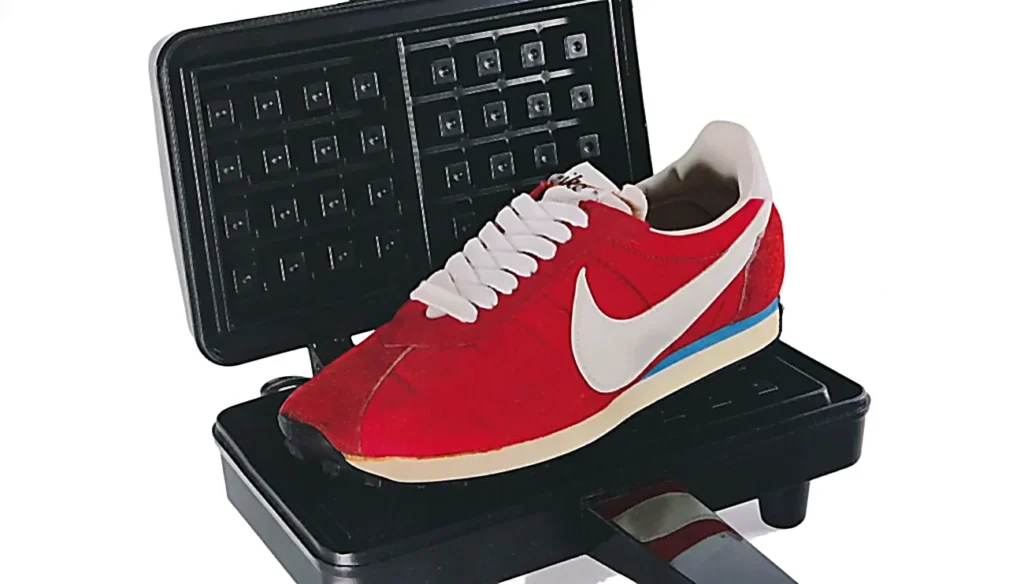
The waffle-iron story is real, but the popular version compresses years of experimentation into one breakfast. Bowerman was searching for lightweight traction that would work on modern track surfaces and experimented with a household waffle iron to create a raised rubber grid. Early experiments fed into shoes such as the Moon Shoe and Oregon Waffle, while the Waffle Trainer became a major commercial success by the mid-1970s. Nike’s own archive credits the Waffle Trainer with helping cement the young company’s reputation for problem-solving through product.
Cortez: The Transition From Tiger to Nike
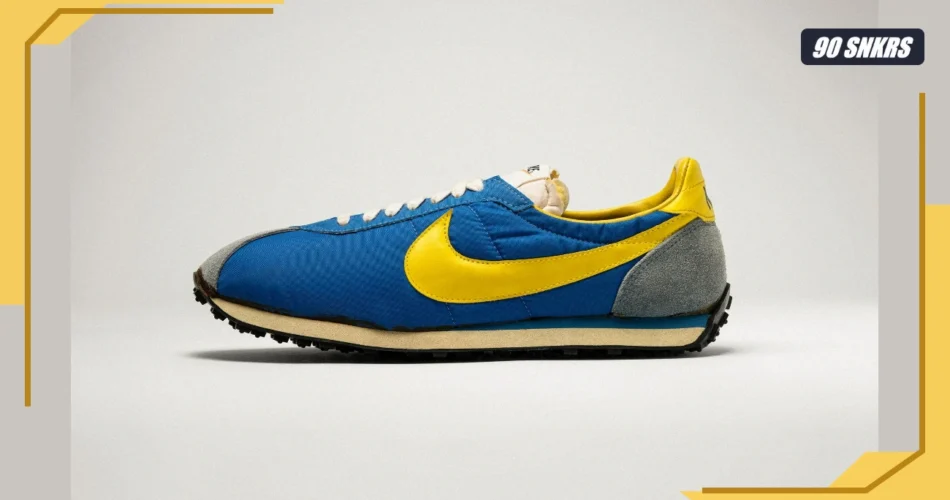
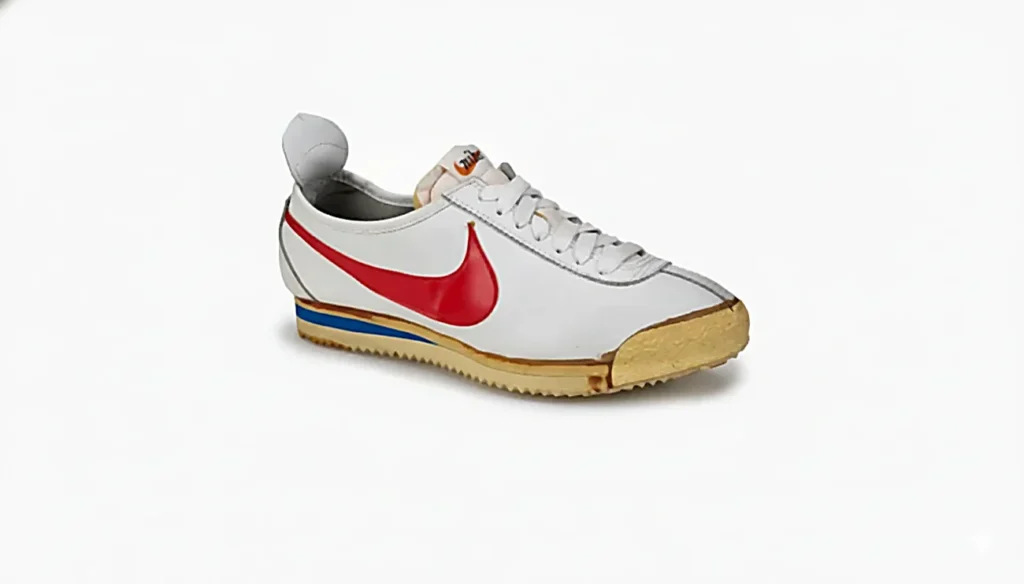
The Cortez connects Nike’s distribution years with the birth of its own footwear brand. Bowerman worked on the Tiger Cortez while BRS still distributed Onitsuka products; after the companies separated, Nike developed and marketed its own Cortez. Describing the shoe as something Nike simply invented from zero in 1972 erases the shared BRS/Onitsuka phase that preceded the independent Nike version. The later Nike Cortez nevertheless became one of the brand’s most recognizable early products and eventually crossed from running into popular culture.
Marketing, Athletes, and Expansion
Nike grew by combining product innovation with athlete relationships and storytelling. Runner Steve Prefontaine became one of the company’s most important early figures, while the brand expanded distribution and moved beyond elite running. Endorsement itself was not new, but Nike developed an unusually aggressive system for connecting athletes, product design, marketing, and cultural identity. That pattern later became central to the company’s work in basketball, tennis, soccer, track, and many other sports.
IPO, Global Scale, and New Categories
By the late 1970s and early 1980s, Nike was expanding into tennis, basketball, training, and other sports. The company went public in 1980, gaining access to capital for broader growth while also increasing the complexity of a global business built around outsourced manufacturing, international suppliers, and rapidly changing consumer demand. Scale gave Nike more resources for design and marketing, but it also created new operational and ethical responsibilities.
1978: Nike Air Arrives in Running
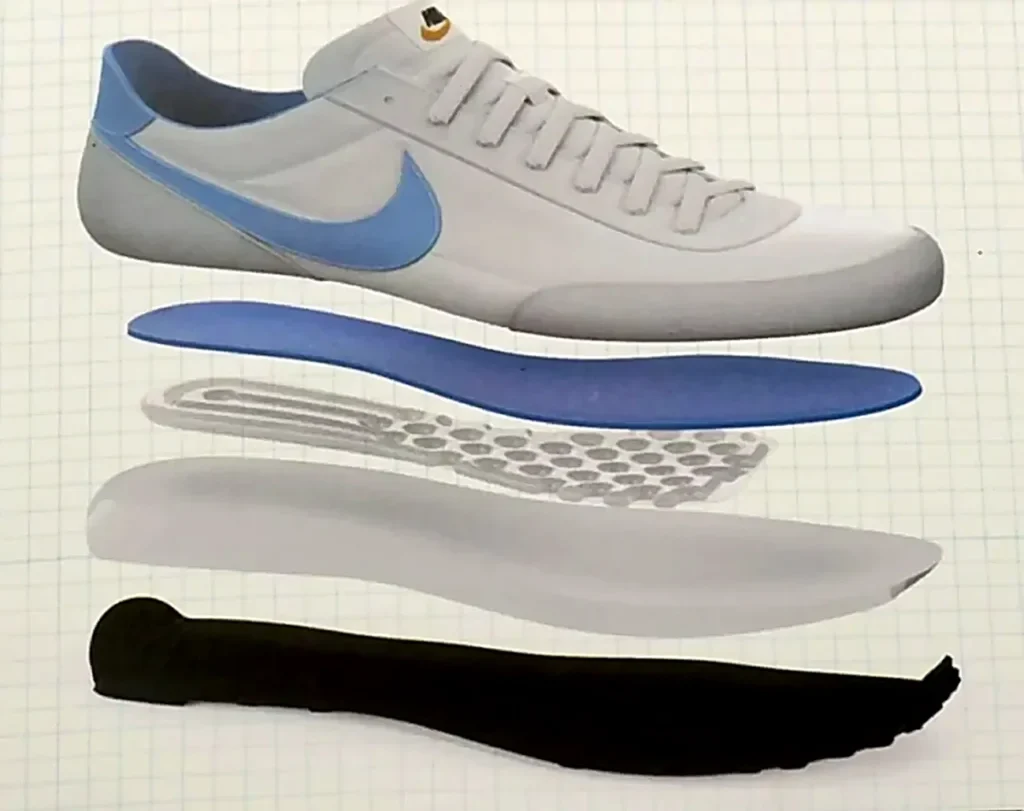
Aeronautical engineer Frank Rudy brought Nike the idea of encapsulating pressurized gas inside flexible cushioning units. The Nike Tailwind introduced Air cushioning to running in 1978, years before the Air Max 1. That makes the distinction clear: Rudy helped develop Nike Air; Hatfield later made it visible in the Air Max 1. Rudy’s concept and Nike’s engineering work created the foundation that later designers would reinterpret.
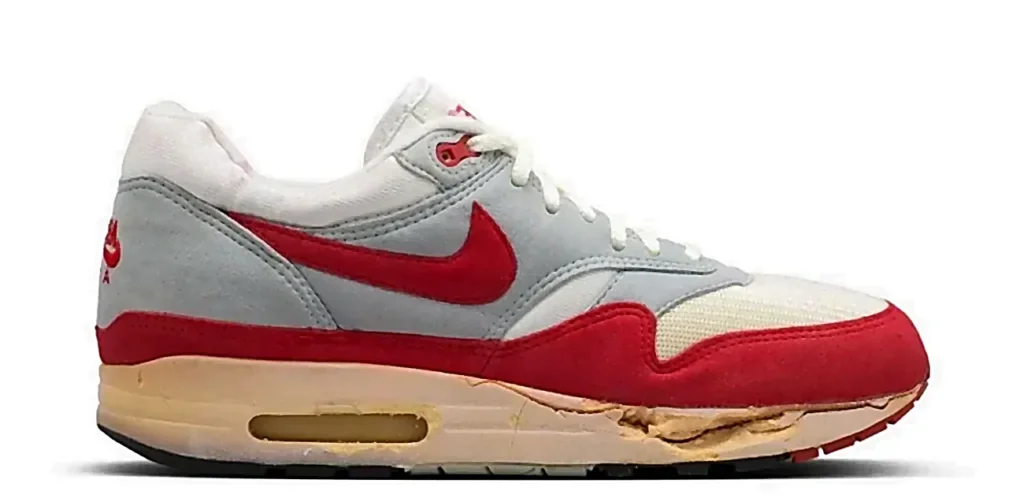
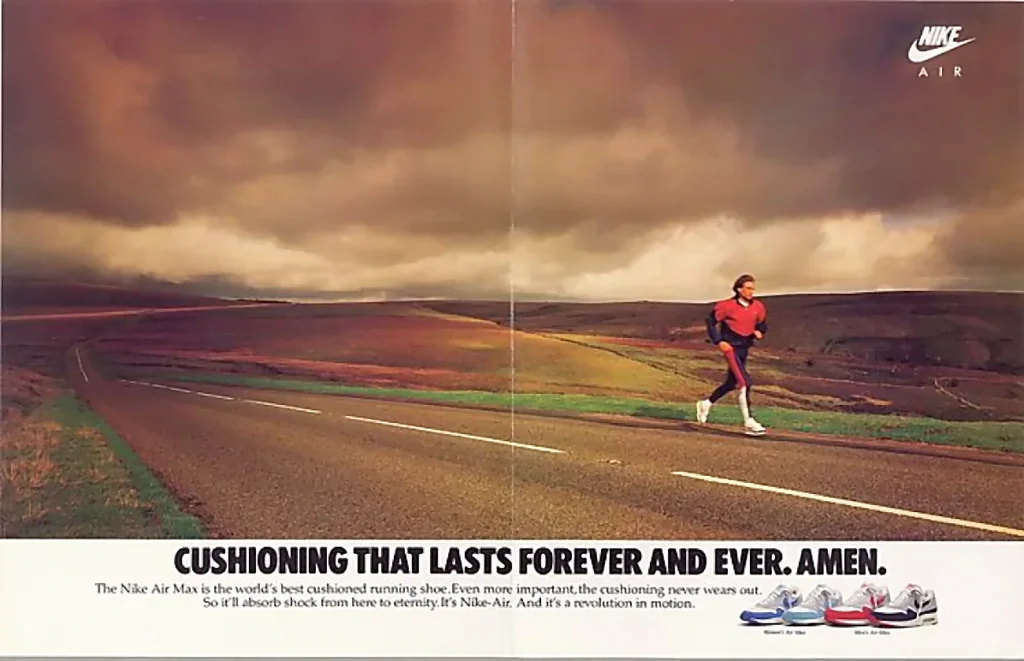
During the 1980s, Air continued evolving. In 1987, Tinker Hatfield’s Air Max 1 exposed the cushioning through a midsole window, converting a hidden functional system into a visual identity that consumers could understand at a glance. The move helped transform cushioning technology into one of Nike’s most durable design languages and later led to increasingly large and complex Air units.
1982: Air Force 1 and Nike Basketball Before Jordan
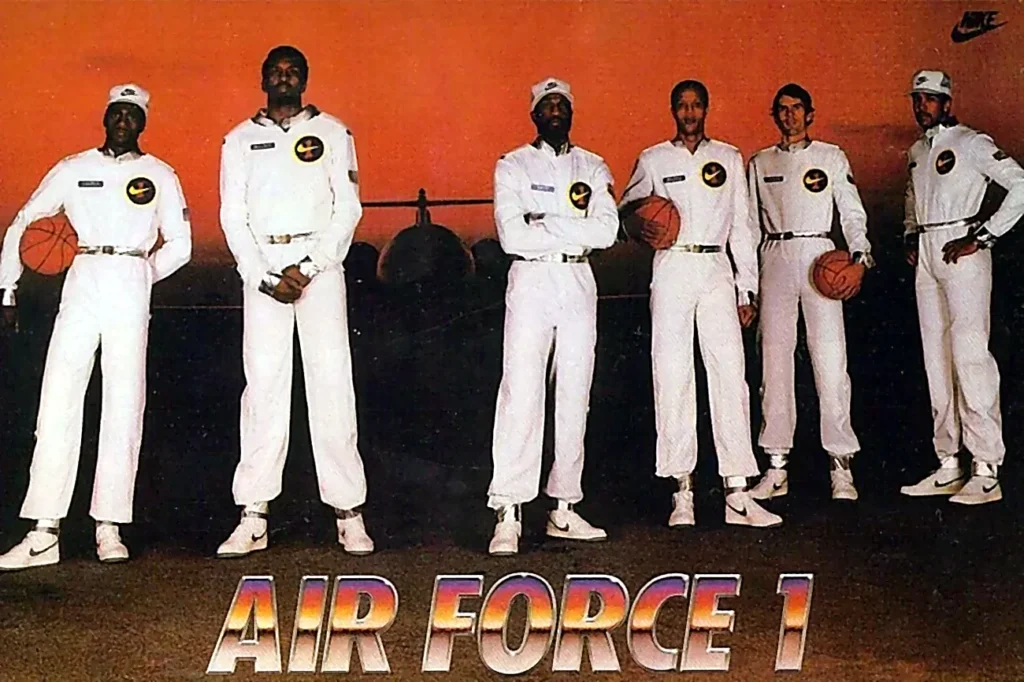
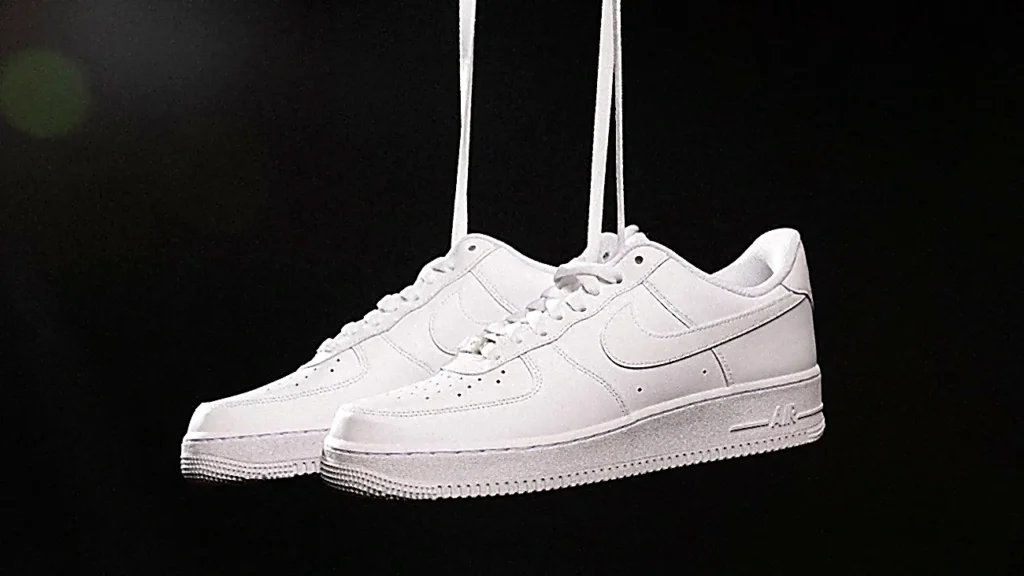
Nike had a basketball presence before Michael Jordan. The Blazer and Bruin had appeared during the 1970s, and Bruce Kilgore’s Air Force 1, released in 1982, became the first Nike basketball shoe to use Air cushioning. Its later adoption in cities such as Baltimore and New York helped turn an on-court model into a long-running cultural platform, showing early evidence of Nike performance products acquiring second lives away from their original sport.
1988: “Just Do It”
Nike launched “Just Do It” in 1988 with advertising agency Wieden+Kennedy. The first campaign included 80-year-old runner Walt Stack crossing the Golden Gate Bridge. Instead of explaining one shoe or technology, the line gave Nike a broad message about participation, effort, risk, and athletic identity, one the company was still actively revisiting with its “Why Do It?” campaign in 2025. The slogan helped turn Nike advertising into cultural communication rather than simple product promotion.
Michael Jordan and the Creation of a Franchise Inside Nike
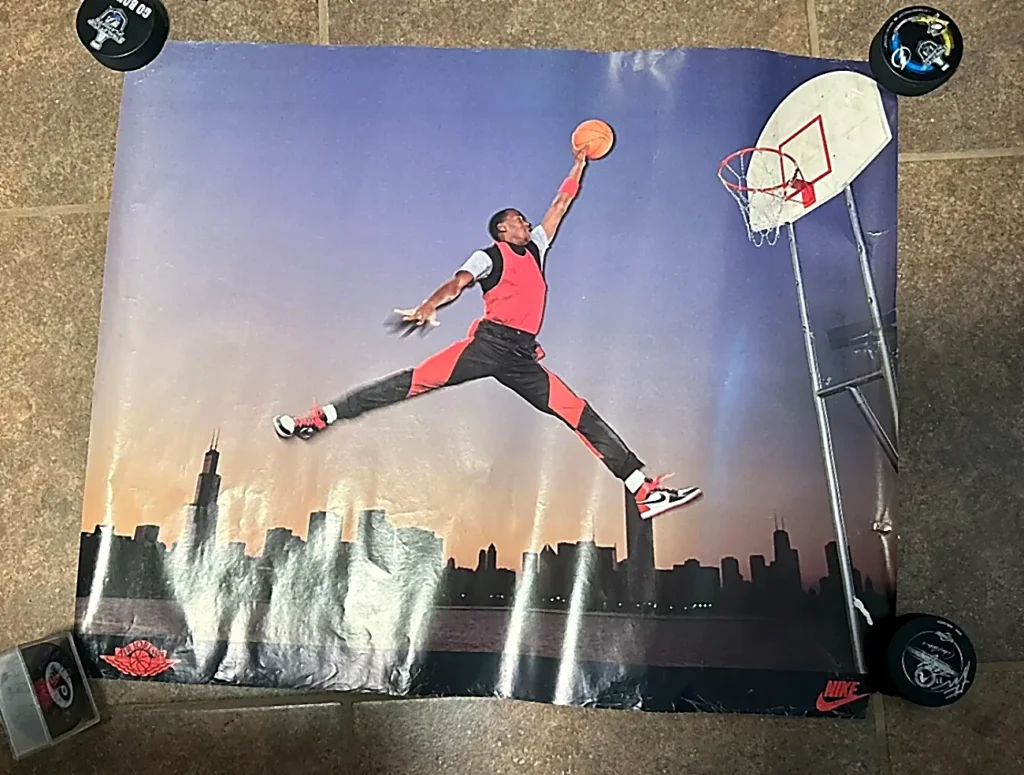
Michael Jordan signed with Nike in 1984, and the Air Jordan 1 (designed by Peter Moore) launched publicly in 1985. The partnership changed athlete marketing by combining performance footwear, personal identity, storytelling, and recurring product generations on a scale the industry had not previously seen. Jordan’s success on court amplified the product, while Nike’s advertising made the shoes symbols of aspiration and rebellion.
The famous “Banned” story needs nuance. The NBA did warn the Chicago Bulls about noncompliant black-and-red footwear, but surviving evidence connects key early uniform-rule episodes with the Nike Air Ship. Nike transformed the controversy into a powerful rebellious narrative that later became attached to the Air Jordan 1 Bred legend. The mythology became culturally real even though the historical footwear details are more complicated than the advertisement suggests.
Jordan Brand was formalized as its own brand within the NIKE, Inc. ecosystem in 1997. Today Nike’s corporate site presents Nike, Jordan, and Converse as the company’s principal brands, illustrating how a signature basketball relationship evolved into a global business and culture of its own. For the model that began the public franchise, see our history of the Air Jordan 1.
The 1990s: Air Max, Huarache, ACG, and Global Sneaker Culture
During the 1990s, Nike expanded major families such as Air Max and ACG while deepening its presence in basketball, running, soccer, tennis, and training. Air Max 90, Huarache, Air Max 95, Air Max 97, and multiple Jordan models developed strong regional identities and increasingly crossed from sport into everyday style. Different cities and countries adopted those products in their own ways, creating cultural histories that cannot be reduced to one global Nike marketing plan.
Nike did not create hip-hop, streetwear, or sneaker culture by itself. Artists, local communities, retailers, athletes, collectors, and consumers assigned new meanings to the products. Nike benefited from those cultural movements and increasingly learned to work with creators and scenes outside traditional sports marketing. That distinction matters because brands participate in culture; they do not own the communities that give products meaning.
Factory Labor and the Controversies That Changed the Company
Global scale brought intense scrutiny. During the 1990s, labor-rights groups, journalists, students, and activists criticized wages, hours, working conditions, and oversight in contract factories producing Nike goods. The criticism became one of the defining corporate-responsibility controversies of the era and challenged Nike’s ability to separate brand image from conditions inside a global outsourced supply chain.
Nike responded over time with supplier codes, audits, factory disclosure, compliance programs, and public impact reporting. Those reforms matter, but they do not erase ongoing debates about living wages, freedom of association, audit effectiveness, and responsibility across outsourced supply chains. A complete Nike history has to include both the criticism and the company’s attempts to change, rather than treating either side as the whole story.
Nike SB and a More Structured Entry Into Skateboarding
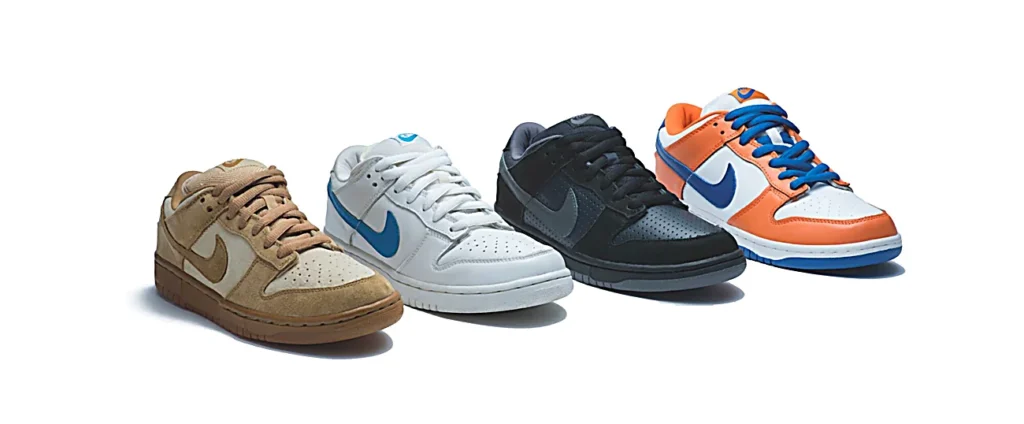
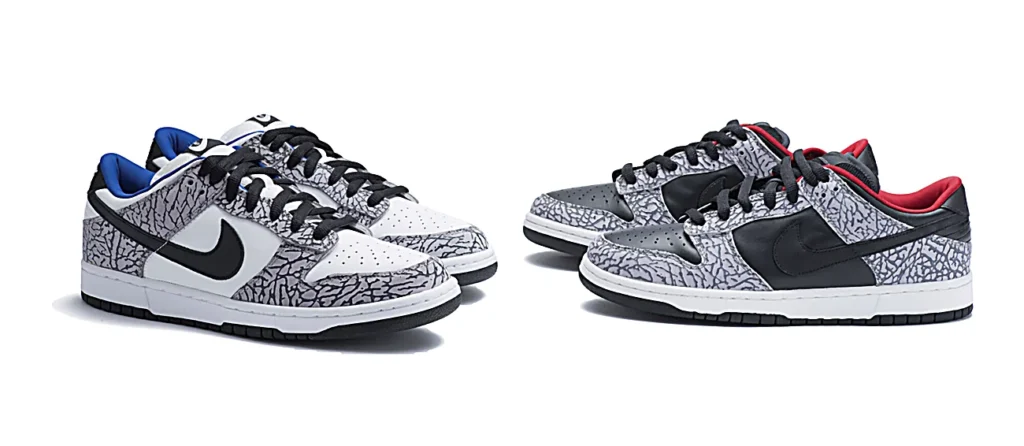
Nike had tried to enter skateboarding before the 2000s, but Nike SB established a more coherent approach in 2002 through skate-specific products, athletes, independent shops, and a reworked Dunk. The SB Dunk became one of the defining sneaker platforms of the decade, combining skate performance with local retail storytelling, artist collaborations, and limited distribution.
Nike did not invent skate culture or the Dunk’s adoption by skateboarders. It entered an existing ecosystem, learned from earlier failures, and built stronger relationships with skaters and shops. Collaborations with skate retailers and brands then helped turn SB product into both equipment and collectible culture. This history is important because it shows a large company adapting to a community rather than simply creating that community from above.
The 2000s: Nike+, Collaborations, and the Sneaker Economy
The 2000s accelerated the relationship between sport, digital technology, and collecting. Nike+ connected running with data and music technology, while Nike SB, limited collaborations, forums, blogs, and e-commerce made release information travel faster and gave sneaker communities new ways to organize. Scarcity became easier to discuss in real time, and regional releases suddenly had global audiences watching them.
This was also the era when people increasingly described scarce sneakers as a kind of “currency.” The phrase is metaphorical: pairs can have market prices and liquidity among collectors, but they are not official currency or guaranteed investments. Restocks, retros, condition changes, market fees, and shifts in taste can move prices quickly. The secondary market became culturally important without turning every sneaker into a financial asset.
The 2010s: Flyknit, SNKRS, and High-Performance Running
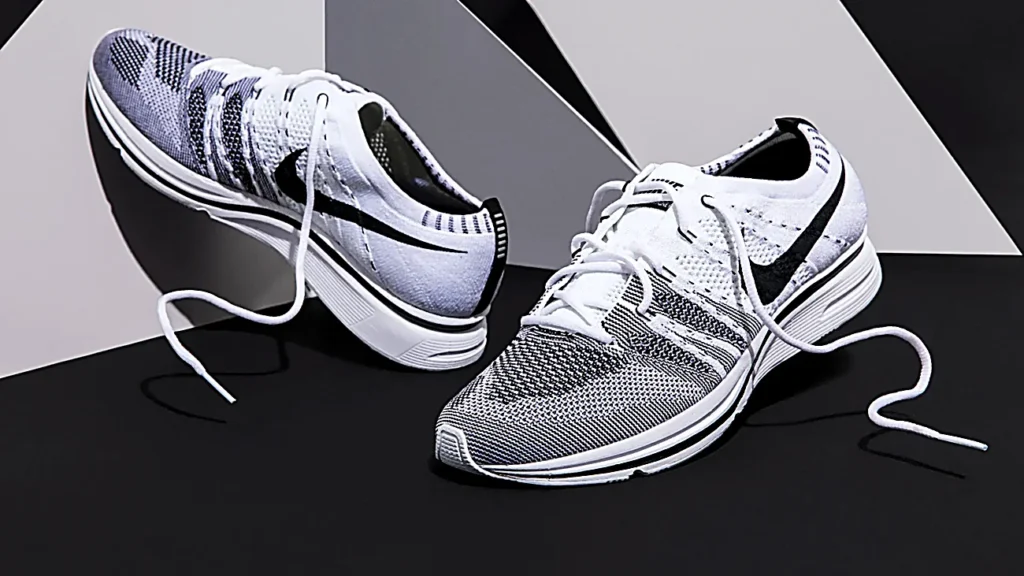
Nike introduced Flyknit in 2012 after years of research into engineered knitted uppers, reducing the number of traditional cut-and-sew components and allowing support and flexibility to be built directly into the knit. The technology spread across running, soccer, basketball, and lifestyle footwear and became one of the decade’s clearest examples of Nike using manufacturing innovation as visible design language.
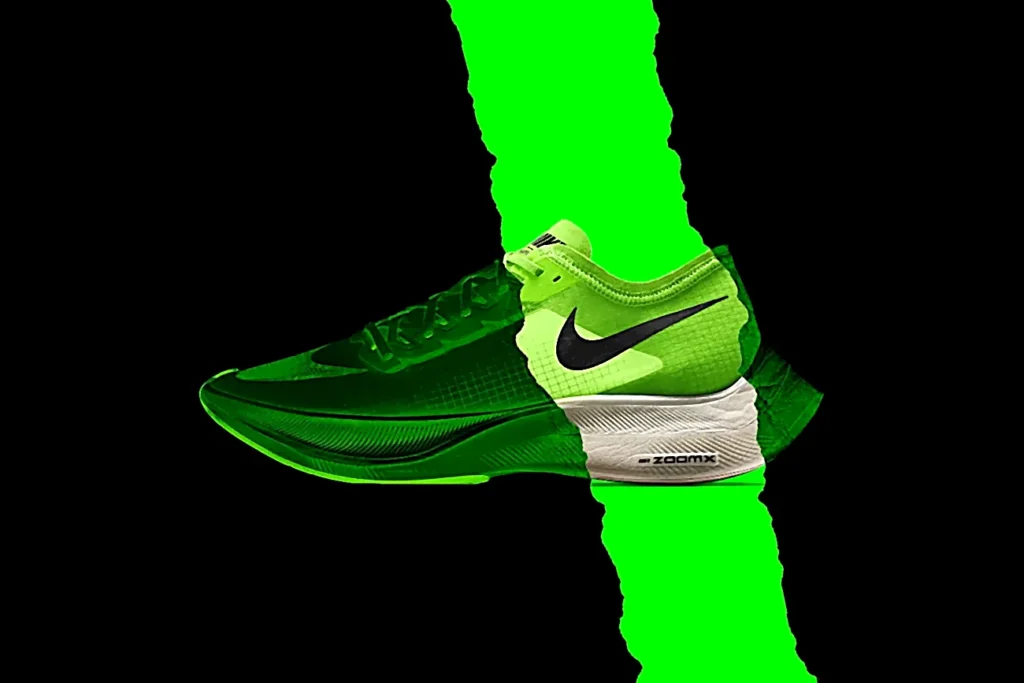
The decade also brought SNKRS and a more controlled digital release system, while Vaporfly and later Alphafly placed responsive foams, plates, and Nike Air at the center of a global debate about running efficiency and competition rules. Performance innovation once again became part of Nike’s broader cultural visibility, while digital launches changed how consumers experienced scarcity, access, Ws, and Ls.
The 2020s: Leadership Change, Digital Growth, and Marketplace Rebalancing
Nike accelerated direct-to-consumer and digital sales early in the decade, then began rebuilding parts of its wholesale network as management acknowledged the need for a healthier balance between Nike Direct and retail partners. Elliott Hill returned to the company and became President and CEO in 2024; as of October 2026 he remains CEO, while Mark Parker is Executive Chairman. Recent leadership changes have been framed around a broader Nike “comeback” and a more connected marketplace.
For the fiscal year ended May 31, 2026, NIKE, Inc. reported $46.4 billion in revenue, essentially flat on a reported basis and down 2% currency-neutral. NIKE Brand revenue was $45.2 billion and Converse revenue was approximately $1.2 billion, reflecting a period of operational reset rather than uninterrupted growth. Wholesale grew for the full year while Nike Direct declined, underscoring the company’s attempt to rebalance channels.
Move to Zero and Sustainability: Goals, Progress, and Limits
Nike uses Move to Zero as an umbrella for climate, waste, recycled-material, renewable-energy, and circular-design goals. Those initiatives should be judged through measurable reporting rather than treated as proof that any product carrying recycled content is automatically “sustainable.” A recycled material percentage can describe one aspect of a product without describing its total environmental impact.
Footwear still requires materials, energy, factories, packaging, and transportation. Recycled inputs and lower-impact processes can reduce certain impacts without eliminating the product’s total footprint. Responsible coverage should recognize both progress and the limits of marketing shorthand, especially because global scale magnifies both innovation opportunities and environmental consequences.
NIKE, Inc., Jordan Brand, and Converse: Who Is Who in 2026
- NIKE, Inc.: the publicly traded parent company headquartered near Beaverton, Oregon.
- Nike: the company’s primary athletic brand across footwear, apparel, and equipment.
- Jordan Brand: the basketball and lifestyle brand built from Michael Jordan’s signature legacy within NIKE, Inc.
- Converse: a wholly owned NIKE, Inc. subsidiary brand focused on athletic-lifestyle footwear, apparel, and accessories.
The Air Force 1 as an Example of Nike’s Longevity
Few products summarize Nike’s ability to turn performance design into cultural heritage better than Air Force 1, Dunk, Air Max, and Air Jordan. They survived not by remaining frozen but by changing use, entering new communities, receiving retros and collaborations, and being reinterpreted by generations that were not present at the original release. The Air Force 1 in particular moved from 1982 basketball performance into music, street style, fashion, and an enormous contemporary lifestyle business.
Conclusion: Why Nike Became More Than a Shoe Company
Nike’s scale came from combining product innovation, athlete relationships, advertising, distribution, and an unusual ability to convert technology into cultural language. Bill Bowerman, Phil Knight, Jeff Johnson, Carolyn Davidson, Frank Rudy, Peter Moore, Tinker Hatfield, athletes, engineers, factory workers, retailers, and thousands of others all contributed to different chapters of that history. The company became more than a running-shoe business because those systems reinforced one another across generations.
The same history contains contradictions: innovation and environmental cost, global growth and labor criticism, broad sport participation and restricted access to some launches, direct retail and dependence on wholesale partners. Keeping those tensions visible makes the story more accurate (and more useful) than a corporate success myth. Nike’s history is compelling precisely because it is a history of experimentation, ambition, culture, mistakes, adaptation, and enormous scale.
Nike History Timeline
A simplified chronology helps connect the major milestones without pretending that each transition happened overnight:
- 1964: Phil Knight and Bill Bowerman form Blue Ribbon Sports.
- 1967: BRS opens its first official office in Portland.
- 1971: Carolyn Davidson creates the Swoosh; Nike product identity takes shape.
- 1972: Nike-branded footwear gains wider visibility around the U.S. Olympic Trials era.
- 1975: Waffle Trainer becomes a major commercial running success.
- 1978: Tailwind introduces Nike Air to running.
- 1980: NIKE, Inc. goes public.
- 1982: Air Force 1 brings Nike Air to basketball.
- 1984–1985: Michael Jordan signs with Nike and Air Jordan 1 launches.
- 1987: Air Max 1 makes Nike Air visibly accessible through the midsole.
- 1988: “Just Do It” launches.
- 1990s: Air Max, Huarache, ACG, Jordan, and global sneaker culture expand.
- 2002: Nike SB launches a more structured skateboarding program.
- 2012: Flyknit debuts publicly.
- 2024: Elliott Hill becomes President and CEO of NIKE, Inc.
- 2026: NIKE, Inc. reports $46.4 billion in annual revenue while continuing a marketplace and product reset.
Frequently asked questions
Who founded Nike, and when was Blue Ribbon Sports created?
Phil Knight had run track at the University of Oregon under Bill Bowerman before traveling to Japan and pursuing the idea that Japanese running shoes could compete in the U.S. market. On January 25, 1964, Knight and Bowerman formalized their partnership with a handshake, and Blue Ribbon Sports (BRS) was born. The business began as a distributor rather than as the Nike manufacturing and marketing giant people know today.
Who suggested the name Nike, and what does it mean?
Jeff Johnson suggested the name Nike, after the Greek goddess of victory. He was Blue Ribbon Sports’ first full-time employee.
Who designed the Nike Swoosh, and how much was she initially paid?
In 1971, Phil Knight asked Portland State University design student Carolyn Davidson to create a graphic mark for the company’s own footwear. She produced several concepts and was paid $35 for the original work. The team selected the curved mark that became the Swoosh; Nike later recognized Davidson with additional honors and company stock. The symbol’s early versions varied considerably in shape before evolving into the highly standardized mark used today.
Did Nike’s waffle sole really come from a waffle iron?
The waffle-iron story is real, but the popular version compresses years of experimentation into one breakfast. Bowerman was searching for lightweight traction that would work on modern track surfaces and experimented with a household waffle iron to create a raised rubber grid. Early experiments fed into shoes such as the Moon Shoe and Oregon Waffle, while the Waffle Trainer became a major commercial success by the mid-1970s. Nike’s own archive credits the Waffle Trainer with helping cement the young company’s reputation for problem-solving through product.
Who developed Nike Air, and was the Air Max 1 the first shoe to use it?
Aeronautical engineer Frank Rudy brought Nike the idea of encapsulating pressurized gas inside flexible cushioning units. The Nike Tailwind introduced Air cushioning to running in 1978, years before the Air Max 1. That makes the distinction clear: Rudy helped develop Nike Air; Hatfield later made it visible in the Air Max 1.
Official source: Nike.