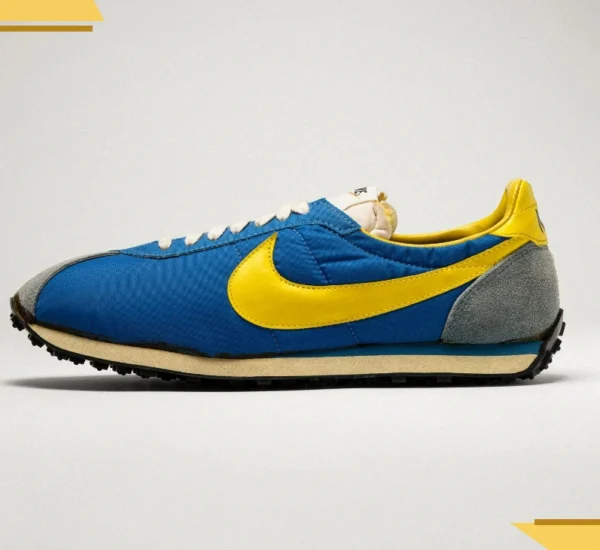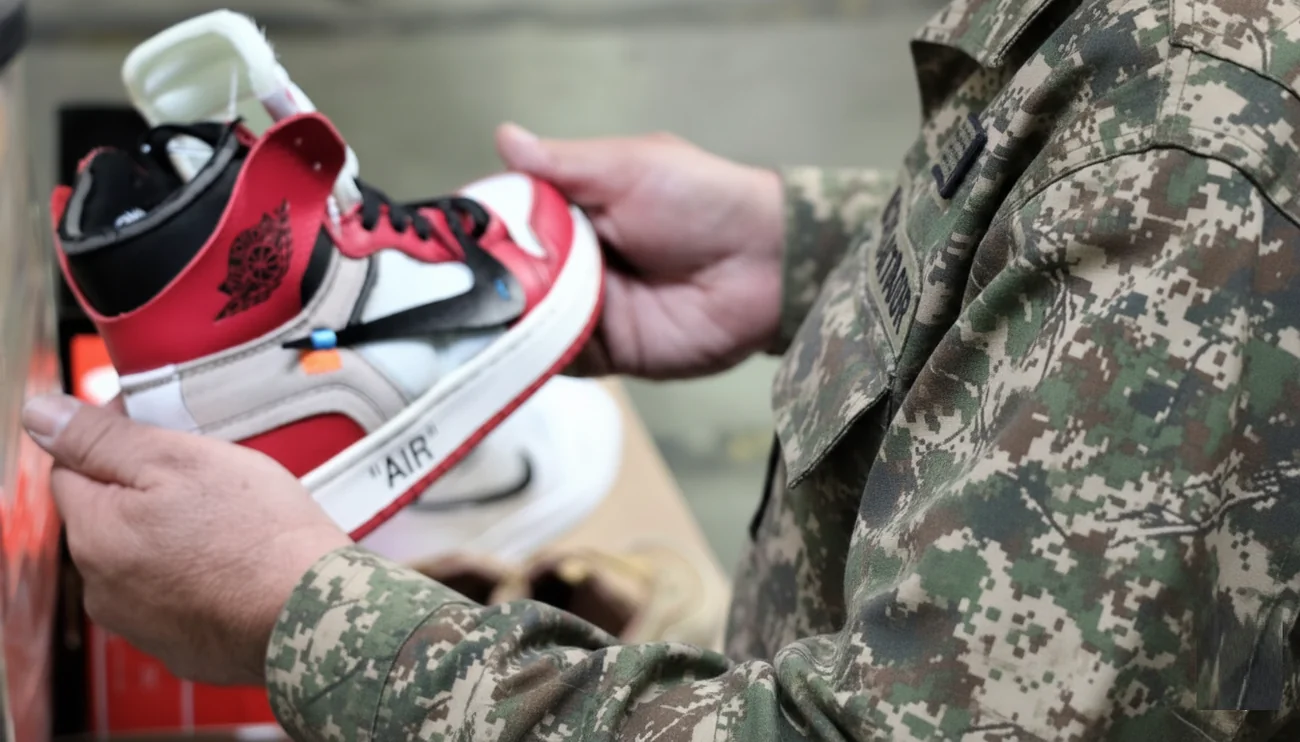
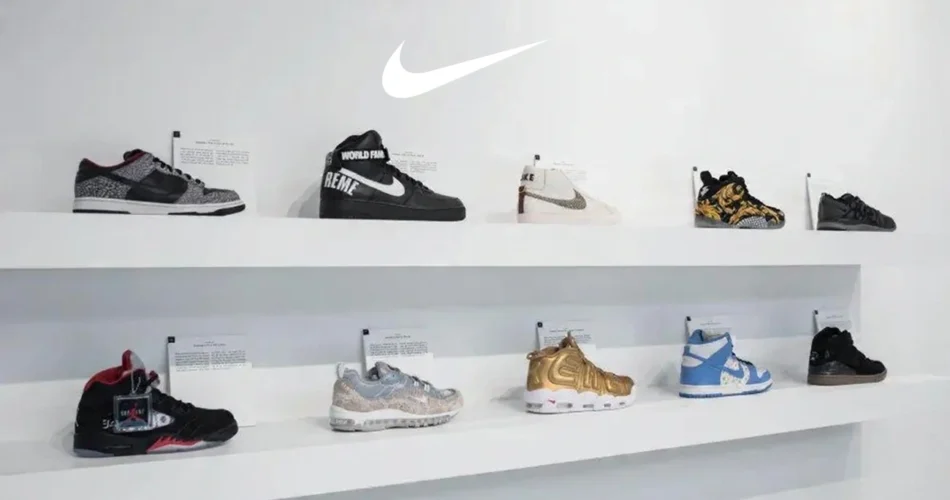
Sneaker resale is the secondary-market sale of a pair after its original retail sale. The sneaker can be new or used, recent or vintage, and it can sell above, near, or below its original retail price.
The most visible version of resale happens when someone buys a highly demanded release at retail and tries to sell it for more. That is only one part of the market. Collectors selling pairs from their rotation, consignment stores, marketplaces, vintage sneakers, and used shoes all belong to the secondary market.
Resale does not guarantee profit. A limited sneaker can lose demand, restock, or trade below retail. Size, condition, platform fees, shipping, taxes, and how easily a buyer can be found all affect the result.
What Does “Resell” Mean in Sneaker Culture?
In U.S. English, resale is the most natural noun for the secondary market, while resell is commonly used as a verb: to sell something again. Reseller means a person or business that sells products again after acquiring them.
- Resell: to sell an item again; also used informally in sneaker conversations.
- Resale: the act or market of selling products again on the secondary market.
- Reseller: a person or business that participates in resale.
These words often appear alongside terms such as drop, raffle, deadstock, Ask, and Offer. For more vocabulary, see the Sneakerhead Dictionary.
Primary Market vs. Secondary Market
The easiest way to understand sneaker resale is to separate two stages of a product’s circulation:
- Primary market: the first sale by the brand, an official store, or an authorized retailer.
- Secondary market: a later sale after the product has already passed through that first retail transaction.
If an authorized retailer sells a sneaker directly to a consumer, that is a primary-market sale. If that consumer, collector, or business later sells the same product again, the transaction takes place on the secondary market.
The product does not need to have been purchased with resale in mind. Someone can buy a pair to wear, change their mind, and sell it later. A collector can also reduce a collection or sell an older pair that is no longer available at retail.
Retail vs. Resale: What Is the Difference?
Retail refers to the primary-market sale or price through the brand or an authorized retailer. That price can change after launch. Resale refers to a later transaction on the secondary market.
The difference is not “retail means cheap” and “resale means expensive.” A sneaker can be resold:
- above retail when buyers are willing to pay a premium;
- around retail;
- below retail when demand is weak, supply is high, or the seller wants a quick sale.
The brand’s original suggested price does not create a permanent floor. After release, secondary-market prices respond to supply, demand, condition, size, timing, and transaction costs.
Resale Does Not Always Mean Selling for More
A sneaker is still part of the resale market when it trades below its original retail price. This happens with releases that underperform expectations, pairs bought on sale, models with abundant supply, or sizes with weaker demand.
A seller can also list a pair above retail and still make little or no profit after platform fees, shipping, payment costs, sales tax paid on acquisition, and other expenses are considered.
Resale is also not automatically the same as scalping. Resale is the broad act or market of selling products again. Scalping usually refers more narrowly to acquiring scarce products with the intention of quickly reselling them at a substantial markup. A collector selling a used pair from a personal collection participates in resale without necessarily being a scalper.
How Does the Secondary Sneaker Market Work?
There is no single resale model. Transactions can happen through marketplaces, consignment, physical stores, or directly between individuals. Each format allocates listing, storage, payment, shipping, returns, and authentication responsibilities differently.
Marketplaces
A marketplace organizes seller listings and buyer demand under its own rules. Some platforms process payment and shipping; others also offer physical verification; and some allow selected sellers to ship directly to buyers.
Marketplace does not always mean direct communication between buyer and seller. Depending on the platform and transaction type, the parties may remain separated and the product may pass through a verification center before reaching the buyer.
Consignment
In consignment, the owner provides the product to a business that sells it on the owner’s behalf. When the sale occurs, the consignor receives the agreed payout after the applicable commission or fees.
The business may store, photograph, market, display, and ship the product depending on the agreement. Withdrawal rules, pricing changes, storage, and fees vary by service.
Direct Person-to-Person Sales
In a direct sale, buyer and seller negotiate without a specialized marketplace managing the entire transaction. That can reduce some fees, but it also shifts more responsibility for authentication, payment, shipping, and dispute resolution to the participants.
When there is no buyer protection or professional verification, the risk of fraud, counterfeit goods, or inaccurate condition descriptions can be higher.
How Does StockX Work in 2026?
StockX can no longer be summarized as one marketplace for “deadstock only.” In 2026, StockX separates its selling ecosystem into the Verified Marketplace, Listings Marketplace, and StockX Live, each with different rules and fees.
Verified Marketplace
The Verified Marketplace is for new, unworn items that meet StockX condition standards. StockX says each item is either verified by StockX or shipped directly by an approved StockX Verified Seller.
Buyers can generally use:
- Buy Now: purchase immediately at the lowest available Ask.
- Make an Offer: submit the price the buyer is willing to pay.
For sellers, the familiar actions are:
- Ask: set the price the seller is willing to accept.
- Sell Now: accept a compatible active Offer when available.
The interface borrows language from financial markets, including bids, asks, offers, and sales history. Sneakers are still physical consumer goods, however, and StockX should not be described as equivalent to a regulated securities exchange.
Listings Marketplace
The Listings Marketplace is a separate U.S. experience for used and unique items sold by the StockX seller community. Listings can include condition categories such as New, New – Other, and Used, with seller photos and descriptions. For eligible items, buyers can currently add StockX verification at checkout; without verification, the seller ships directly to the buyer.
Selling access remains limited to select U.S. sellers as StockX expands the program. The fee structure also differs from the Verified Marketplace: in its launch-stage policy checked in October 2026, StockX says Listings sellers pay no standard selling, processing, or shipping fee, while buyers pay the applicable processing, shipping, and optional verification charges.
StockX Live
StockX also operates a live-shopping marketplace for approved sellers. Live expands the platform beyond the traditional Ask-and-Offer model and has its own transaction and fee rules. StockX says Live orders do not go through its verification process and ship directly from the seller.
For a dedicated walkthrough of the platform, see how to buy on StockX. Because marketplace features and fees change, always verify the current rules for the specific StockX marketplace you are using.
How Do GOAT, Flight Club, and Stadium Goods Fit Into Sneaker Resale?
GOAT
GOAT allows approved sellers to submit products for sale, including new, used, and new-with-defects items depending on the listing. Used or defective products require condition information and photos, which shows clearly that sneaker resale is not limited to brand-new pairs.
GOAT uses its own authentication, shipping, commission, and seller-rating rules. In its U.S. policy checked in October 2026, the commission for a seller in good standing is 9.5% plus the applicable seller fee, with higher rates possible when seller ratings decline. Check the current commission rules and any separate cash-out charges before listing. For a platform-focused overview, see our GOAT guide.
Flight Club
Flight Club built its reputation as a consignment destination for rare sneakers. Its current selling structure is connected to the GOAT ecosystem, and Flight Club no longer accepts new seller registrations through its older selling system.
Since 2025, new seller activity has been handled through alias, the selling platform connected to the Flight Club and GOAT network. That makes it inaccurate to describe Flight Club as a simple peer-to-peer marketplace.
For the store’s history and buying model, see our Flight Club guide.
Stadium Goods
Stadium Goods remains part of the sneaker and streetwear aftermarket. Its seller operation uses a consignment-style inventory model in which products are submitted, inspected, stored, marketed, and sold through the Stadium Goods system.
Its current U.S. seller materials say accepted merchandise should be new and unworn, and the company handles storage, sale, and shipment after inventory is accepted. Current seller terms and payout rules should always be checked before consigning. For more context, see our Stadium Goods guide.
What Does Deadstock Mean?
In contemporary sneaker culture, Deadstock, or DS, generally describes a new, unworn pair.
Exact expectations around the box, accessories, tags, and packaging can vary between collectors and marketplaces.
Deadstock mainly describes condition, not rarity. A DS sneaker can be common, widely available, and priced below retail. A used sneaker can be rare and command a high secondary-market price.
Do Used Sneakers Count as Resale?
Yes. Used, vintage, discontinued, and collection-owned pairs are all part of the secondary market. Value can be influenced by:
- outsole and midsole wear;
- stains, tears, repairs, or alterations;
- condition of the upper;
- original box and accessories;
- size;
- rarity and demand;
- age and material deterioration;
- authenticity and provenance.
Those factors do not form a fixed formula. A very rare pair can remain desirable with visible wear, while another sneaker in excellent condition may still have very few buyers.
Why Do Some Sneakers Go Up in Value While Others Fall?
Secondary-market price is created by the interaction between sellers willing to sell and buyers willing to pay. No single feature guarantees appreciation.
Supply and Demand
Low supply can support higher prices only when enough buyers actually want the product. Scarcity without demand does not automatically create value.
Restocks and Re-Releases
A restock can add supply and affect resale prices, but the impact depends on quantity, timing, sizes, and demand.
A later retro or re-release can also change how buyers value an older edition.
Size and Region
Different sizes can trade at very different prices because supply and demand are not evenly distributed.
Regional availability also affects what buyers can source locally, although large marketplaces increasingly connect sellers and buyers across wider areas.
Collaborations and Cultural Relevance
Collaborations can attract demand when the partner, design, story, and release resonate with buyers. But the word collab does not guarantee strong resale performance.
Projects such as Nike x Off-White show how design, scarcity, and cultural relevance can combine, but later collaborations do not automatically reproduce the same market response.
Model History
A sneaker tied to a long-running cultural or sports story can retain demand across generations. The Air Jordan 1 is a clear example of a silhouette whose history extends far beyond one release. History can support interest, but even an iconic model can have colorways that trade below retail.
Condition and the Passage of Time
Physical products age. Yellowing, oxidation, adhesive deterioration, foam breakdown, and other material changes can affect old sneakers even when they were barely worn.
Condition therefore matters both aesthetically and structurally, especially in vintage resale.
Drops, Raffles, and Bots: How Do They Relate to Resale?
Drop
A drop is a product release.
Limited drops can create concentrated demand, but “limited” does not guarantee future resale profit.
Raffle
A raffle is a release method used by retailers to allocate the chance to purchase when demand exceeds available inventory. Winning a raffle gives the buyer the opportunity to purchase under that retailer’s rules; it does not guarantee profit if the pair is later resold.
Bots
Automated tools have been used to attempt purchases during high-demand releases. Retailers and platforms use different anti-bot systems and terms of service, and those rules vary.
Bots are part of the history and controversy around limited sneaker releases, but they are not required for someone to participate in resale.
Sale Price Is Not the Same as Profit
The listed price or recorded sale price does not automatically reveal how much the seller earned. A realistic calculation can include:
- the original retail or acquisition price;
- sales tax paid when the sneaker was purchased;
- platform commission or transaction fees;
- payment-processing or cash-out fees;
- seller shipping or verification costs where applicable;
- packaging and storage costs;
- discounts caused by condition issues;
- returns, cancellations, or penalty fees;
- income-tax or business obligations that may apply to the seller;
- losses on inventory that never finds a buyer.
Fees change by platform, marketplace type, seller status, and transaction. For example, StockX currently applies different seller-fee structures to its Verified, Listings, and Live marketplaces. Old percentages copied from past articles may no longer describe the real cost today. Before listing a pair, calculate net proceeds rather than focusing only on the visible sale price.
Is Sneaker Resale an Investment?
People sometimes buy sneakers expecting appreciation.
That does not make sneakers predictable investments or equivalents to stocks, bonds, or regulated funds.
- Variable liquidity: there may be no buyer at the price you want.
- Demand risk: tastes and trends change.
- Restock risk: new supply can affect secondary-market prices.
- Physical deterioration: materials continue to age even inside a box.
- Transaction costs: fees and shipping reduce returns.
- Size-specific markets: one size can behave differently from another.
- Fraud and authenticity risk: disputes can involve payment, condition, or counterfeit products.
- Valuation difficulty: asking prices are not the same as completed sales.
It is possible to profit, break even, or lose money. Buying a pair only because it appears limited is not a substitute for understanding cost and demand, and historical prices do not guarantee future results.
What Are the Risks of Sneaker Resale?
- Counterfeits: desirable pairs attract increasingly convincing fake products.
- Misrepresented condition: wear, accessories, box status, or repairs may not match the listing.
- Distorted pricing: the lowest Ask or highest listing does not prove a completed sale at that level.
- Low liquidity: inventory can sit for weeks or months without a buyer.
- Unexpected costs: platform fees, shipping, taxes, returns, and payment charges can reduce proceeds.
- Cancellations and penalties: marketplaces can impose consequences when sellers fail to complete transactions.
- Deterioration: age and storage conditions can affect materials.
- Policy differences: authentication, returns, and buyer protection vary by platform and transaction type.
How to Buy Resale Sneakers More Safely
- Read the condition and authentication rules for the exact marketplace or transaction type.
- Review real photos, description, style code, size, accessories, and box condition.
- Research completed sales, not only seller asking prices.
- Treat prices far outside the normal market range as a reason to investigate further.
- Use payment methods that provide appropriate buyer protection.
- Read return, cancellation, and dispute policies before paying.
- For U.S. purchases, include sales tax, shipping, and marketplace fees in the real checkout cost.
- In direct sales, verify the other party’s reputation and keep a record of the transaction.
StockX, GOAT, Flight Club, and Stadium Goods each describe their own authentication or inspection processes. The process depends on the transaction type. These systems can reduce certain risks, but they do not make errors impossible. If authenticity is the main concern, see our Legit Check guide.
Is Resale Part of Sneaker Culture?
Yes. The secondary market helps collectors find older releases, sold-out sizes, discontinued models, and pairs that are no longer available through normal retail channels. It also lets people sell sneakers that no longer fit their collection or style.
At the same time, speculative buying of scarce launches is criticized when it reduces retail access and pushes prices higher. Both realities can exist at once: resale can improve circulation of hard-to-find products and also encourage controversial behavior around limited releases.
Not everyone who sells a sneaker is a professional reseller. There are occasional sellers, collectors rotating their collections, consignment businesses, and full-time resale operations.
Sneaker Resale FAQ
What Does Resell Mean in Sneakers?
It refers to selling sneakers again after the original retail sale. In natural U.S. English, resale is the more common noun for the secondary market, while resell is commonly used as the verb.
What Is the Difference Between Retail and Resale?
Retail is the primary-market sale through the brand or an authorized retailer. Resale is a later transaction on the secondary market.
Does Resale Always Mean Selling for More?
No. Sneakers can resell above, near, or below their original retail price.
What Does Deadstock Mean?
Deadstock, or DS, usually describes a new and unworn sneaker. Exact rules about boxes, accessories, and tags vary by collector community or marketplace.
Does Deadstock Mean Rare?
No. Deadstock describes condition, not scarcity. A common sneaker can be DS, and a heavily worn sneaker can still be rare.
Do Used Sneakers Belong in the Resale Market?
Yes. Used sneakers are a major part of the secondary market, including vintage pairs, discontinued releases, and sneakers from personal collections.
How Does StockX Work?
In 2026, StockX operates the Verified Marketplace for new and unworn items, the Listings Marketplace for used and unique products in the U.S., and StockX Live for live shopping. Each marketplace uses different rules, shipping flows, and fees.
What Are Ask and Offer?
On StockX, an Ask is the price a seller is willing to accept. An Offer is the price a buyer is willing to pay. When compatible prices match or one side accepts the other, the sale can be confirmed under the platform’s rules.
What Is Consignment?
Consignment is a selling model in which the owner provides merchandise to a business that sells it on the owner’s behalf and pays the owner according to the agreed commission or payout structure.
Does Every Limited Sneaker Go Up in Value?
No. Scarcity alone does not guarantee demand, and restocks, changing tastes, sizes, timing, and transaction costs can all affect resale prices.
Can You Lose Money Reselling Sneakers?
Yes. A seller can lose money when the market price falls below acquisition cost or when fees, shipping, taxes, returns, and other costs erase the margin.
Can Sneaker Resale Still Be Profitable?
Yes, some sellers can earn money, but profit is not guaranteed. Results depend on acquisition cost, demand, size, timing, fees, sell-through rate, and the seller’s ability to manage inventory and risk.
Is Sneaker Resale an Investment?
Sneakers can appreciate, but resale should not be treated as a predictable or regulated investment category. Physical deterioration, liquidity, fashion cycles, fees, and market risk all matter.
Sources and Next Steps
For the rules that apply to a sale, consult StockX seller fees, GOAT commissions, Flight Club seller guidance, and the Stadium Goods consignment agreement.
For more terms used throughout the secondary market, explore the Sneakerhead Dictionary. For the broader stories behind collecting, releases, and resale culture, continue with Sneaker History & Culture.