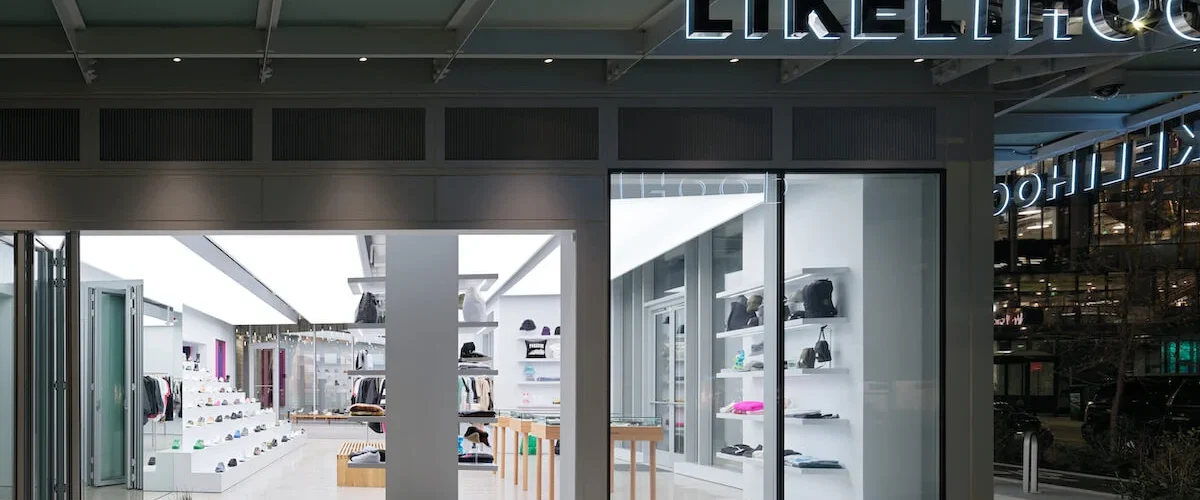
According to the retailer, the name Likelihood emerged during a visit to Elliott Bay bookstore. The word was chosen for its optimistic association with possibilities.
It is an appropriate opening to the store’s history because it does not depend on a scarce sneaker. The starting point is an idea about how people might feel when choosing what to wear. Footwear would become a practical, everyday way of expressing it.
A first home on Capitol Hill
Likelihood opened in 2015 on Capitol Hill. In coverage preceding the launch, Seattle Magazine identified Aaron DelGuzzo and Daniel Carlson as the people behind the project and described a men’s footwear selection that extended beyond athletic sneakers.
Boots, other shoes and accessories were part of the idea. That breadth prevents a narrow reading of the shop’s beginnings: Likelihood was not established only to compete for limited releases. It proposed a way of putting styles together and treating footwear as a meaningful part of an outfit.
The official history records DelGuzzo’s Nike experience. Knowing products is a beginning; developing an independent selection requires another kind of decision.
Selection as an invitation
The selection expanded from men’s shoes into a broader footwear and apparel offer.
Those terms become more useful when considered through relationships between products. A shoe with a sporting background does not need to appear only as equipment; it can be considered alongside different fabrics, proportions and garments. Broadening the offer need not mean losing people who first arrived through an interest in sneakers.
That balance matters for specialist retail. An experienced customer may want a selection that still surprises them, while someone else needs a straightforward way into the subject. A boutique can accommodate both by making connections understandable instead of assuming everyone already knows every label.
Gathering around more than a release
The shop reports backpack and sock collections for people experiencing homelessness. That account describes an activity; it is not an independent audit of results.
They nevertheless identify a particular choice: using the attention around footwear for a purpose beyond selling it. A release brings people together, and that gathering can create opportunities to participate in matters affecting the city where the shop operates.
The FAQ explains that inventory comes directly from suppliers, rather than purchases from the public for resale.
One closure did not end the business
The original Capitol Hill location closed in December 2024. Speaking to local publication CHS, Carlson attributed the decision to economic difficulties and crime, while explaining that the team would concentrate its efforts on South Lake Union.
The attribution and scale matter. This was a business owner’s explanation of a particular store decision, not a general diagnosis of Seattle. Nor was it the end of Likelihood: the company continued serving customers elsewhere in the city.
That transition adds a realistic dimension to the optimistic name. A boutique can preserve an underlying idea while changing its physical presence. Likelihood’s story brings together intention, selection and adaptation, showing how a retailer’s identity develops through both the products it chooses and the different circumstances it works through.
Sources and further reading
Likelihood: origins and approach
Likelihood: FAQ and the name’s origin
Seattle Magazine: 2015 opening announcement
Capitol Hill Seattle: the 2024 transition
Related store histories
Notre
BAIT