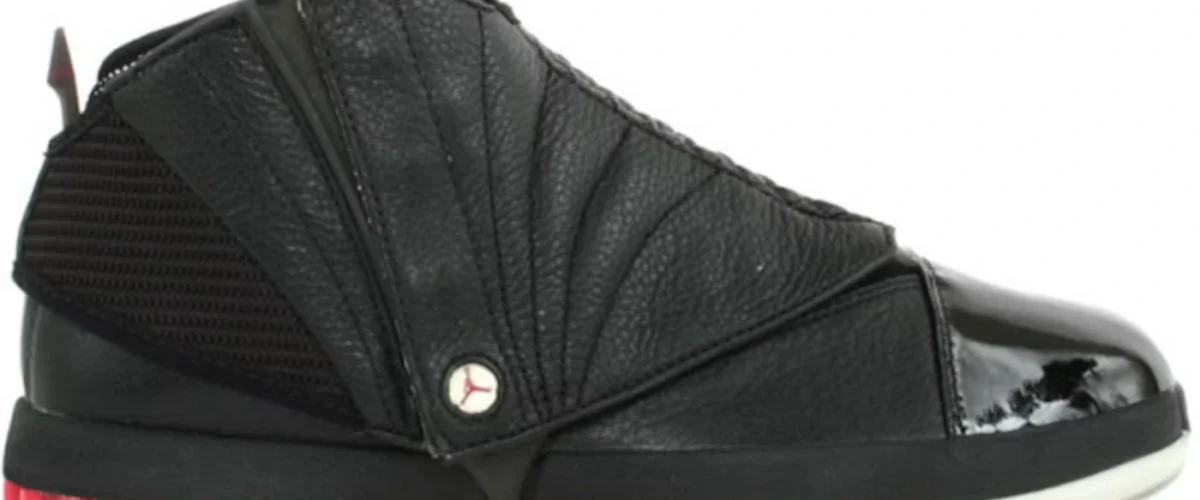
The Air Jordan 16 makes transformation visible. With its removable cover attached, the shoe has a more enclosed, dressed-up appearance; without it, the lacing and underlying basketball construction are exposed. That two-part identity is the best starting point for the model’s history. It also explains why a photograph of only one configuration tells an incomplete story.
A new designer for the 2001 model
The Air Jordan 16 launched in 2001, with Wilson Smith III credited as designer. Smith’s development work took place with guidance from Tinker Hatfield, but that does not erase Smith’s lead design credit.
The removable shroud
The lace cover, often called a shroud or gaiter, is the model’s distinguishing feature. The concept bridges court performance and a more formal appearance. Patent-leather accents and translucent outsole elements also connect the design with earlier Jordan vocabulary. The cover changes what the viewer sees without creating a separate numbered model.
The basketball construction underneath
The original technical package combined Zoom Air in the forefoot with a blow-molded Air unit at the heel. Mesh and the underlying lacing remain important parts of the design even when concealed. A complete explanation should therefore show the shoe both with and without the cover, rather than allowing the accessory to stand in for the entire product.
Three original 2001 colorways
Black/Red. Black/Varsity Red launched in February 2001. Its dark upper and glossy toe make the shroud silhouette especially clear. The familiar palette links it visually to earlier signature shoes, even as the removable layer gives the 16 a different structure.
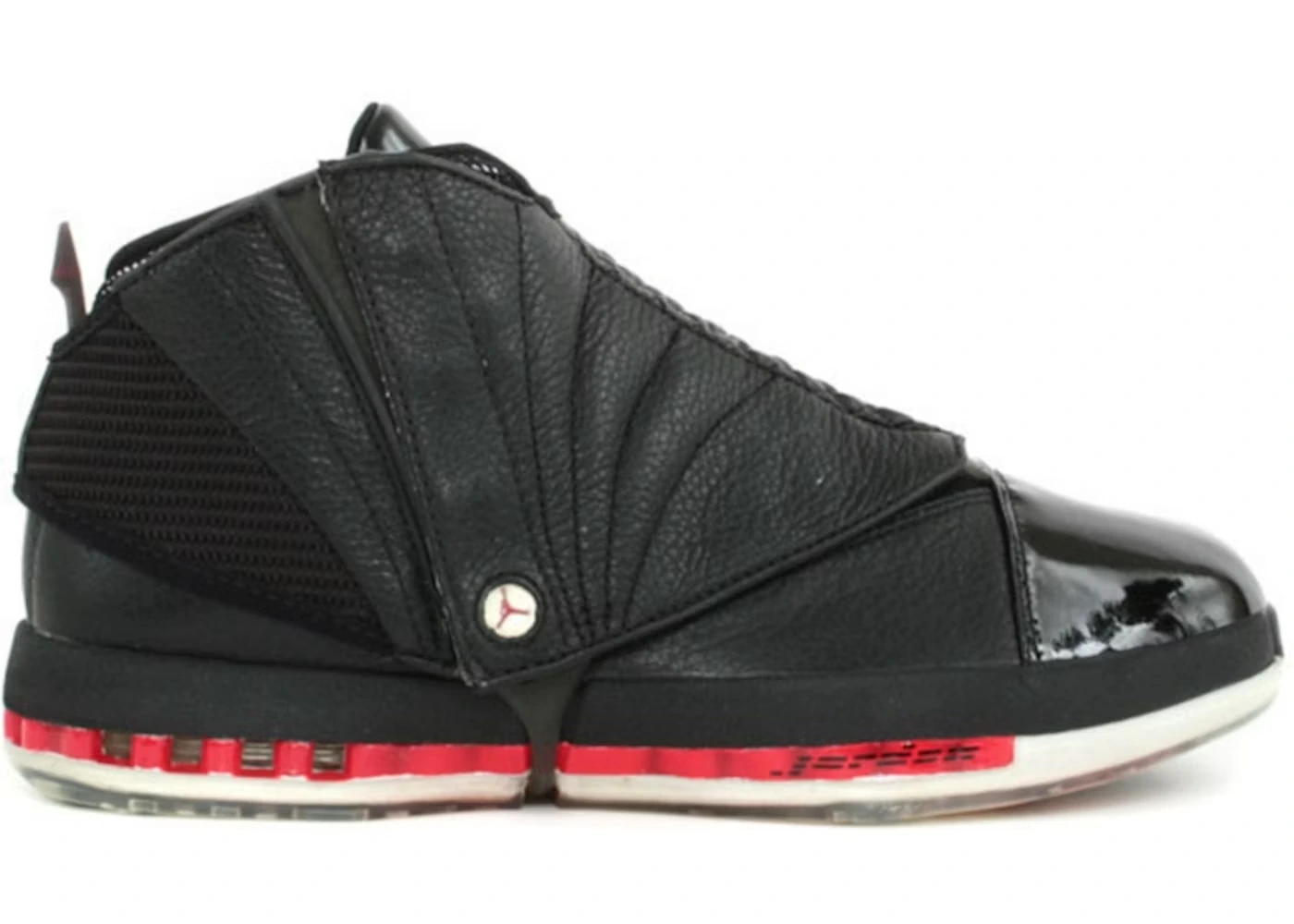
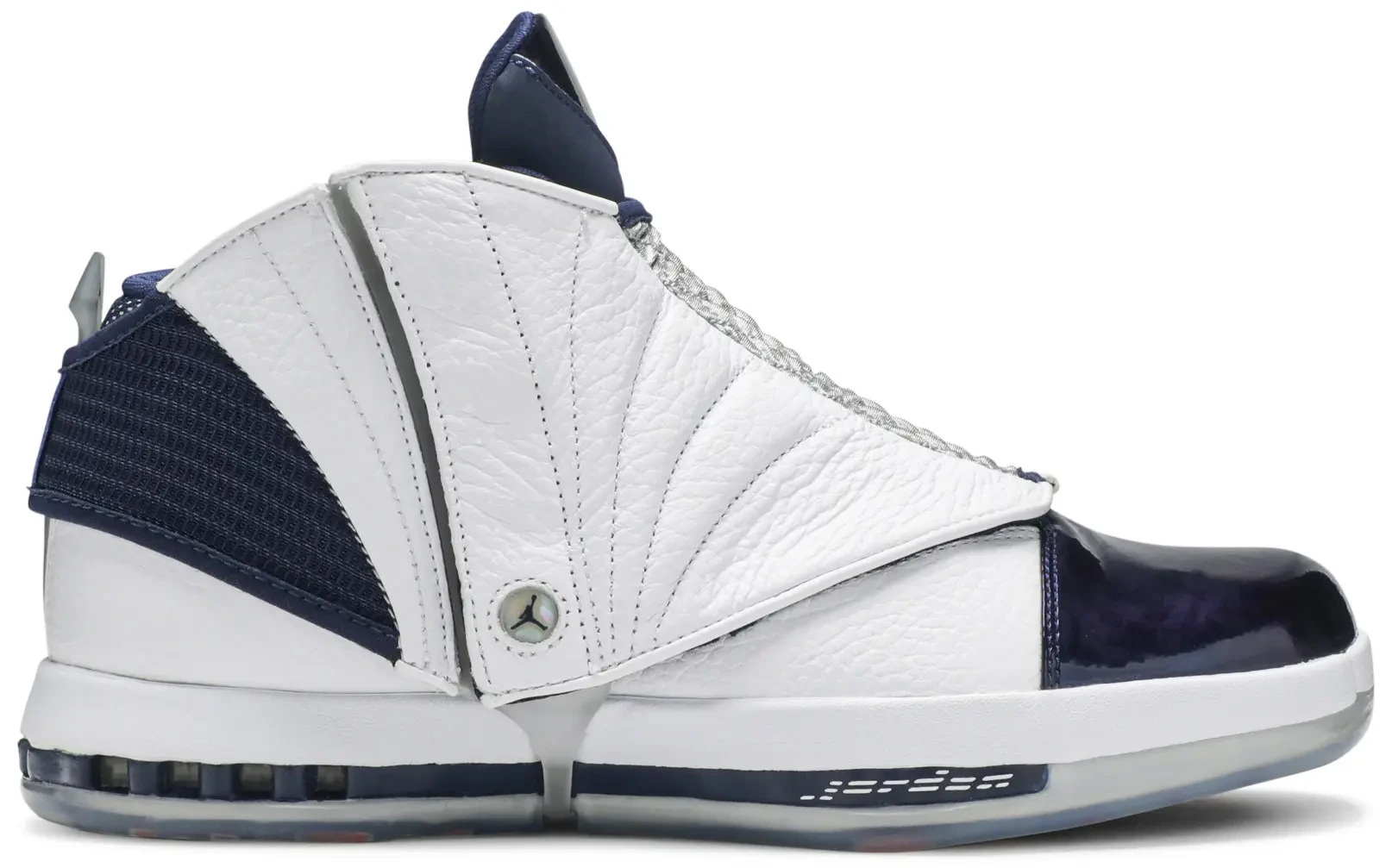
Midnight Navy. White/Midnight Navy followed in March 2001. Navy on the patent toe and lower areas contrasts with the white upper. It is an original-year release, not a later Wizards-themed color created after the model’s launch. Its date is useful when separating design development from Jordan’s eventual return to playing.
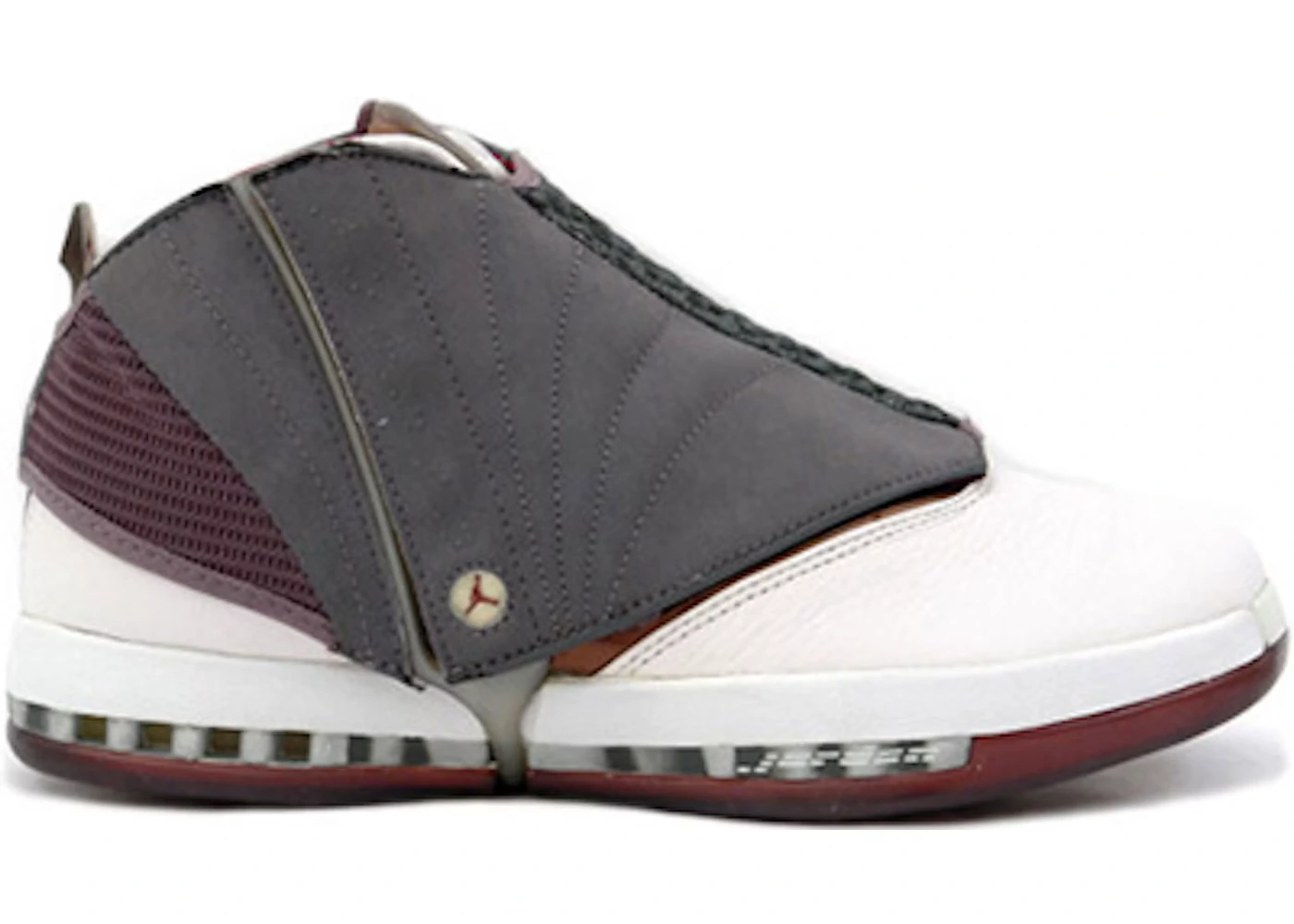
Cherrywood+. Whisper/Cherrywood–Light Graphite arrived in June 2001. It is part of the original-year catalog, with a different material treatment: the toe is leather rather than the patent finish seen on the first two selections. The plus designation matters because it signals a variation within the model family.
Original does not mean identical
The original lineup also included Light Ginger+, as well as two Low versions. A history that assigns patent leather to every Air Jordan 16 overlooks those variations. The correct level of description depends on the question: some features define the model concept, while others belong to a particular color, cut or edition.
The executive-to-player transition
Jordan returned to playing for Washington in the 2001 preseason. The 16’s launch earlier that year places it between his executive role and his next chapter on court.
Later returns and reinterpretations
The Midnight Navy retro returned in 2016, giving readers a later edition to distinguish from the 2001 original. A separate Nike release, the Why Not? x Converse pack, used the 16 to express Russell Westbrook’s relationship between performance and personal style. That collaboration is a later reinterpretation, not part of the original palette.
Two looks built into one shoe
With the shroud attached, a large uninterrupted surface takes over the profile. Removing it reveals the smaller divisions of the lacing and mesh underneath. The transformation is immediately visual: the same sole and toe remain, but the upper shifts from a covered object to an openly layered basketball shoe.
Cherrywood+ adds another dimension to that idea. Its less glossy toe changes how the covered shoe looks even before the shroud comes off. Alongside Black/Red and Midnight Navy, it shows that the original collection explored finish as well as color. The removable component is the common thread, rather than a promise that every pair is materially identical.
Why the 16 deserves its own chapter
The 16 is more than an interval between two better-documented playing seasons. It explores a practical design question: can a removable element change the social reading of a basketball shoe? The answer is visible in the product itself. That makes authorship, construction and the diversity of the original collection central to its history, alongside Jordan’s changing career.
Mid and Low: first releases and colors
The Mid began with Black/Varsity Red in February 2001. The Low joined the same year, first in White/Black–Varsity Red on August 4. Black/Black–Metallic Silver followed September 29. The Low is therefore part of the model’s original retail year, rather than a cut introduced during a later retro campaign.
Frequently asked questions
What is the removable cover called?
It is commonly called a shroud or gaiter and covers the lacing area.
Is Cherrywood+ an original release?
Yes. It belongs to the 2001 original-year catalog.
Do all Air Jordan 16s have patent-leather toes?
No. Cherrywood+ is an original example with a different leather treatment.
Is the Why Not? pack part of the OG collection?
No. It is a later collaboration linked to Russell Westbrook.
Sources
Nike Air Jordan 16 archive · Sneaker Files Air Jordan XVI history · Original Air Jordan XVI: Black/Red · Original Air Jordan XVI: Midnight Navy · Original Air Jordan XVI: Cherrywood+ · Sneaker Freaker: Creating the Air Jordan 16 · Sneaker Files: first original XVI Low · Sneaker Files: second original XVI Low.