The Jordan 6 Rings combines seven championship-era models. Explore its 2008 debut, original-year colors and the logic behind its hybrid design.
A championship story assembled in 2008
The Jordan 6 Rings debuted in 2008 as a hybrid celebrating Michael Jordan’s six NBA championships. It combines references to the AJ6, AJ7, AJ8, AJ11, AJ12, AJ13 and AJ14. No individual lead-designer credit is established by the sources consulted, so the model is attributed here to Jordan Brand.
The premise is different from a numbered signature shoe introducing the next stage of an athlete’s career. The 6 Rings looks backward and assembles a memory. Its identity comes from the selection of familiar elements and the way they are brought into one outline. That makes the shoe a compact visual account of the championship years rather than a replacement for any one of its source models.
Why six rings require seven shoes
The six titles arrived in 1991, 1992, 1993, 1996, 1997 and 1998. The final championship includes both the AJ13 and AJ14, explaining the seven-model recipe. The number in the name counts championships; it does not count the pieces being combined.
That distinction gives the design an unusually specific organizing idea. A hybrid can be built around whatever parts seem visually compatible, but this one starts with a sporting theme. Its source material is limited by the story it wants to tell. Not every famous Jordan appears, and the omissions are part of the logic.
The result is also a reminder that an athlete’s season and a shoe’s model number are not a perfectly synchronized timeline. Sporting history contains transitions. The 6 Rings turns one of those transitions into a reason to include an extra design reference.
Reading the seven references
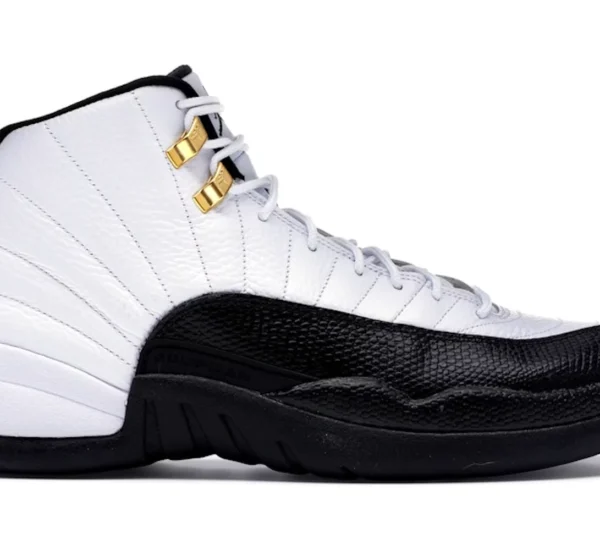
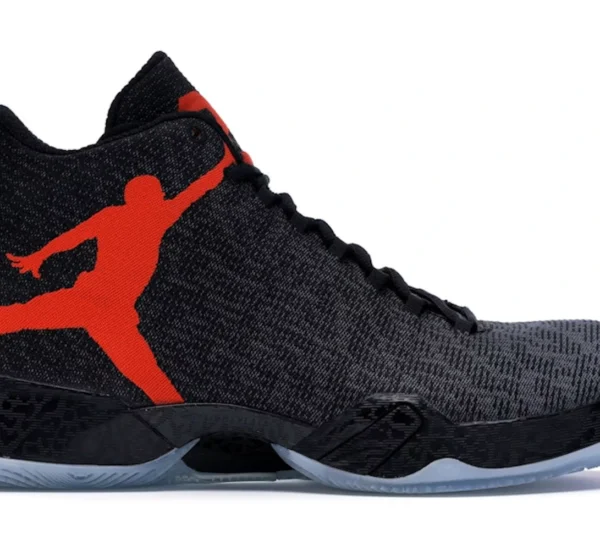
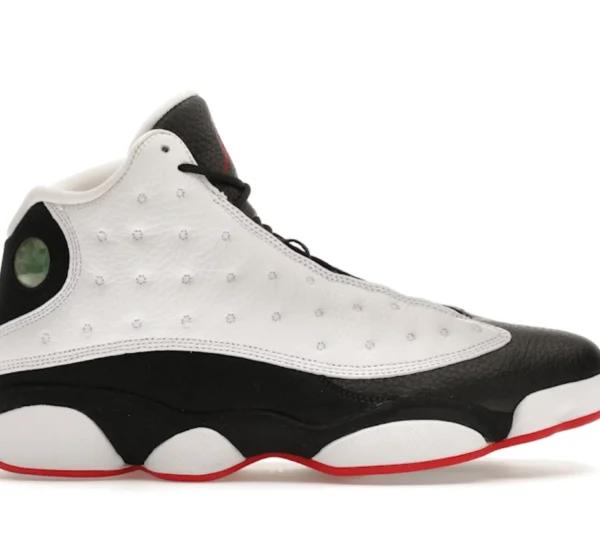
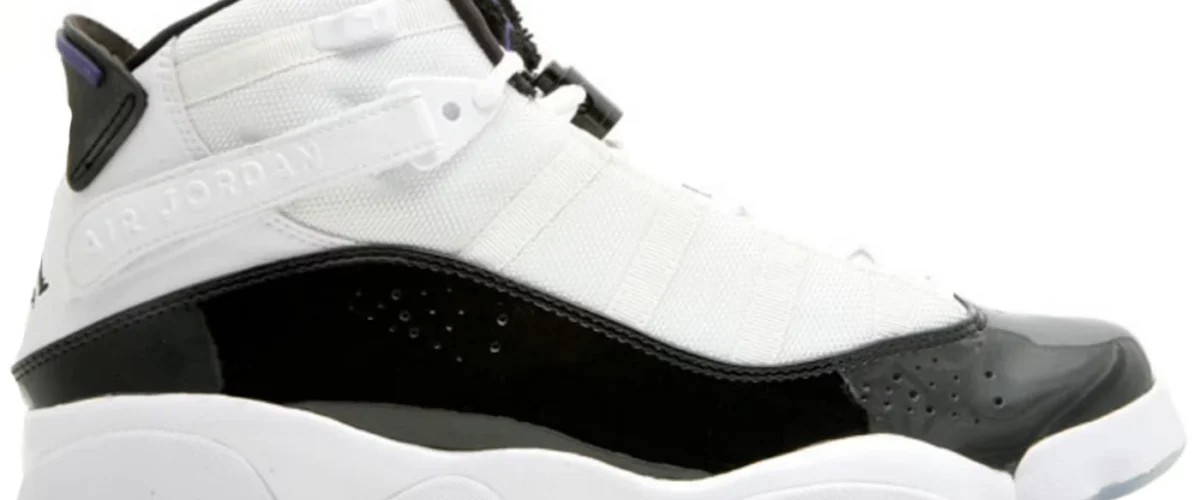
The AJ6 contributes the lace lock and heel loop; the AJ7, the inner-sleeve idea; and the AJ8, the textured tongue emblem and strap. The AJ11 informs the upper’s outline, the AJ12 the TWO 3 detail and upper lace hardware, the AJ13 the outsole, and the AJ14 the small forefoot-area Jumpman.
The larger shapes carry the first impression, while the smaller elements reward a second look. That hierarchy is important. If every reference competed at the same visual volume, the silhouette would become difficult to read. The broad upper and substantial base provide an organizing frame for details that would otherwise feel unrelated.
It is useful to look at the shoe from more than one angle. A side photograph emphasizes the flowing upper, but a front view brings the tongue and closure system forward. The outsole adds another layer. The design is therefore less like a single borrowed panel and more like a collection of recognizable gestures assembled around a shared body.
Three documented first-year colorways
The 2008 calendar records Black/Varsity Red-White in August, the Olympic White/Varsity Red-Midnight Navy-Metallic Gold in September, and White/Dark Concord-Black in October. These are three documented first-year releases, not a claim that only three colors existed or that all launched together.
The black-and-red scheme gives the dense construction a cohesive, dark profile. Olympic introduces a different balance, with a light base and several contrasting accents. Concord makes the upper’s light-and-dark separation particularly noticeable. Each demonstrates how color can either unify the borrowed details or make their boundaries easier to see.
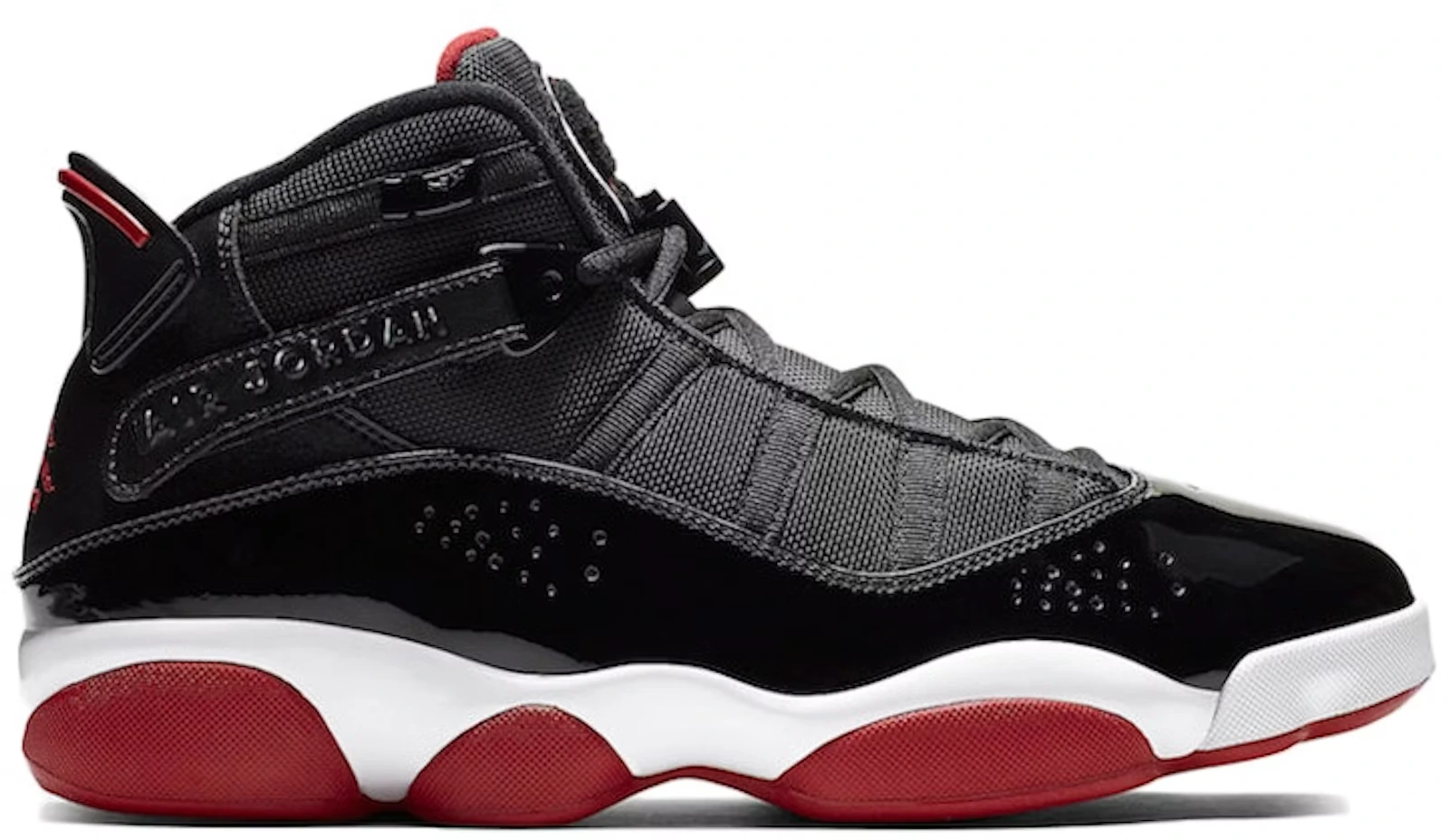
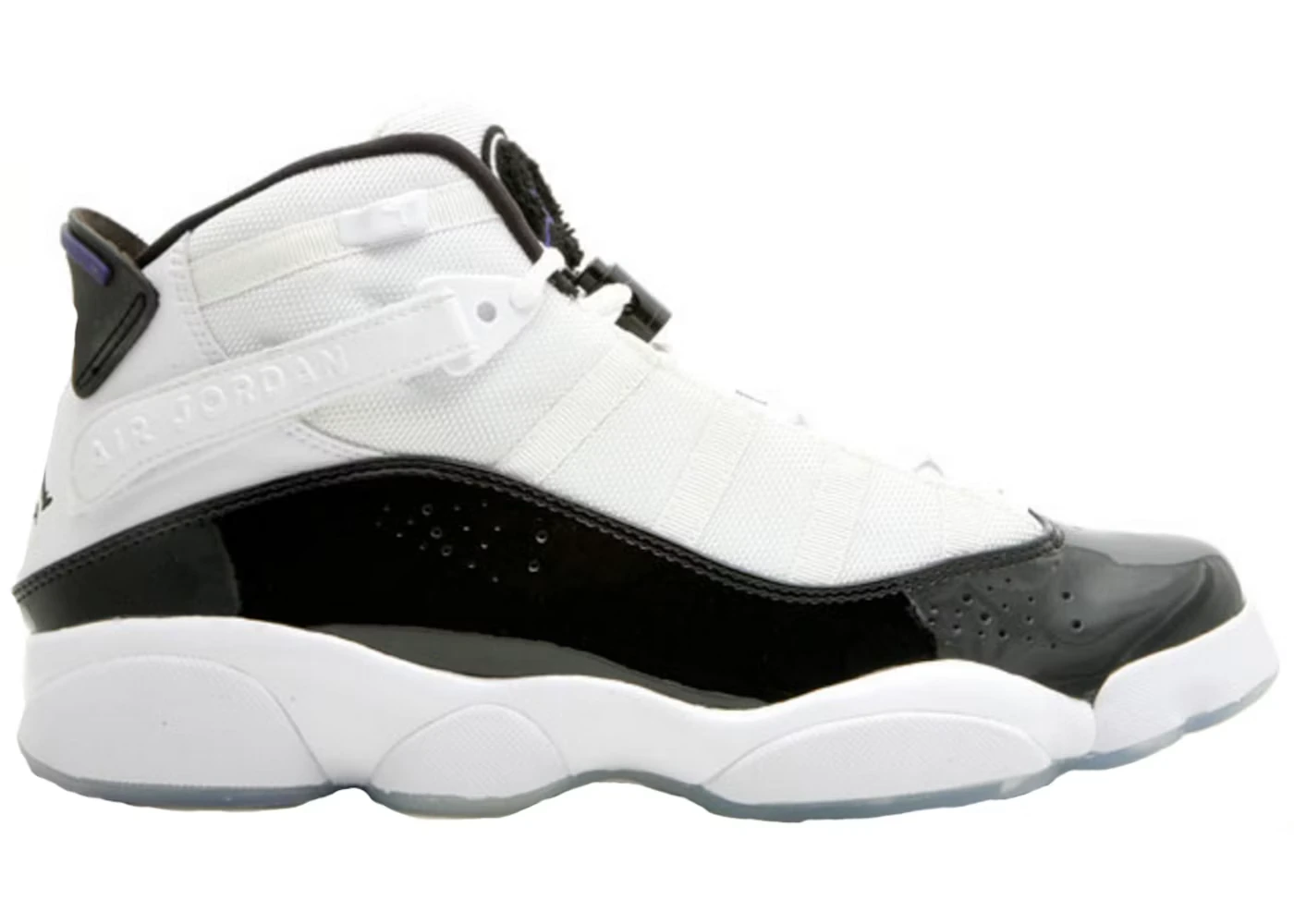
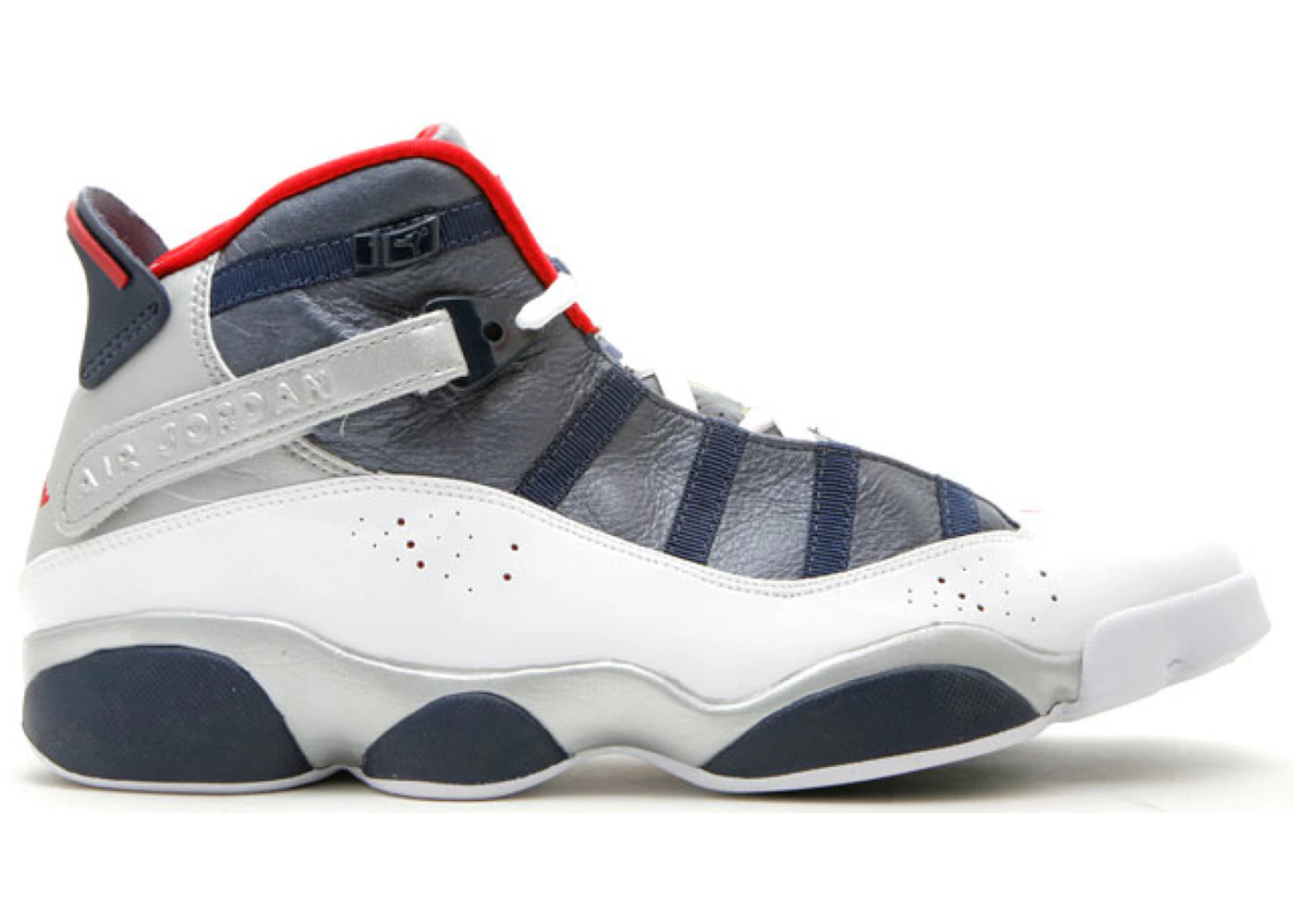
A familiar nickname should not collapse the hybrid into the signature model that popularized a palette. A Concord 6 Rings remains a 6 Rings. Its color association is one part of its identity, while the strap, tongue, heel and sole preserve the hybrid composition.
Later colors and the family’s own identity
Later releases include championship-opponent themes and other interpretations. Nike describes the 6 Rings through its championship references and Zoom Air cushioning. Those descriptions establish a continuing product family; they do not make every later material combination identical to the first run.
The most interesting question is what happens when an assembled design becomes recognizable on its own. Once the overall outline is familiar, the viewer does not need to identify every source shoe to recognize a 6 Rings. The collage acquires its own silhouette. That is the point at which a hybrid can be discussed as more than a checklist of borrowed components.
Its relationship with the numbered line remains important, but it is not subordinate in the simple sense of being a damaged or incomplete version of another shoe. It is a different design exercise: editing an existing vocabulary into a commemorative object.
Mid and Low: keeping the names precise
The base 6 Rings has a substantial ankle profile, and retailers may describe its height in different ways. That descriptive wording does not establish a separately launched Mid generation. No independently documented Low debut and first Low colorway are established in this history.
For collectors, the practical sequence is straightforward: identify the family, then the release year, color blocking and specific version. That approach preserves the distinction between a genuine product branch and an informal listing label. It also leaves room to appreciate the shoe without making its significance depend on an invented chronology.
The enduring idea of the 6 Rings is the act of compression. Several championship memories become one object, with enough familiar detail to reward recognition and enough shared structure to function as a design in its own right.
Frequently asked questions
Why does the 6 Rings combine seven Jordans?
The final championship story includes both the AJ13 and AJ14; the name counts six titles, not six models.
Did Michael Jordan win his titles wearing the 6 Rings?
No. This 2008 hybrid commemorates earlier championship shoes; it is not the shoe he wore for those titles.
Are the three listed colors a complete original catalog?
No. They are documented releases from the debut year, with separate release windows.