The Air Jordan 1 Mid lives close to one of the most recognizable sneaker shapes ever made. That closeness explains both its appeal and the arguments around it. The outline feels familiar, yet the proportions and particular editions tell another story. Understanding the Mid means separating the beginning of the Air Jordan 1 from the later growth of a family with several cuts and creative directions.
Roots in the early 2000s
Histories trace its development through the early-2000s Retro and Retro+ period. The year 2001 appears in accounts of its beginnings, while the 2003 patent-leather releases provide a particularly clear milestone for the recognizable Mid format. Early product names and later catalog classifications do not align neatly enough to turn that progression into one unquestionable modern launch date.
The modern Mid is a later branch of that design, not the retail model launched under today’s Mid name in Jordan’s rookie era. Nike itself describes the current shoe as a mid-top inspired by the original.
This is a useful distinction rather than a flaw in the story. A product family can develop through revisions before its present-day label becomes familiar. The Mid belongs to the period when revisiting the first Jordan could also mean changing it. Its connection to the original is real, but connection is not the same thing as being an exact reproduction.
What the lower collar changes
The Mid keeps the AJ1’s recognizable arrangement of panels and side Swoosh while changing the upper silhouette. Its collar sits between the Low and the taller High versions. The important visual difference is proportion: the balance between the ankle area, the side panels and the base changes even when the colors resemble another AJ1.
A useful comparison starts with the whole outline, then moves to the tongue, collar and branding. Counting one detail without checking the edition can be misleading, especially across different generations. “High,” “Mid,” “Low” and “OG” describe different aspects of a product name and should not be treated as interchangeable promises.
Nor does collar height alone establish quality or comfort. Those judgments require the materials, construction and fit of a specific pair. A historical relationship can explain the design; it cannot supply a universal wear test for every release that carries the name.
Three early patent palettes, not a 1985 Mid lineup
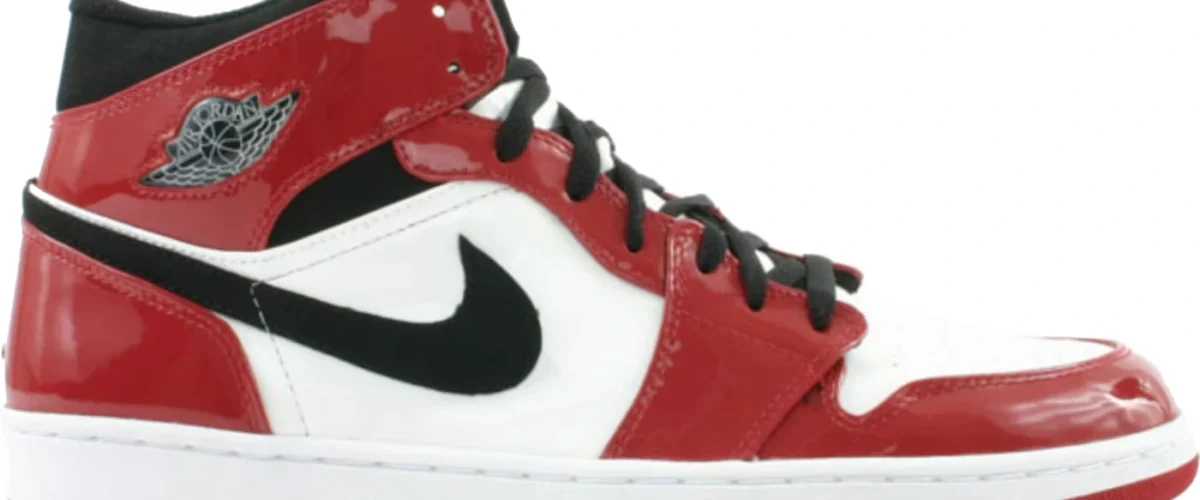
The 2003 patent group offers three useful early landmarks: the light-blue-and-white Carolina treatment, white/red/black Chicago, and Black/Metallic Gold. They document an early direction for the Mid; they should not be presented as three original Mid colorways from 1985.
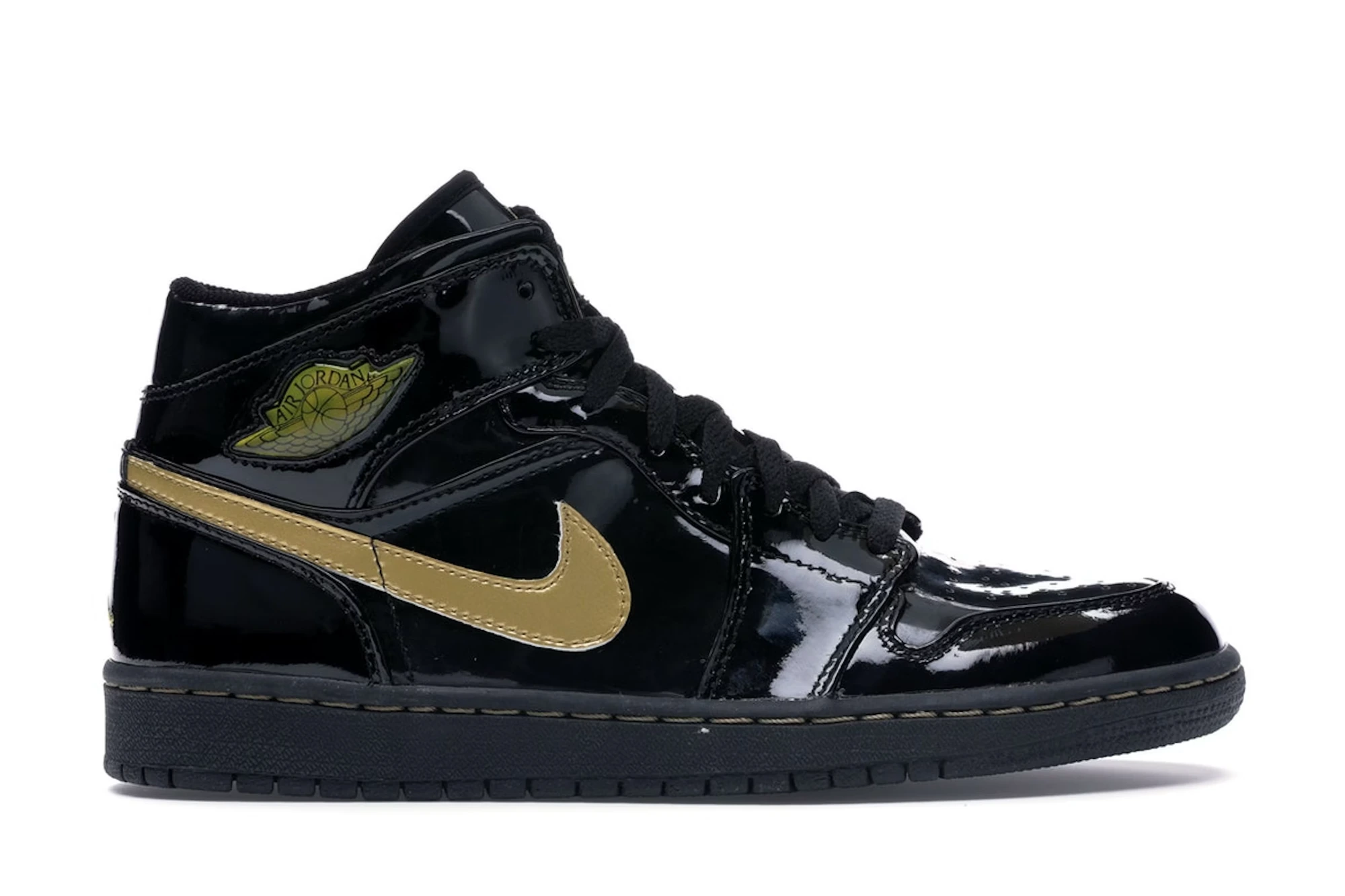
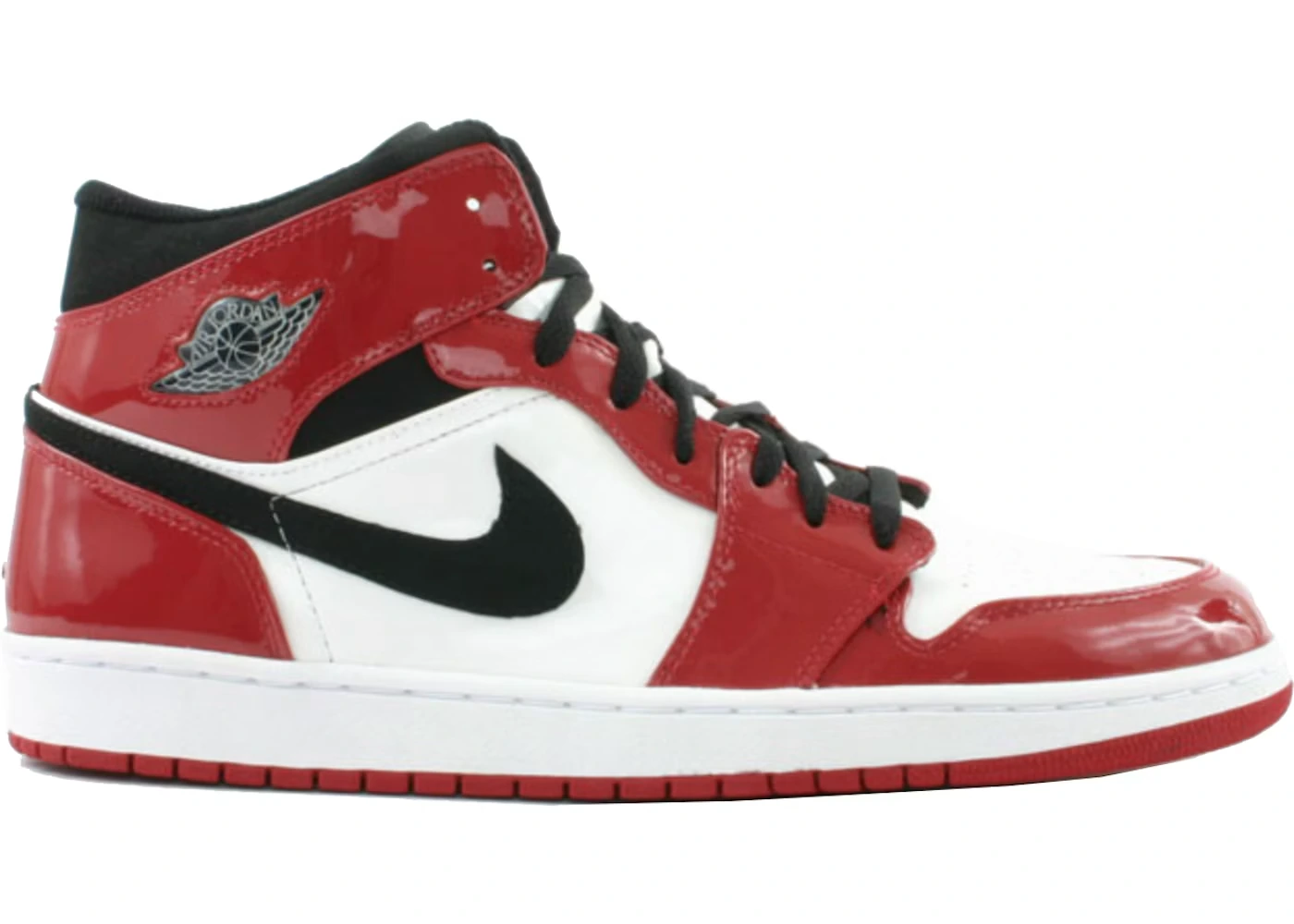
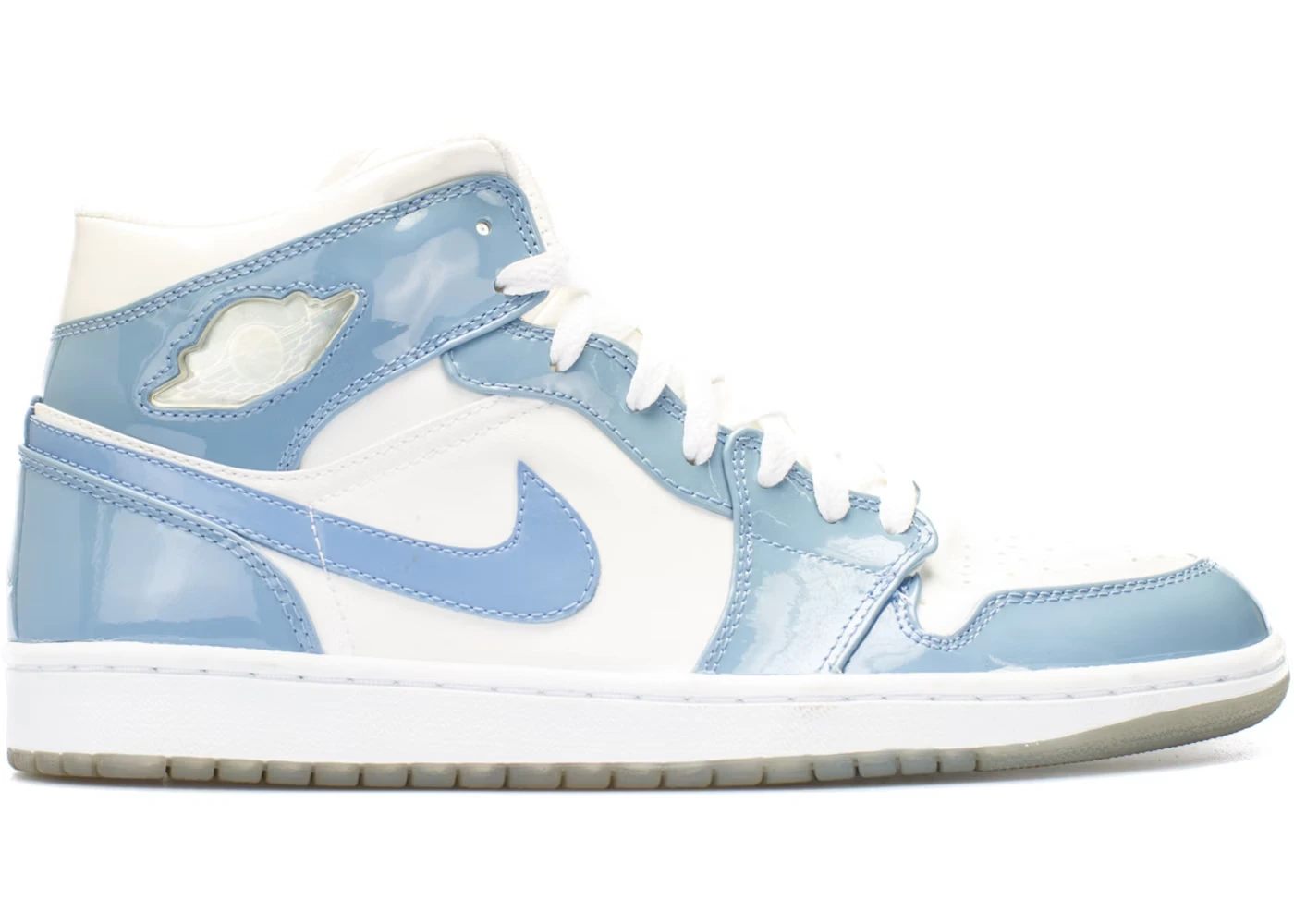
Patent leather changes more than color. Its reflective surface emphasizes the boundaries between panels and makes highlights part of the composition. A familiar arrangement can look more graphic when light catches an overlay and leaves the neighboring panel dark. That material choice helps explain why these releases deserve attention beyond their nicknames.
The three palettes also demonstrate different ways to use the same structure. Blue and white create a lighter contrast, Chicago emphasizes strong alternating panels, and black with gold concentrates attention on brighter accents. These are visual readings, not rankings of rarity or demand.
Later Mid releases often revisit familiar Jordan color language, but resemblance does not turn every edition into an archival reproduction. The placement of color matters as much as the ingredients. A white, black and red shoe can differ substantially from another white, black and red shoe once the toe, heel, collar and Swoosh are compared.
When collaborators made the Mid their own
The 2019 Fearless era demonstrated the Mid’s usefulness as a creative platform. Melody Ehsani’s edition combined a decorative watch-shaped lace ornament with hand-lettered messages and an emphasis on self-expression. Blue the Great worked with suede, corduroy and a multicolor composition. These were interpretations of the silhouette rather than attempts to hide its identity.
The two approaches show why a familiar base can be productive. One directs attention toward an accessory and a message; the other lets texture and adjacent colors carry the design. Neither needs the shoe to imitate a particular game-worn pair. The Mid becomes the setting for a new point of view.
This is also why collaboration history belongs in a whole-model account. It establishes that the silhouette has supported authored ideas, not merely alternate colors. A single collaboration does not define every Mid, but several distinct treatments make it harder to reduce the family to one simple judgment.
Why the debate persists
Arguments about the Mid often mix different standards. Historical fidelity asks how closely a pair follows an early reference. Personal style asks whether its proportions and colors work for the wearer. Availability and price ask practical questions about a particular release. These standards can lead to different answers without one canceling the others.
For a collector focused on reproducing an early AJ1 look, small changes may be decisive. For someone choosing a daily outfit, those same changes may be unimportant or welcome. Calling the Mid inauthentic simply because it is a later variation confuses its place in the family with whether an individual pair is genuine.
Its lasting significance lies in that space between inheritance and revision. The Air Jordan 1 Mid keeps a recognizable design in circulation while allowing different proportions, surfaces and creative voices. It does not need a fabricated rookie-season debut or an invented set of launch colors to have a story worth telling.
Frequently asked questions
What should I check before buying a Mid?
Compare the exact product code, size chart, materials and return policy. Photographs and a familiar color nickname are not enough to judge fit or authenticity.
Does “Chicago” identify one exact Mid release?
No. Use the edition and product code to establish which pair is being described, then compare how its colors are distributed.
Is a collaboration the same as an OG edition?
A collaboration describes a creative partnership. OG describes a relationship to an original design or color, depending on the product and context.