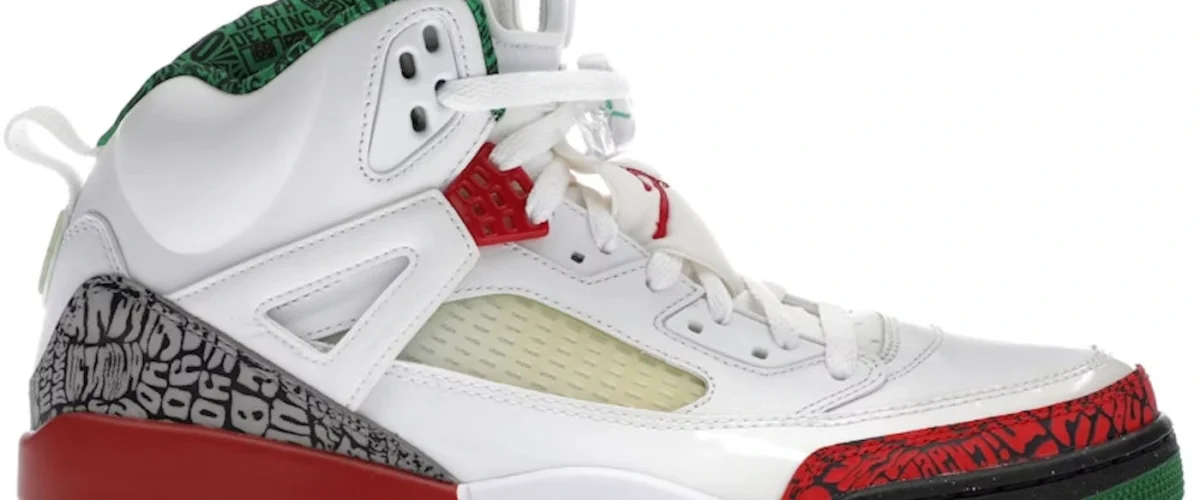
The Jordan Spizike makes its subject visible before you know its name. Different textures, angular supports and a prominent tongue compete for attention, yet the result has a recognizable identity. This is a Jordan built around remembering other Jordans. Its history therefore asks a different question from a numbered signature shoe: how can a design celebrate the people who helped turn basketball footwear into popular culture?
A tribute with its own place in the family
Introduced in 2006, the Spizike celebrated Jordan Brand’s relationship with filmmaker Spike Lee. Lee’s Mars Blackmon character connected his film world with Air Jordan advertising. The shoe belongs to that shared story, rather than to a season in which Michael Jordan needed a new on-court signature model.
That distinction gives the silhouette its purpose. A championship shoe can evoke one game or a single athletic achievement. The Spizike evokes a conversation between an athlete, an entertainer and an audience. Its collage-like appearance suits that idea: the shoe invites recognition, and recognition is part of the pleasure. Knowing one reference is enough to enter the story; knowing several reveals a richer design.
The documented starting point is the Jordan–Lee relationship. It should not be simplified into an unsupported claim that Lee personally designed every component, or that one famous Jordan designer can automatically receive sole credit for the finished hybrid.
How the hybrid is assembled
The core references are III sole and elephant print, IV lace wings, V upper and netting, VI tongue, and XX lining graphics. Some histories add an IX-related heel detail; Nike describes five classic Jordans. The distinction is between the main design formula and a more granular component inventory.
The useful way to read these references is from the ground upward. A substantial base anchors the composition; textured panels interrupt smoother surfaces; the side supports pull the eye toward the laces. Above them, the tongue creates a strong vertical accent. These parts do not disappear into a neutral whole. Their visibility is the point.
That also explains why a Spizike is not simply another name for an Air Jordan 3 or 4. Recognizing a borrowed piece does not identify the whole shoe. The arrangement, proportions and dialogue between the references create a separate model, much as a sample can become part of a new musical composition.
The first colors and the early expansion
The first Spizike used White/Varsity Red–Classic Green. Its white foundation and contrasting accents established a lively starting point rather than a quiet imitation of one numbered Jordan. The original palette returned in 2014, which is a separate release chapter from the first production.
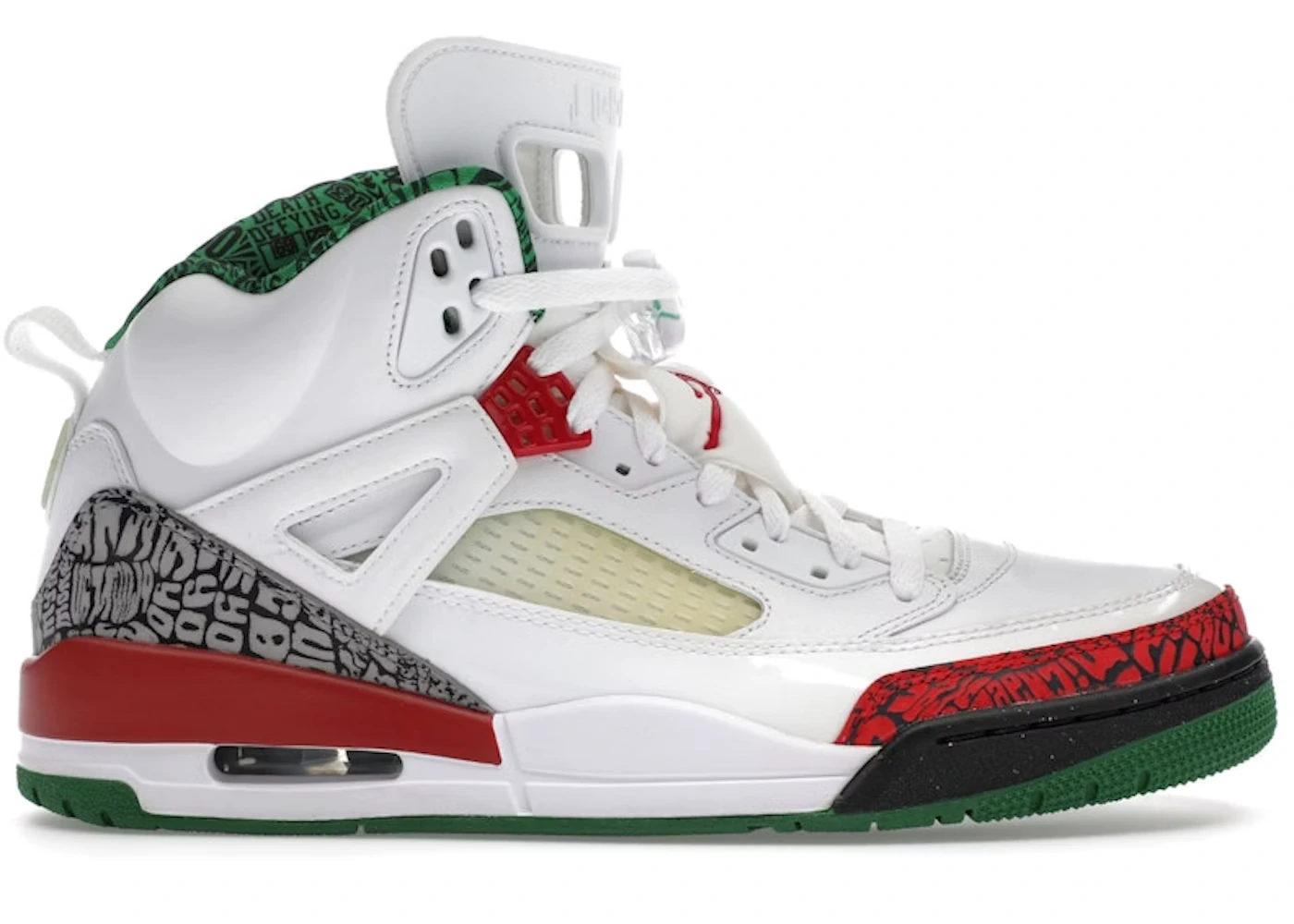
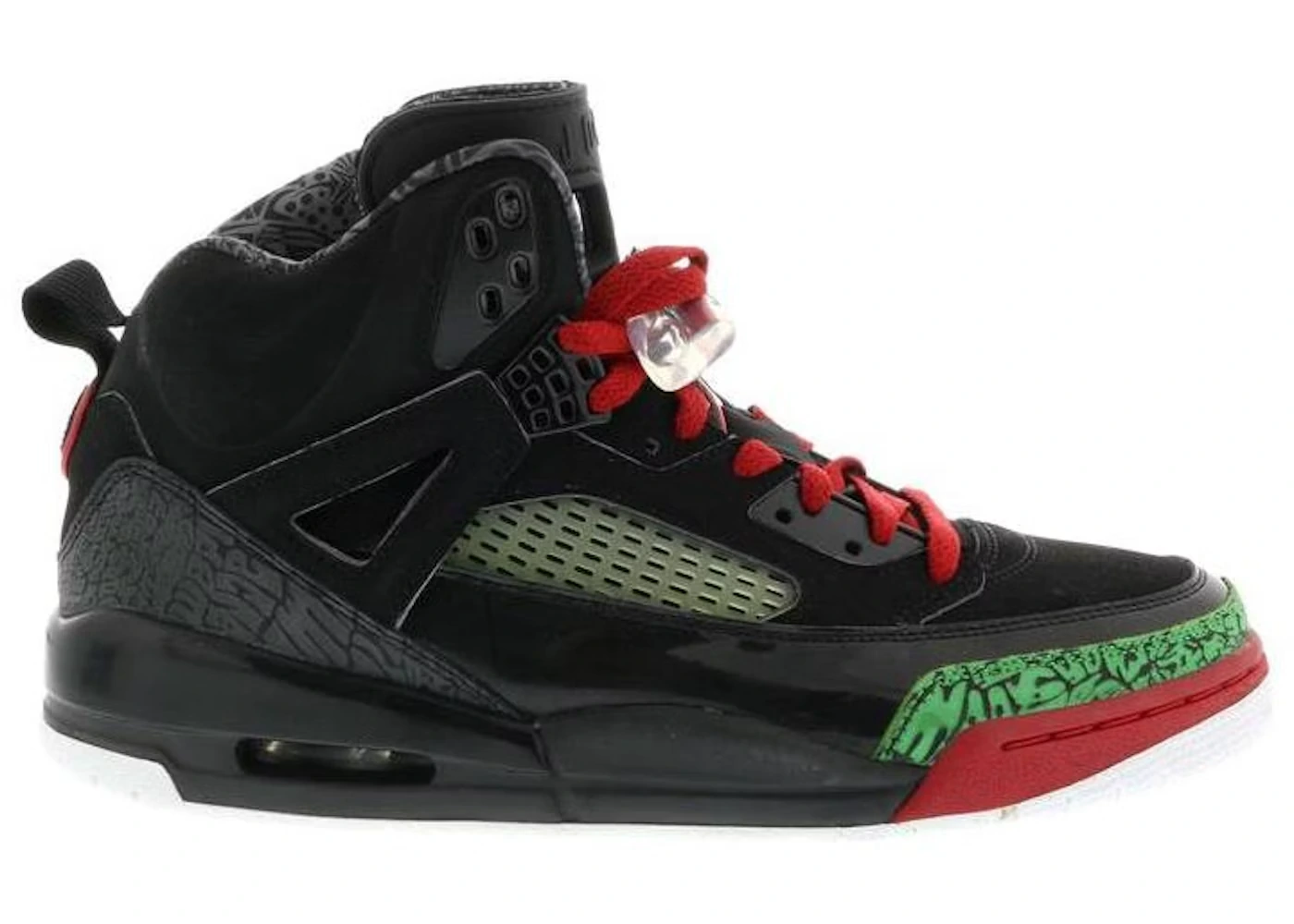
Black/Varsity Red–Classic Green followed in early 2007. Changing the dominant surface from white to black changes the visual weight of the same idea: the colored details appear more isolated, while the silhouette reads as a denser object.
White/Cement Grey–Black, commonly called Cement or White Cement, arrived later in 2007. It is an important early colorway, but its familiar Jordan vocabulary does not make it the first Spizike. Together, these three examples explain the early range; they are not three simultaneous launch colors.
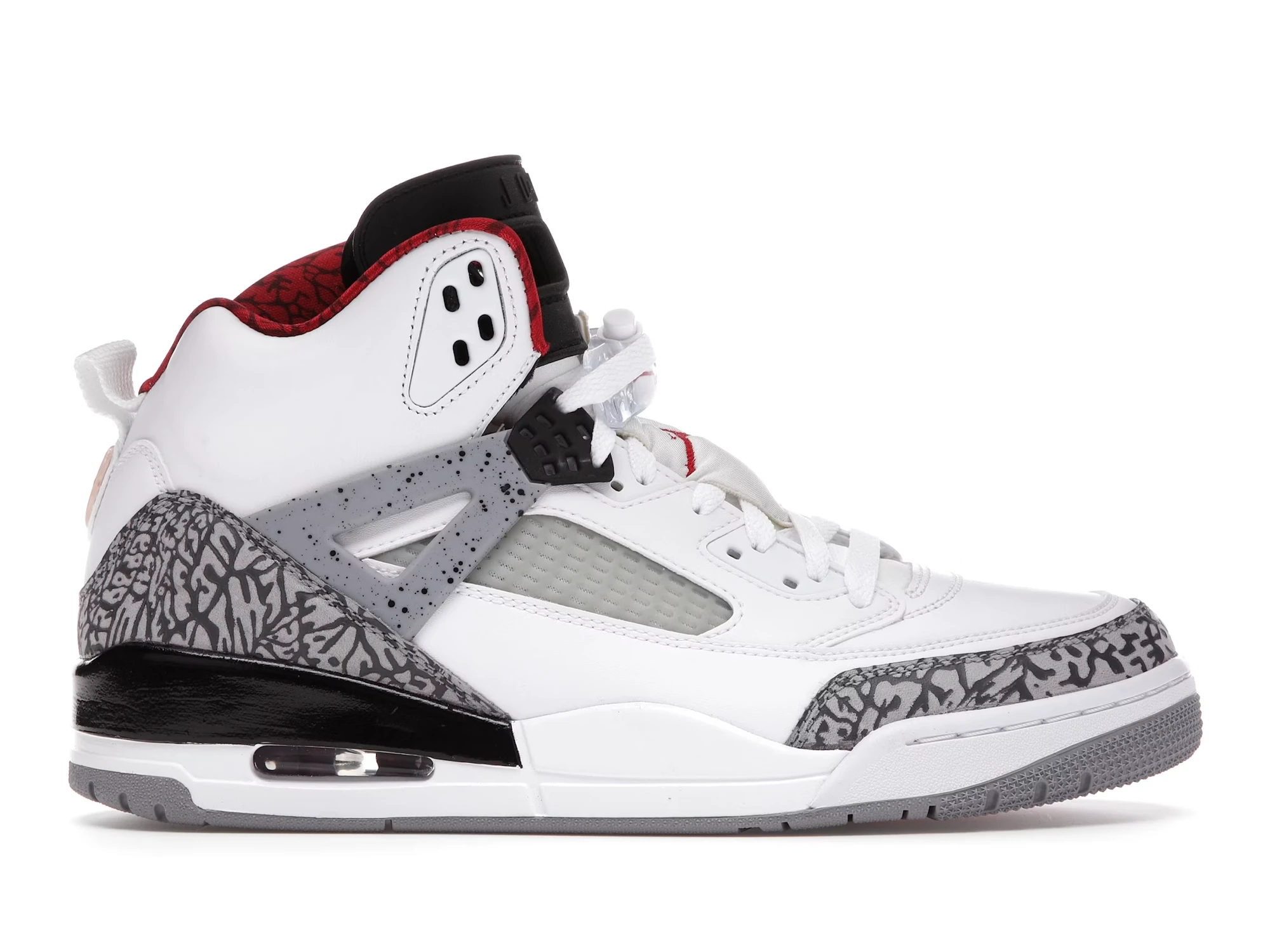
When comparing listings, separate design history from the age of the object. Check the product code and production period before treating two similarly named pairs as equivalents. A useful description should make that distinction easy to follow, with clear photographs and information about the actual edition.
A remix that invites disagreement
The design sets up a genuine aesthetic tension. Someone who values a clean, unified outline may find the multiple references distracting. Someone who enjoys visible construction and layered memories may see that same density as its strongest quality. Neither reaction requires pretending the shoe lacks a history.
The Spizike also challenges a narrow definition of what counts as a meaningful Jordan. Its relevance comes from a cultural partnership and a method of design, rather than from a new number in the signature sequence. Evaluating it only as a substitute for another shoe misses the specific question it was created to answer.
The Low opens another chapter
The Spizike Low arrived in 2024. The earliest retail release documented here is Year of the Dragon, FJ6372-100, listed for January 24 in the United States. Its palette combined Sail, Oil Green and Dark Team Red with gold accents. Football Blue and Bred followed in the opening season. Regional calendars differed; these are Low releases, not 2006 originals.
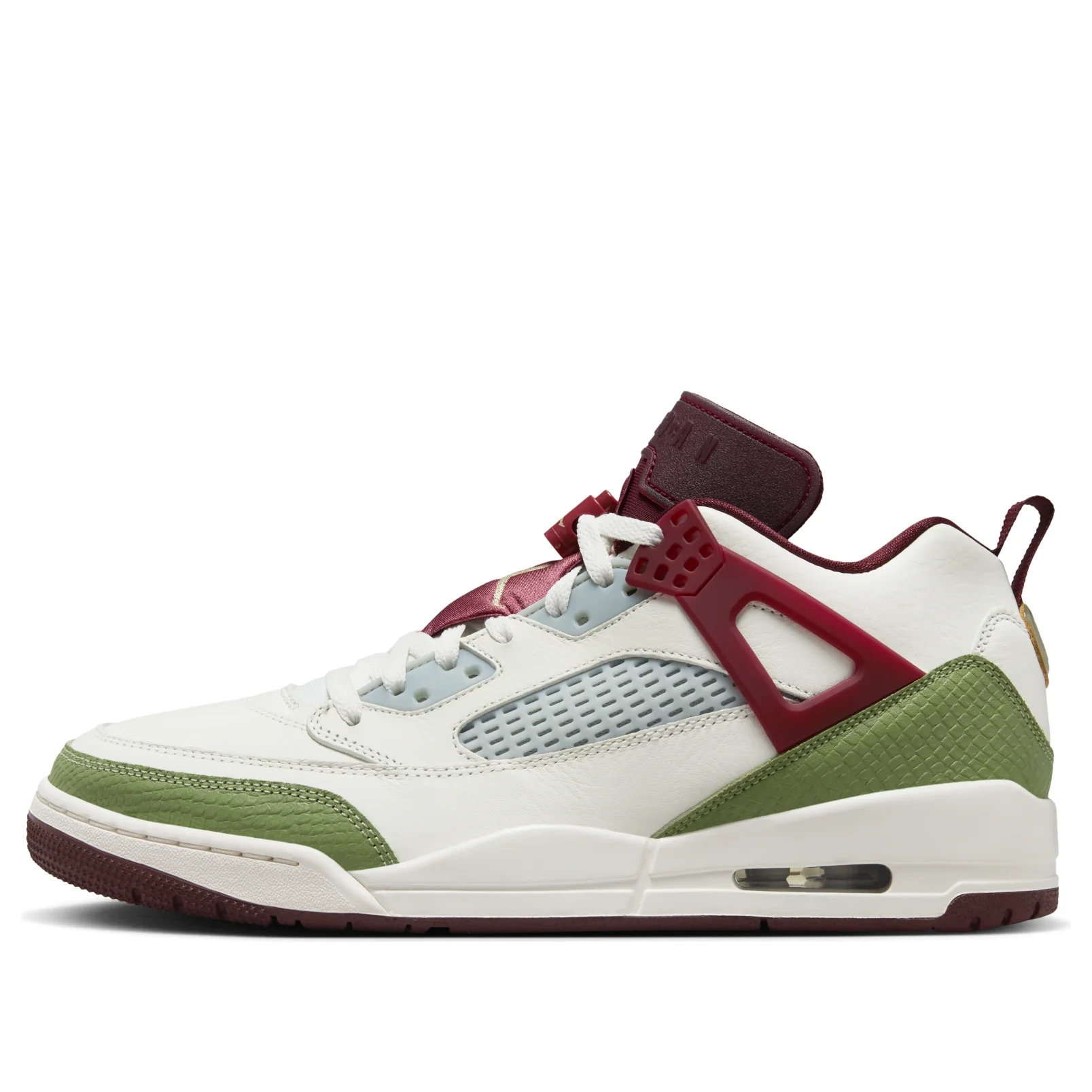
Changing the collar alters the balance of the entire object. More attention falls on the base and the concentration of detail across the front and sides. A familiar color on this altered shape can therefore produce a different visual result. “Low” is more than an extra word on the box when comparing generations.
For a present-day pair, inspect the exact edition, its materials and its condition. A model history cannot establish how every release will fit, how a vintage pair has aged or whether an individual listing is authentic. Those are pair-specific questions. The enduring appeal of the family is easier to define: it turns recognition into design and gives the Jordan–Spike Lee relationship a wearable form.
Frequently asked questions
How should I compare two Spizike listings?
Start with the cut, product code and production period. Then compare the color placement, materials and photographs of the actual pairs.
Does a familiar Jordan color make a Spizike an OG?
A borrowed palette and an original release are different ideas. Check whether the seller means the model’s first color or a reference to another Jordan.
Is the Low interchangeable with the earlier silhouette?
Treat them as different versions of one family. Compare the overall shape and collar before deciding whether they offer the look you want.