SE usually means Special Edition in Nike product naming. The letters identify a particular edition of a model, but they do not create a universal promise of rarity, premium materials, higher quality, or limited production.
That distinction matters because Nike uses SE across very different product categories. You can find SE on lifestyle classics such as the Air Force 1 and Dunk, on Jordan models, and on performance products such as the Structure 26 running shoe.
The most useful way to read SE is therefore simple: this version has been given a special-edition treatment. To understand what is actually special, you have to inspect that specific release.
Color, materials, graphics, branding, packaging, or storytelling may change. Sometimes the performance platform stays almost identical to the standard model. Sometimes only the visual execution changes. SE describes the edition—not a fixed technical formula.
What Does SE Mean at Nike?
SE stands for Special Edition. Nike currently uses the wording directly in product copy for models carrying SE in their names.
A strong 2026 example is the Nike Structure 26 SE. Nike calls it a “special edition Structure 26” and lists a “special edition color design” while retaining the model’s ReactX midsole and midfoot-support system.
That product is useful because it removes a common misconception: SE is not limited to casual sneakers.
The letters also appear on Nike Sportswear and Jordan products, where the changes may center on color, materials, or branding.
For more naming codes used across Nike and sneaker culture, see the Sneakerhead Dictionary.
What Does “Special Edition” Actually Tell You?
Special Edition tells you that Nike is distinguishing this execution from another version of the same or related model.
What it does not tell you is exactly how that distinction was created.
The change may be cosmetic, material-based, thematic, seasonal, performance-related, or a combination of those factors.
That is why the product page is more informative than the suffix alone.
- SE can identify a distinct color treatment.
- SE can identify different materials.
- SE can identify special branding or graphics.
- SE can identify a themed or seasonal execution.
- SE can appear on lifestyle footwear.
- SE can appear on performance footwear.
- SE does not establish a universal rarity or quality tier.
What Can Change on a Nike SE?
Colorway and Branding
Color is one of the easiest ways to differentiate an SE from a standard release. Nike can use unusual combinations, metallic finishes, contrast stitching, patterned liners, or seasonal palettes.
Branding may also be modified through tongue labels, heel marks, lace charms, Swoosh treatments, or special graphics.
Those details are release-specific. They should be described from the actual product rather than assumed from the letters SE.
Materials
Some SE products use material combinations that differ from a standard version.
A Nike Dunk Low SE, for example, can combine suede and textiles instead of relying on the exact material mix of another Dunk release.
An Air Force 1 SE can also receive patent leather, textured panels, or other visual material treatments depending on the edition.
That does not create a rule that every SE uses “better” materials.
Material choice, material quality, durability, and collector preference remain separate questions.
Design Details
SE versions can add details that make the edition easy to distinguish without changing the entire silhouette.
Examples include special sockliners, graphics, lace hardware, reflective elements, contrast textures, or release-specific embroidery.
A small design difference can justify a separate edition even when the basic tooling remains familiar.
Does SE Mean the Sneaker Is Higher Quality?
No universal rule says that.
Some SE products may use materials or finishing that buyers prefer. Others may simply use different colors or graphics.
Quality also has several meanings: material feel, stitching consistency, durability, performance, and long-term wear are not the same thing.
Nike does not present SE as a universal factory grade above ordinary releases.
Evaluate the exact product rather than assuming the suffix is a quality score.
- SE does not guarantee premium leather.
- SE does not guarantee better stitching.
- SE does not guarantee greater durability.
- SE does not guarantee more cushioning.
- SE does not guarantee a higher resale value.
- SE does not guarantee fewer manufacturing defects.
Does Every Nike SE Use Premium Materials?
No.
Some Special Edition sneakers do use distinctive or premium-feeling materials, but that is a characteristic of the release, not the definition of SE.
Nike can create an SE through color alone.
It can also use graphics, reflective details, different textiles, or special branding.
The Structure 26 SE demonstrates this clearly: Nike emphasizes a special-edition color design while the shoe remains a technical running model built around ReactX and stability support.
If material quality matters to your purchase, read the product description and inspect the pair instead of treating SE as shorthand for PRM.
Does Special Edition Mean Limited Edition?
No. “Special” and “limited” are different ideas.
A Special Edition may be produced for a particular season, theme, or execution without Nike publishing any production limit.
Some SE releases can become difficult to find after selling through.
Others can remain available for long periods or receive broad distribution.
The letters SE do not tell you how many pairs were manufactured.
Unless Nike or another reliable source documents a quantity, avoid converting “Special Edition” into “Limited Edition.”
Does SE Mean the Sneaker Is Rare or Exclusive?
Not automatically.
Rarity depends on production, distribution, surviving inventory, size availability, age, and demand.
An SE can be sold across many Nike channels and retailers.
Another SE may have a narrower release. The product history determines scarcity—not the suffix by itself.
Is Nike SE Always More Expensive?
No.
Retail price depends on the model, materials, market, season, and Nike’s pricing decision for that release.
An SE can cost more than a comparable standard version, the same amount, or eventually be discounted below it.
Current sale pricing also changes over time, so price should never be used to reverse-engineer the meaning of SE.
Does SE Automatically Increase Resale Value?
No.
Resale price depends on demand, supply, size, condition, timing, cultural relevance, and the specific model.
A Special Edition label can help identify a desirable release, but it does not force buyers to pay a premium.
If you are evaluating a secondary-market price, use comparable completed sales rather than assuming SE equals profit.
Does SE Exist Only on Lifestyle Sneakers?
No, and this is one of the most important corrections for U.S. search intent.
SE appears on lifestyle footwear, but Nike also uses it on performance products.
The current Nike Structure 26 SE is a road-running shoe.
Nike describes the shoe with full-length ReactX cushioning and a midfoot support system for everyday runs.
The special-edition treatment includes its color design rather than replacing the underlying running platform.
That proves SE is not another word for Nike Sportswear.
Product category must be identified separately from edition naming.
Does SE Mean More Technology?
No.
A Special Edition can retain exactly the same core cushioning or performance system as another version of the model.
Technology may change on an individual product, but SE itself does not promise more Air, more ZoomX, more ReactX, or any other system.
The Structure 26 SE again provides a useful example: the familiar ReactX and stability platform remains central.
Treat the suffix as edition naming, then read the specifications to understand the technology.
Does “Special Edition” Also Appear on Apparel?
Yes. Special-edition naming is not limited to footwear.
Nike can use special-edition language across apparel and accessories when a product receives a distinct treatment or story.
That does not mean every Nike apparel item abbreviated SE follows the same naming pattern as sneakers.
Always identify the category and exact product before interpreting short internal labels.
Four Real Examples Show Why SE Depends on the Product
Nike Air Force 1 ’07 SE
Nike currently sells Air Force 1 ’07 SE variants alongside standard Air Force 1 releases, showing that SE can live inside a long-running lifestyle franchise.
Depending on the edition, the differences can involve materials, color treatments, charms, graphics, or seasonal design details.
The Air Force 1’s underlying identity remains intact; SE tells you to look at what makes that version distinct.
Nike Dunk Low SE
A current Dunk Low SE combines suede and textiles with unique branding and a striped sockliner, demonstrating an edition-specific material and visual treatment.
The product still uses the recognizable Dunk platform. SE describes the execution rather than creating a new silhouette.
Air Jordan 1 Low SE
Jordan Brand also uses SE on Air Jordan 1 Low products.
Those versions can receive distinct materials, colorways, and branding while remaining part of the Air Jordan 1 family.
Again, SE does not tell you whether the pair is limited, rare, or superior without additional evidence.
Nike Structure 26 SE
The Structure 26 SE is the clearest current reminder that Special Edition can appear on performance footwear.
Nike describes a special-edition color design while preserving the road-running model’s ReactX cushioning and stability platform.
SE therefore tells you which edition you are looking at; the performance specifications still come from the Structure 26 itself.
Are SE and PRM the Same Thing?
No.
PRM is widely associated with Premium in Nike naming, while SE means Special Edition.
A Special Edition can use premium-feeling materials without becoming PRM.
A PRM product can use elevated materials without needing SE in its name.
The abbreviations describe different naming ideas.
Neither one should automatically be treated as a guaranteed quality grade.
When both material and edition matter, the product description should explain what actually changed.
Does SE Rank Below SP, QS, or PE?
There is no reliable Nike hierarchy that places SE underneath SP, QS, or PE.
Those codes communicate different ideas.
SP is associated with Special Project naming, QS with Quick Strike/Quickstrike contexts, and PE with Player Exclusive.
A specific release can be rarer or more culturally important than another, but that cannot be derived from an imaginary acronym ladder.
Compare releases, not letters.
Is SE the Same as Nike Sportswear?
No.
NSW means Nike Sportswear, a broad product and merchandising context.
SE means Special Edition and can appear inside or outside lifestyle-oriented products.
The Structure 26 SE is enough to show why those two concepts should not be merged.
Does SE Mean Collaboration?
No.
A collaboration can be a Special Edition, but a Nike SE does not automatically involve another brand, artist, athlete, or retailer.
Many SE products are created entirely within Nike or Jordan Brand.
For actual partnership terminology, see what a sneaker collaboration means.
How Do You Correctly Identify a Nike SE?
Start with the exact documented product rather than guessing from appearance.
The most useful pieces of evidence are:
- Official product name: confirm that SE is actually attached to the model.
- Style code: use it to separate similar colorways and editions.
- Release date or season: distinguish original releases from later versions.
- Product description: identify the color, materials, graphics, or performance details that make the edition special.
- Reliable archive or retailer record: use it when an old Nike page is no longer available.
A sneaker does not become SE merely because it looks unusual.
Does SE Always Appear on the Inside Tag or Box?
No universal rule requires SE to appear in one fixed location.
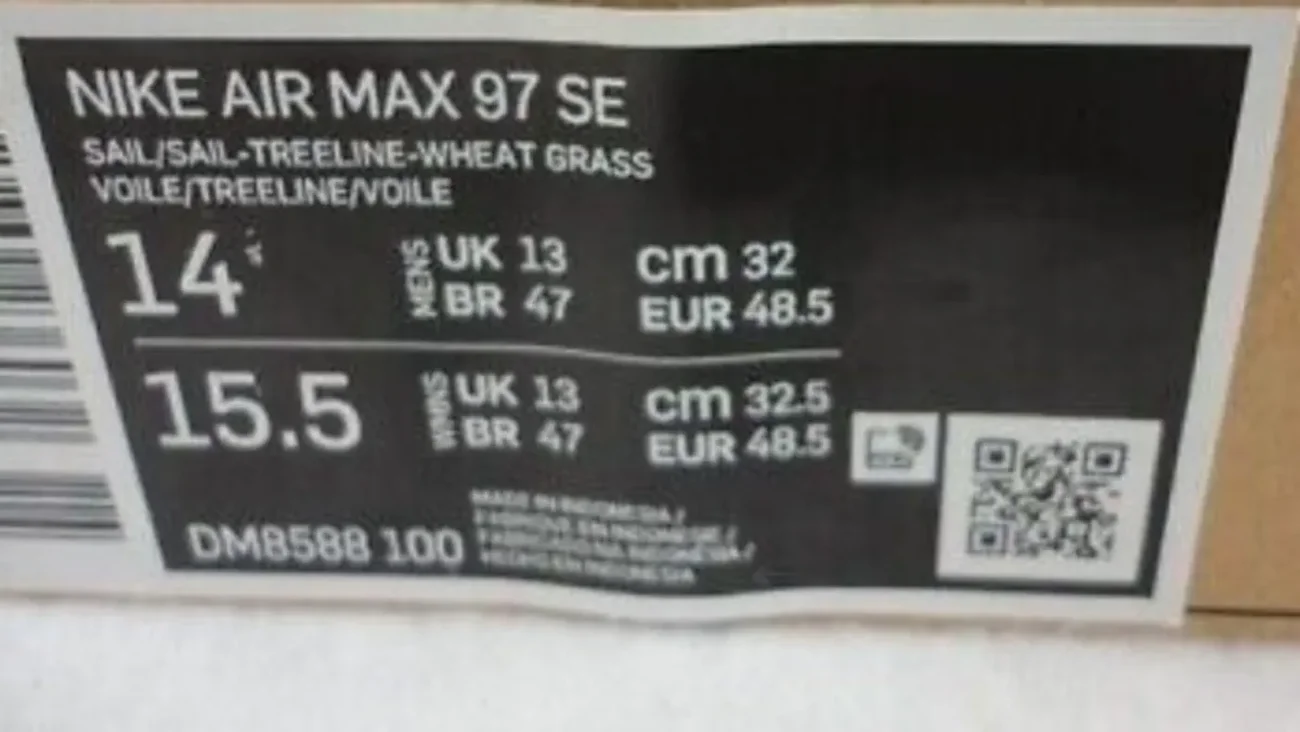
The suffix may appear in product names, retailer systems, catalog records, launch pages, or packaging depending on the release.
The internal size label is primarily used for sizing, style code, production, and manufacturing information.
Do not reject an otherwise correctly documented SE merely because one expected abbreviation is absent from a specific tag layout.
Is There a Number in the SKU That Means SE?
No documented universal decoder works that way.
A Nike style code identifies a specific product or colorway.
The code can help you verify that your pair matches the release you are researching.
It does not contain a simple digit that universally translates to “Special Edition.”
Does SE in the Name, Box, or SKU Prove Authenticity?
No.
Authenticity requires evaluating the physical pair and its consistency with a genuine release.
Counterfeits can copy names, boxes, style codes, colors, and product labels.
SE therefore helps identify what the product is supposed to be—not whether the object in front of you is genuine.
If authenticity is the real question, use our Legit Check guide.
Useful evidence includes:
- shape and proportions;
- materials and construction;
- labels and style code;
- box and accessories;
- release-specific details;
- provenance and seller history.
Does Nike Still Use SE in 2026?
Yes. Nike is still using SE in current product names.
The Structure 26 SE is a current U.S. road-running example, and Nike also continues to list SE versions within lifestyle franchises.
That current use is important because SE is not merely an old collector term.
At the same time, the exact meaning of “special” still varies by product.
- Nike Structure 26 SE;
- Nike Dunk Low SE;
- Nike Air Force 1 ’07 SE;
- Air Jordan 1 Low SE;
- special-edition apparel and accessories;
- other model-specific SE executions.
Is a Nike SE Worth Buying?
It can be if you prefer what makes that edition different.
The decision should depend on the actual product rather than the suffix.
Compare the SE with the standard version and ask whether the materials, colors, fit, performance, and price make sense for you.
For resale purchases, also consider condition and authenticity.
- Do you prefer the SE colorway?
- Are the materials different in a way you value?
- Does the model fit your intended use?
- Is the price reasonable compared with other versions?
- Is the pair authentic?
- Is the condition appropriate for its age?
- Are you buying it because you like it—not because SE sounds automatically rare?
Nike SE FAQ
What Does SE Mean at Nike?
SE means Special Edition in Nike product naming. It identifies a distinct edition of a model but does not establish a universal rarity or quality tier.
Does Nike Really Use SE for Special Edition?
Yes. Current Nike product copy for the Structure 26 SE explicitly describes it as a special edition and identifies a special-edition color design.
Is Nike SE Better Than the Standard Version?
Not automatically. An SE can use different colors, materials, or details, but the suffix itself does not guarantee superior quality.
Does Every Nike SE Use Premium Materials?
No. Some do; others are differentiated mainly by color, graphics, branding, or another release-specific treatment.
Does SE Mean Limited Edition?
No. Special Edition and Limited Edition are not synonyms, and SE does not disclose production quantity.
Is Nike SE Rare?
Not necessarily. Rarity depends on the actual release, distribution, age, demand, and surviving inventory.
Does SE Mean Exclusive?
Not automatically. Some SE products receive broad retail distribution.
Does SE Mean Collaboration?
No. Collaborations can be special editions, but many Nike SE products are created without an outside collaborator.
Is Nike SE Always More Expensive?
No. Retail and resale prices vary by model, market, materials, demand, and timing.
Does SE Increase Resale Value?
No. Buyer demand and supply determine resale performance; the suffix does not guarantee appreciation.
Is Every Nike SE a Lifestyle Sneaker?
No. The Nike Structure 26 SE is a road-running shoe, proving SE also appears on performance footwear.
Does Nike Use SE on Apparel?
Yes, special-edition language can appear beyond footwear, although naming conventions vary by category.
What Is the Difference Between SE and PRM?
SE means Special Edition; PRM is associated with Premium. They describe different ideas and neither is a universal quality grade.
Does SE Rank Below SP, QS, or PE?
No official universal ranking should be inferred. Those abbreviations communicate different product contexts.
Does SE Always Appear on the Inside Tag?
No. Presentation can vary by release, era, and labeling system.
Is There an SE Number in the SKU?
No universal digit or pattern in Nike style codes automatically means Special Edition.
Does SE Prove a Sneaker Is Authentic?
No. Counterfeits can reproduce names, boxes, labels, and style codes. Authentication must evaluate the physical pair.
Does Nike Still Use SE in 2026?
Yes. Nike continues to sell current products with SE in their official names, including the Structure 26 SE.
Special Edition Describes an Edition, Not a Hierarchy
SE is useful because it tells you that Nike wants you to distinguish one execution from another.
What makes the edition special must still be discovered in the product itself.
On one sneaker that can mean suede, textiles, or unusual branding. On another it can mean a seasonal color treatment. On a running shoe it can mean a special visual execution built on the same technical platform.
SE does not automatically mean rare, limited, premium, expensive, collectible, or better.
That is not a weakness in the term—it is simply a reminder that Nike product naming works in context.
Read the letters, then read the shoe.