The Air Jordan 3 built a lasting visual identity from a few memorable elements. Explore the full model, its original palette and its cultural significance.
The moment the line found a lasting language
The Air Jordan III launched in 1988 and marked Tinker Hatfield’s first design in the series. Its importance is not simply that several familiar details appeared together. Those details created a coherent identity: a mid-cut silhouette, visible cushioning, textured overlays and a Jumpman placed where the eye naturally lands.
The frequently repeated story that the shoe “saved Jordan at Nike” compresses a complicated relationship into one product reveal. Historical accounts do connect Hatfield’s design with Jordan choosing to stay. The responsible reading is that the shoe was an important part of rebuilding that relationship, not that a single sketch can explain every business decision.
Why the construction looked different
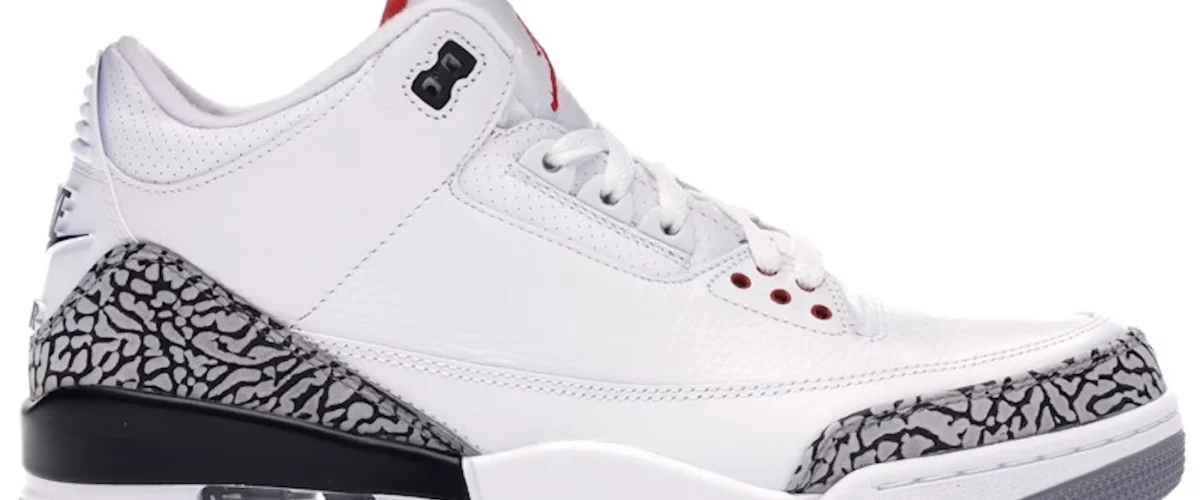
The III introduced visible Air to the signature line and used elephant-print panels around the toe and heel. Its mid-cut upper offered a different proportion from the taller visual language of many contemporary basketball shoes. On the tongue, the Jumpman became the central emblem of the shoe.
Each element has a separate job in the composition. The heel window makes an otherwise hidden component legible. The printed overlays define the ends of the silhouette. The relatively open leather side panel gives those accents room to register. This balance helps explain why changing a small piece of an AJ3 can noticeably change its character.
“Elephant print” names the visual treatment; it should not be presented as proof that the shoe uses elephant hide. Likewise, the Jumpman’s arrival on this signature model is not the date when the underlying photographic pose was first created. Product history, image history and trademark history are separate timelines.
Three OGs to understand, and the fourth to remember
Four colorways belong to the 1988 original lineup: White Cement, Black Cement, Fire Red and True Blue. The first three make a useful editorial comparison, each showing a different balance of contrast. White Cement highlights the print against a pale upper; Black Cement reverses that balance; Fire Red makes the Bulls-associated accent color more assertive.
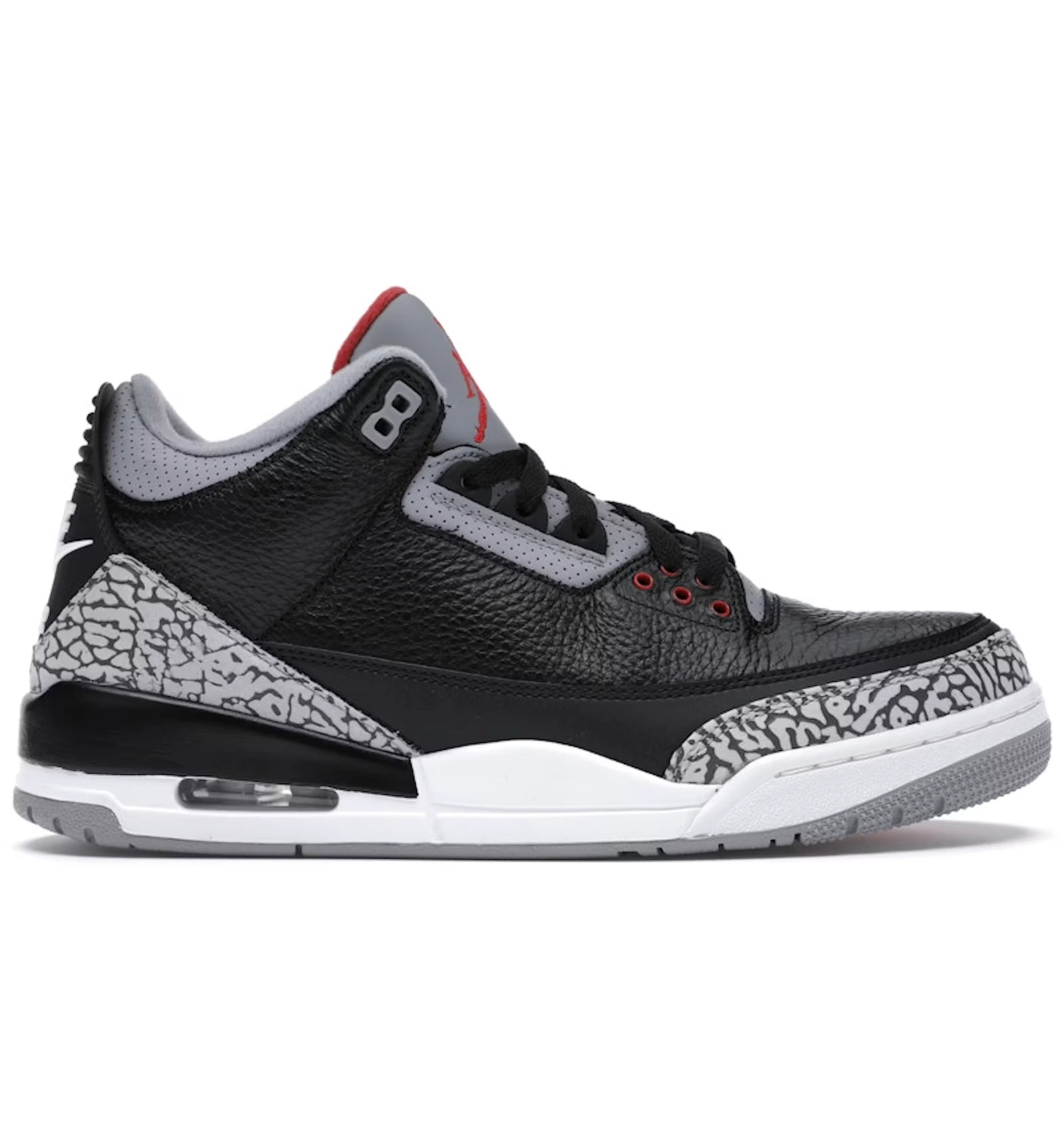
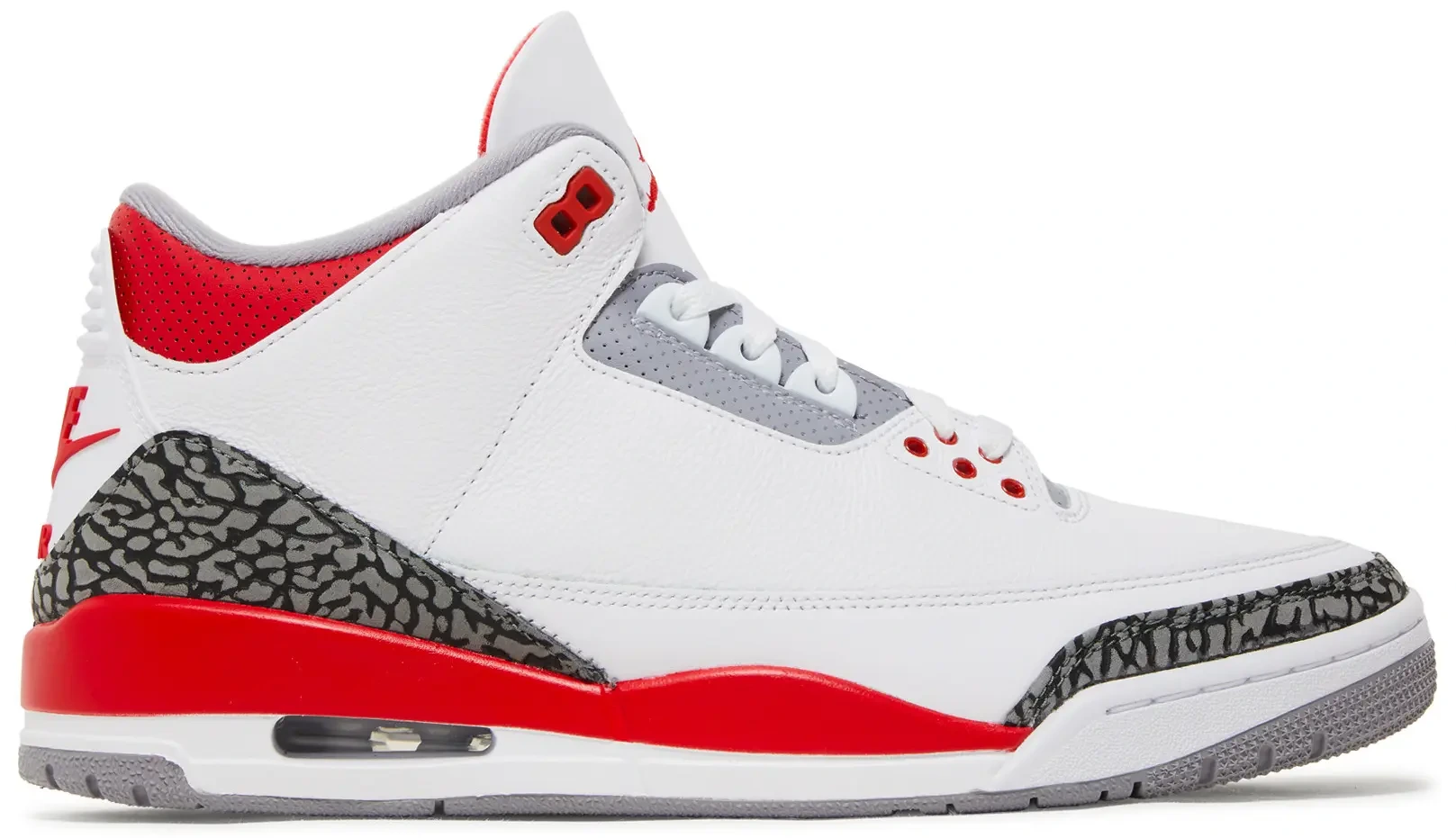
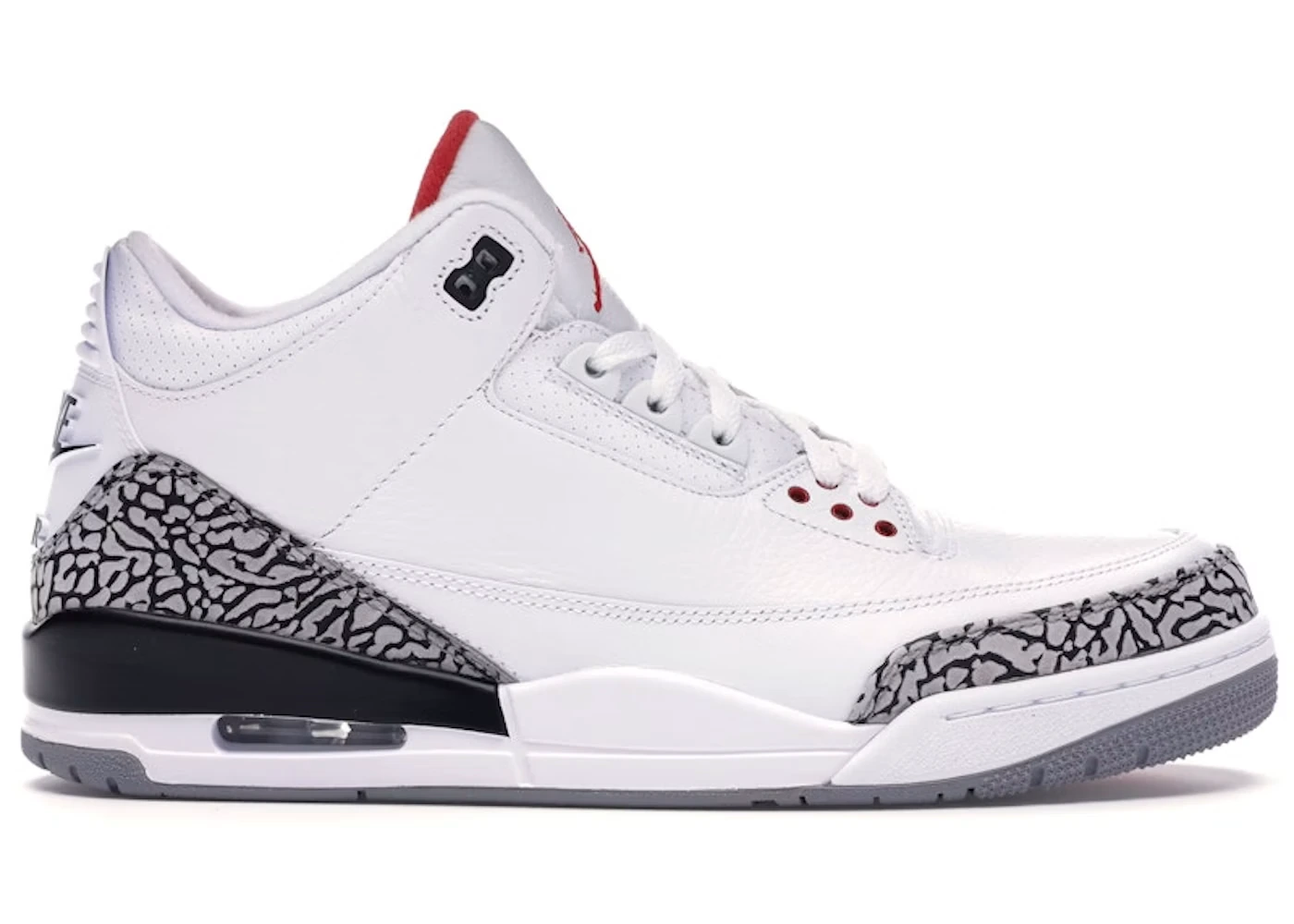
White Cement is linked to Jordan’s 1988 Slam Dunk Contest victory. Black Cement is associated with the All-Star Game from the same weekend. Treating those appearances as one event loses the difference between an individual exhibition and an NBA showcase game. Fire Red adds another original expression of the silhouette without needing that same single-event mythology.
True Blue is equally original. Its blue accents demonstrate that an OG Jordan need not match Chicago’s black-and-red identity. Omitting it from a three-pair spotlight must not imply that it came later. A model-wide history should establish the full original set before choosing which examples receive more discussion.
Basketball and the personality of the advertisements
The III’s 1988 setting matters because the shoe arrived while Jordan’s public stature was growing rapidly. The All-Star weekend provided memorable images; the Mars Blackmon advertising associated with Spike Lee offered another route into the culture. One made the product visible in competition, the other gave it a recurring character and a sense of humor.
It is useful to distinguish publicity from design. A clever campaign can make a shape familiar, but the campaign does not explain every construction decision. Conversely, a list of technical features cannot explain why people remember a line from an advertisement years later. The AJ3 sits at the intersection of those two kinds of recognition.
For readers encountering the shoe through a retro rather than an original game photograph, the period context prevents a common reversal. The model did not begin as a nostalgic lifestyle product. Nostalgia formed around an object that originally belonged to an active athlete and a developing commercial partnership.
What an original-inspired retro can and cannot promise
A later pair can restore an original color arrangement without reproducing every measurement, material or manufacturing detail. The shape of the toe, height of the printed overlays, thickness of the pattern and heel branding all affect how close it appears to an earlier example. “OG colorway” describes ancestry; it does not automatically establish construction accuracy.
For the same reason, a new interpretation of an old color should be named as an interpretation. Artificial aging, changed leather or altered branding can be intentional. Readers gain more from a clear description of those choices than from the unsupported claim that one edition is the only “real” version.
The III’s wider legacy is the creation of a repeatable but flexible visual system. It can remain recognizable without making every panel busy. Looking at the whole model, including all four originals, shows how that system works across different balances of color and contrast.
Frequently asked questions
What are the original Air Jordan 3 colors?
White Cement, Black Cement, Fire Red and True Blue. All four belong to 1988.
Which Jordan 3 did Michael wear in the dunk contest?
White Cement is associated with the 1988 Slam Dunk Contest. Black Cement belongs to the All-Star Game distinction from that weekend.
Did the Jordan 3 introduce the Jumpman image itself?
It introduced the Jumpman as the signature shoe’s central logo. The photographic history behind the pose predates the 1988 shoe.
Is every Jordan 3 with Nike Air an original?
No. Later retros can also use Nike Air branding. Dating requires the exact edition, not one logo.
Sources
Historical sources consulted October 15, 2026.