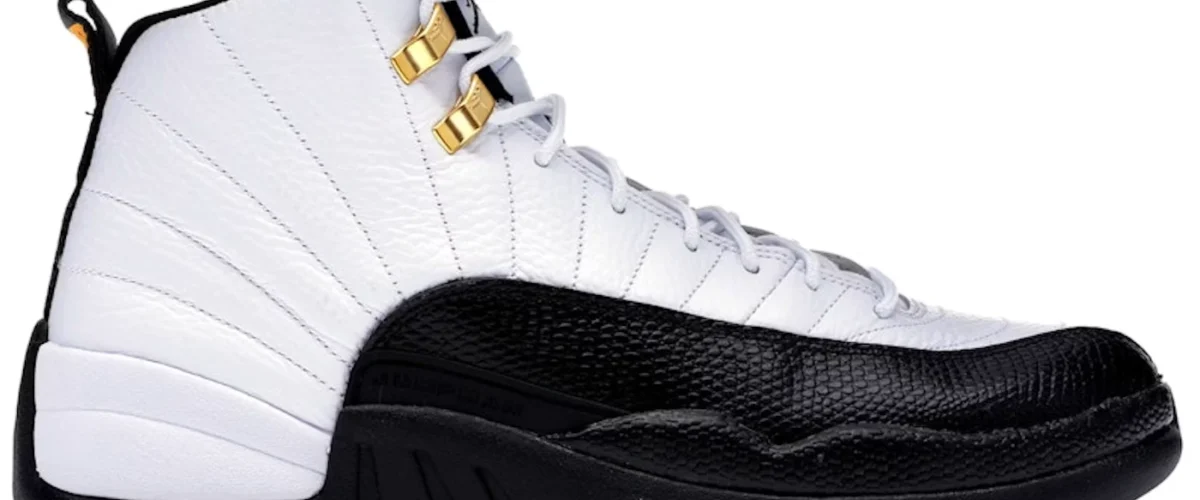
The Air Jordan 12 is easy to recognize from its radiating stitched lines and strong division between the upper and lower side panel. That architecture gives each colorway a clear identity without changing the underlying silhouette. Its history deserves more than a retelling of one Finals game: the model also marks a technical step in the signature line and a particularly readable approach to color blocking.
The original release and designer
Tinker Hatfield designed the Air Jordan 12, released in 1996. Its radiating stitching draws on a Japanese rising-sun reference.
Zoom Air and the structure beneath the leather
Nike describes the 12 as the first model to bring Zoom Air to Jordan’s signature line. That claim concerns the numbered Air Jordan series, not the invention of Zoom or its first use anywhere at Nike. The original design also uses a carbon-fiber support component and herringbone traction. These details give the model a performance story beyond its recognizable panels.
Three original colorways
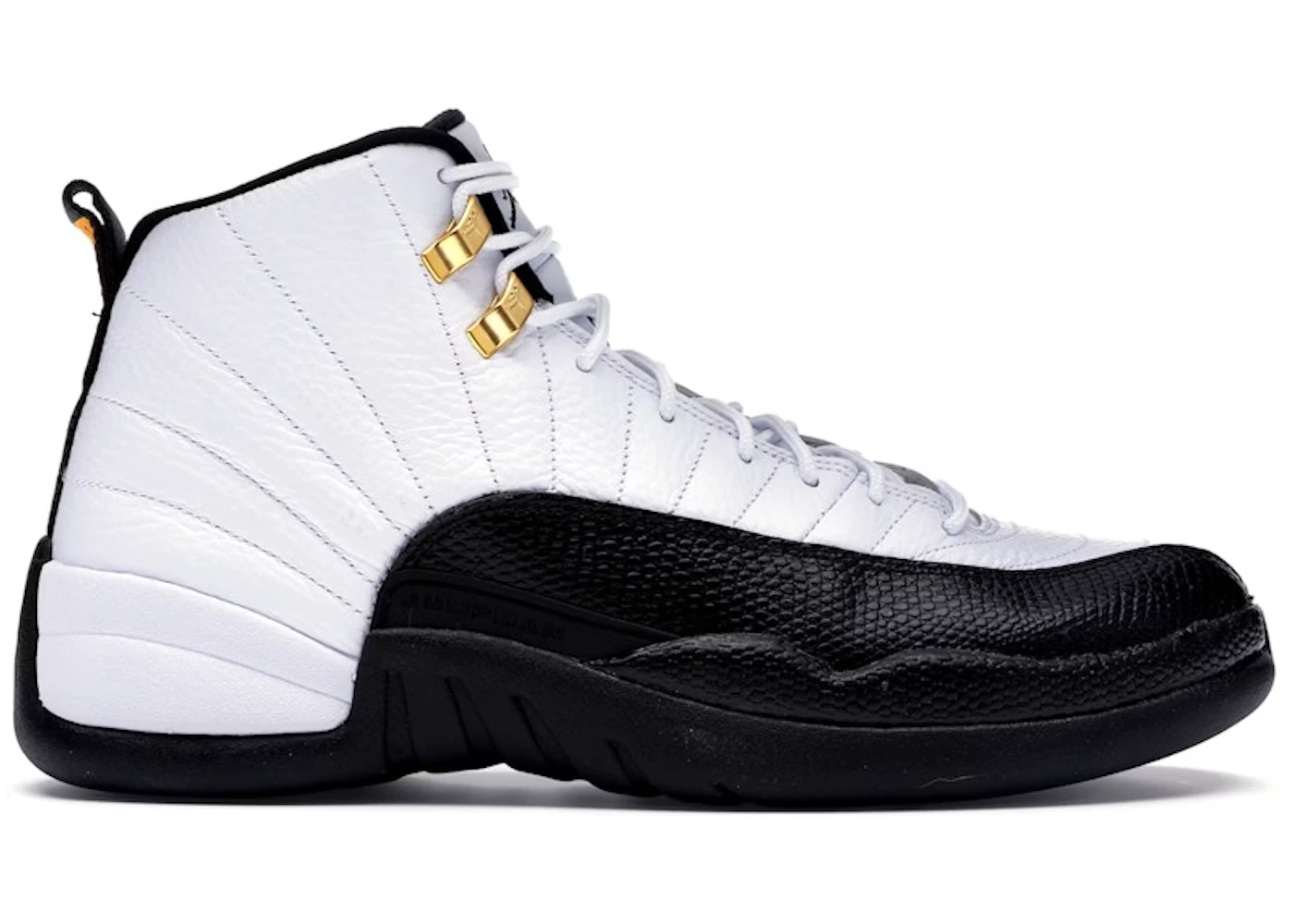
Taxi, 1996. White/Black–Taxi establishes a light upper against a dark lower section. Small yellow details explain why a mostly black-and-white sneaker carries the Taxi name. It is a useful starting point for studying the shape because the contrast makes the stitched upper and lower panel easy to distinguish.
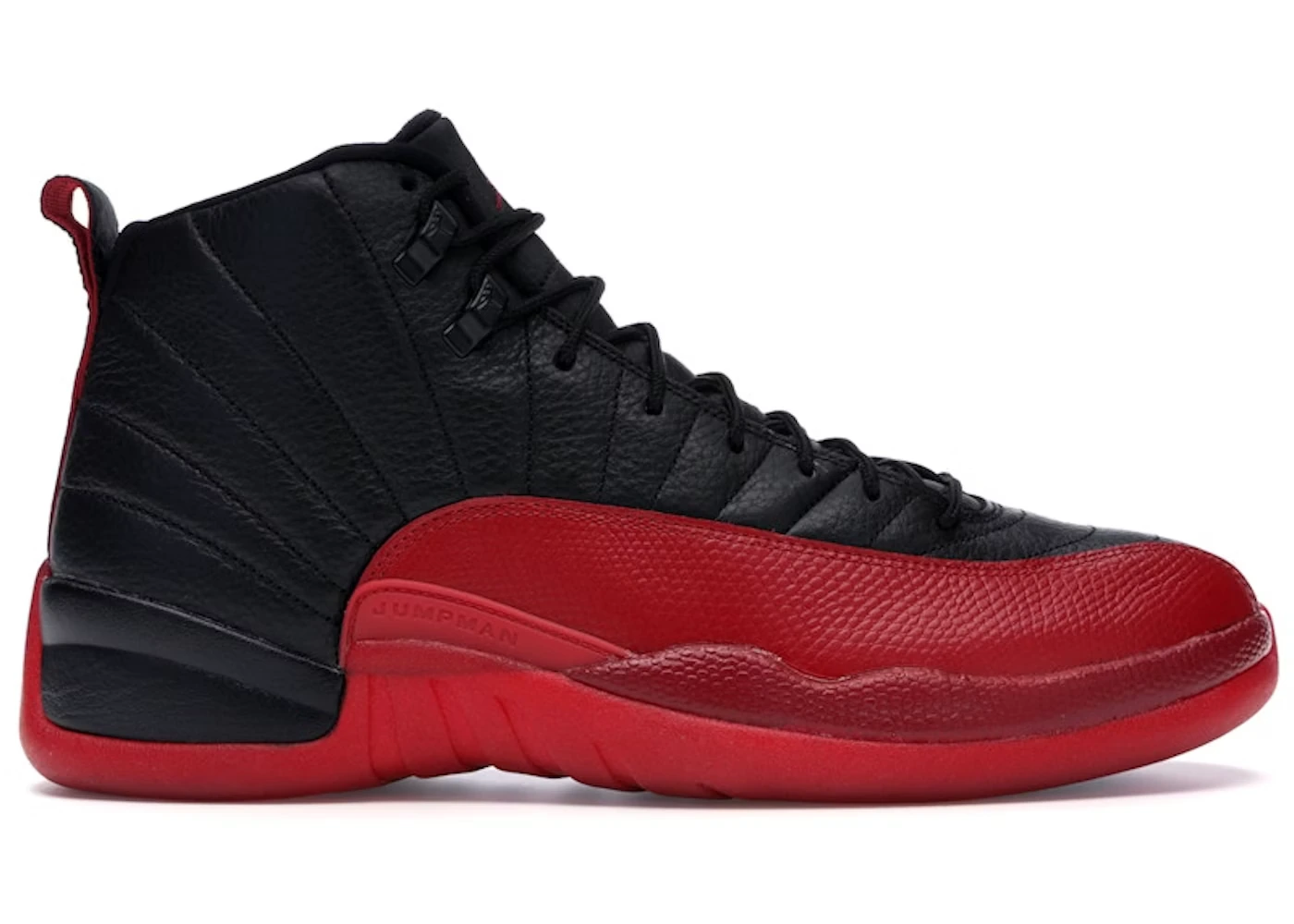
Black/Red, 1997. Black–Varsity Red is the original colorway now widely called Flu Game. The nickname links it to Jordan’s appearance in Game 5 of the 1997 Finals. The original version and later releases using that nickname must still be compared individually; a shared story does not guarantee identical materials.
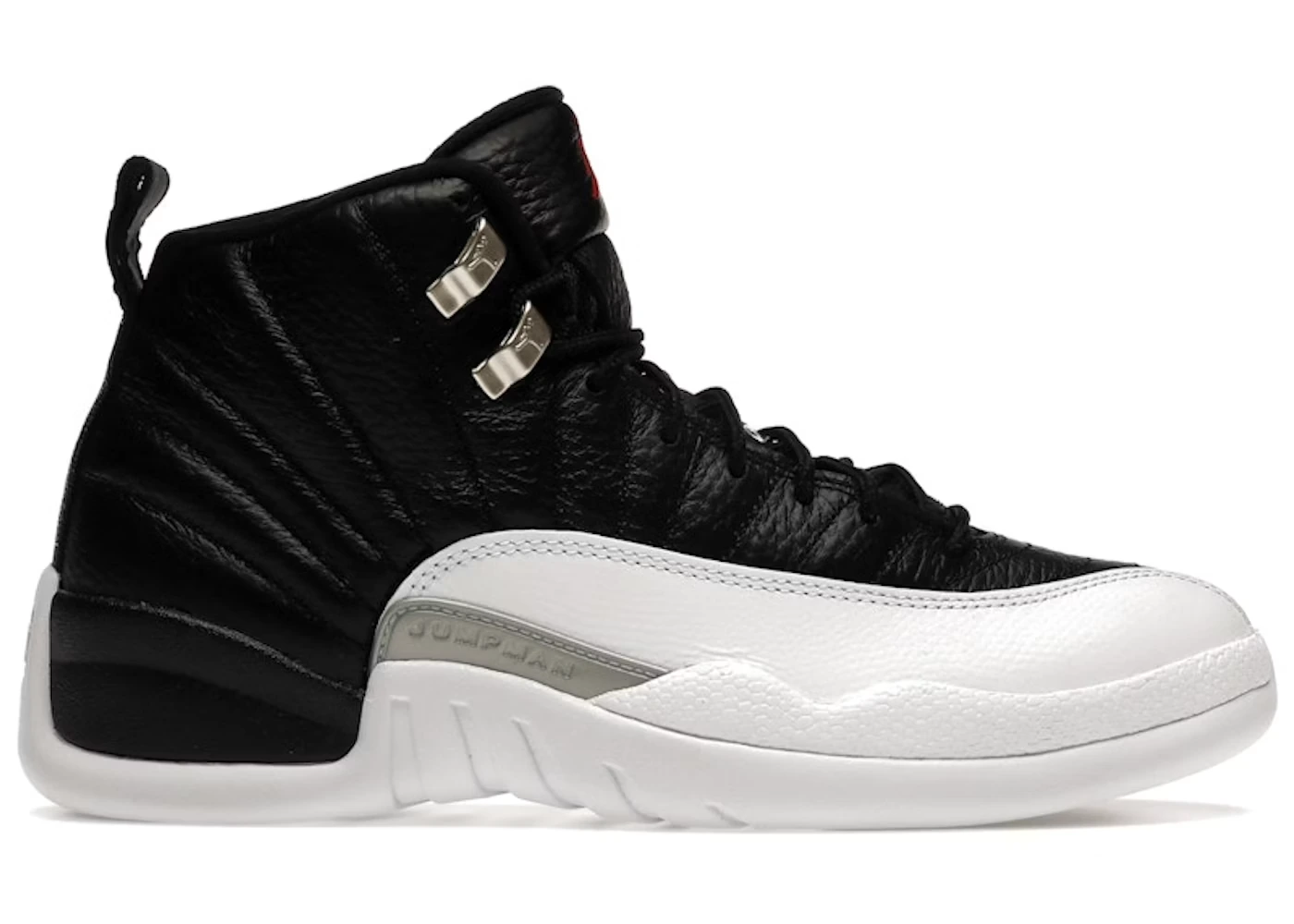
Playoffs, 1997. Black/Varsity Red–White–Metallic Silver reverses the broad light-and-dark relationship visible on Taxi. Its black upper and white lower area give the original collection another strong Bulls-era expression. It belongs to the 1997 part of the original season, rather than a later invention named for old games.
The championship context, with the nickname kept in proportion
Jordan scored 38 points in the game popularly remembered as the Flu Game, and Chicago won its fifth championship in 1997. The nickname is useful historical shorthand; it should not be treated as a confirmed medical diagnosis. The Playoffs version also appears in the history of the opening game’s winning jumper, broadening the model’s Finals story beyond black and red.
What the original lineup shows
The original catalog also included white/red and Obsidian combinations. The three examples above are selected to explain the model, not to claim a measured popularity ranking. The collection already contained contrasting approaches: light uppers, dark uppers and a blue-based alternative. A model-wide account should acknowledge that range even when it concentrates on three representative pairs.
Why color blocking matters here
On some sneakers, a new color primarily changes decoration. On the 12, the division between the two large areas changes how the whole object reads. Taxi emphasizes the upper; Playoffs brings the lower panel forward. Black/Red uses the same boundary to deliver a more uniform team-color impression. Comparing those relationships is more informative than listing a succession of nicknames without explaining what changes.
The stitched rays also remain visible in a way that printed graphics might not. They make the surface feel directional, leading the eye through the side of the shoe. This is a design observation rather than a claim that the seams independently improve speed, jumping or injury protection.
Researching an original or a retro
Use three labels in your notes: model launch, colorway debut and the year of the actual pair. That simple separation prevents a 1997 original color scheme from being mistaken for a 1997 manufactured sneaker. When comparing retros, look at leather or other upper materials, the finish of the lower panel, hardware, tongue details and the documented specification of that edition.
A search such as ‘Air Jordan 12 Black Red original 1997’ asks a more precise question than ‘best Flu Game.’ The same principle applies to Taxi and Playoffs. Historical photographs can establish appearance and game context, but they should be paired with retail records before assigning a store-release date.
Its place in the Jordan timeline
The 12 offers a particularly clear meeting of construction, visual order and sporting memory. Its biggest historical game is part of that explanation, not a substitute for it. Following the model through its launch, original palette and later reinterpretations lets readers understand why the same design can carry both championship associations and a distinct identity in a collection.
Mid and Low: first releases and colors
The standard-height model, often called Mid, began with Taxi in 1996. The Low arrived much later: its earliest documented release is Obsidian/University Blue–White on April 10, 2004. Taxi Low followed on May 22. A familiar 1990s palette on a Low therefore does not make that cut a 1996 original.
Frequently asked questions
Was the Jordan 12 the first with Zoom Air?
It was the first in the numbered Air Jordan signature line, according to Nike.
Are Taxi, Black/Red and Playoffs all OG colors?
Yes. Taxi debuted in 1996; Black/Red and Playoffs belong to 1997.
Does Flu Game prove what illness Jordan had?
No. It is the established nickname for the game and colorway, not a medical determination.
Are the three colors listed the entire original collection?
No. White/red and Obsidian were also part of the original lineup.
Sources
Nike Air Jordan 12 archive · Sneaker Files Air Jordan XII history · Original Air Jordan XII: Taxi · Original Air Jordan XII: Black/Red · Original Air Jordan XII: Playoffs · Nike SNKRS: Taxi · Sneaker Files: Obsidian Low 2004 · Sneaker Files: Taxi Low 2004.