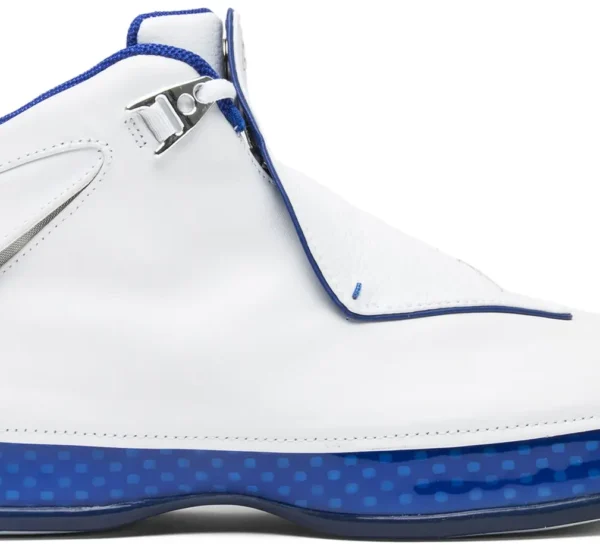
The Air Jordan 4 makes its structure part of its identity. Its original colors reveal how one design can connect sport, cinema and everyday style.
A more architectural successor
The Air Jordan IV arrived in 1989, again designed by Tinker Hatfield. Where the III used a relatively open leather side panel, the IV made its supporting structure part of the visual identity. Mesh areas, molded lace supports and a pronounced heel tab gave the shoe an immediately recognizable arrangement of hard and soft surfaces.
Nike records the IV as the line’s first global release.
Reading the mesh and the wings
The side netting is one of the IV’s clearest identifiers. The wing-like supports connect the upper lacing area to the sides, while visible Air keeps a link to its predecessor. The tongue’s Flight treatment and Nike Air on original heels give the model more than one branding surface without requiring a large side Swoosh.
Its construction is unusually easy to read as an image. The wings frame the middle of the shoe; the grid breaks up the side panel; the sole supplies another horizontal layer. That produces a sense of engineering even before the viewer knows the function of any component. The effect is different from the III’s concentration of texture at the front and back.
This visual structure also helps explain the IV’s adaptability. A color change on the supports can emphasize the frame, while a contrasting mesh area can make the upper seem more segmented. A model history should explain that flexibility before moving to later collaborations. The design already contained a framework for variation in 1989.
Three useful OG reference points
The original collection contained four colorways: White Cement, Black Cement, Fire Red and Military Blue. White Cement, Black Cement and Fire Red are highlighted here as three contrasting examples, because they reveal different aspects of the design. All four belong to the initial release year.
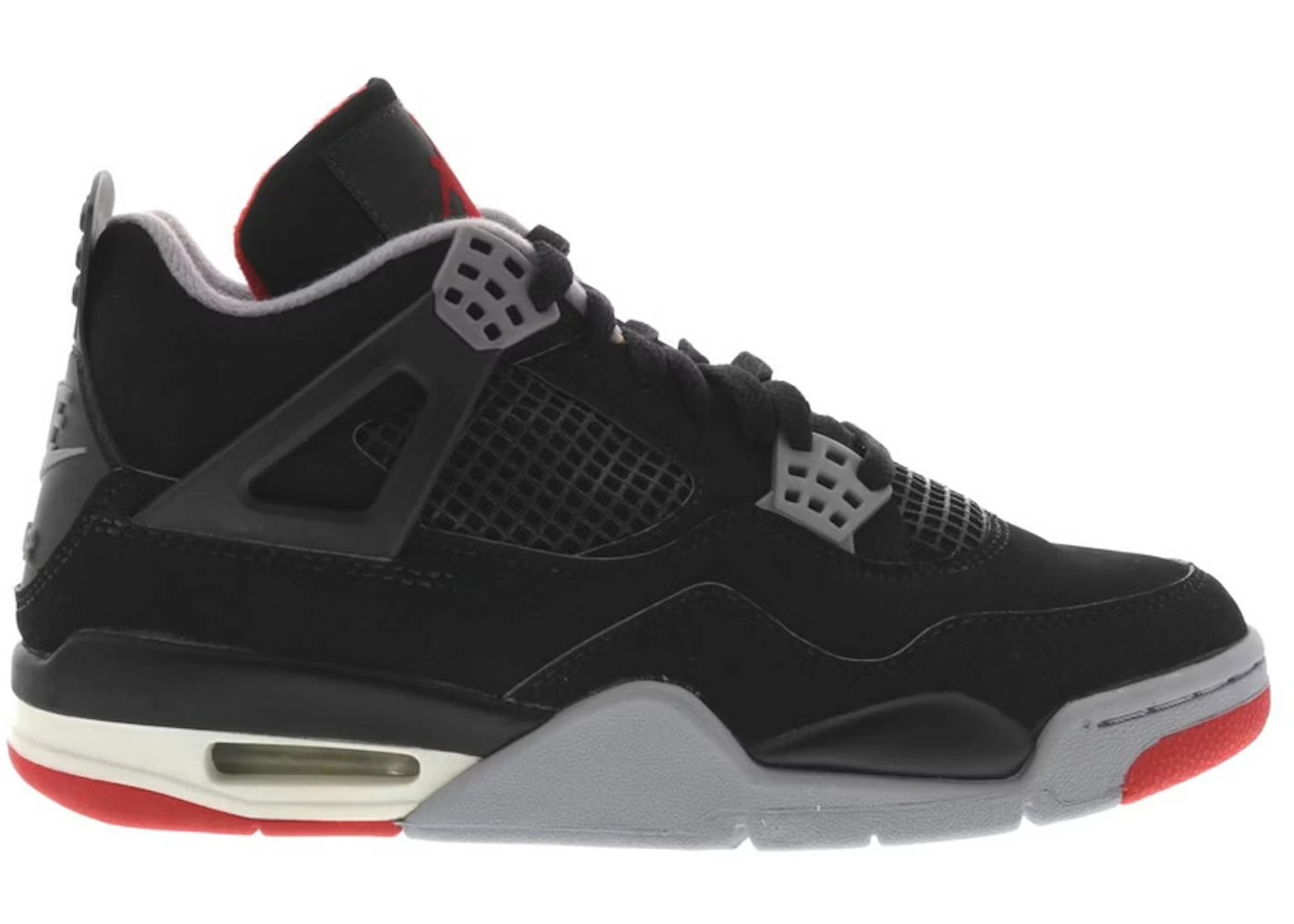
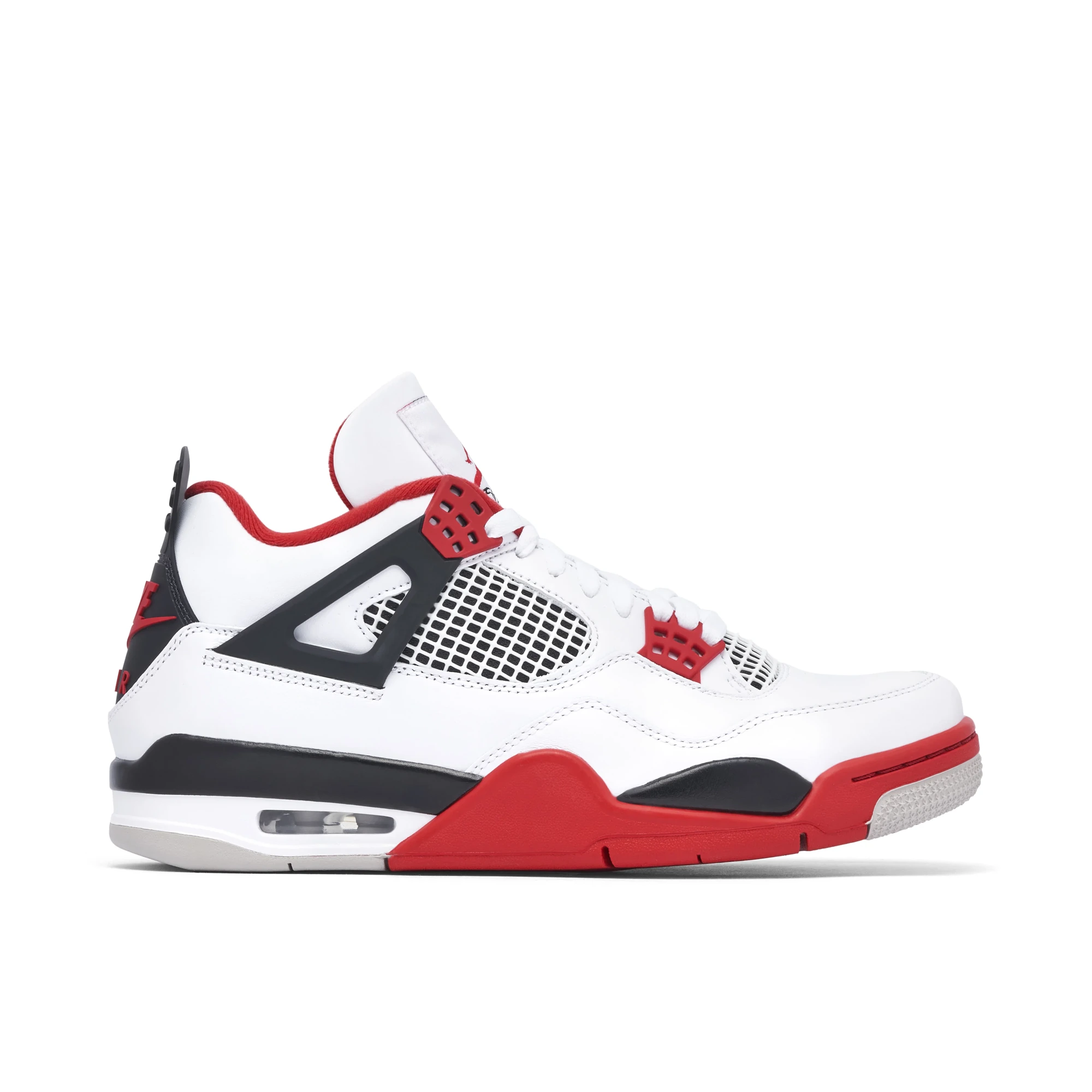


White Cement combines a white base with speckled gray detailing. Black Cement, also widely called Bred today, gives the darker upper a different relationship to the same cement idea. Fire Red uses white, black and red in another distinct arrangement. These are separate original designs, not interchangeable names for any red-accented IV.
Military Blue is the essential fourth entry. Its blue accents broaden the story beyond Bulls colors. The fact that a colorway lacks a famous Michael Jordan game appearance does not make it non-original. “OG” identifies its position in the release history, not the number of times the athlete wore it.
The Shot and a very different kind of screen time
The IV is linked to Jordan’s series-ending basket against Cleveland in the 1989 playoffs, known as The Shot. Black Cement is the color associated with that moment. In the same year, White Cement appeared in Spike Lee’s Do the Right Thing. The shoe therefore occupied both a sporting highlight and a film scene about the emotional value of an everyday possession.
Those two associations do different work. A game-winning basket connects a product to athletic accomplishment. A scene in which a sneaker becomes the focus of a confrontation connects it to identity, pride and how an object is treated by other people. Neither meaning can be reduced to a list of materials.
It is tempting to make the movie appearance a simple explanation for everything that followed. A better reading recognizes several forces working together: an identifiable design, distribution beyond the previous market footprint, an athlete’s growing fame and a cultural appearance that made sense outside a basketball broadcast.
Why later editions need their own dates
The model’s first retro period began in 1999. Subsequent returns and new palettes expanded the IV far beyond the initial four. That expansion should not rewrite the original lineup: a beloved later edition remains later, even if it is familiar to more readers than an OG.
For comparisons, separate three questions. Does the color arrangement descend from 1989? Does the edition reproduce the older material choices? Does it match the original shape and branding? A yes to one does not guarantee a yes to the others. A black-and-red reinterpretation in a different upper material illustrates why these distinctions matter.
The IV’s legacy is the ability to carry recognizable structure through changing contexts. The mesh and supports remain readable whether the reference is a playoff photograph, a film still or a modern outfit. That continuity is more informative than treating each release as an isolated hype event.
The lower-cut RM redesign
The Air Jordan 4 RM introduced a lower-cut redesign in 2024. Its first color was Nigel Sylvester’s Grandma’s Driveway/Fence Green: Pro Green/Metallic Platinum-Black-Sail. The global launch was July 20; contemporary reporting also records a July 13 GO Ride early release in London. (Sole Retriever: Grandma’s Driveway launch; SneakerFiles: first AJ4 RM collaboration)
RM is its own redesign, rather than simply the original IV with a shorter collar. Keeping its full name distinguishes this later branch from the original silhouette.
Frequently asked questions
What are the four original Jordan 4 colors?
White Cement, Black Cement, Fire Red and Military Blue.
Is Military Blue an OG even though it is not Bulls-colored?
Yes. It is one of the four original releases. Original status does not require a Chicago color palette or a particular game appearance.
When was the Air Jordan 4 first retroed?
The first retro cycle began in 1999, a decade after the original 1989 release.
Sources
Historical sources consulted October 15, 2026.