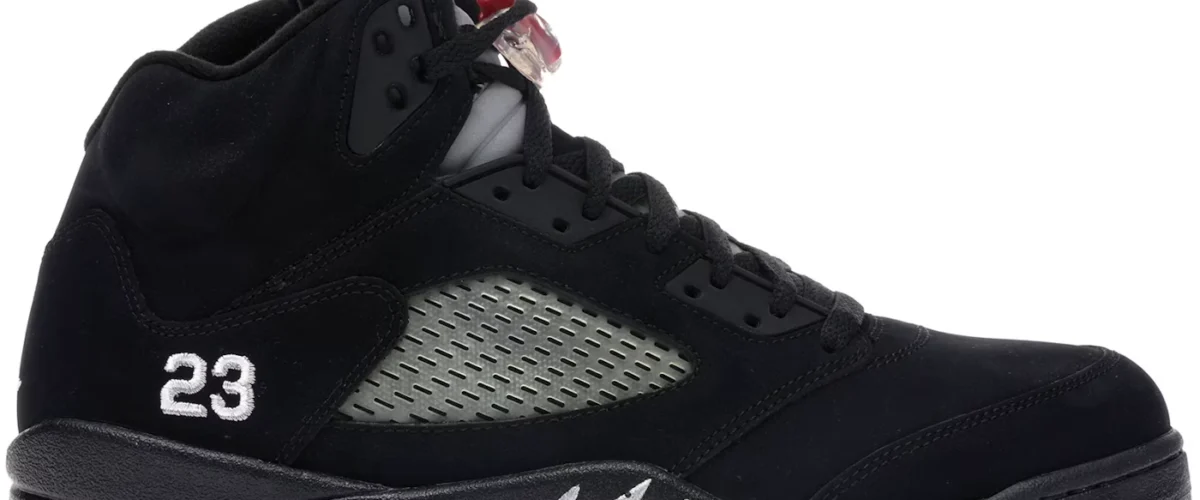
The Air Jordan 5 combines dramatic shapes with surfaces that react to light. Explore its design and the differences within its original color range.
A new visual direction for 1990
Tinker Hatfield’s Air Jordan V debuted in 1990 with midsole graphics inspired by a World War II fighter aircraft.
Placed between the structural IV and the championship-associated VI, the V is sometimes reduced to a transitional model. Its own contribution is more specific: it made the shoe’s stance theatrical. The high tongue, projecting collar, translucent elements and sharp sole graphics give the profile several different kinds of visual energy.
Technology that became part of the look
Visible heel Air continued, while translucent outsole sections and netted panels added another relationship between surface and transparency. Lace locks were incorporated into the adjustment system. Reflective tongues became closely associated with the model, but that does not mean every original colorway used the same tongue treatment.
The contrast matters. A reflective surface changes under light; translucent rubber lets another layer show through; the midsole graphic looks solid and sharp. Together, these treatments make the shoe more visually active than a simple description of its colors suggests.
It is also important not to assign every detail to every version. Tongue color and reflectivity differ across the originals, and the embroidered number 23 is not a universal shortcut for identifying all AJ5s. The model has a shared structure, but its individual executions still need separate documentation.
Four originals, including two Fire Reds
The original 1990 lineup comprises Black Metallic, Grape and two distinct white, red and black versions commonly grouped under Fire Red. The reflective-tongue Fire Red and black-tongue Fire Red must be treated separately. Nike’s account of the latter explicitly distinguishes it from its silver-tongued contemporaries.
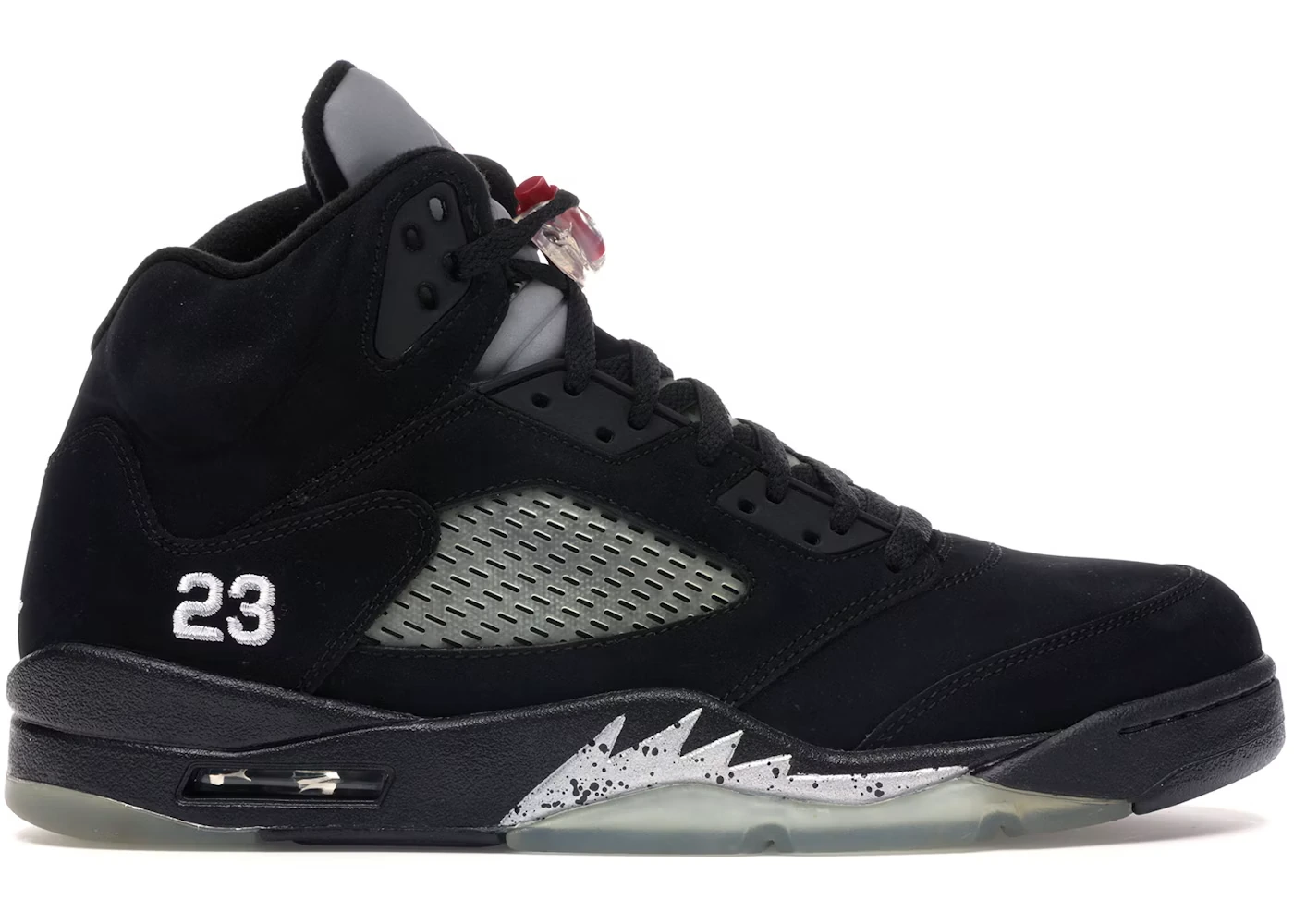
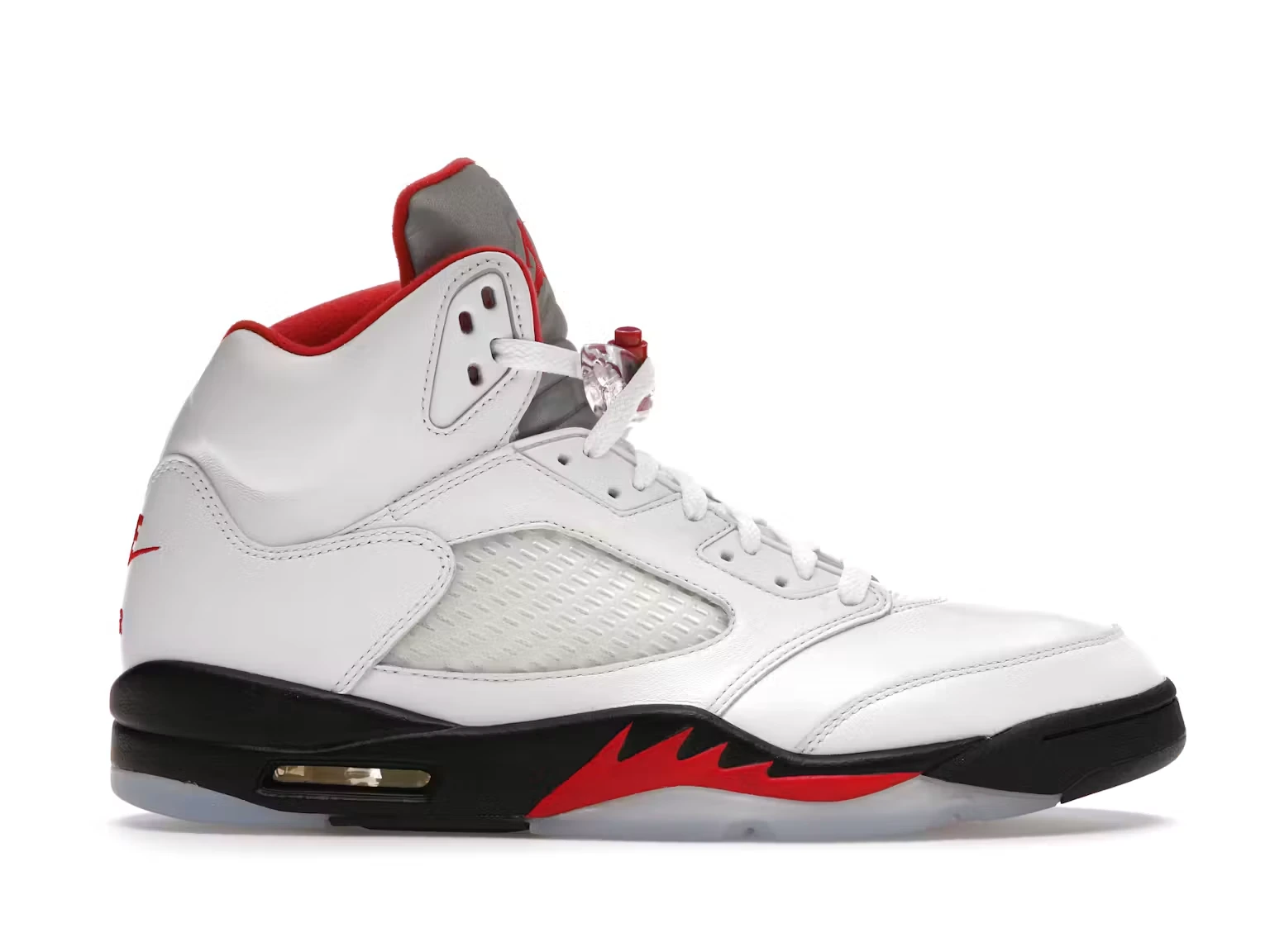
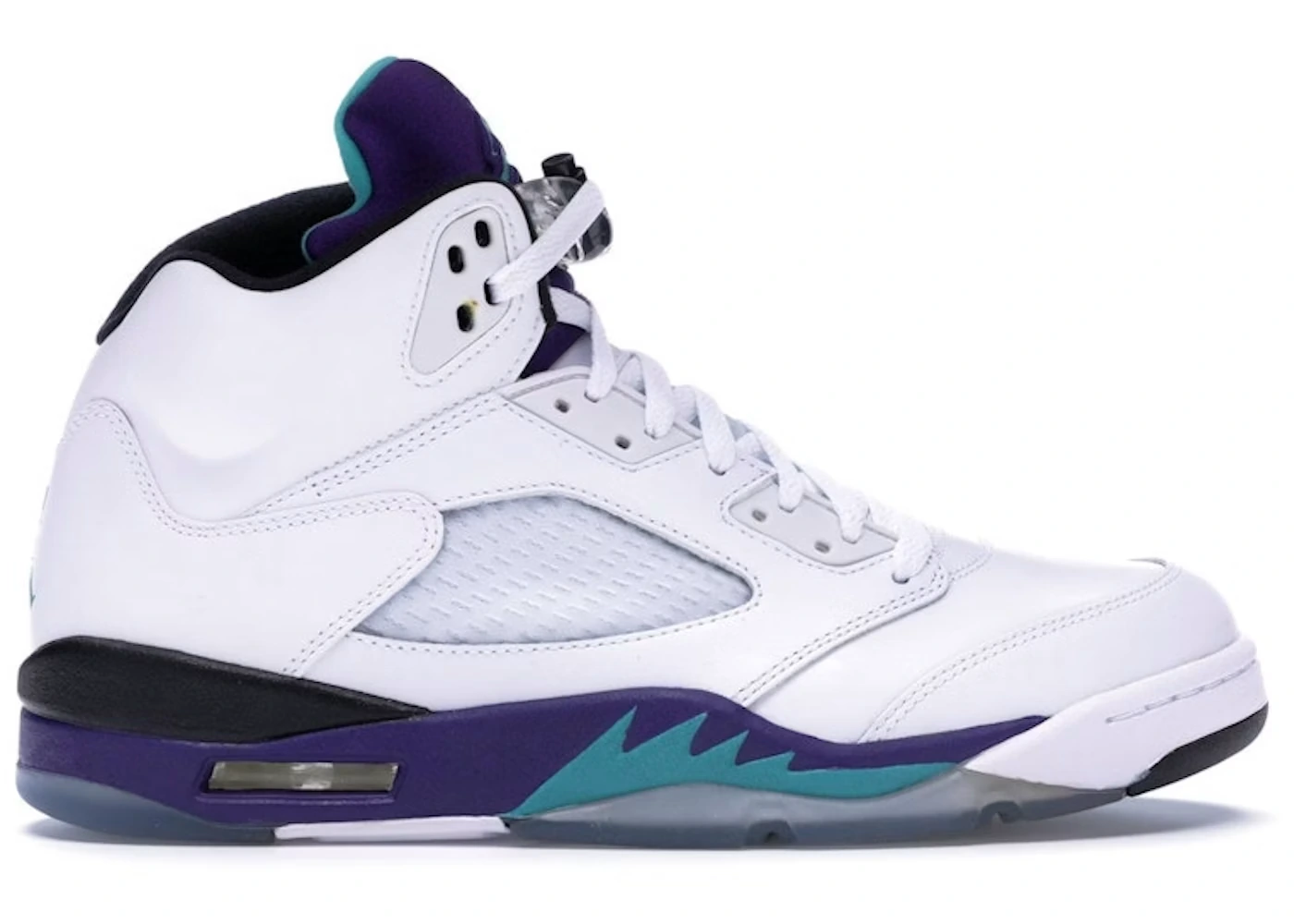
Three useful reference points are Black Metallic, reflective-tongue Fire Red and Grape. Black Metallic emphasizes the dark upper and silver accents. The reflective-tongue Fire Red shows the design in a white-led Bulls palette. Grape introduces purple and green accents against white, changing the mood without changing the model’s architecture.
The fourth, black-tongue Fire Red, is not a later invention simply because another Fire Red is more familiar to a particular reader. Its contrasting tongue and different distribution of black and red are central to identification. A release list that merges the two loses an original colorway.
Grape also demonstrates why “original” and “worn by Jordan in an NBA game” are different tests. Its 1990 origin is documented independently of game use. Likewise, a later tribute to Jordan’s school or a collaboration cannot be inserted into the original set just because it has become well known.
A scoring-era shoe with a wider visual vocabulary
The V’s sporting context includes Jordan’s 69-point game against Cleveland during the 1989–90 season. That is a different chapter from the first title associated with the VI. Keeping those achievements attached to the right model prevents the whole early-1990s period from collapsing into a single championship story.
On the design side, Grape is particularly revealing. It shows that a signature basketball line could create a distinct identity without limiting every product to an athlete’s team uniform. The same aggressive shape could carry a darker, competition-oriented reading or a brighter, less literal color expression.
This flexibility is one reason a model-wide account is valuable. A Black Metallic-only article can make the V seem defined by dark materials and reflectivity. A Grape-only article can make it seem primarily about color. Looking across the OG collection reveals that contrast between executions was part of the initial idea.
Separating original design from later interpretation
Retro editions gave the V another life, but release year still matters. A reissue of a 1990 palette is a later object with an original reference. A newly invented palette is a different addition to the family. Neither category should be confused with an untouched pair manufactured during the first run.
For comparison, inspect the tongue first, then the side number, midsole blocking, translucent outsole and heel branding. These details provide a more useful map than a nickname alone. Two sellers can use “Fire Red” while referring to materially different executions of the same model.
The lasting design lesson is the interaction between movement and visibility. The fighter-inspired accents suggest forward action, while reflective and translucent surfaces respond to light. The V does not merely decorate the foot; it makes the viewer notice different parts of the shoe at different moments.
The first Air Jordan 5 Low
The AJ5 Low reached retail in December 2006, beginning with the women’s White/University Blue-Team Red, style 314337-141. Release archives disagree on the exact December day, but agree on the month, year and first color. White/Metallic Silver-Black followed afterward. (Sneaker News: first AJ5 Low women’s release; SneakerFiles: 2006 release ledger)
That beginning gives the Low its own timeline. Its opening palette was new to this cut’s retail story, rather than one of the four colors sold with the original tall model.
Frequently asked questions
How many original Air Jordan 5 colorways were there?
Four: Black Metallic, Grape, Fire Red with a reflective tongue and Fire Red with a black tongue.
Are both Fire Red versions OG?
Yes. They are distinct original executions and should not be merged into one entry.
Did every original Jordan 5 have a reflective tongue?
No. The black-tongue Fire Red and Grape prevent that generalization. Check the specific colorway.
Is Grape an original color even without a famous NBA game appearance?
Yes. Its original release dates to 1990; game use is not the definition of OG.
Sources
Historical sources consulted October 15, 2026.