
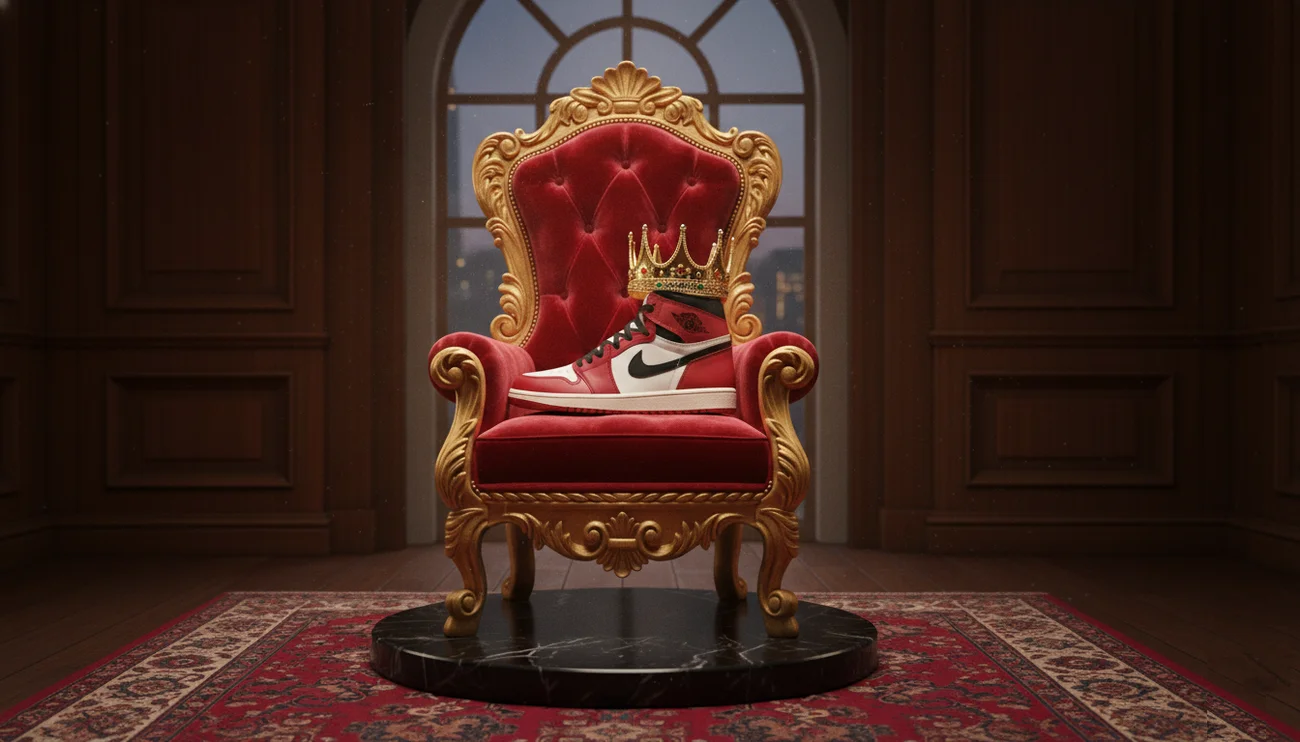
What is GOAT in the sneaker world?
If you’ve spent any time exploring the world of sneakers, you’ve probably come across the term “GOAT”. Much more than just an acronym, this expression carries significant weight within sneaker culture and is directly tied to the history, relevance, and impact of certain athletes and iconic models. GOAT stands for “Greatest Of All Time”.
In the sneakerhead context, the term is often associated with Michael Jordan, both because of his legacy in basketball and the massive influence his sneaker line has had — and still has — on the global market. But the concept goes beyond a person: it can also be applied to models, collaborations, and even historical moments within the culture.
Before diving deeper into this concept, it’s worth noting that this is just one of many terms used in this universe. If you want to better understand this language, I recommend exploring the sneakerhead dictionary, which was actually one of the first pieces of content I wrote and still consider essential for anyone entering this world. Another piece that complements this learning perfectly is the sneaker anatomy, where you can understand every technical detail of a sneaker.
Why is Michael Jordan considered the GOAT?
When we talk about GOAT in the sneaker world, it’s almost impossible not to talk about Michael Jordan. And that’s no coincidence. Jordan didn’t just dominate basketball during his career — he also helped completely transform how sneakers are perceived.
Before him, sneakers were basically seen as sports gear. After the release of the Air Jordan line, they became objects of desire, fashion items, and even investment assets. Models like the Air Jordan 1, for example, are not just sneakers — they are historical pieces that helped shape the entire sneaker culture.
This impact is so massive that even today we see retro releases, collaborations, and reinterpretations based on models created decades ago. That’s what defines a true GOAT: relevance that transcends generations.
GOAT goes beyond people: models can be GOAT too
Although the term is strongly linked to Michael Jordan, it is also used to define sneaker models that made history. Some sneakers are so influential that they end up being considered GOAT within their categories.
A great example is classic Nike models like the Air Force 1 or the Nike Dunk. These sneakers haven’t just stood the test of time — they remain relevant across different generations and styles.
If you want to explore some of the most important models ever released, it’s worth checking out this content about the most iconic Nike sneakers, which clearly shows how certain pairs achieved this almost legendary status.
My personal experience with the GOAT concept
Over time, living sneaker culture since 2007, I started to realize that the concept of GOAT goes far beyond hype or price. I’ve seen many extremely hyped releases lose relevance within months, while classic models continue to be desired year after year.
For me, a GOAT isn’t just the most expensive or hardest sneaker to get. It’s one that has history, cultural impact, and represents something bigger. It’s the kind of pair that still makes sense to have in your collection even years later.
And here’s an important lesson I’ve learned over time: it’s far more valuable to invest in a simple but authentic sneaker than in a fake version of a rare model or a hyped colorway. Authenticity is what truly gives a sneaker its value. A real “grail” represents achievement, history, and identity — while a fake delivers only a momentary illusion.
GOAT vs hype: is there a difference?
Yes — and many people confuse these two concepts. Hype is tied to the moment — limited releases, celebrity collaborations, and short-lived trends. GOAT, on the other hand, is built over time.
A sneaker can be extremely hyped at release and disappear shortly after. But a GOAT remains relevant regardless of trends or timing.
This difference becomes even clearer when analyzing buying behavior. More experienced sneakerheads tend to prioritize pairs with history and legacy, moving away from impulsive purchases based solely on hype.
How does the GOAT term influence the sneaker market?
The impact of the GOAT label on the market is huge. When a model or athlete earns this title, its symbolic — and often financial — value automatically increases.
This directly affects the resale market, where GOAT-level pairs tend to hold or even increase their value over time. Platforms like international marketplaces help reinforce this trend, showing how certain models remain in high demand.
If you’re starting to explore this side of the market, it’s important to understand how these platforms work and avoid common mistakes.
GOAT in today’s sneaker culture
Today, the term GOAT remains extremely relevant. It appears in discussions, reviews, rankings, and even buying strategies. But what’s most interesting is that it has also evolved.
Nowadays, we see debates about who the GOAT is among brands, designers, and even collaborations. Some argue that modern partnerships have already reached this status, while others believe only historical classics deserve the title.
Regardless of opinion, one thing is certain: the concept of GOAT helps keep the history and essence of sneaker culture alive.
FAQ about GOAT in the sneaker world
What does GOAT mean in sneakers?
GOAT means “Greatest Of All Time,” used to define the greatest ever — whether it’s an athlete, sneaker model, or influence within the culture.
Why is Michael Jordan considered GOAT?
Because he revolutionized both the sport and the sneaker industry, creating a legacy that remains relevant to this day.
Can a sneaker be considered GOAT?
Yes. Iconic models that shaped generations and remain influential can be considered GOAT within sneaker culture.
Is GOAT the same as hype?
No. Hype is temporary, while GOAT represents long-term relevance and historical impact.
How do you know if a sneaker is GOAT?
It’s usually defined over time, based on cultural impact, history, influence, and consistency in the market.
If you’re also into sneakers, check out more content from 90 Sneakers. Since 2007, we’ve been sharing real sneaker experiences, including collections, reviews, cleaning tips, and stories that are part of sneaker culture.
Continue one level up in this topic through Sneakerhead Dictionary.