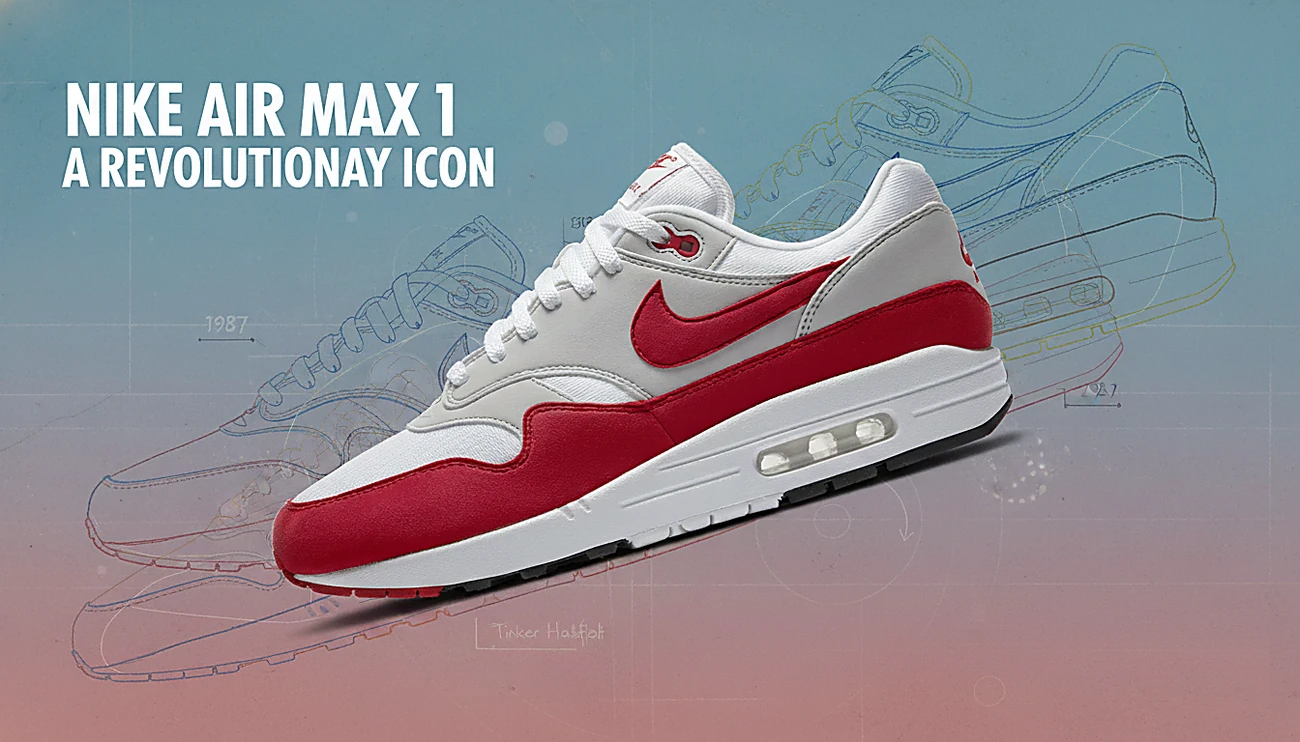
The Nike Air Max 1 launched in 1987 and changed sneaker design by making Nike Air visible through a window in the midsole. Tinker Hatfield’s idea turned hidden cushioning technology into part of the shoe’s visual identity, creating a design cue that consumers could understand before they ever read a technical explanation.
The Air Max 1 was not Nike’s first shoe with Air, and its history is more nuanced than the simplified “Tinker invented Air” story. Frank Rudy’s cushioning concept, Nike engineers, Tinker’s architectural thinking, and years of experimentation all came together in the product. That combination of engineering and visual storytelling is what made the Air Max 1 revolutionary.
Before Air Max: Frank Rudy and the Arrival of Nike Air
Nike Air began before Air Max. Aeronautical engineer Frank Rudy developed the idea of encapsulating pressurized gas inside a flexible membrane, and Nike introduced Air cushioning to running in the 1978 Tailwind. That shoe proved the cushioning concept could work in athletic footwear years before anyone could see the Air unit from the outside.
The first generations hid the Air unit inside the midsole. By the early 1980s, Nike engineers were already exploring how visible Air might work, but durability, pressure, materials, and manufacturing challenges had to be solved before the concept was ready for a commercial product. Air Max was therefore an evolution of existing technology, not its origin.
Tinker Hatfield and the Centre Pompidou
Tinker Hatfield joined Nike in 1981 with an architecture background and initially designed offices, showrooms, and retail spaces. When he moved into footwear, that training shaped how he thought about structure, material, proportion, and the relationship between what a product does and what it reveals visually.
A trip to Paris provided the famous reference point: the Centre Pompidou, a building that exposes pipes, ducts, escalators, and structural systems on the exterior. Hatfield later credited that inside-out architecture with helping him imagine a shoe that could expose Nike Air instead of hiding it. Nike engineers then had to make that architectural idea physically durable enough to manufacture.

March 26, 1987: The Launch and the First Major Visible Air Window
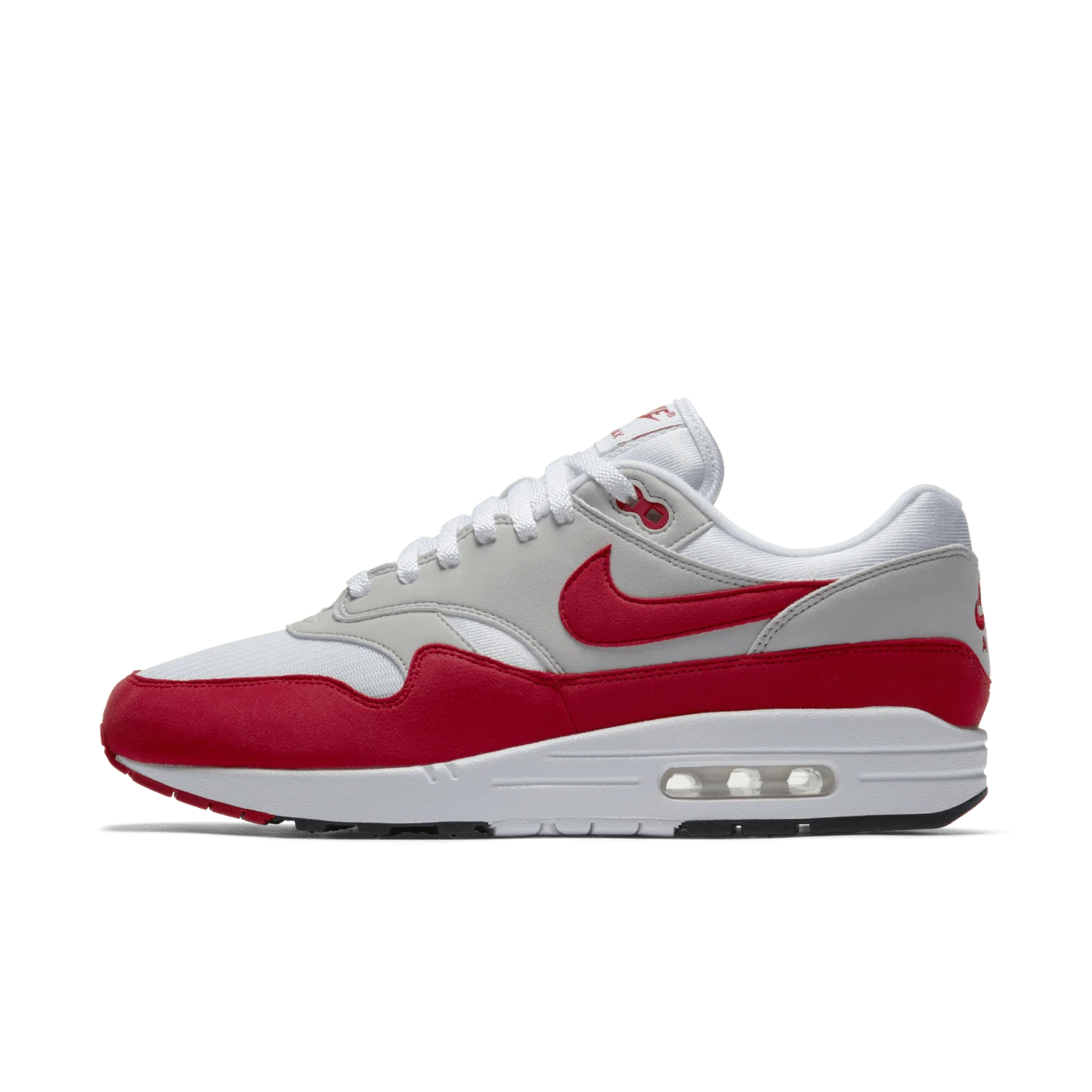
The Air Max 1 launched on March 26, 1987. Its visible heel Air window gave consumers a direct look at technology that had previously been hidden inside the shoe, establishing a design language that would expand into Air Max Light, Air Max 90, Air Max 95, Air Max 97, and many later generations. The original white, grey, and red color blocking also helped frame the window visually instead of treating it as a background detail.
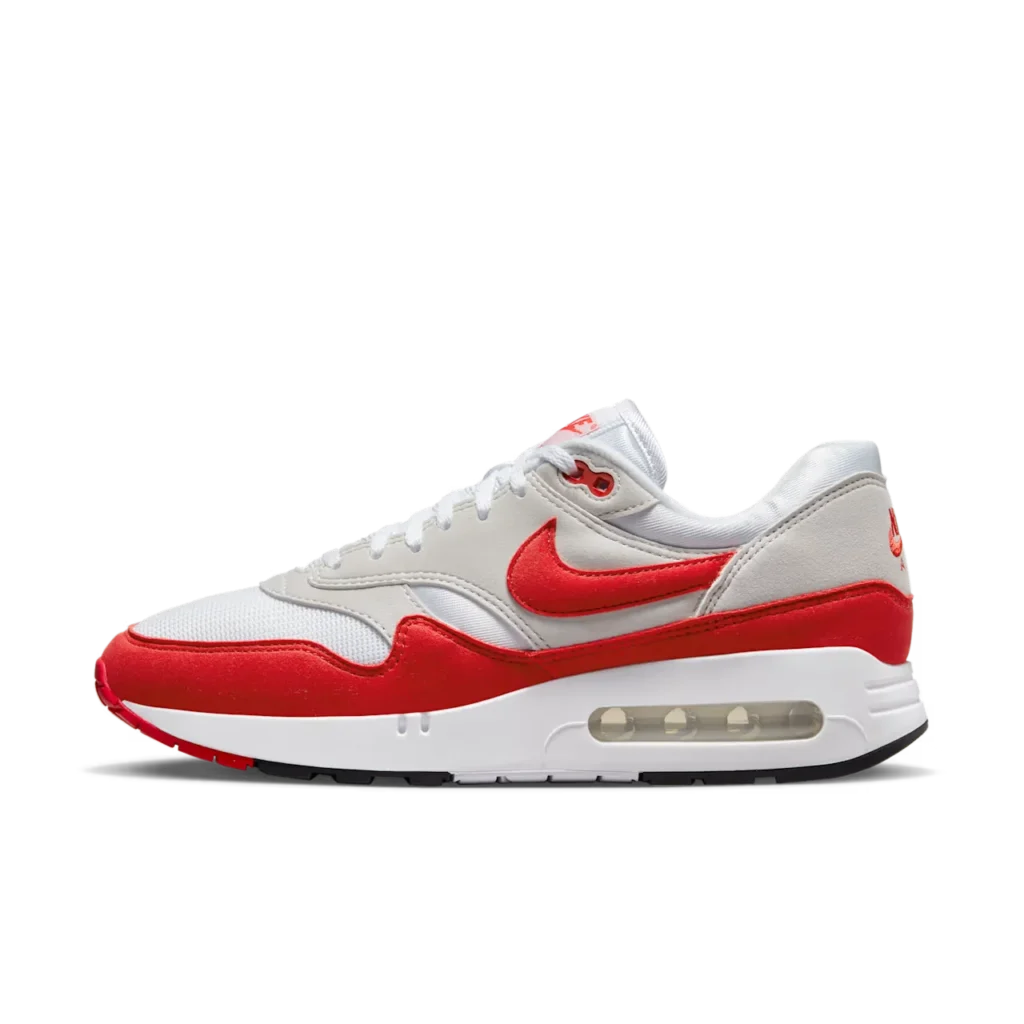
Big Bubble: What Actually Happened in 1987
The earliest Air Max 1 production used a larger visible Air window—the version now known as the Big Bubble or Big Window. For years it was treated almost like a prototype myth, but Nike’s later archival storytelling clarified that the larger-window version genuinely entered production and reached stores.
Nike later documented that engineers discovered the larger exposed unit could be vulnerable to cracking in cold temperatures. With the launch already underway, the company reduced the window’s length and height and adopted a revised Air unit during the original production period. That is why surviving 1987 pairs can reflect more than one early configuration.
The 2023 Air Max 1 ’86 Big Bubble revival was therefore not simply a fantasy “what if” edition. Nike used archival work and CT scanning of an original pair to reconstruct the larger Air unit and window, bringing an unusually short-lived early production detail back into the public story of the model.
Air Max 1 and Air Max Zero Are Not the Same Thing
Air Max Zero is a later project built from an early pre-Air-Max sketch associated with Hatfield. It was released decades after the Air Max 1 and should not be described as “the first Air Max” simply because its concept came from an earlier drawing. The commercial Air Max lineage begins with the Air Max 1 in 1987.
“Revolution”: the Beatles Commercial and the Licensing Controversy
The 1987 Air Max campaign became culturally notable because Nike used the Beatles’ “Revolution” in advertising—an unusually high-profile use of the band’s original recording in a commercial. The music reinforced Nike’s intention to present the shoe as something disruptive rather than as another incremental running update.
The campaign drew legal controversy over music licensing and commercial use. The important sneaker-history point is that Nike paired a visually radical product with an equally aggressive advertising approach, helping the Air Max 1 enter culture as more than a technical running shoe. Product innovation and marketing spectacle were already becoming intertwined.
From Running Shoe to Sneaker Culture
The Air Max 1 began as performance running footwear, but its visible technology and color blocking gave it an identity that traveled far beyond running. As later technical running shoes surpassed it in performance, the Air Max 1 remained desirable because the design itself had become recognizable.
Over time, retro releases, regional scenes, boutiques, music, streetwear, collectors, and collaborations turned the model into a cultural platform while preserving its running origin. In the U.S. and Europe, different communities adopted the shoe for different reasons, which helped the Air Max line become globally significant rather than culturally uniform.
Retros, Anniversary Releases, and the Return to OG Proportions
Air Max 1 retros have changed shape, materials, and tooling across decades. Collectors often compare toe-box height, mudguard shape, panel proportions, and Air-window details between generations. Anniversary projects and the 2023 Big Bubble program renewed interest in reproducing earlier proportions more closely, reminding collectors that “retro” never automatically means an exact duplicate of the original.
Collaborations That Helped Keep the Air Max 1 Relevant
atmos
Tokyo retailer atmos helped make the Air Max 1 a major collaboration canvas through releases such as the famous Elephant execution, blending Nike archive language with atmos’ distinctive color and material choices. The partnership also demonstrated the importance of Japan in the global evolution of Air Max collecting.
Parra
Dutch artist Parra became closely associated with Air Max through color-rich projects that connected Amsterdam design culture with Nike’s running archive. His work helped establish the Air Max 1 as a surface for personal visual language rather than only a historical recreation.
Patta
Patta’s relationship with Nike became one of the model’s most important long-term partnerships. Nike said in 2024 that the brands had created six sought-after Air Max 1 colorways, including the celebrated Chlorophyll, and described Patta as its longest and most impactful Air Max collaborator. The partnership also connected product releases with community work in Amsterdam.
Concepts
Concepts used the Air Max 1 as a storytelling platform in projects inspired by music and festival culture, combining denim, bandana-like prints, floral Swooshes, and deliberately aged visual cues. The result showed how far the silhouette could move from its original 1987 running brief without losing its identity.
Air Max Day Came Decades Later
Nike created Air Max Day in 2014, choosing March 26 to celebrate the anniversary of the Air Max 1’s 1987 launch. The first celebration included an Air Max 1 Premium with “3.26” tongue branding. Air Max Day later became an annual moment for retros, new Air technologies, community events, and special releases across the wider Air Max family.
Is the Air Max 1 Still a Performance Running Shoe in 2026?
The Air Max 1 remains rooted in running history, but Nike now sells it primarily as a lifestyle sneaker rather than as a current technical running option. That shift does not erase its original purpose; it shows how quickly performance standards evolve while strong design can survive outside the category that created it.
Modern runners looking for contemporary training performance typically choose newer Nike running platforms designed around today’s foams, geometry, fit, and biomechanics. The Air Max 1’s value in 2026 is mainly heritage, style, everyday comfort, collectibility, and design history rather than elite running efficiency.
Air Max 1 Availability in 2026
The Air Max 1 remains active in Nike’s current lineup through seasonal colorways, retros, and Nike By You options in some markets. That continuing availability is significant: nearly four decades after launch, Nike still treats the 1987 design as a living product rather than a museum-only artifact.

Why the Air Max 1 Still Matters
The Air Max 1 changed the relationship between technology and appearance. The cushioning system no longer had to be explained only in diagrams or advertising—the shoe itself showed it. That made performance engineering part of the visual conversation and gave consumers a reason to look at the midsole differently.
That idea influenced generations of Air Max design and helped establish a Nike habit that remains visible today: turning performance engineering into recognizable visual language. For the broader technology story, see how Nike Air works.
Nike Air Max 1 FAQ
Who Created the Air Max 1?
Tinker Hatfield designed the Air Max 1, working within Nike alongside engineers and Air-technology teams. The shoe was the result of collaboration, not one person inventing every component.
Was the Air Max 1 the First Nike Shoe With Air?
No. Nike introduced Air cushioning in the Tailwind in 1978. The Air Max 1 became famous for making the cushioning visibly accessible through a midsole window.
Did the Centre Pompidou Really Inspire the Air Max 1?
Yes. Nike and Hatfield repeatedly credit the Centre Pompidou’s exposed, inside-out architecture as a major design inspiration for visible Air.
Was the 1987 Big Bubble Actually Sold?
Yes. Nike’s archival Big Bubble story says the earliest larger-window version reached shelves before engineering concerns led to a smaller Air window.
When Did Air Max Day Begin?
Nike launched Air Max Day in 2014, 27 years after the Air Max 1.
It is celebrated on March 26, the date associated with the model’s original 1987 launch.