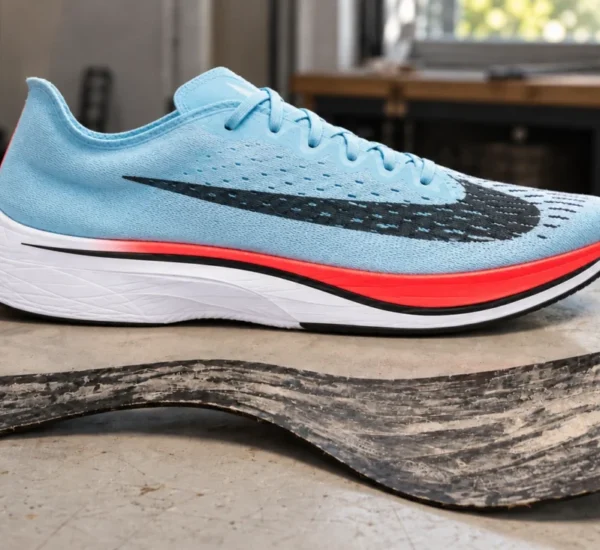
A familiar sneaker can feel like a different design when smooth leather becomes suede, canvas gives way to knit, or an opaque outsole turns translucent. The silhouette may barely change. Its texture, shadows, flexibility and the way it ages can change a great deal. Materials are part of the reason two seemingly similar pairs tell different stories.
Sneakers combine leather, natural and synthetic textiles, coated fabrics, microfiber materials, foams, rubber, structural plastics and sometimes waterproof membranes. Those ingredients work as a system. An airy outer mesh can sit over a dense lining; soft leather can conceal a stiff reinforcement; a lightweight foam may need rubber protection where it touches the ground.
This materials reference belongs to Sneaker Lab. It covers the major families found in everyday sneakers, historically important constructions and selected newer materials with documented applications. It is a guide to reading the whole shoe, rather than an inventory of every proprietary compound ever developed. If you need a map of the parts first, start with our sneaker anatomy guide.
A material, a construction and a technology are different clues
Consider the description “polyester knit upper with TPU overlays.” Polyester identifies a fiber. Knit describes how yarn forms the fabric. TPU identifies the polymer in the overlays. A name such as Flyknit adds a branded technology to that description. Asking whether knit is better than polyester mixes categories: a knit can be made from polyester.
- Material family: cotton, bovine leather, nylon, rubber or EVA.
- Construction: woven, knitted, nonwoven, laminated, foamed or formed into a lattice.
- Finish: pigment, a brushed surface, a glossy film or a water-repellent treatment.
- Component: upper, lining, midsole, outsole, plate or heel counter.
- Trademark: may describe a fiber, process, formulation or multi-part system.
Thickness, density, backing layers, seams and placement matter alongside those names. An open mesh protected by substantial trail-shoe overlays has a different job from a thin lifestyle mesh. A complete comparison needs both the material and what the designer has done with it.
| Part | Common material families | What to check |
|---|---|---|
| Upper | Leather, canvas, mesh, knit, microfiber and laminates | Fiber or hide type, lining, overlays and finish |
| Midsole | EVA, PU, expanded TPU, PEBA and blends | Disclosed formulation, geometry and protection |
| Ground-contact surface | Rubber and other outsole compounds | Tread, coverage, wear and intended surface |
| Internal structure | Plastics, composites, textiles and adhesives | Function and position, including hidden parts |
| Weather protection | Membranes, laminates, sealing and repellents | Whether the claim applies to the finished shoe |
Textiles: start with the fiber, then look at the fabric
Cotton, polyester, nylon, spandex and wool
Cotton appears in canvas uppers, laces, linings and blends. Its familiar texture suits casual sneakers, but an absorbent fabric can hold moisture, depending on weight and finish. Light-colored canvas also makes everyday dust conspicuous. The word cotton cannot tell you how quickly a double-layer upper will dry or how much air reaches your foot.
Polyester is common in mesh, knit, lining fabrics and laces. Nylon, part of the polyamide family, also appears in technical fabrics, nets and reinforcement yarns. Yarn construction, fabric structure and finishing influence abrasion resistance and feel. A sporty-looking fabric is not enough to identify either polymer, and recycled polyester cannot be reliably recognized by touch.
Spandex, also called elastane, is blended into materials to add stretch and recovery. It can help a shoe opening expand or let a panel flex, while other parts provide containment. Stretch is only useful when the fit works: a soft upper that lets your foot slide sideways is not automatically comfortable during movement.
Wool, including merino, can become knitted uppers, felted structures or linings. It interacts with moisture vapor differently from many synthetic fibers. Woolmark documents footwear applications, including blended textiles. A wool shoe still contains a sole, adhesives and other components, so a sweater’s washing instructions are not a substitute for the shoe manufacturer’s care label.
Linen, hemp and regenerated cellulose fibers appear in selected collections too. Linen and hemp are plant fibers; viscose and lyocell are produced by processing cellulose. Plant origin describes feedstock, not every treatment or the disposal route for the finished sneaker. If a product page only says “natural fibers,” ask which fibers, in what blend and in which part.
Canvas, twill, denim, ripstop and jacquard
Woven fabrics interlace warp and weft yarns, as explained in Cotton Incorporated’s weaving guide. Canvas is associated with substantial fabrics and classic casual uppers. Twill uses a diagonal structure; denim is a familiar example. Neither name guarantees an all-cotton composition, because blends and synthetic versions exist.
Ripstop incorporates a reinforcing structure, often visible as a small grid, intended to limit a tear’s spread. It does not make an upper puncture-proof. Jacquard concerns patterned fabric construction and can apply to woven or knitted textiles. The visual motif may be built into the material rather than printed on its surface.
When comparing canvas sneakers, look at the fabric’s body, the folds near the sole and the layers inside. Our Chuck Taylor All Star versus Chuck 70 comparison explores why two familiar canvas high-tops can differ well beyond their outline. Canvas weight is useful information, but it still does not describe the complete shoe.
Mesh: open on the outside does not always mean open throughout
Mesh describes an open, net-like structure. It can be made through different textile processes and with different fibers. In sneaker descriptions, engineered mesh generally points to a deliberately designed fabric with variations across the upper, such as larger openings in one area and a tighter structure elsewhere.
That openness can serve airflow and weight reduction. Exposed openings can also admit water and dust, while fine yarns may snag. Inspect the lining: a visibly perforated outer layer can cover a much less open inner one. A photograph of the surface will not settle how the assembled shoe handles heat.
Technical-looking runners make this interaction easy to see. Mesh supplies the background, while overlays draw lines, protect zones and help shape the upper. The New Balance 2002R versus 1906R comparison looks at this mixed-material language in specific versions, without assuming every colorway has identical components.
Knit: loops, stretch zones and support
Knitting forms fabric from interconnected yarn loops. The construction can vary in thickness and openness or create firmer zones within the upper. Some knits have a sock-like feel; others are strongly structured. A “seamless” claim may refer to part of the upper, rather than a shoe with no joins anywhere.
Flyknit and Primeknit are branded approaches associated with knitted uppers, not names for one universal fiber. Nike’s archive places the Flyknit Racer in 2012 and a 360-degree construction development in 2018. This shift matters visually as well as technically: fabric itself could create shapes and contrasts previously built from separate stitched panels.
During a try-on, check heel security and whether the upper holds your foot when changing direction. Pleasant stretch in your hands does not demonstrate support under load. Fine loops also deserve gentle cleaning; an aggressive brush can catch yarns, and pulling a loose thread may make a small problem worse.
Felt, nonwovens and reinforcement fibers
Some textiles have no obvious weave or loops. Felt and other nonwovens join fibers using mechanical, thermal or chemical processes. They can appear in linings, reinforcement layers and visible surfaces. Microfiber describes very fine fibers; it does not, on its own, disclose the polymer or the way those fibers are assembled.
Branded fabrics need a second look too. CORDURA NYCO combines cotton with nylon 6,6, so CORDURA should not be treated as a synonym for a single pure fiber. Dyneema identifies an ultra-high-molecular-weight polyethylene fiber used in several constructions and blends. Aramids and other high-strength fibers likewise need to be understood through their specified role. None makes the shoe’s stitching, glue or flex points indestructible.
Leather: separate the layer, tannage and finish
Animal leather is tanned hide or skin with its fibrous structure substantially retained. Species, hide area, thickness, tanning and finishing all affect the result. Bovine leather is common in sneakers, with other leathers appearing in particular designs. A reptile-like pattern may be embossed on bovine leather or a synthetic sheet; texture alone cannot identify the animal.
Full grain, top grain, corrected grain and split leather
A hide can be divided horizontally. The upper layer retains the original grain surface; lower layers provide splits. The Leather Working Group glossary distinguishes full grain, corrected grain and split leather through structure and processing.
- Full grain: retains the grain without corrective mechanical removal. It can still be dyed, finished or thinned from the reverse.
- Top grain: refers to the upper layer and can include full-grain or corrected-grain leather. Retail descriptions are not always equally precise.
- Corrected grain: has a mechanically modified grain surface, commonly followed by finishing to achieve a particular appearance.
- Split leather: comes from below the grain layer and can become suede, coated material or other components.
“Genuine leather” is not a quality grade. It indicates real leather without specifying the layer, thickness or performance. The Tannery Row’s explanation of leather grains is helpful here: full grain and top grain are not necessarily separate rungs on a quality ladder. Ask what the words tell you about the actual pair.
Smooth, aniline, pigmented and textured leather
Smooth describes an appearance. More open finishes allow natural characteristics to show; pigmented finishes can create a more uniform color and surface. A protective finish can make sense for regular wear, while a less covered surface may be chosen for visible variation and patina. Visible pores are not a requirement for every well-made sneaker.
Aniline leather keeps the natural grain visible, without a coating or beneath a non-pigmented coating. Semi-aniline adds a small amount of pigment while leaving the grain visible. A pigmented finish conceals the natural surface. The Leather Working Group definitions distinguish these finishes without making them universal quality grades.
Processing changes texture as well as color. Embossing creates texture through pressure, while tumbled leather can acquire a more pronounced grain during processing. A pebbled surface in a product photo does not reveal thickness, softness or overall quality. Leather Naturally’s manufacturing guide notes that several finishing categories can produce high-quality leather.
Pull-up describes the temporary lightening that happens as oils and waxes move when certain leathers bend or stretch. Nappa is associated with soft leather, but the word alone is not a complete specification. Horween’s glossary helps decode finishing and tanning terms without turning them into price rankings.
Suede, nubuck, roughout and a longer nap
The visible fibers on suede create its nap. Change their direction and the surface catches light differently, producing the familiar light-and-dark effect. Two panels can appear different because of nap direction, rather than fading or a mismatched dye.
Nubuck is buffed on the grain side; suede commonly presents a worked flesh-side or split surface. Leather Naturally’s care and material guide explains this distinction. Suede does not always mean a thin split: C. F. Stead describes roughout and suede products with the grain preserved on the reverse.
Hairy suede highlights a longer, more conspicuous nap. Roughout describes using the fibrous side outward and can retain a substantial underlying structure. These terms help you read the appearance, but they do not establish a rule that every suede is weaker than every smooth leather.
Watch for staining, dye transfer, aggressive brushing and changes to the nap. Treated suede and untreated suede need not handle moisture identically. Faux suede is a different category, made from textiles or other synthetic structures despite a similar look. Do not choose care products from color and texture alone.
Patent leather, coatings and reconstituted leather fibers
Patent leather’s mirror-like look comes from a surface layer. Scratches or flex marks in that layer differ from damage to an uncoated leather surface. Metallic finishes, foils and iridescent effects similarly make cleaning a finish-specific question. An abrasive suitable for an outsole can quickly spoil them.
Coated leather retains a leather base beneath a substantial finish. Bonded leather and reconstituted leather-fiber materials reorganize particles or fibers, typically with binders. Ask for composition to distinguish an intact leather sheet from a composite containing leather fibers. Recycled content does not make the structures interchangeable.
Tanning is another separate variable. Vegetable tanning uses plant-derived tanning agents, chrome tanning uses chromium salts, and combination processes also exist. Vegetable-tanned leather remains animal leather. The term describes how the hide was processed, not a plant-based substitute for it.
Synthetic leather, microfiber and coated textiles
Synthetic material is too broad a label for a useful verdict. It can mean a PU-coated fabric, a PVC (polyvinyl chloride) surface, a microfiber nonwoven or a molded reinforcement. Layer composition affects flexibility, moisture transfer and the ways a surface may change over time.
Kuraray distinguishes PU- and PVC-coated materials from nonwoven structures impregnated with polyurethane. Some microfiber materials mimic leather through a fine-fiber network rather than relying only on a film over woven fabric. Its CLARINO polyester collection provides one specific composition, which should not be applied to every microfiber product.
A well-chosen synthetic can offer consistent appearance, controlled thickness or targeted reinforcement. Possible failures include peeling, cracking and layer separation, depending on formulation and use; natural leather has its own damage modes. Price, smell and the word premium cannot identify the structure or predict its lifespan.
No-sew overlays often use thermoplastic films bonded to the upper. TPU, or thermoplastic polyurethane, can also form heel clips, cages and eyelet structures. A thin film and a substantial support piece may share a polymer family while behaving very differently. Reflective details, embroidery and printed decoration add further care considerations: the most fragile surface may be the accent rather than the main fabric.
GORE-TEX, waterproof membranes and DWR
A GORE-TEX sneaker can show mesh, leather or another material on the outside. Its protection relies on a thin membrane integrated into the footwear construction. The membrane provides a functional barrier; a laminate combines it with supporting layers; the upper incorporates that system alongside its other components.
Gore describes both ePTFE and ePE membrane platforms, combined with PU in many bi-component membranes. ePTFE means expanded polytetrafluoroethylene; ePE means expanded polyethylene. The logo alone does not identify which generation is in a particular pair, especially when comparing an older shoe with a current version.
The next-generation ePE product information qualifies its PFAS language: made without intentionally added PFAS, with trace amounts potentially present. That should not become a claim that every component of a finished sneaker is free from every substance of concern, or that it has the lowest environmental impact in every comparison.
Breathable means moisture vapor can move through the system, not unlimited airflow. Activity, outside humidity, temperature, socks and lining all affect the experience. In hot, humid weather, sweat can leave the interior damp without rain getting through. Water can also enter through the opening at the top of a shoe.
DWR, durable water repellent, helps water bead on the outer surface. It does not replace a membrane, sealed construction or a well-made shoe. A wetted-out exterior can affect comfort without proving that the membrane has developed a hole. Other waterproof technologies also use membranes and surface treatments; read the exact claim rather than judging by a technical-sounding name.
Follow the GORE-TEX footwear care instructions and the shoe maker’s directions. Do not copy jacket advice involving tumble-drying or heat onto sneakers. Unsuitable waxes and greases can interfere with breathability. Renewing water repellency cannot repair an open seam, puncture or separating layer.
Midsole foams: chemistry, cells and shape
Foam contains gas-filled cells within a material. Its behavior depends on polymer family, formulation, density, cell structure and processing. The same broad chemistry can produce quite different foams. Pressing a midsole sidewall with a thumb also does not reproduce the load and movement of a stride.
EVA and blends
EVA stands for ethylene-vinyl acetate copolymer. It is widely used in midsoles and insoles and can be blended with other polymers. Molding, expansion and additives help tune weight, firmness and response. Treating every EVA as one inexpensive, identical foam misses how much can change within the family.
Repeated compression can affect foam thickness and feel over time, but external wrinkles cannot tell you exactly how much cushioning remains. Dow describes EVA and polyolefin elastomer applications in footwear. POE and olefin block copolymers add further formulation options; the retail product page rarely gives the complete recipe.
PU and TPU: related chemistry, different forms
PU means polyurethane, a broad family found in foams, coatings and adhesives. Sole systems can use different chemistries, including polyester- and polyether-based formulations, as documented for BASF’s Elastopan range. Knowing only that a shoe contains PU does not establish its performance or service life.
TPU is thermoplastic polyurethane. It can be used as a compact structural component or expanded into foam. E-TPU identifies expanded TPU, familiar from the fused-particle appearance of some midsoles. BASF documents these applications through Infinergy. For the history and variations of a widely recognized cushioning system, see the adidas Boost guide.
PEBA, thermoplastic copolyesters and foaming processes
PEBA combines polyamide and polyether blocks. Pebax is an Arkema trademark; the company’s technology overview describes both foam and solid-component uses. The family name and the trademark should not be substituted for each other in every specification.
Thermoplastic copolyester foams also appear in footwear, with abbreviations such as TPC and TPEE. Celanese documents foamable Hytrel grades for soles and insoles. Supercritical foaming and nitrogen-infused are descriptions of processing, not sufficient identification of the base polymer. A novel process can be applied to more than one material family.
High energy return in a particular test does not guarantee that every wearer will run faster or enjoy walking in that shoe. Stack height, base width, material placement and the structure around the foam all affect the result. When reading names such as ZoomX, React, FuelCell, FF BLAST or PWRRUN, verify the version rather than assigning one universal formula to an entire branded family.
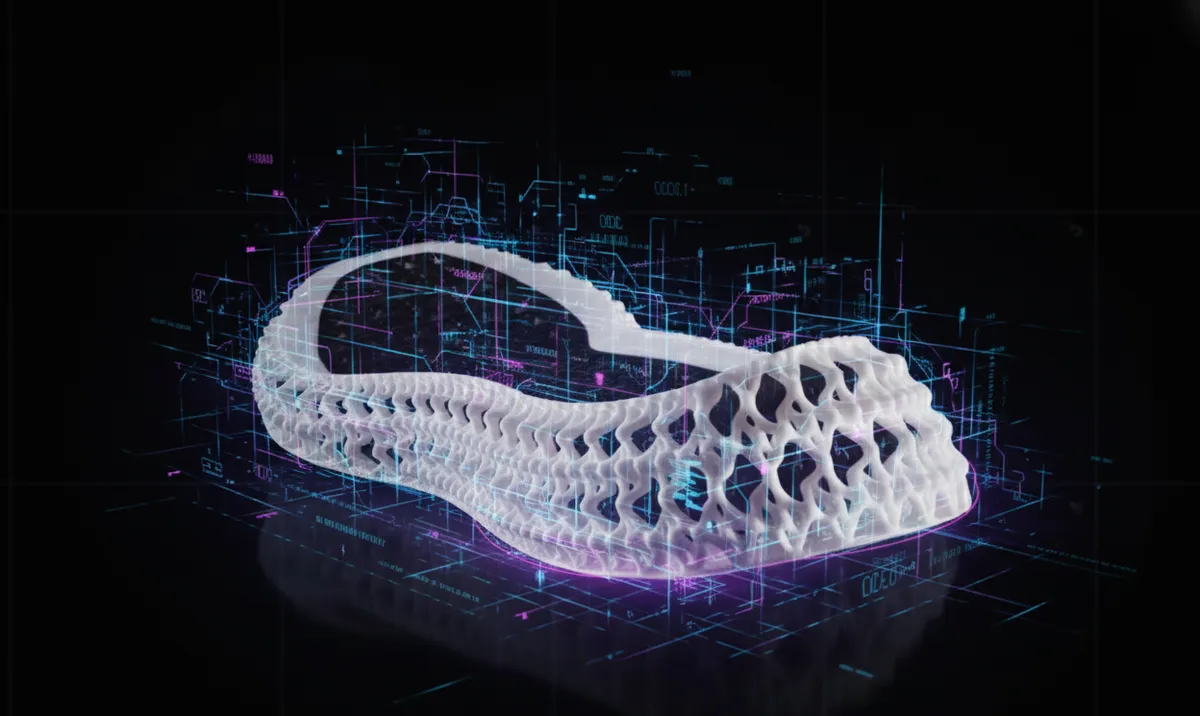
Air units and gel components belong to cushioning systems, while printed lattices use another structural approach. Our guides to Nike Air and adidas 4D explain those designs in more detail. The technology name, the material and the component’s shape each answer a different question.
Outsole rubber: more than a color or a logo
Natural rubber is derived from latex. Synthetic rubbers include several polymer families, such as SBR (styrene-butadiene rubber) and butadiene rubber. An outsole can combine rubbers, fillers, pigments and additives. The formula balances factors including abrasion resistance, traction, flexibility, manufacturing and appearance. Natural does not mean pure, and synthetic does not describe a single level of quality.
Gum is strongly associated with the caramel or translucent appearance of classic soles. Color alone does not prove natural-rubber content. Clear, white and black outsoles likewise cannot be chemically identified from appearance. Blown rubber incorporates cells and may reduce weight relative to a comparable solid formulation.
Carbon rubber commonly refers to rubber containing carbon-black filler. Cabot documents carbon black in rubber goods, including footwear. Those dispersed particles are different from a carbon-fiber plate. A darker sole is not automatically a more durable one.
Vibram, Continental and shoe-brand compound names point toward suppliers or technologies, but the precise compound and tread still matter. Vibram describes XS Trek as a particular formulation. Grip on rock cannot simply be transferred to wet tile, muddy trails or an oily floor. Wear, contamination and the amount of rubber contacting the surface matter too.
Vulcanized construction, cupsoles and visible stitching
Vulcanization is a curing process that creates links between rubber chains, forming a network. In footwear, vulcanized construction also names an assembly method. That does not mean a cupsole is made from unvulcanized rubber. The IUPAC definition and SATRA curing tests for molded sole units help separate those meanings.
A cupsole uses a molded unit that wraps around the bottom of the upper, with attachment methods varying by design. Vans describes these construction approaches and its Wafflecup hybrid.
Do not turn them into a universal flexible-versus-heavy comparison. Thickness, insoles, reinforcements and geometry can change the result. Visible stitching does not prove a shoe is adhesive-free, and a stitched sidewall does not guarantee an easy resole. Repairability depends on how the entire pair was made.
The hidden materials: plates, linings, insoles and glue
Plates, shanks and reinforcement pieces
A carbon-fiber plate is a composite, with fibers held in a resin matrix. Fiber direction, layer count, thickness and shape influence stiffness. Nylon plates and structural TPU pieces provide other options. A small midfoot shank has a different position and purpose from a long plate in a racing shoe.
A rigid black component is not proof of carbon fiber, and plated shoes do not all target the same activity. The carbon-plate guide separates material, geometry and the complete shoe system. Heel counters, internal toe reinforcements and side cages deserve similar attention: they may change the feel considerably while remaining absent from the headline description.
Linings, padding, sockliners and the construction underneath
The surface against your sock may influence first-step comfort more than the visible outer panel. Textile and leather linings, collar foams and internal sleeves create different contact surfaces. Neoprene is a synthetic polychloroprene rubber. A description such as “neoprene-like” identifies a resemblance and does not establish the composition.
A removable insole, when present, usually combines a top cover with a base such as EVA, PU or another material. OrthoLite offers different open-cell foam formulations. A logo does not establish identical density in every model, make an insole a medical orthotic or mean a glued-in piece should be pulled out.
There may be a textile lasting layer or another structural component beneath the sockliner. Removing the sockliner does not expose the midsole directly in every shoe. A thicker replacement insole also takes up interior space and can increase pressure over the top of the foot.
Adhesives, thread, laces and hardware
Adhesives are part of a sneaker’s engineering. BASF describes PU-based footwear adhesives, including waterborne dispersions. Water-based describes the manufacturing system, rather than proving the cured bond dissolves in ordinary contact with water or that the assembled shoe can be machine-washed.
Footwear thread can use nylon, polyester and other fibers. Coats documents nylon filament in shoe-stitching applications. Laces, webbing, metal or plastic eyelets and lace tips complete the picture. Look for fraying, worn contact points and damaged hardware rather than judging quality by stitch count alone.
How to identify materials without damaging your sneakers
- Find the product code. Compare the inside label, box and order details. A model name does not identify every edition.
- Read the official description for that colorway. Look for separate upper, lining, midsole and outsole information.
- Inspect structure and finish. A weave, loops, nap or surface film offers clues, rather than a laboratory identification.
- Keep unknowns visible. Textile does not identify a fiber; foam does not identify a polymer; leather does not identify a finish.
- Find the care instructions before using a product. If the listing conflicts with the label, ask the manufacturer to clarify.
Do not burn, pierce, scrape or apply solvent to identify a material. Water-drop tests can also mark absorbent finishes and give misleading results. Smell and hand feel are limited clues because coatings can change both. A product photograph rarely establishes whether a smooth panel is coated leather or a convincing synthetic.
Two exact-SKU examples
The official Samba OG B75807 listing separates leather, suede overlays, synthetic lining and gum rubber. That information changes the cleaning question: which panel are you treating? A product suitable for the smooth area may alter the napped toe overlay.
Meanwhile, adidas describes Gazelle BB5476 as nubuck. Calling every Gazelle suede would erase that distinction. Our Samba versus Gazelle comparison takes the model differences further. Here, the useful habit is to check the actual code instead of borrowing the materials from a similar-looking pair.
Material pictograms are summaries too. European footwear labeling separates the upper, lining and sock, and outsole. Those categories are not a complete bill of materials for adhesives, films and additives. A US shopper may encounter these symbols on imported footwear, but should not assume the same labeling rules or level of detail applies in every market.
Choose for your routine, then check the whole shoe
Start with the conditions you encounter regularly. For hot weather, inspect ventilation through the upper, lining and tongue. For frequent rain, look for a finished-footwear protection claim and consider the height of the opening. For rich color and texture, suede or nubuck may be appealing if their maintenance fits your routine.
If easy cleaning is the priority, a smooth finish that tolerates gentle wiping may help, although light colors and delicate films still need care. For skating, trail use or sport, choose a construction designed for the activity. Swapping one upper material does not turn a casual sneaker into specialist equipment.
Break-in has limits. Leather may give and knit may conform, while reinforcements, outsole length and other dimensions do not change in the same way. Use the sizing and fit guide to judge the foot inside the shoe, then the sneaker buying guide for the rest of the purchase decision.
Durability includes more than abrasion resistance
Wear resistance, repeated flexing, aging, maintenance and repairability are different parts of durability. A tough upper can outlast the foam beneath it; a healthy midsole can accompany a lining already worn through. No material makes every component permanent.
Creasing can be normal. Horween links leather creasing to factors including tannage, thickness, pattern and fit. Crumbling, structural cracking and separation call for a different assessment. SATRA documents moisture-related PU degradation over time, including during storage. Wearing an old pair occasionally does not magically stop that chemistry.
There is no universal expiration date for PU or one mileage at which every EVA midsole fails. Read our hydrolysis and storage guide and, for older pairs, the vintage sneaker inspection guide. An unworn appearance does not establish that a pair remains suitable for wear.
A practical care reference for mixed-material shoes
Respect the most sensitive component and the manufacturer’s directions. For ordinary everyday dirt, remove loose particles first; if mold or contamination is suspected, separate the pair and seek guidance before brushing. Patch-test a permitted cleaning product in an inconspicuous spot. Nike and New Balance provide gentle-cleaning and air-drying guidance with material-specific cautions.
| Material or system | Initial approach | Important limit |
|---|---|---|
| Finished smooth leather | Soft cloth and care approved for the finish | One conditioner does not suit every leather |
| Suede and nubuck | Start with dry dirt and an appropriate gentle brush | Soaking or hard scrubbing does not restore lost nap |
| Canvas, mesh and knit | Gentle spot cleaning that protects yarns and dyes | A textile upper is not permission to use a washer |
| Patent, metallic or film-coated surfaces | Finish-specific directions and minimal friction | Outsole abrasives can damage the surface |
| Synthetics and microfiber | Identify the coating and test a compatible cleaner | Leather oil does not nourish a synthetic film |
| Membrane footwear | Follow shoe directions and renew DWR when indicated | Repellent does not repair punctures or sealing |
| Rubber and exposed foam | Remove debris without attacking paint or bonded edges | Being on the sole does not make solvent safe |
On a mixed-material pair, keep the rubber-cleaning product away from suede and control moisture near joins. Do not pull out fixed insoles or speed drying with an oven, hair dryer or intense sun. Before using a washer, read how to check whether your sneakers can be machine-washed. The sneaker cleaning guide covers the broader process.
When a material has already changed
- Flattened nap: may reflect fiber direction or wear. Suitable brushing may rearrange the surface but cannot replace missing material.
- Peeling film: stop using abrasives or solvents. Conditioner cannot rebuild a detached coating.
- Crumbling foam: stop wearing the pair and seek assessment. A surface glue repair cannot restore degraded structure.
- Separating sole: inspect the extent and the underlying material before repair. Adhesive alone does not fix a brittle substrate.
- Unknown deposit or stain: appearance alone does not confirm mold. If contamination is suspected, separate the pair and seek appropriate guidance.
Recycled, bio-based, vegan and emerging materials
These terms answer different questions. Recycled concerns recovered feedstock. Bio-based concerns biological origin, which is broader than plant origin alone. Vegan concerns the absence of animal-derived inputs within the stated scope. Recyclable depends on processing and available infrastructure; biodegradable requires defined conditions and a timeframe. None should be transferred automatically from one fiber to a complete sneaker.
Ananas Anam describes Piñatex as a nonwoven using pineapple-leaf fibers, with components such as PLA and PU coatings varying by collection. It also states that the complete material is not 100% biodegradable. VEJA describes C.W.L. as cotton canvas coated with PU and plant-derived components. Both illustrate why a plant-based headline should lead to questions about the remaining layers.
Mycelium, agricultural by-products, foams with renewable feedstock and designs that make components easier to separate belong to the wider materials-development landscape. Evaluate the composition of the commercial version, relevant testing and whether the product is actually available. A promising prototype cannot demonstrate the lifetime of every future application.
Recycled content needs a denominator too: half of a yarn is not half of a shoe’s weight. Certification also has a scope. Leather Working Group explains that its certification applies to the audited facility, rather than the finished sneaker as a whole.
A useful environmental comparison considers sourcing, processing, energy, service life, transport, maintenance and end of life. Bonded mixed-material constructions can complicate separation. Ask what was measured, which component the claim covers and whether a collection or recycling route exists where you live. Caring for and repairing a usable pair can avoid premature replacement without creating a promise of zero impact.
Sneaker materials FAQ
What is the best material for sneakers?
It depends on the job. Airflow, rain protection, abrasion resistance, texture, weight and easy care favor different combinations. Compare the finished shoe and its fit rather than choosing solely from the headline upper material.
Are mesh and knit the same thing?
Mesh describes an open structure; knit describes a loop-based construction. A knit can contain mesh zones. Neither term alone identifies the fiber, thickness or number of layers.
Is suede real leather?
Natural suede is leather with a napped surface. Similar-looking materials can be synthetic. Check the composition rather than assuming either animal origin or animal-free construction from the look.
Does premium leather crease?
Yes. Flexing is part of wearing shoes, and the look of a crease depends on several leather and construction choices. Creases alone do not prove poor material or a counterfeit pair.
Does GORE-TEX make a shoe immune to getting wet?
Protection depends on construction and condition. Water can enter over the opening, sweat can dampen the inside, and damage needs assessment. DWR and the membrane perform different functions.
Is TPU always rigid and PEBA always soft?
No. Chemistry, formulation and structure must be read together. TPU can form foam or compact pieces, and PEBA also appears in components beyond foam. The design determines the application.
Is vegan footwear always plastic or always plant-based?
Neither is a reliable rule. Plant textiles, synthetics and mixtures are possible. If animal-free construction is essential to your purchase, check the maker’s statement for the complete shoe, including adhesives and small details.
Can I identify materials from a product photo?
You can spot construction and finish clues, but not reliably establish polymer chemistry, recycled percentage or leather layer. Finding the exact product code and a credible specification is the better next step.
Understanding materials adds another way to enjoy sneakers. Suede nap, layered shadows, exposed yarns and outsole texture become part of the design story. Return to Sneaker Lab when you want to follow one of those details into cleaning, construction or cushioning technology.
Technical references and product information checked October 7, 2026. Specifications can vary by product code, color and edition. This guide combines manufacturer and institutional documentation with editorial guidance; it does not report original laboratory or wear testing.