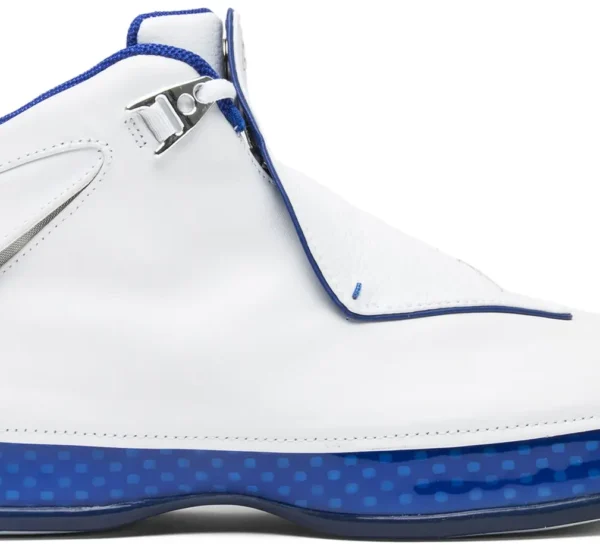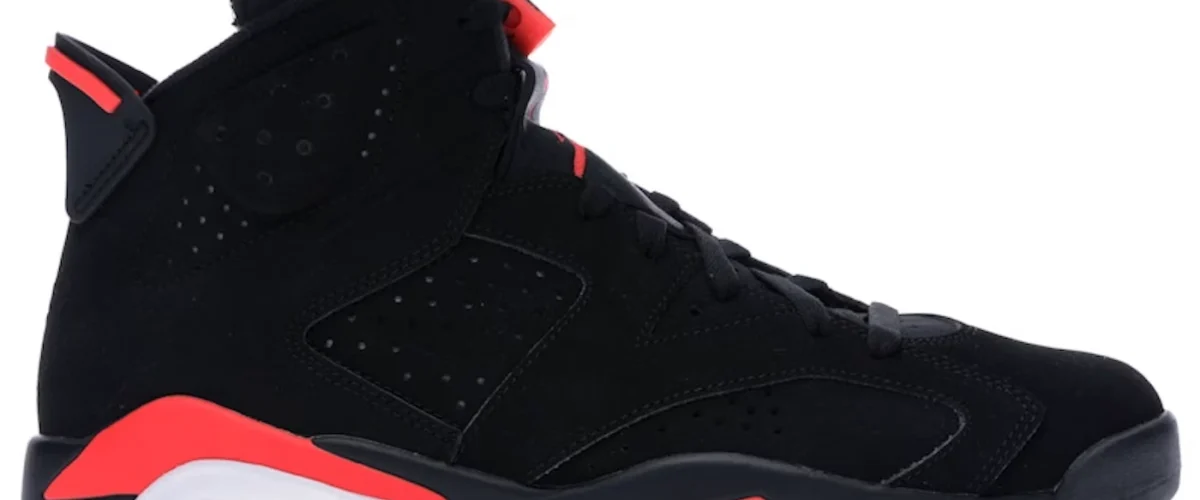
The Air Jordan 6 turns practical details into recognizable forms. Its history connects a major sporting moment with a varied original color range.
The shoe at a career turning point
Tinker Hatfield’s Air Jordan VI debuted in 1991. Its practical points of access and adjustment became some of its most recognizable design features.
Compared with the V, the profile organizes its dramatic features differently. The jagged visual energy gives way to larger panels, deliberate openings and a distinctive tongue-and-heel arrangement. The change can be read as a move toward a more controlled composition, rather than simply a quieter version of the same idea.
Access and adjustment as design subjects
The tongue openings and rear pull tab provide obvious points for pulling the shoe on. Lace locks and a tongue cover organize the fastening area. Perforated panels, visible heel Air and translucent outsole sections complete a recognizable package. Materials vary by original colorway, so a leather-based pair should not be used to describe every VI.
Nike links the model’s inspiration to Jordan’s German sports car. The heel tab is commonly understood through a spoiler-like form. Keeping the reference at that documented level is more useful than attaching an unsupported car model to the shoe.
The functional details also serve as visual landmarks. From the front, the tongue is unmistakable; from the back, the pull tab provides another identifier. A design can therefore communicate the same identity from several views. This is worth noticing when comparing the VI with models whose recognition depends mainly on a side panel.
The original five, with three central examples
The 1991 lineup included Black Infrared, White Infrared, Carmine, Sport Blue and Maroon. Black Infrared, White Infrared and Carmine provide three useful entry points into the model’s color design. The three show how the same panel structure can support very different distributions of color.
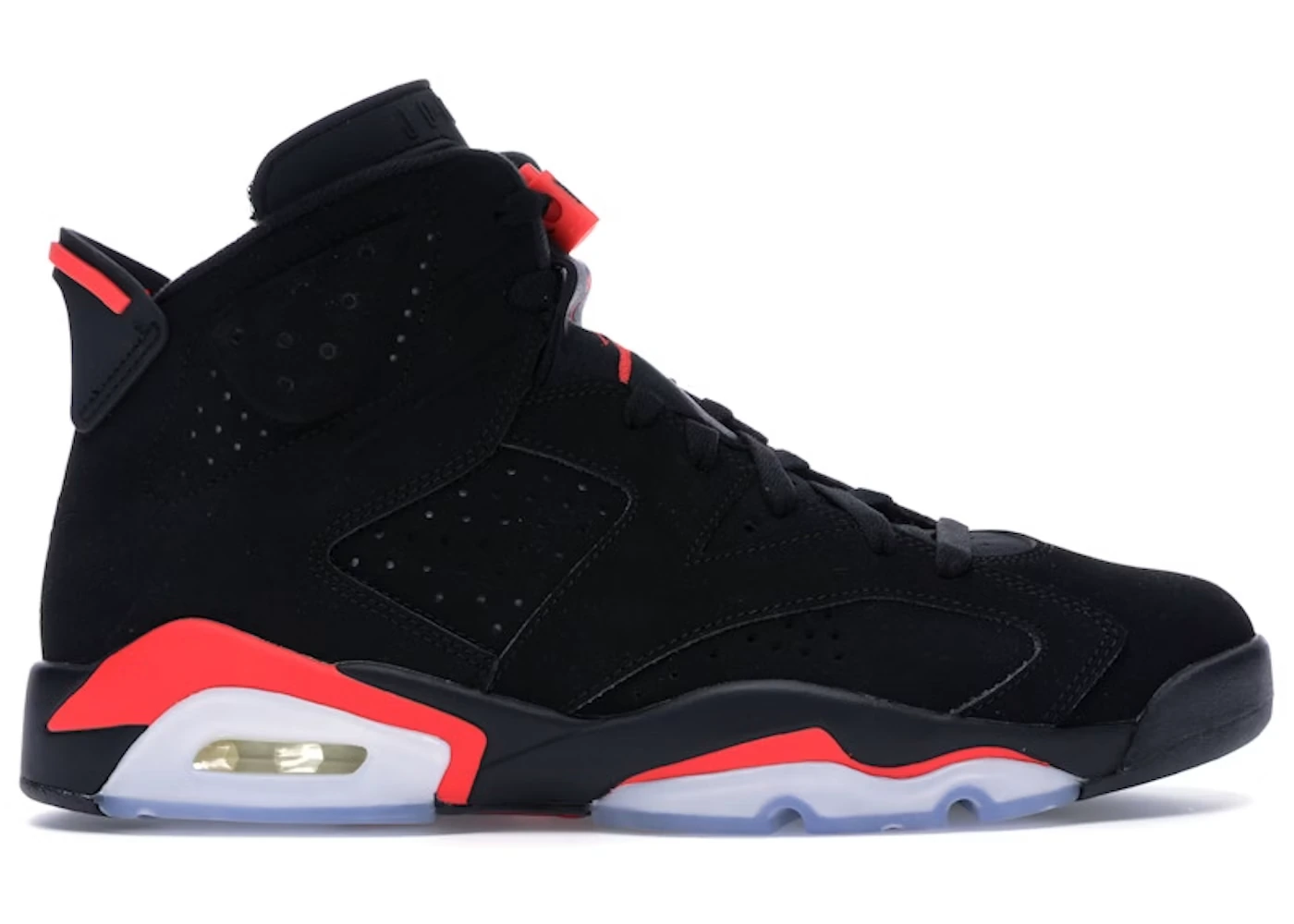
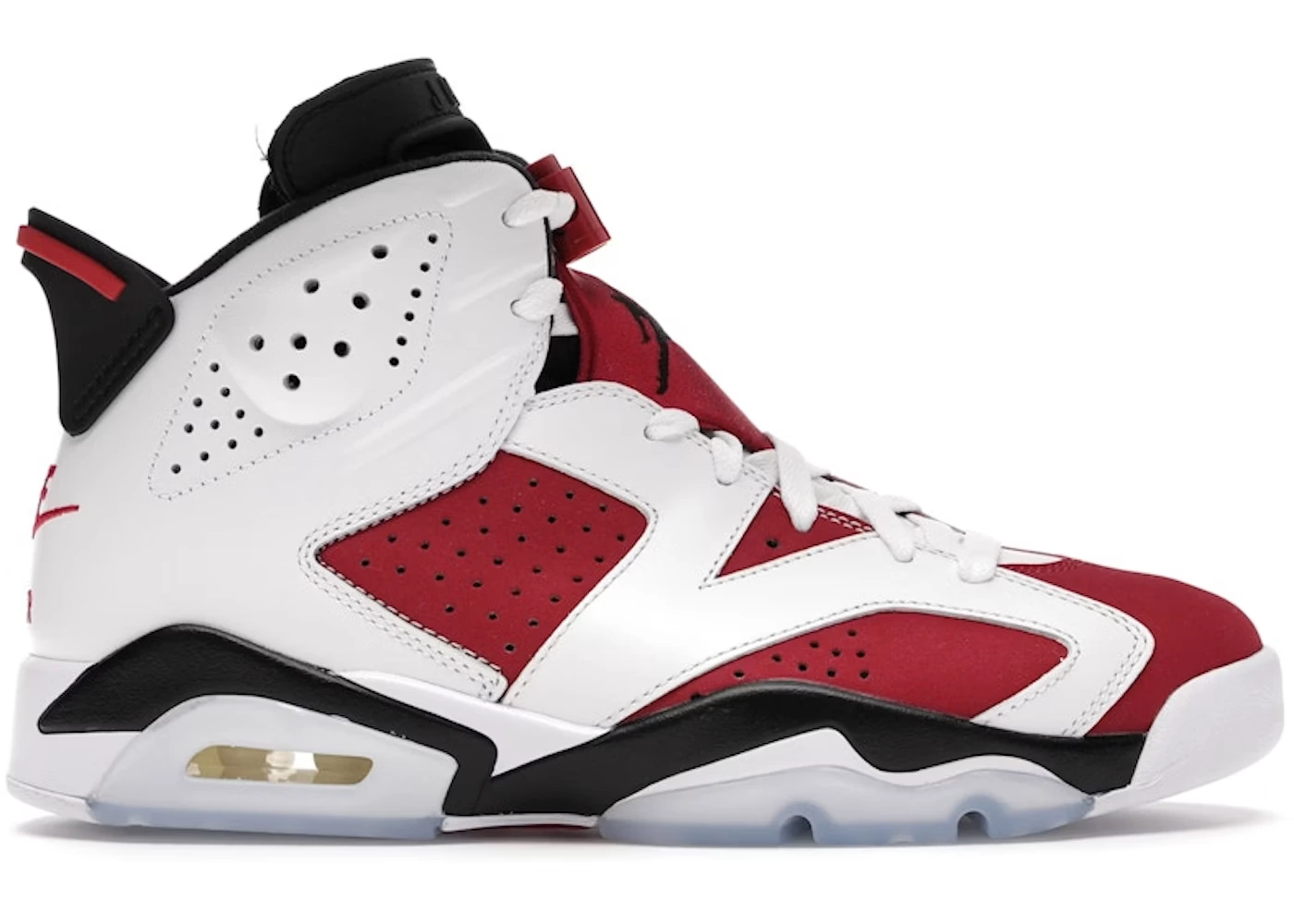
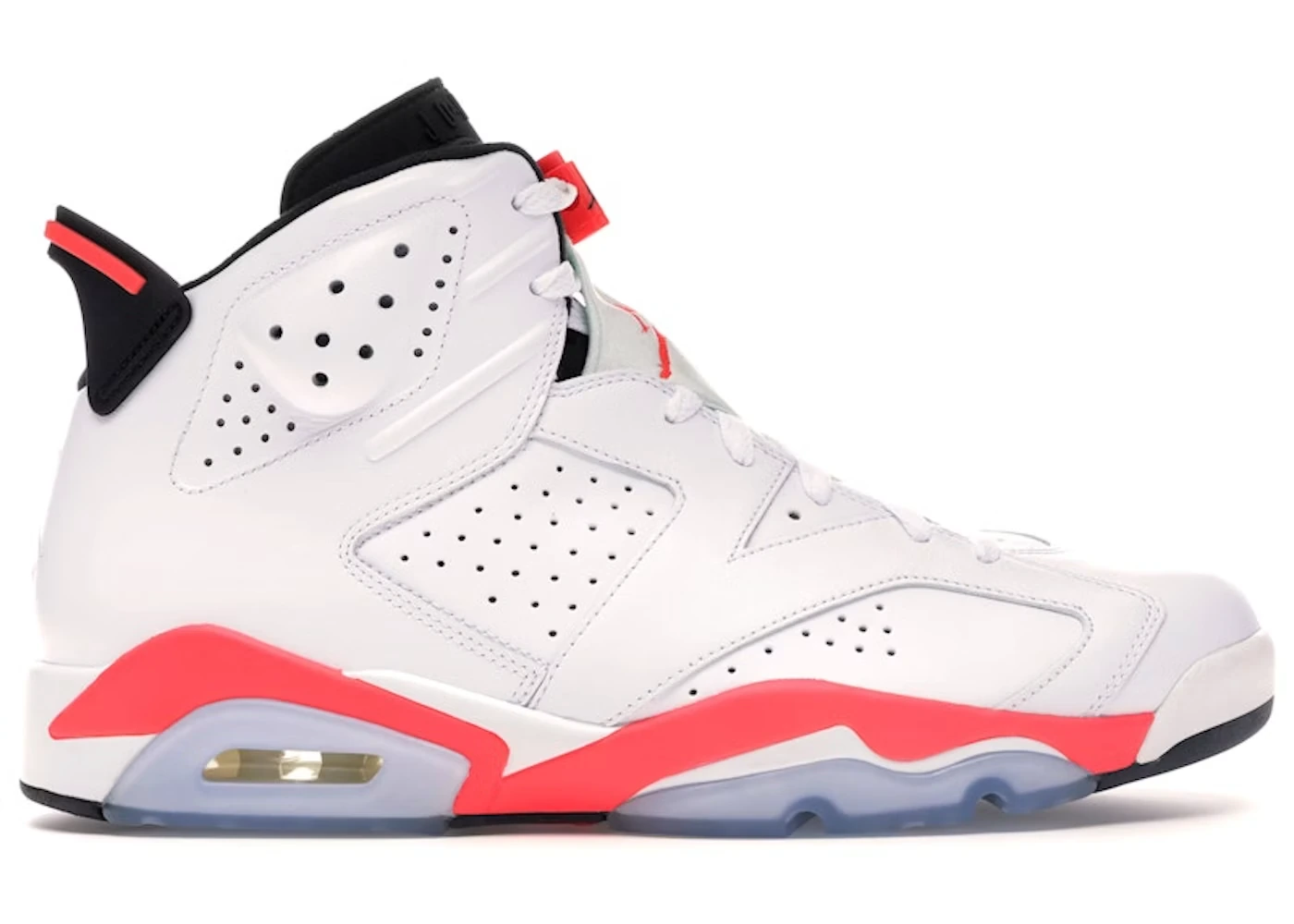
Black Infrared places bright accents against a dark upper and is the version linked to the championship postseason. White Infrared changes the contrast while keeping the accent family. Carmine makes the upper itself more color-blocked, with red and white creating a different emphasis from the smaller flashes of Infrared.
Sport Blue and Maroon are also original. Their existence matters because the VI was not launched as a single championship color with later alternatives added afterward. The full original collection already allowed different readings of the same shape.
The word Infrared needs similar care. It identifies a particular accent tradition, not any red used on an Air Jordan. Later releases may vary in shade, branding and materials. Those differences belong in comparisons between editions, rather than being silently treated as identical.
What the championship association actually establishes
Jordan’s first NBA title gives the VI a clear historical role. The black-based Infrared pair belongs to the playoff narrative, while the model as a whole spans a wider release program. It is more precise to say that the VI was his first championship shoe than to imply every original colorway appeared in the title-clinching game.
This distinction makes the history richer. A signature line can have a definitive sporting image while also offering products with other visual purposes. Collectors interested in Sport Blue or Maroon are not stepping outside the original story; they are looking at a less frequently illustrated part of it.
The championship also changes how later viewers interpret the design. An opening in the tongue is a functional feature, but once attached to a famous season it becomes a period marker. Historical meaning accumulates around the object; it is not a technology built into the sole.
The retro timeline and the Low distinction
The VI’s retro history began in 2000, opening a new phase of releases and interpretations.
When assessing a retro, look separately at original palette, branding, shape and material execution. An OG colorway can return with changes to heel branding or a different interpretation of the accent shade. Calling it a retro explains its place in time, but does not settle how closely it follows one particular earlier pair.
The model’s enduring appeal can be understood through two parallel stories: a major sporting milestone and a design that made practical points of access into recognizable forms. Neither requires treating every later edition as a perfect reconstruction. The useful question is what each release preserves, changes or newly emphasizes.
The Low’s three-color debut
The Air Jordan 6 Low launched on April 27, 2002 with three documented colors: Black/Metallic Silver, White/University Blue-Black and the women’s White/Coral Rose. They share the same release date, so the first Low is best understood as a three-color introduction. (SneakerFiles: 2002 Low launch ledger; Grailed: Air Jordan 6 history)
Its new height changes the balance of the familiar upper. This is a distinct retro-era branch, with its own opening colors rather than a replay of the original collection.
Frequently asked questions
What were the original Jordan 6 colors?
Black Infrared, White Infrared, Carmine, Sport Blue and Maroon.
Is Carmine a later colorway?
No. Carmine was one of the five original colors in 1991.
Does OG Infrared mean every retro has the same shade and branding?
No. The palette has original roots, while individual reissues can differ in execution.
Sources
Historical sources consulted October 15, 2026.