The second chapter becomes a new starting point
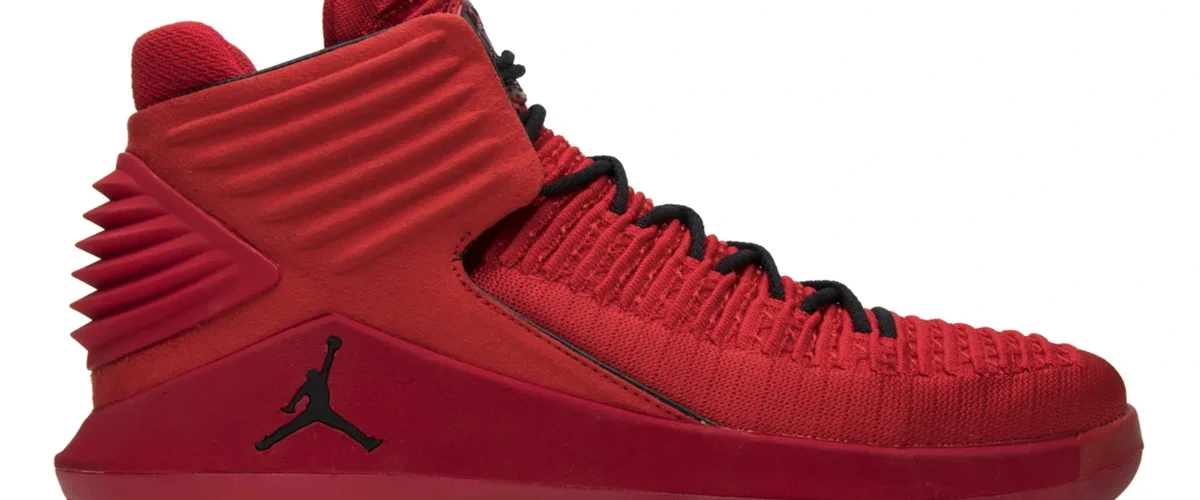
The Air Jordan XXXII continued an idea introduced by the XXXI: return to an early flagship and ask what its identity might mean for a contemporary basketball shoe. This time the reference was the Air Jordan II. The result belongs to the 2017 performance line, even when the familiar shapes and marks invite a comparison with an earlier era.
The shoe was presented in Turin on August 29, 2017, ahead of the September 23 Rosso Corsa release. Nick DePaula’s contemporary report connects that setting with the Air Jordan II’s Italian history. The setting explains the creative reference; it should not be turned into an unsupported claim that the XXXII was manufactured in Italy.
Tate Kuerbis and a less visible support structure
Tate Kuerbis designed the XXXII. His discussion of the upper emphasized an internal support system integrated with the knit construction. The launch-period designer interview helps explain why a visually smooth exterior could conceal a more involved arrangement.
That approach is different from displaying every functional element on the outside. The viewer reads the shape and textile first; the wearer encounters the supporting system through the fit. It is a useful contrast with shoes that make straps, cables or plates the most obvious part of their appearance.
For a model history, the connection to the II should be treated as a design conversation rather than an equivalence. Recognizable references can carry an earlier idea of finish and proportion into a new material language. The XXXII does not need to reproduce the original II’s construction to make that relationship meaningful.
Flyknit, Zoom and FlightSpeed
The family used Flyknit, forefoot and heel Zoom Air, and FlightSpeed. Nike’s XXXII Low product description documents those platform elements; the launch coverage describes the knit upper and herringbone-based traction on the new model. Contemporary introduction coverage provides that broader context.
These names describe different parts of the product. Flyknit concerns the upper, while Zoom Air and FlightSpeed address the underfoot system. Listing them together without explaining their locations can make the shoe sound more complicated than it is. The meaningful question is how the upper keeps the foot situated relative to the platform underneath.
It is also important to distinguish Flyknit here from the performance-woven story of the XX9. Both are textile approaches, but treating all fabric-looking Jordans as the same construction removes the very material differences that drove this period of design.
The XXXII is particularly useful for comparing visible heritage and hidden engineering. A reader can recognize a historical reference before knowing how the support system works. The product therefore communicates on two timescales: immediate visual familiarity and a more detailed explanation of its contemporary construction.
Three original-period mid-top colors
The third selected mid-top is Russ, also called Why Not, style AA1253-400, released November 22, 2017. Contemporary release coverage identifies that Westbrook-associated edition. It is an original-run follow-up rather than a third first-day color.
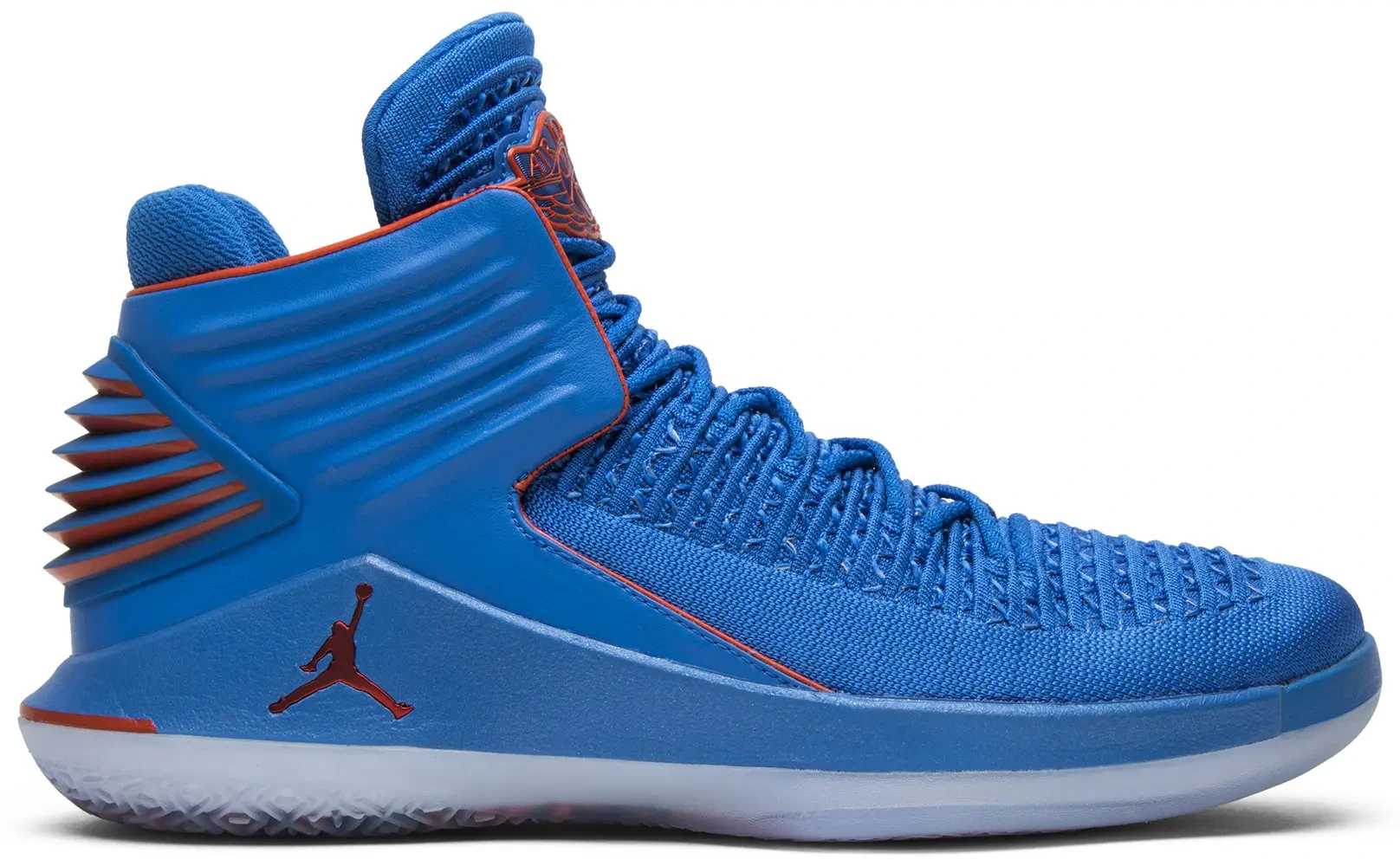
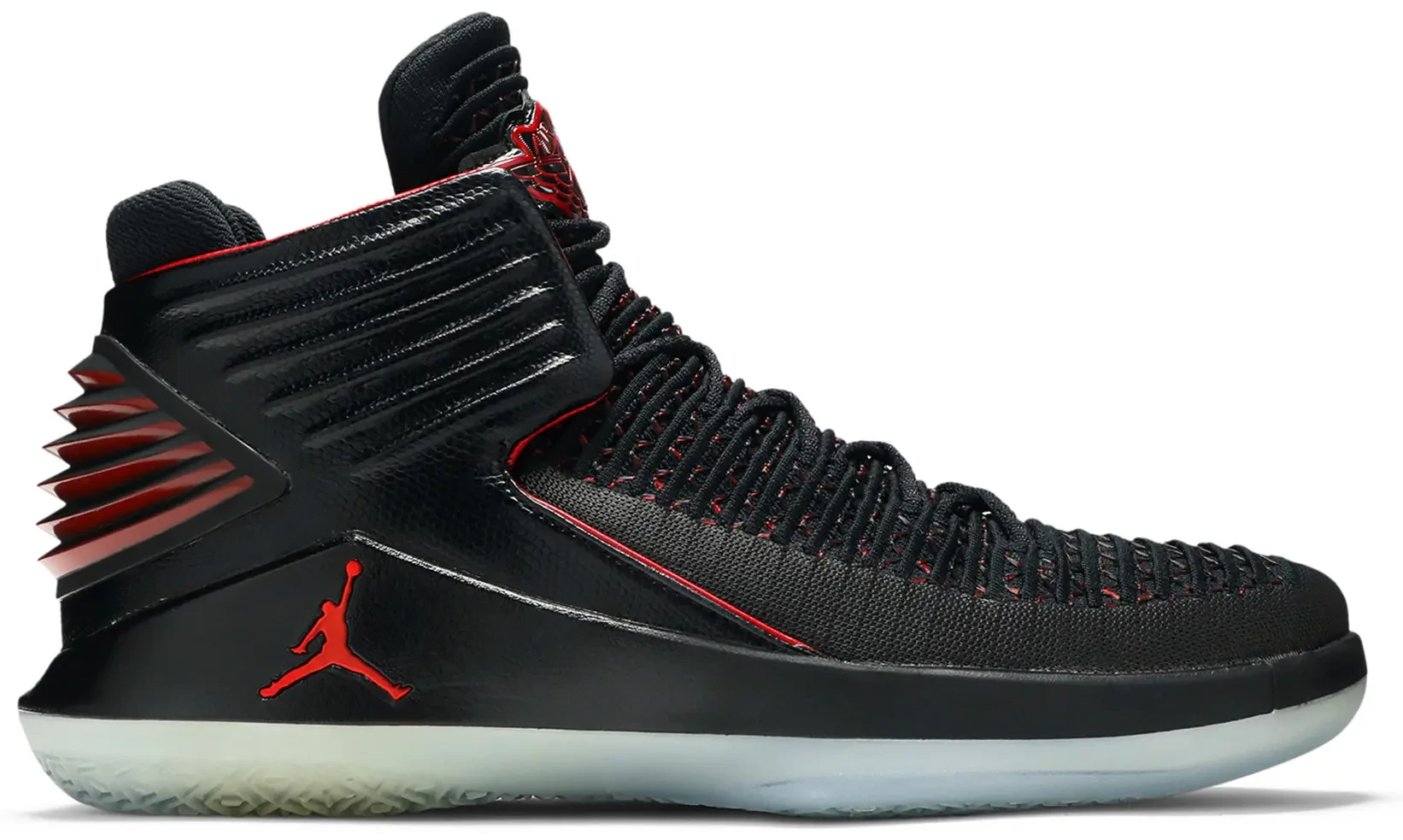
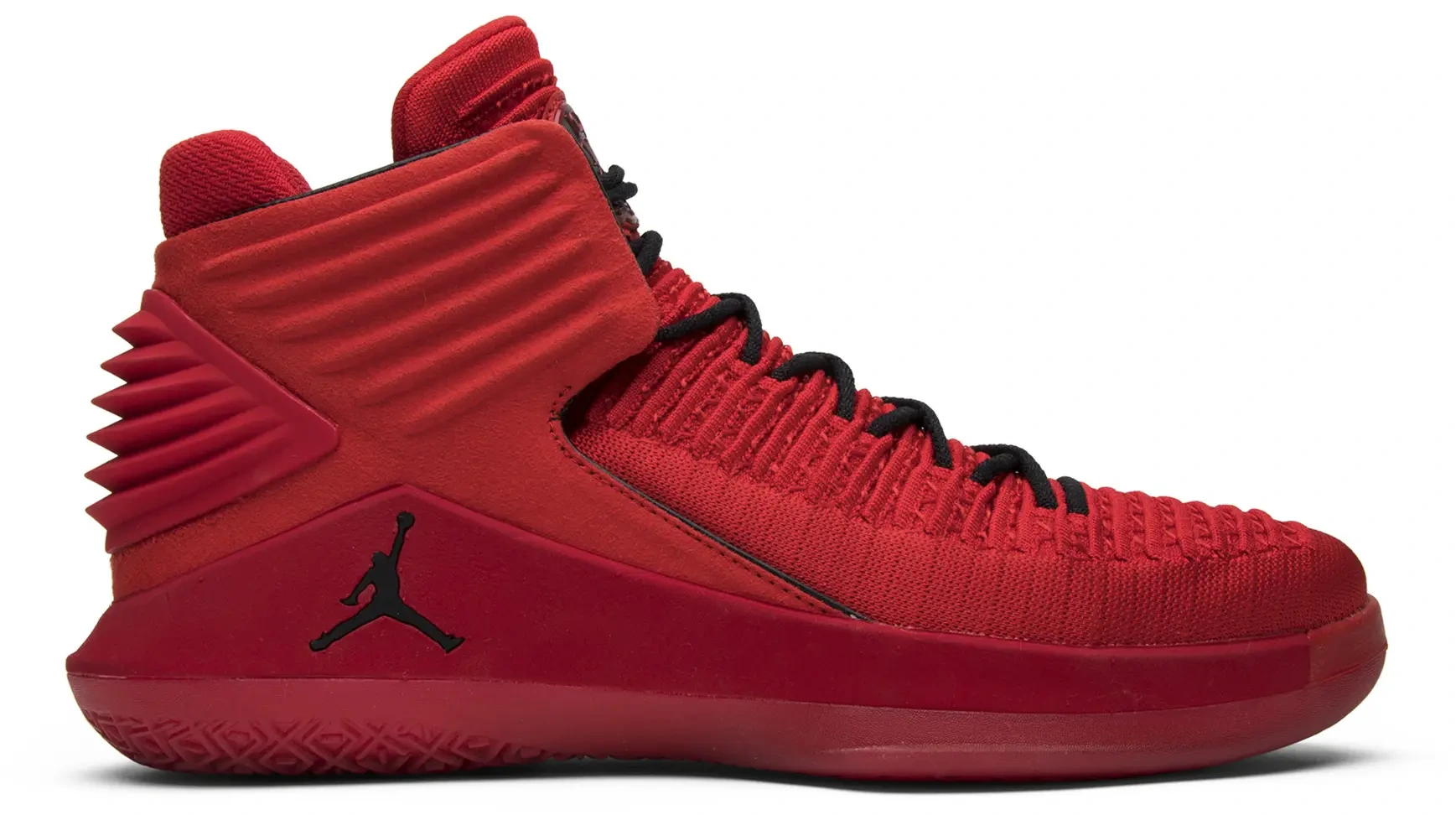
Rosso Corsa’s red gives the surface a cohesive visual reading. Bred introduces a different balance of dark and red areas. The Westbrook edition makes the model’s link to an active athlete more explicit. This trio covers the opening design statement, the early core-color extension and a player-linked chapter.
Westbrook and the contemporary basketball setting
Russell Westbrook represented the XXXII as the reigning NBA MVP. The launch announcement.
That role also helps distinguish a player-associated mainline colorway from a separate signature model. The XXXII remains part of the numbered Air Jordan franchise. An athlete’s name or motto on one edition does not automatically change the model family to which it belongs.
Looking across XXXI, XXXII and XXXIII reveals a sequence of changing emphasis. The XXXI revisited the first Jordan; the XXXII took the second as a visual starting point; the XXXIII made a new closure system central to its identity. The XXXII occupies the point where a heritage-led silhouette and an engineered knit upper were made to feel like one design, rather than two unrelated ideas.
Mid and Low: two debut dates in 2017
The XXXII Mid opened with Rosso Corsa on September 23, 2017. The first XXXII Low was Bred, style AA1256-001, on October 18, alongside the Bred Mid. The launch schedule.
Frequently asked questions
Who designed the Air Jordan XXXII?
Tate Kuerbis is the credited designer.
Is it a retro Air Jordan II?
No. It is a separate 2017 mainline performance model that references the II’s design language.
What part of the XXXII uses Flyknit?
The upper. It is separate from the cushioning platform.
Are the three colors in this guide all day-one releases?
No. Each release has its own date above.