The Air Jordan 7 connects a confident design identity with sport and playful advertising. Explore the original model and the stories its colors tell.
1992: a signature shoe on two stages
Tinker Hatfield’s Air Jordan VII debuted in 1992, accompanying another Bulls championship and Olympic gold in Barcelona.
Its design made a confident break with the immediately preceding shoes. There was no visible heel Air window and no prominent exterior Nike Air mark. The Jumpman and the silhouette could carry recognition on their own. It was a visual step toward a distinct Jordan identity, years before the formal establishment of Jordan Brand.
The Huarache idea inside the shoe
The VII used a Huarache-inspired inner sleeve that hugged the foot. The approach placed fit closer to the foot itself rather than relying only on a heavily structured outer shell. Its geometry and colorful detailing drew from African-inspired visual references, creating a different rhythm from the VI’s large panels and pull-tab emphasis.
Without a visible Air window, the side of the sole reads as a more continuous surface. That does not mean the shoe abandoned Air cushioning. Visibility and presence are different things: a component can remain part of the performance package without becoming a window in the design.
The tongue is particularly important to the model’s personality. Color and angular patterning create an expressive focal point above an upper that can otherwise look comparatively restrained. The result rewards looking at the shoe from the front as well as the side.
Hare, Bordeaux and Olympic: three ways into the OG set
Five original colors define the 1992 lineup: Hare, Bordeaux, Cardinal, Charcoal and Olympic. Hare, Bordeaux and Olympic make a revealing trio because they connect the model to advertising, a darker graphic palette and the international stage.
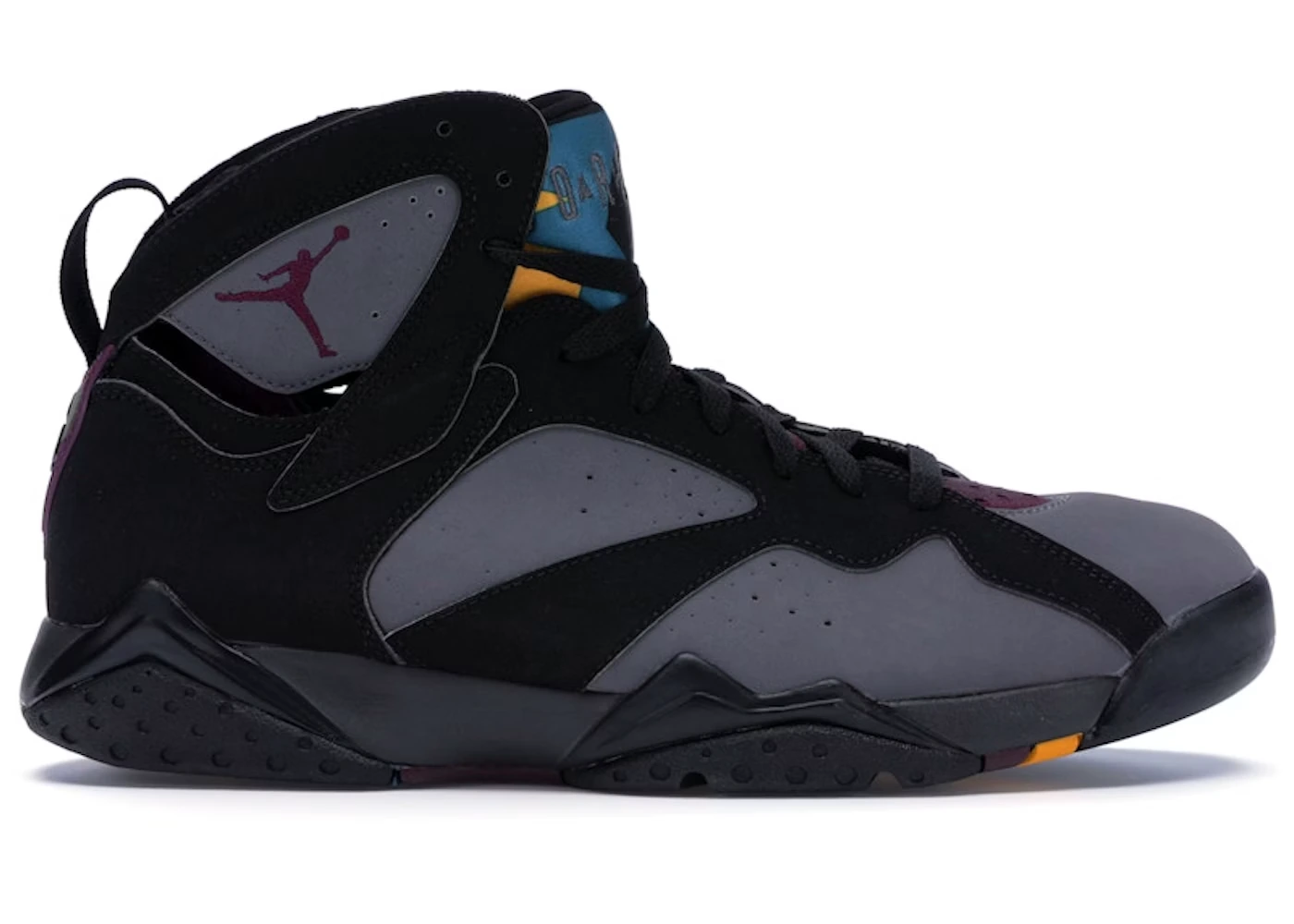
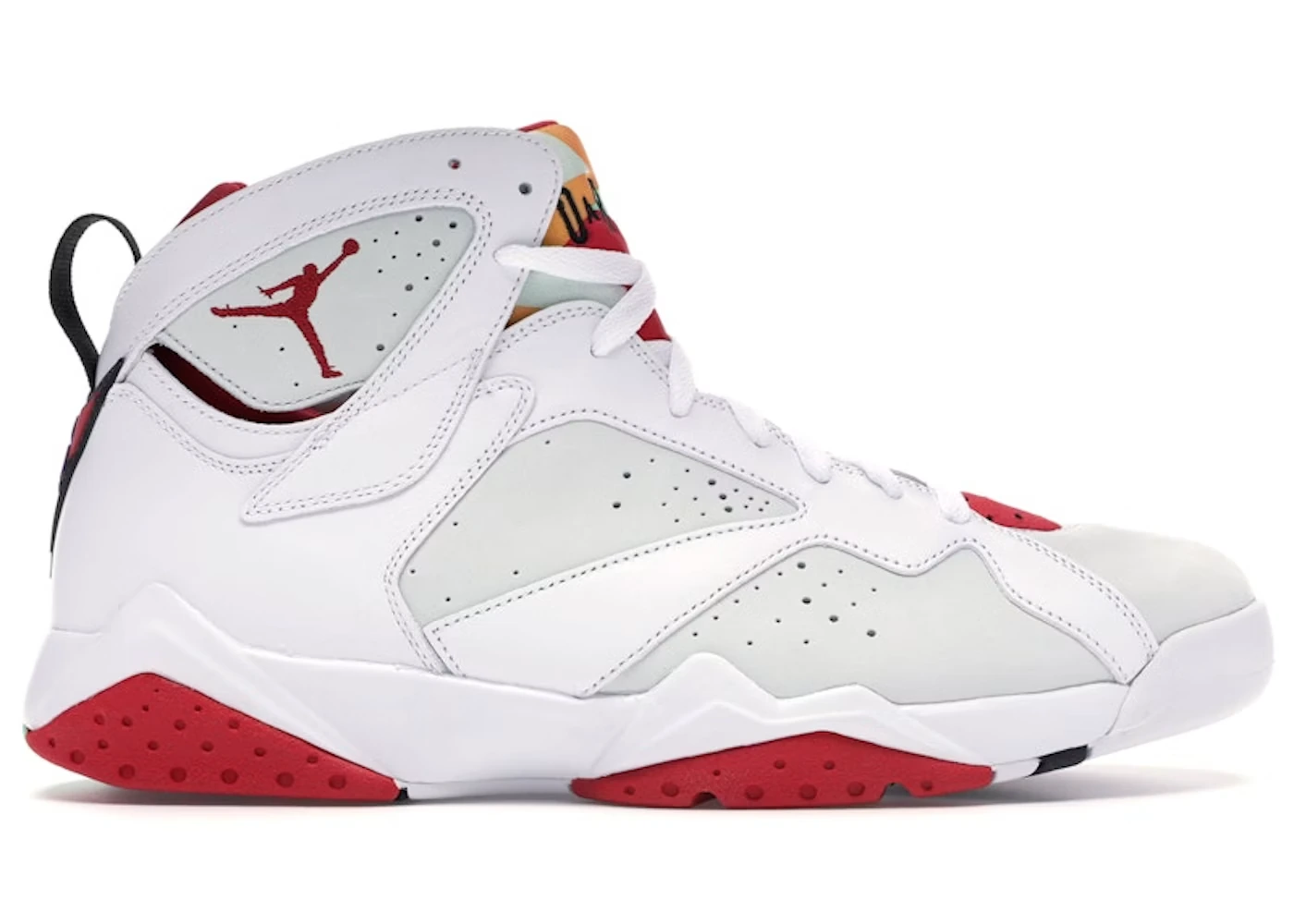
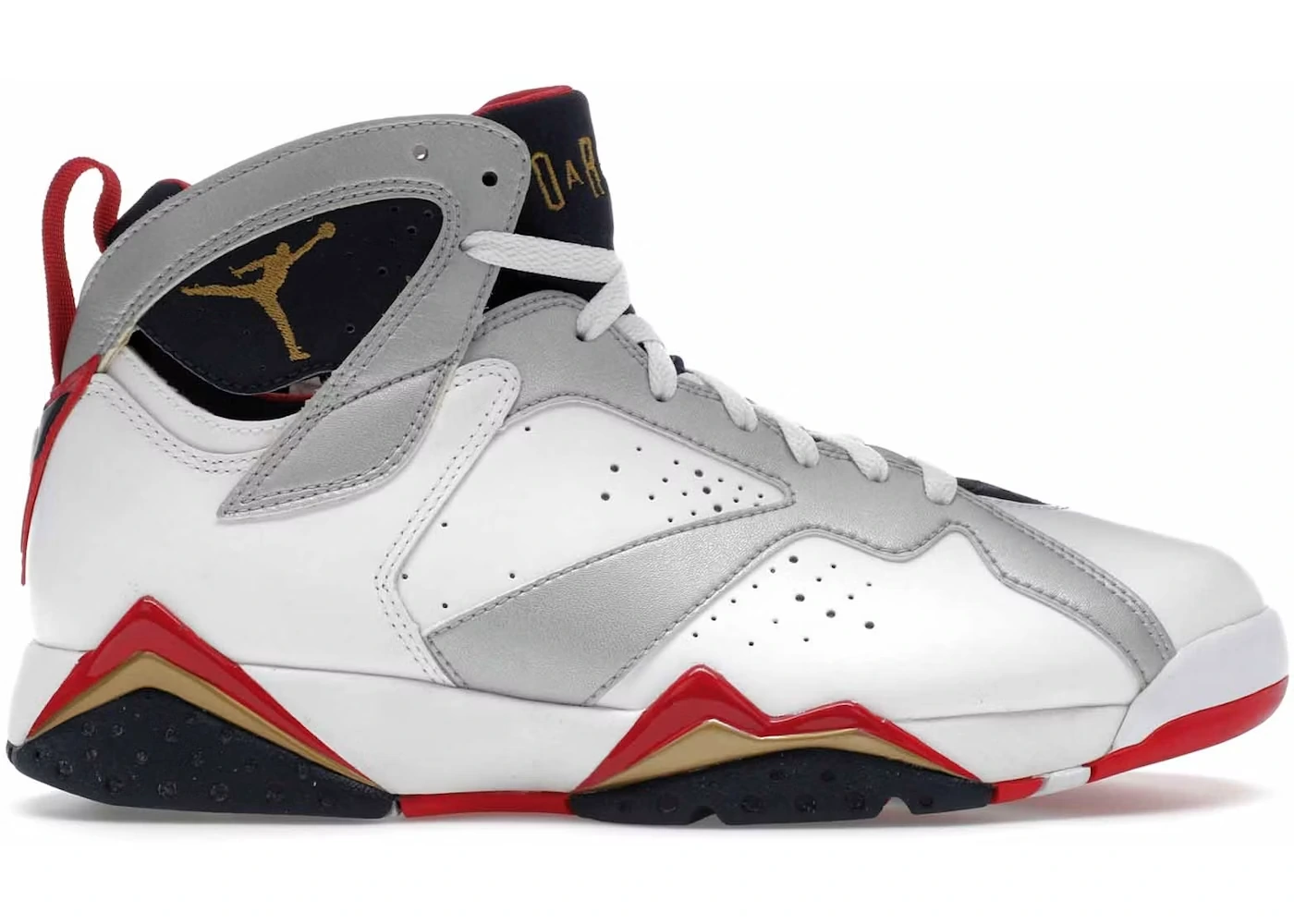
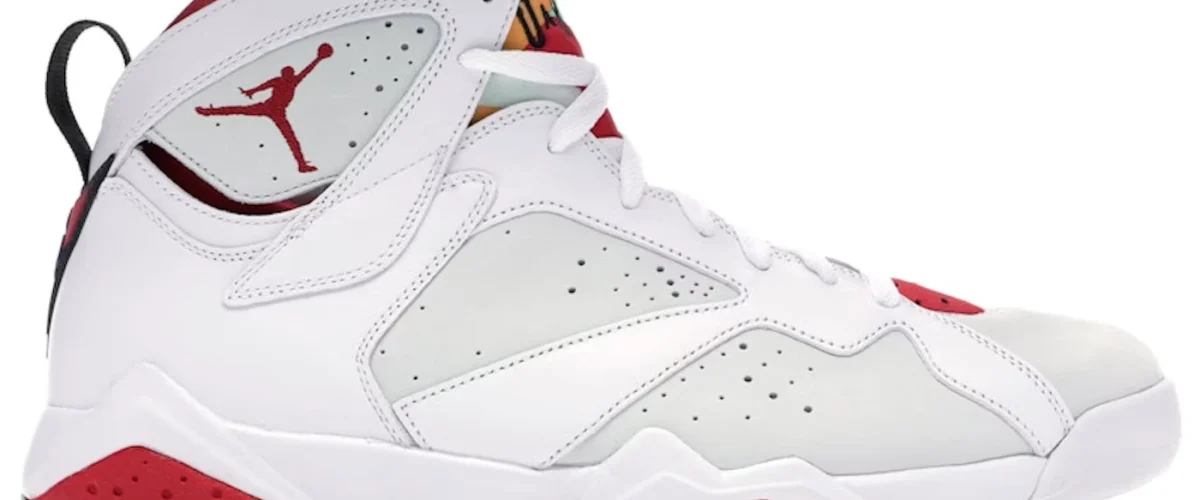
Hare uses a light upper with a colorful tongue treatment and is associated with the Bugs Bunny campaign. Bordeaux combines dark gray and black with burgundy-led accents, giving the same geometry a more subdued setting. Olympic introduces the national-team context, including Jordan’s Olympic number 9 on the heel rather than his usual 23.
Cardinal and Charcoal complete the original range. Charcoal is often called Raptors today, but that is a later nickname, not evidence that the 1992 shoe was designed for Toronto’s NBA franchise. Reading the shoe through the modern nickname alone creates a history that runs backward.
Olympic is also genuinely part of the original year. It was not invented later as a tribute to a tournament that had already become famous. That distinction gives the VII a special place: its OG collection already contains both domestic-team and national-team stories.
Bugs Bunny changed the tone
The Hare Jordan advertising paired Michael with Bugs Bunny. It gave the model a playful counterpart to the seriousness of championship basketball. The sneaker could belong to an elite competitor and still be introduced through animation, comedy and a familiar character.
The campaign also helps explain why model names and nicknames can carry different kinds of meaning. Hare points toward a character and a commercial world; Olympic points toward an event; Bordeaux points toward a color. They are useful handles for memory, but they are not all formal descriptions of the same kind.
The partnership with Bugs belongs to the advertising history that preceded Space Jam. Keeping that sequence intact matters: the VII was not created as merchandise for the 1996 film. The earlier campaign established a playful relationship that later audiences would recognize in a different medium.
From an original season to the retro era
The VII began returning as a retro in 2002. French Blue belongs to that later chapter, even though Jordan himself wore the colorway with Washington. Athlete use can give a new edition its own significance without making it part of the original 1992 collection.
That example is particularly helpful for collectors. “Worn by MJ,” “OG colorway” and “original pair” describe three different things. A new color can have direct athlete history; a faithful-looking retro can reference an original palette; a surviving 1992 pair is a historical object from the first production period.
The VII’s legacy comes from the way it combines reduction and expression. The exterior loses familiar Nike signals, yet the tongue and sole gain a lively graphic language. At the same time, its sporting story expands from Chicago to Barcelona. Few models make the relationship between a personal signature and a global audience quite so visible.
The Low NRG: samples before a retail launch
The Air Jordan 7 Low NRG reached retail on September 27, 2018 in Bordeaux, Bright Concord and Taxi. Nike distinguishes earlier Low samples from a public release: those previews had not reached stores. The retail debut therefore belongs to 2018, not the original model’s era. (Nike SNKRS: Air Jordan VII Low debut; Nice Kicks: Air Jordan 7 Low launch pack)
All three colors belong to that opening group. Bordeaux links the new cut to a familiar palette, while the other two give the Low a different starting personality.
Frequently asked questions
What were the five original Jordan 7 colors?
Hare, Bordeaux, Cardinal, Charcoal and Olympic.
Why does the Olympic Jordan 7 have a 9?
Jordan wore number 9 for the United States at the 1992 Olympics. The heel reflects that national-team number.
Are Raptors 7s named after the team from the original release?
No. Raptors is a later nickname for the Charcoal-associated color family; it should not be read as a 1992 Toronto collaboration.
Does the Jordan 7 have Air despite no visible window?
Yes. Losing the visible heel window did not mean abandoning Air cushioning.
Is French Blue an original 1992 color?
No. It belongs to the 2002 retro era, even though Jordan wore it during his Wizards years.
Sources
Historical sources consulted October 15, 2026.