
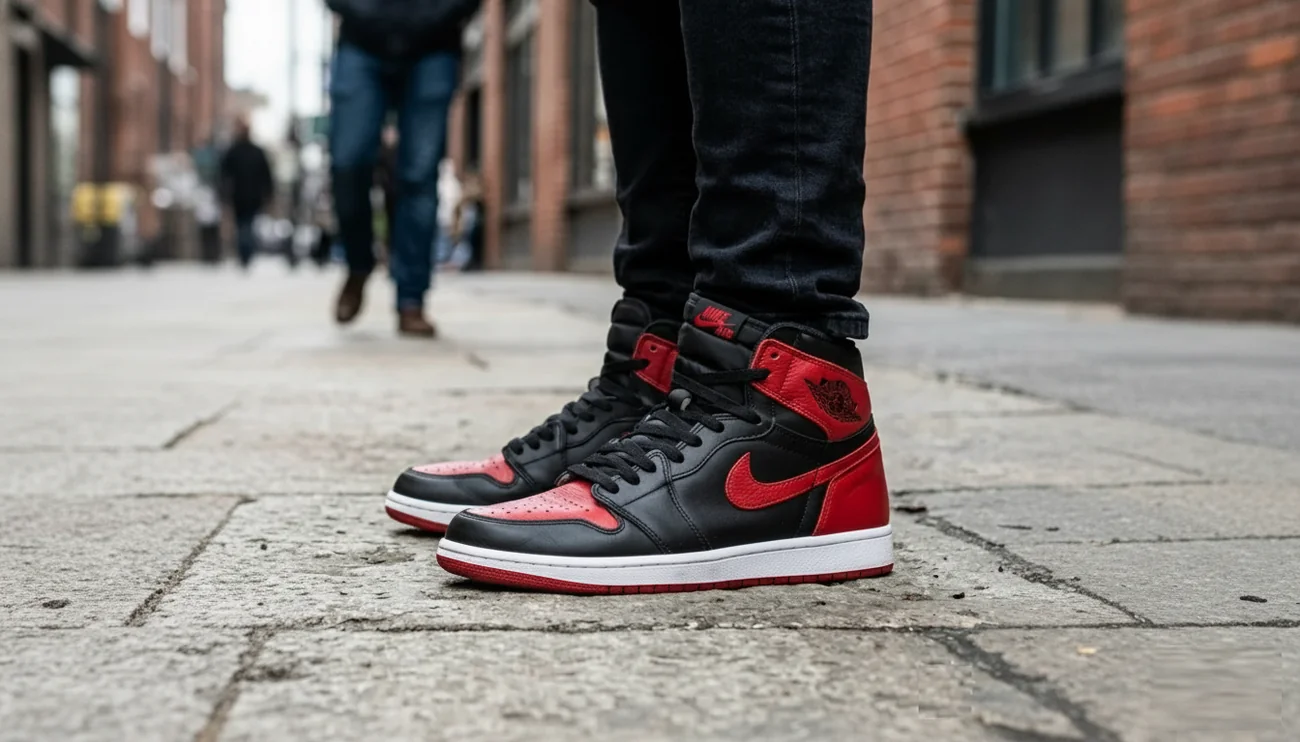
An OG colorway is a color scheme that belongs to the original release period of a sneaker, a specific version, or a product line. The concept sounds simple, but there is one important distinction: OG colorway does not necessarily mean “the one and only first color.”
Some silhouettes launched in several color combinations during their original era. That means a single model can have multiple OG colorways. A historic colorway can also return decades later on a retro without turning that modern pair into a physical example from the original production year.
This distinction prevents several common resale mistakes: OG colorway is not the same thing as OG release, does not prove authenticity, does not mean limited edition, and does not guarantee a high resale price.
What Does OG Colorway Mean?
OG colorway means original colorway: a color combination associated with the historically recognized original period of a model or version.
A colorway is the combination of colors and how those colors are distributed across the product. Two sneakers can use the same silhouette and very similar construction while still being different colorways because the upper, Swoosh, midsole, outsole, laces, or other components use different colors.
“OG” connects that combination to the historical origin of the model. For the broader meaning of the term, see what OG means in sneakers.
Is an OG Colorway Always the First Color Released?
No. Defining OG colorway as one single “first color” is too restrictive.
A silhouette can enter the market with multiple colorways during its original launch period. In that case, more than one combination can belong to the historically recognized OG group.
The better questions are:
- Which exact model and version are being discussed?
- What was its original release period?
- Which colorways actually released during that original period?
- Does brand history or reliable period documentation connect that colorway to the original era?
Air Jordan 1 Shows Why a Model Can Have Multiple OG Colorways
The Air Jordan 1 is one of the clearest examples. Nike’s official Jordan archive documents the original release in 1985, identifies Peter Moore as the designer, and preserves Black/Red as one of the defining historical references from the model’s first era.
That does not mean Black/Red was the only original Air Jordan 1 colorway. The 1985 story includes several original combinations, and more than one can correctly be described as an OG colorway when the historical context is clear.
So phrases such as “Chicago OG colorway” or “Black/Red OG colorway” describe that color scheme’s relationship to the original era. They do not mean every pair made in those colors was manufactured in 1985.
Are OG Colorway and OG Release the Same Thing?
No. This is one of the most important distinctions.
OG Release
An OG release is the original physical or historical production release of a model or version. An Air Jordan 1 produced during the original 1985 release period belongs to that original era.
OG Colorway
An OG colorway is the color combination connected with that original era. The same color scheme can be reproduced later.
So an Air Jordan 1 manufactured decades later can reproduce a 1985 OG colorway without becoming a physical 1985 original.
The release is the historical object; the colorway is the historical visual combination.
Can a Retro Sneaker Use an OG Colorway?
Yes. This is extremely common.
A brand can re-release an older silhouette using a color combination that belonged to the original era. In that case, the product is a modern retro of an OG colorway.
That does not mean the new release matches the historical product in every detail. Across generations, brands can change:
- materials;
- color tones;
- shape and proportions;
- panel thickness;
- branding;
- manufacturing methods;
- internal components;
- packaging.
“Return of an OG colorway” should therefore never be automatically translated as “exact 1:1 reproduction of the old pair.” For the release-history side, see what retro sneakers mean.
Does Retro High OG Mean the Colorway Is Also OG?
Not necessarily.
In the Air Jordan 1 Retro High OG line, “Retro High OG” is part of Jordan Brand’s product naming and construction lineage. A modern pair can carry that designation while introducing a color combination that never existed in 1985.
So:
- Retro High OG does not automatically mean OG colorway;
- OG colorway does not mean the physical pair is old;
- a new colorway can release in a model named Retro High OG.
“OG” in the product name does not open a portal to 1985. Model, release year, style code, and colorway history still matter.
Does an OG Colorway Have to Match the Original Exactly?
Historical colorway identity and material accuracy are different questions.
A release can be recognized as a return of an OG colorway because it reproduces the historic visual combination even when shades, materials, shape, or construction differ from an older pair.
When historical accuracy matters, compare the specific release. Knowing that the colorway is OG is only the beginning.
Does OG Colorway Mean the Sneaker Is Original or Authentic?
No. Here, “original” refers to historical colorway origin, not to an authenticity certificate.
A counterfeit can reproduce a historically OG colorway. A resale listing can also use “OG colorway” correctly or incorrectly.
To determine whether a physical pair is genuine, evaluate authentication separately. See our Legit Check guide.
Neither the OG label, style code, box, nor the colorway itself proves authenticity on its own.
Is Every OG Colorway Rare?
No.
OG describes the historical relationship between the color combination and the model’s origin. It does not reveal how many pairs were produced.
An OG colorway can be retroed multiple times with broad distribution, while a completely modern colorway can be produced in very small numbers.
Origin, rarity, and production quantity are separate attributes.
Does OG Colorway Mean Limited Edition?
No. A colorway can be OG and still release broadly. Limited edition status, regional distribution, collaboration status, and production quantity have to be verified independently.
Is an OG Colorway Always Worth More?
There is no such rule.
Historical connection can increase interest in certain releases, but market price depends on the actual product. Size, condition, supply, demand, region, release year, quantity, and timing all influence value.
A highly desirable modern colorway can trade for more than a retro of an OG colorway. Another OG colorway can remain available at retail for a long time.
There is no basis for using “OG colorway” alone as a resale forecast or investment recommendation.
What Is the Difference Between an OG Colorway and a New Colorway?
The difference is historical.
An OG colorway belongs to the group of combinations associated with the model’s original period. A new colorway was created later.
That does not create a quality hierarchy. A new colorway can become culturally important, while an OG colorway may matter mainly to buyers who value the history of the silhouette.
OG Colorway and Retro Are Different Concepts
Colorway describes colors. Retro describes a later reissue of a historical model or product.
The two concepts can combine:
- retro of an OG colorway;
- retro with a new colorway;
- original release using an OG colorway by historical definition;
- modern silhouette with no relationship to an earlier OG colorway.
Does OG Colorway Mean Vintage?
No. Vintage refers to the age and era of the physical pair, while OG colorway describes the historical origin of its colors.
A retro produced in 2026 can reproduce an OG colorway and still be a sneaker physically manufactured in 2026. For the age distinction, see what vintage sneakers mean.
Is OG Colorway a Nike-Only or Jordan-Only Term?
No. The expression belongs to broader sneaker vocabulary and appears across other brands as well.
adidas, for example, has used OG language when referring back to the historic black-and-purple Ultraboost color scheme from the model’s 2015 debut era.
Nike and Jordan provide famous examples, but they do not own the concept of an original colorway.
How Can You Tell Whether a Colorway Is Really OG?
There is no universal OG seal. The safest approach is to reconstruct the release history.
- Identify the exact silhouette: a similar name is not enough.
- Confirm the generation or version: long-running families can change substantially.
- Find the original release period: brand archives are the strongest reference when available.
- Verify which colors existed in that period: a model can have multiple OG colorways.
- Separate colorway from release: a modern retro can reuse historic colors.
- Check the style code and year: this helps identify the exact edition being evaluated.
Official archives, historical catalogs, period advertising, and reliable documentation are more useful than simply repeating a resale listing description.
Why Do OG Colorways Matter in Sneaker Culture?
Because they help tell the visual history of a silhouette.
Original color combinations can connect with an athlete, team, campaign, design era, or simply the way the public first learned to recognize the shoe. When those colors return years later, a new generation can access the historical reference without finding a fragile original pair.
That importance does not need to become a rule of taste. Some people prefer historical colorways; others care more about collaborations, new interpretations, or colors that never existed during the original release period.
OG Colorway FAQ
What Is an OG Colorway?
It is a color combination that belongs to the historically recognized original release period or original group of colorways for a sneaker or version.
Is an OG Colorway Always the First Color of the Model?
Not necessarily. A silhouette can debut with multiple original colorways, all of which can belong to the OG group.
Can There Be More Than One OG Colorway?
Yes. The 1985 Air Jordan 1 is an important example of a silhouette with multiple historic color combinations associated with its original period.
Can a Retro Be an OG Colorway?
A modern retro can reproduce an OG colorway. That does not make the modern pair a physical original-release pair.
Does Every Air Jordan 1 Retro High OG Use an OG Colorway?
No. Retro High OG is a Jordan Brand product naming convention and can also be used with modern colorways.
Does OG Colorway Mean the Sneaker Is Authentic?
No. A counterfeit can reproduce a historical colorway. Authenticity must be evaluated separately.
Is Every OG Colorway Rare?
No. The term does not reveal production quantity or distribution.
Is an OG Colorway Always More Expensive?
No. Price depends on the specific release, size, condition, supply, demand, region, and market timing.
Is OG Colorway Exclusive to Nike?
No. The phrase is used throughout broader sneaker culture and by other brands.
Conclusion
The most accurate way to understand OG colorway is to think about the historical origin of the colors, not a magical badge of quality, rarity, or value.
A silhouette can have several OG colorways. One of those combinations can return decades later on a retro. That retro remains a modern product, and none of those facts alone determines authenticity, rarity, distribution, or price.
When in doubt, look at the model, original period, exact release, color combination, and historical documentation. Context—not just two letters in a listing—is what makes a colorway part of sneaker history.