
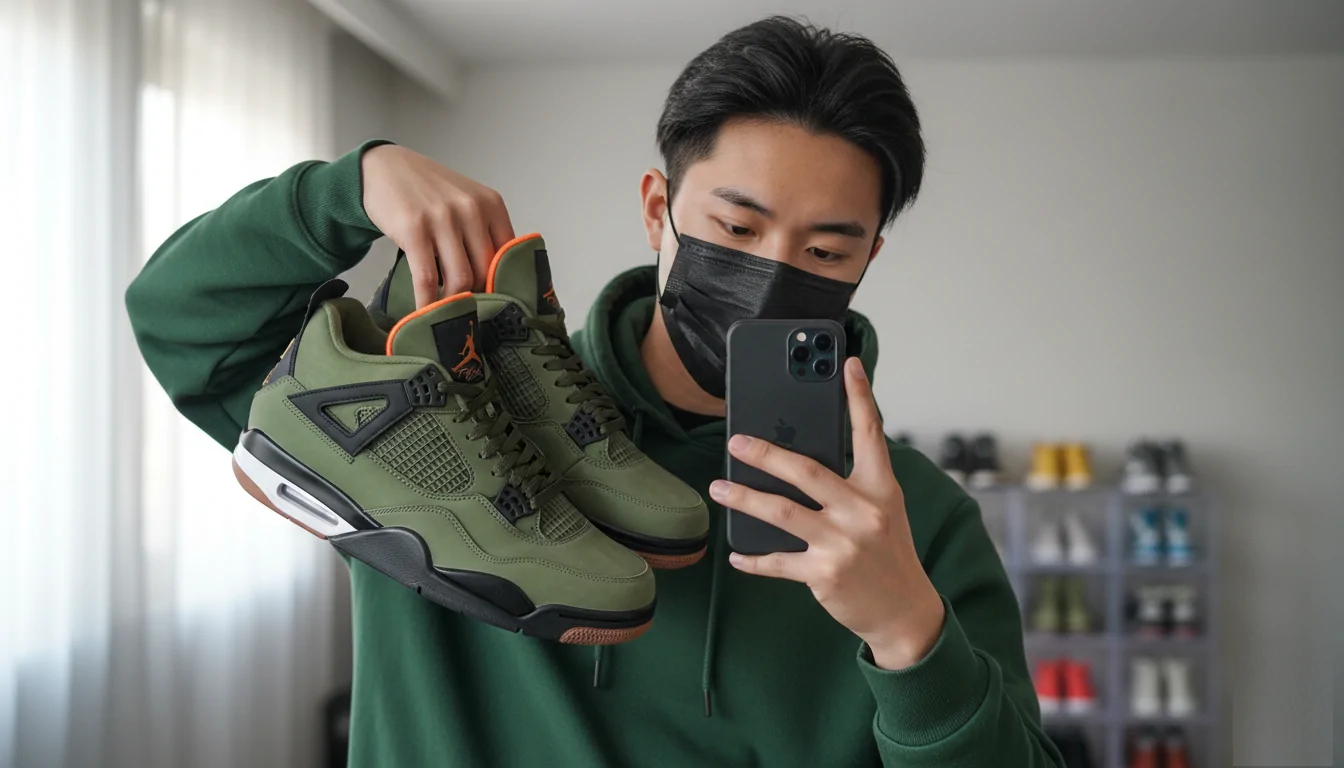
LPU stands for Last Pick Up and is an informal way to describe your most recently acquired sneakers. When someone posts “my LPU,” they are usually showing the pair they most recently bought or added to their rotation or collection.
The abbreviation does not tell you whether the sneaker is rare, expensive, limited, new, or used. An LPU can be a sought-after release, a general-release model, an outlet find, a resale purchase, or simply the latest pair to join your wardrobe.
What Does LPU Mean?
LPU is short for Last Pick Up, meaning your most recent acquisition.
In sneaker vocabulary, it identifies the pair someone acquired most recently.
Examples:
- “That Jordan was my LPU.”
- “What was your LPU?”
- “My LPU finally arrived.”
- “This was my LPU of the month.”
In each example, the abbreviation refers to the sneaker acquired most recently.
Does LPU Mean Last Pick Up or Latest Pick Up?
Last Pick Up is one version used in sneaker culture. Sneaker History also lists Latest Pick Up, which conveys essentially the same idea: your newest acquisition.
In practice, the meaning does not change significantly. It still refers to the pair most recently added to a collection or wardrobe.
What Is the Difference Between LPU and DS?
LPU identifies your latest acquisition. DS, or deadstock, usually describes an unworn pair. The same sneaker can therefore be your LPU and be DS. It can also be your LPU and already be used; purchase order does not determine condition.
Is LPU the Same as a W?
No.
In sneaker language, W is usually short for win and represents success in a purchase attempt, raffle, or release.
LPU, on the other hand, describes the most recent acquisition.
The two can overlap. For example, someone can get a W in a raffle, and that sneaker becomes their LPU.
But they do not have to go together.
A sneaker bought through a regular purchase months after release can also be an LPU, without involving a raffle, a W, or any competition.
Does Every LPU Come From a Drop?
No.
A drop is a release. An LPU is a person’s latest acquisition.
You can buy a sneaker at release and make it your LPU, but you can also buy it months or years later.
Do LPUs Show Which Sneakers Are Trending?
They can sometimes offer clues about a particular community’s interests, but they are not a reliable market measurement.
What shows up as an LPU in a group depends on its members, location, income, tastes, availability, and the releases of that period.
Several posts about the same model may indicate popularity within that space, but they are not enough to conclude that it dominates sneaker culture as a whole.
When Does an LPU Stop Being Your LPU?
As soon as a newer acquisition takes its place.
If the last pair you bought was a Dunk and you later pick up a New Balance, the New Balance becomes your current LPU.
That makes LPU a temporary, chronological description rather than a permanent sneaker category.
Is LPU an Official Nike, adidas, or Jordan Brand Term?
LPU should not be treated as an official brand product designation.
It is a community expression used in sneaker conversations and content, rather than a product term formally defined by a manufacturer.
Find more acquisition and release terms in the Sneakerhead Dictionary’s releases, drops, and buying section.