The number that made the release different
The Air Jordan XXIII arrived in 2008. Its number invited an obvious association with Michael Jordan’s jersey, but the more useful story is what the design team did with that expectation. Tinker Hatfield led the project, with Mark Smith contributing to its visual and design language. The period branding often reads XX3. That is the twenty-third signature model, not a separate shoe from the XXIII.
Considered was a design approach
Nike presented the XX3 as its first basketball shoe to adopt the Considered design ethos. The program sought to reduce waste and use environmentally preferred materials where possible. Those are bounded design objectives. They do not mean that the shoe had no environmental impact, was entirely recycled or met an unspecified modern sustainability certification. A historical account should preserve the scope of the actual announcement.
How stitching changes the way the shoe is assembled
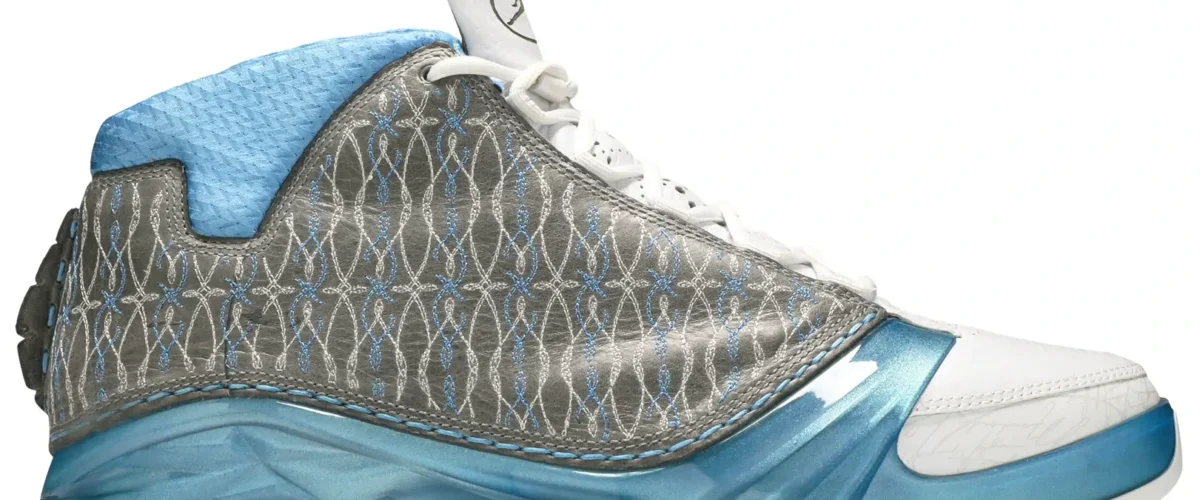
The launch material describes stitching the upper in three-dimensional form rather than treating the pattern as a flat graphic. Hatfield also explained that fitted pieces reduced reliance on adhesive. In other words, the visible thread belongs to a manufacturing problem as well as an aesthetic one. That is the meaningful difference from describing the XXIII as a shoe with decorative embroidery: the pattern and the method of joining the parts were developed together.
A chassis around the cushioning
The technical launch description specifies full-length Zoom Air, a carbon-fiber/acrylic shank and a molded TPU chassis. It also describes molding TPU over the plate to integrate the parts and reduce solvent cement. The chassis gives the underfoot package structure; the cushioning has a different job inside it. Against the XXI/XXII focus on swapping a heel insert, the XXIII’s most useful technical story is how the package was assembled as a whole.
Identity built into the surface
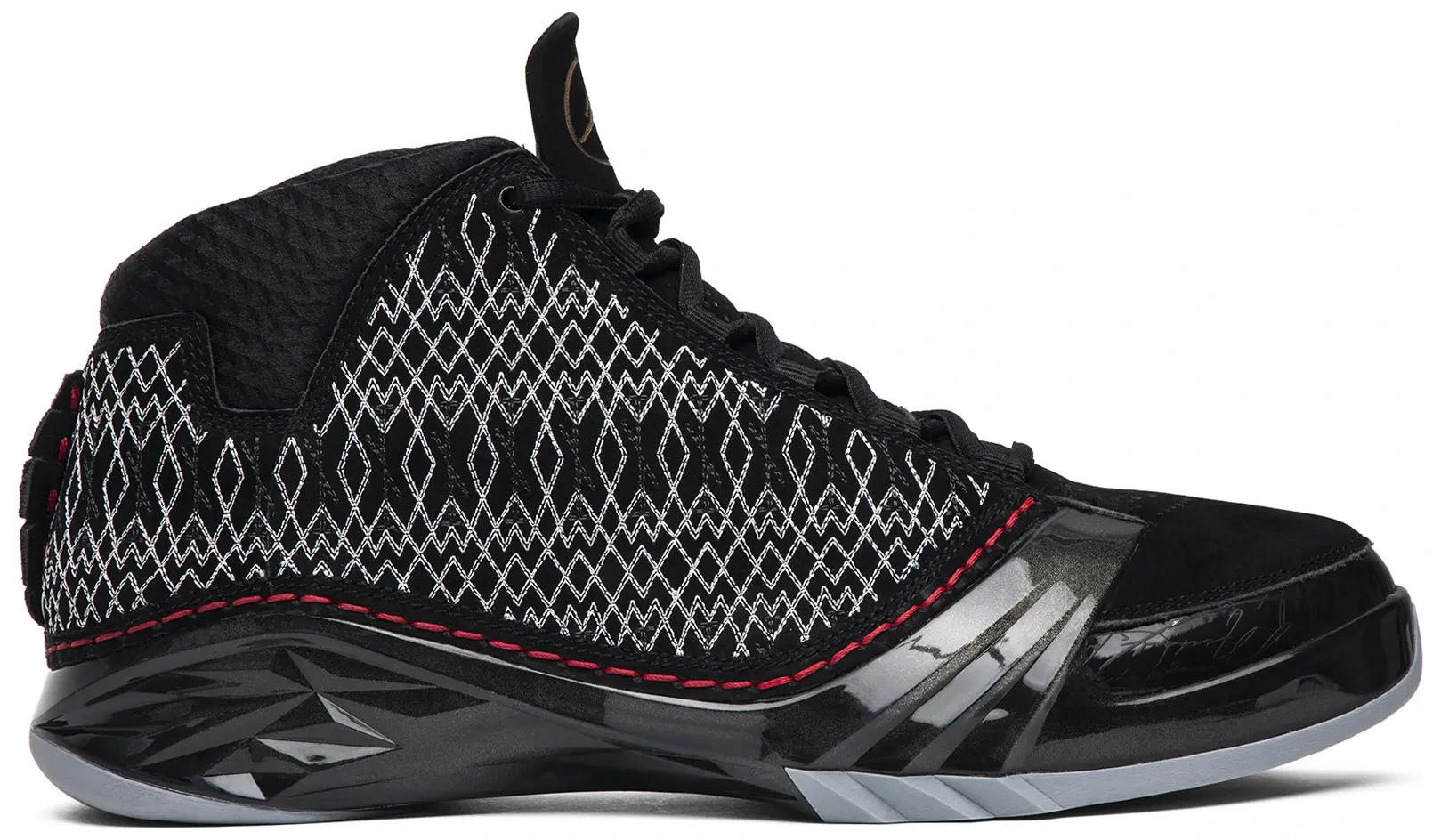
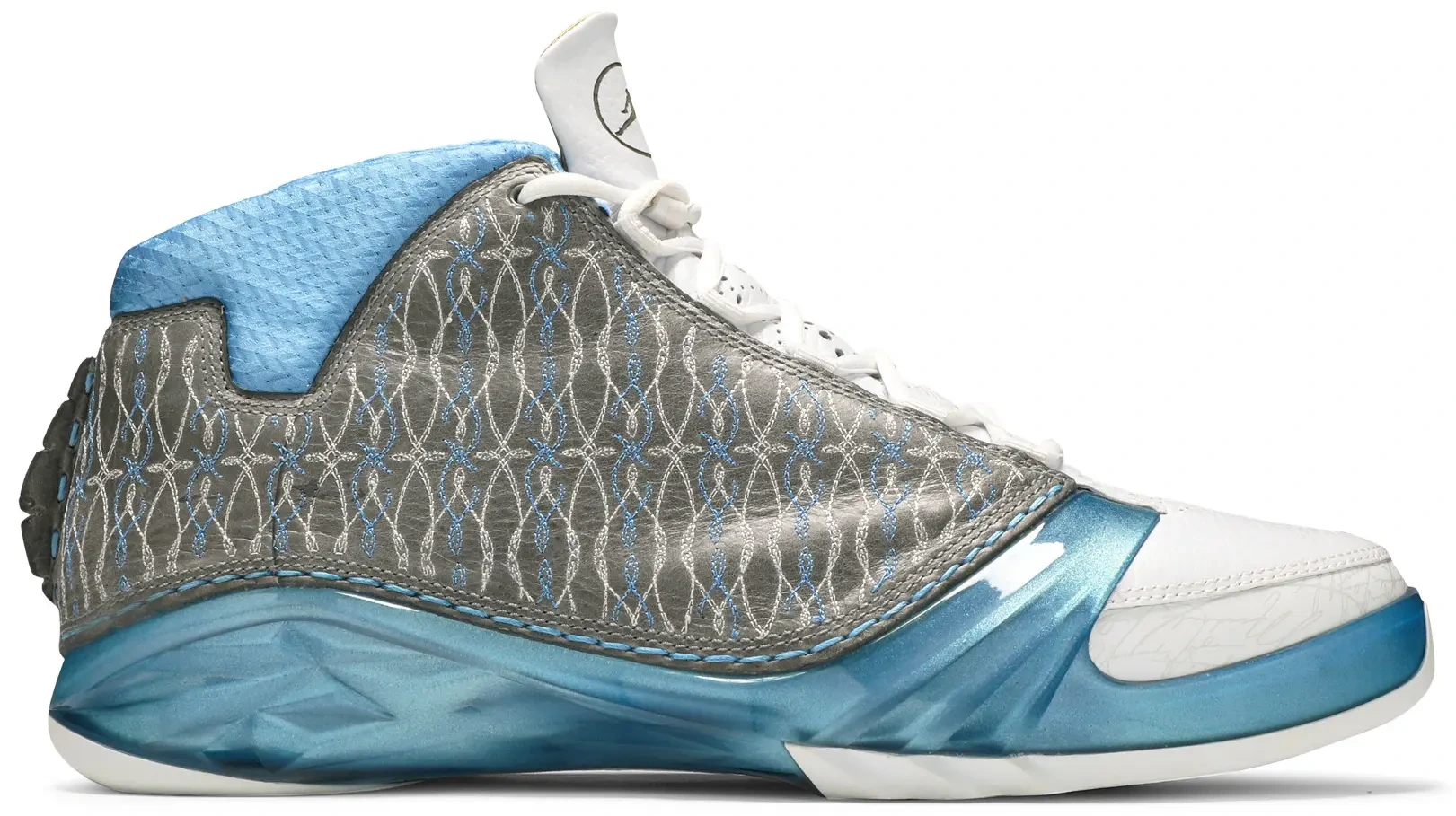
Stitching is central to the XXIII’s appearance. Nike also documented Jordan’s fingerprint as the basis for the outsole pattern and his thumbprint inside the tongue. These details make personal identity part of the object at different scales. The shoe moves between recognition from a distance and recognition through close inspection: the silhouette tells one story, the small details another.
Three steps in the original rollout
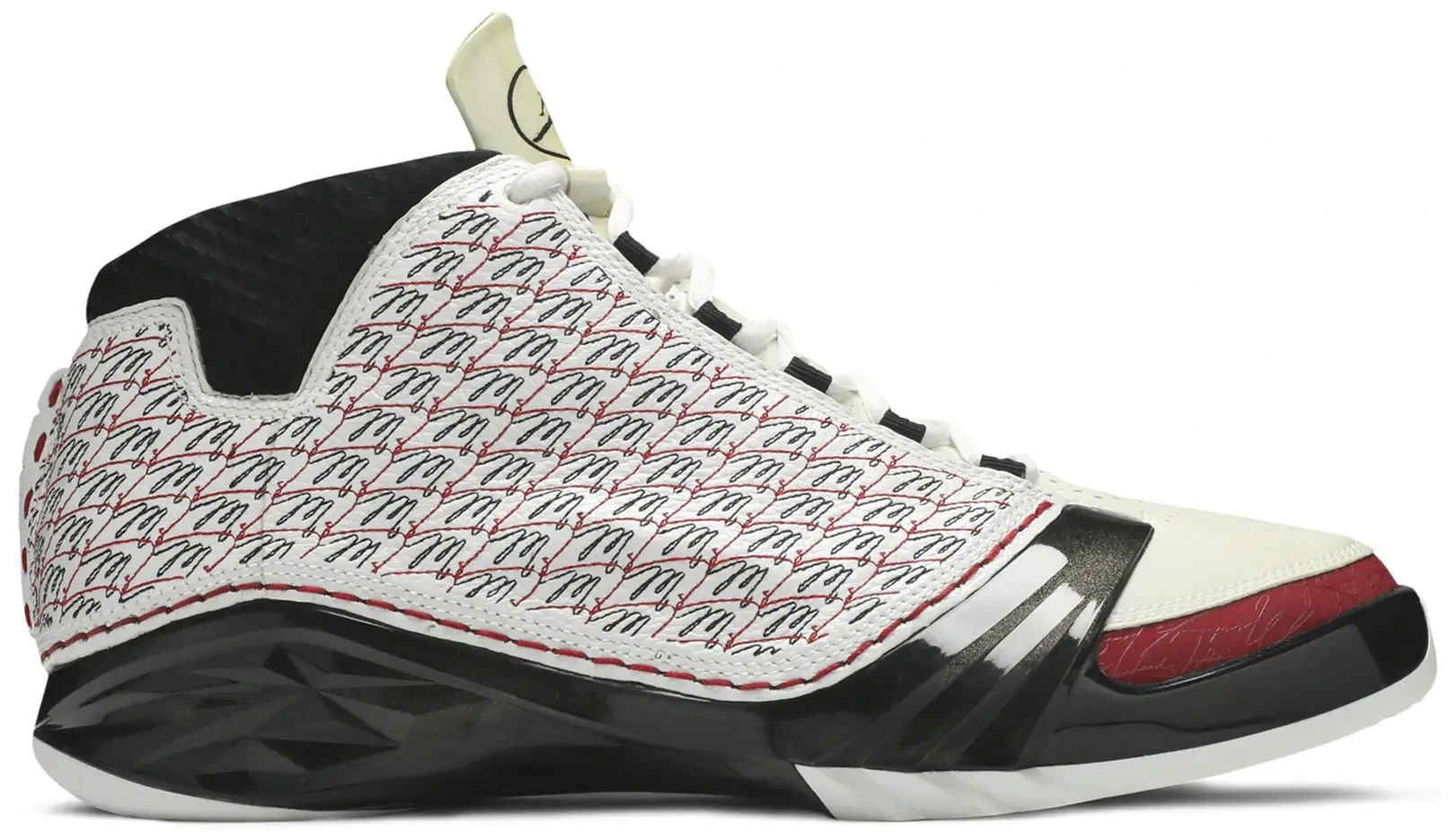
White/Titanium–University Blue debuted as a limited release on January 25, 2008. White/Black–Varsity Red, associated with All-Star, followed on February 16. Black/Varsity Red–Stealth arrived February 23. These are three early original releases with distinct dates, not a simultaneous three-color launch. Precise sequencing is especially useful here because the limited debut can otherwise eclipse the wider first-year story.
Why a model article should not become a rarity chart
Scarcity can dominate discussion of Titanium. The white/black/red and Stealth treatments also show how the stitching and surrounding panels change their visual relationships. The design remains the subject even when the release format changes. Across those treatments, the relationship between stitched panels and smooth surrounding surfaces remains the model’s visual anchor.
The relationship between construction and decoration
The XXIII invites the reader to ask whether a visible line is decoration, structure or both. That is a richer question than counting logos. The patterned side panels occupy a large share of the shoe’s identity, while smoother areas provide contrast. The design concentrates its complexity in particular zones. Comparing two original colors from the same angle makes those zones easier to see.
An intimate kind of signature
The personal details make the XXIII an unusual case study in what “signature” can mean. A signature shoe can be recognized through a name on a box; here the visual reading also extends to small bodily traces and patterned surfaces. Looking at an upper, outsole and tongue together reveals why one side photograph cannot represent all of its design ideas. The model rewards changing the angle of inspection rather than merely zooming in on the same view.
What the XXIII closes, and what it does not
The next signature shoe was sold as Air Jordan 2009, so the XXIII sits immediately before the switch to year-based naming. It did not end the signature line. That distinction helps explain the model without turning anticipation about a final chapter into a historical fact. For collectors, the useful questions are which release, which production year and which actual construction is being offered. For readers, the larger story is a design that treats a familiar number as an opportunity to reconsider the object itself.
XXIII Low: two colors at the beginning
The XXIII Low debuted in 2008 with two initial colorways: White/Varsity Red and White/Midnight Navy–Silver, both scheduled and cataloged for July 12. Neither needs to be placed ahead of the other in the launch story. The original XXIII, sometimes described by sellers as Mid, had already established the model earlier that year; the Low is the separately named cut. Comparing the two first Low colors also shows how red or navy changes the emphasis of the stitched side panels within the lower silhouette.
Frequently asked questions
Did the Air Jordan line end with the XXIII?
No. Air Jordan 2009 followed it. The significance of Jordan’s jersey number made the XXIII a special installment, but the next product demonstrates that it was not the end of the signature sequence.
Does Considered mean completely sustainable?
No. It refers to a design approach with specific aims around waste and materials. Avoid turning those aims into absolute environmental claims or modern certifications that the launch announcement did not state.
Are XX3 and XXIII the same?
Yes. XX3 is a period branding form for the twenty-third signature model. A catalog can include both spellings for clarity without presenting them as different silhouettes.
Were Titanium, All-Star and Stealth released together?
No. The original rollout used separate January and February 2008 dates. Treating them as three early original releases preserves the sequence; calling them one simultaneous launch does not.