Twenty years of the signature shoe
The Air Jordan XX debuted in 2005. Nike’s archive credits Tinker Hatfield and Mark Smith. The anniversary refers to twenty years of the Air Jordan signature line. It should not be confused with the age of Jordan Brand as a separate business identity. The shoe takes that accumulated history and makes it visible on the product itself.
A strap that carries the story
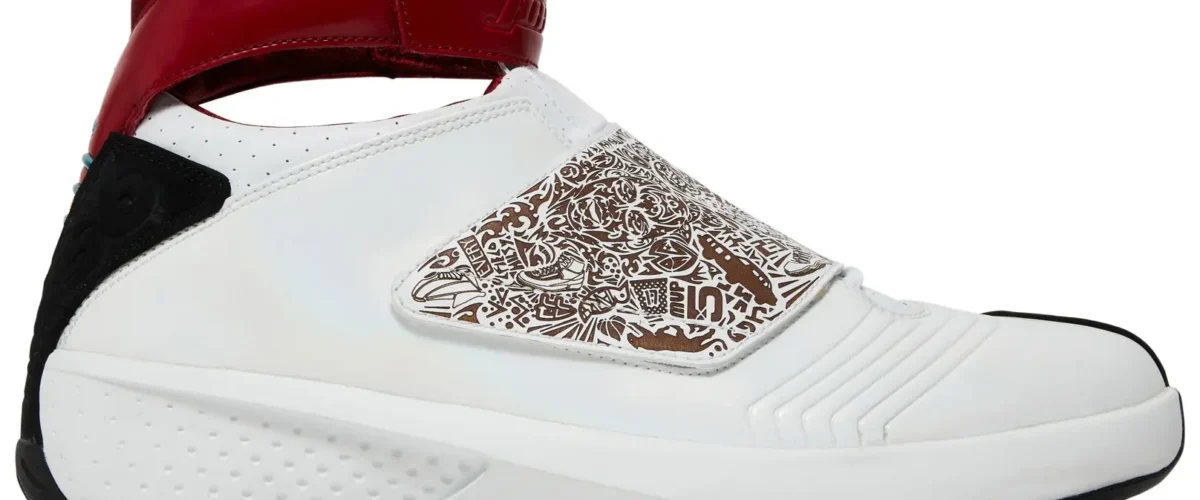
Laser graphics turn the broad midfoot strap into a narrative surface. The graphics refer to Jordan’s life and career, while the unusual ankle strap changes the silhouette above it. The XX works at two scales: it has a bold outline across a room and a dense layer of detail at close range. An image of one icon cannot explain the whole shoe any more than a distant silhouette can explain all its graphics.
From a covered upper to a cushioning layout
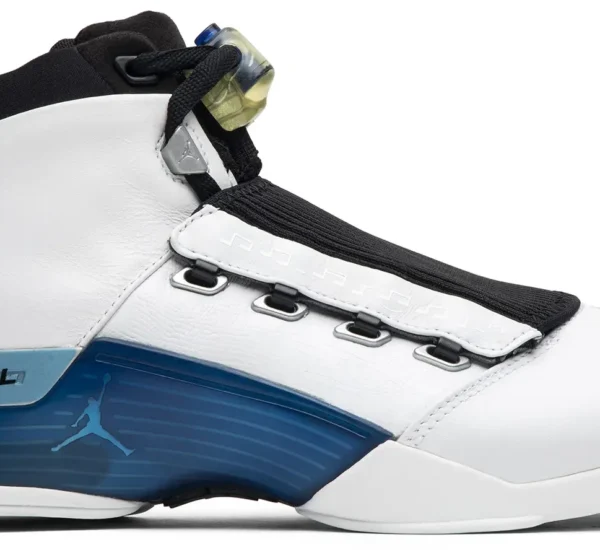
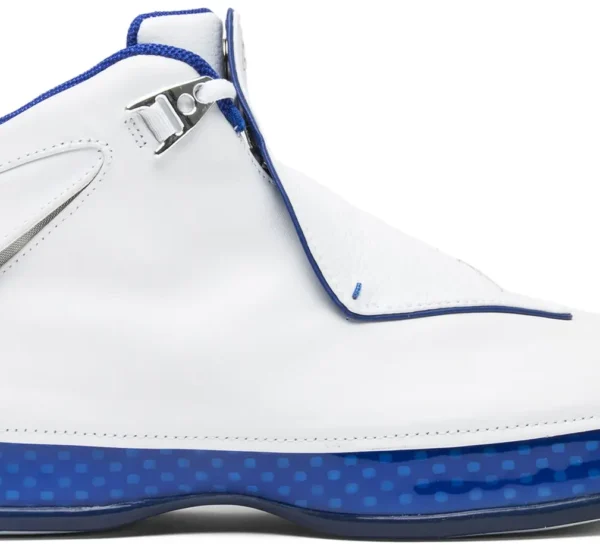
The transition from XIX to XX is not just the addition of anniversary graphics. The XIX’s defining material sits above the laces; the XX’s IPS story asks the reader to look under the foot. The Phylon columns are arranged in selected locations rather than described as one uniform slab. In practical design terms, the placement of cushioning becomes part of the concept: where the material compresses matters alongside what it is made from.
Two straps, two scales of closure
The broad midfoot strap visually spans the body of the XX, while the ankle strap sits above its low-cut base. That separation is why calling it simply a high-top misses the construction. The design combines a low shoe shape with a distinct upper fastening element. Across the white/red debut, Stealth and Quickstrike, the amount of contrast between those elements changes how clearly the two-part silhouette reads. This is a concrete design difference to examine before ranking the colors.
IPS beneath the anniversary treatment
Nike’s historical franchise document describes Independent Podular Suspension, or IPS, as strategically positioned Phylon columns designed to compress under load. This matters because the XX was not simply a graphics project. Its cushioning approach belongs to a technical sequence that continued into the XXI and XXII. Its combination of anniversary storytelling and a new cushioning layout makes the XX a turning point in both appearance and construction.
Three original colorways with separate dates
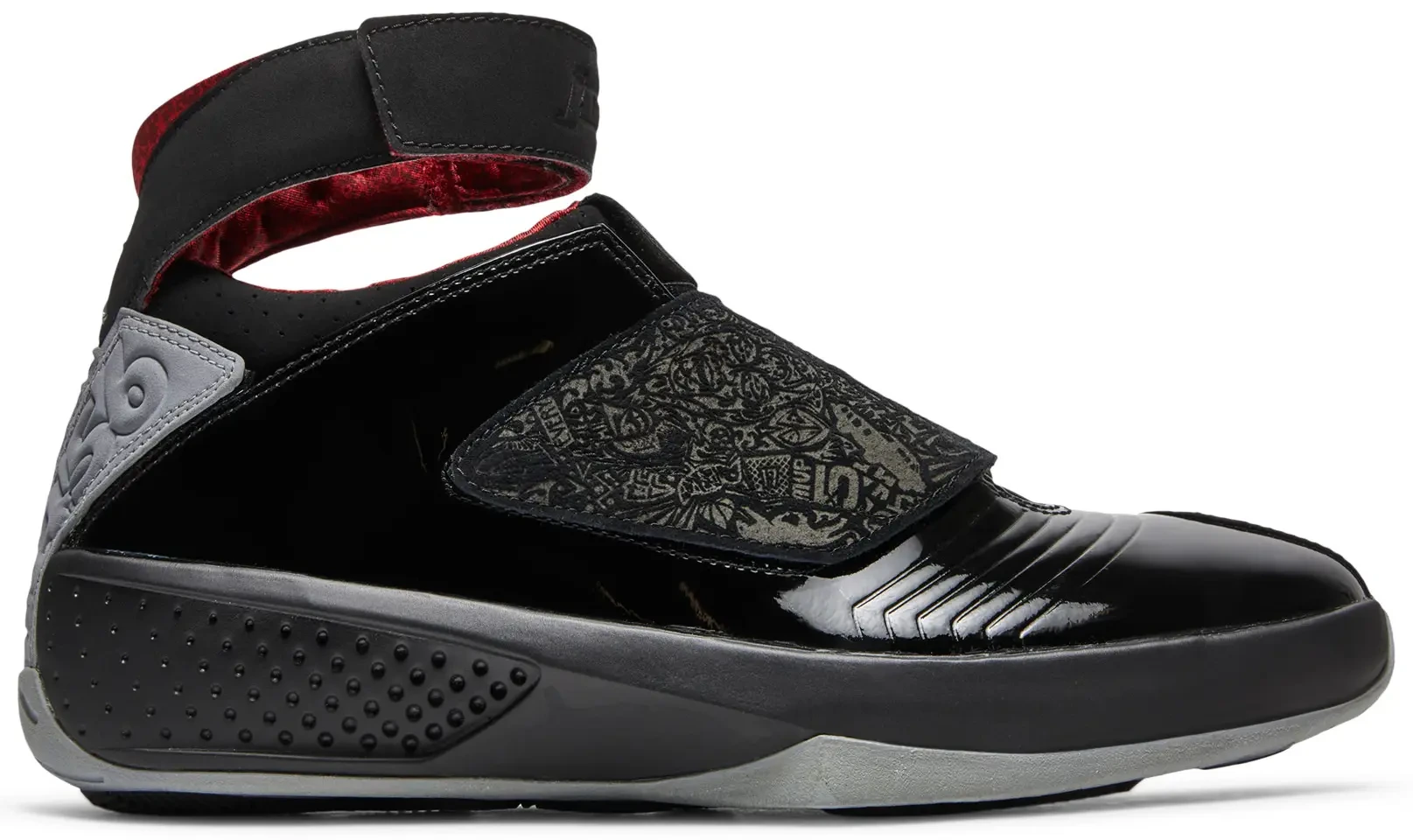
White/Varsity Red–Black was the initial February 19, 2005 release. Black/Stealth–Varsity Red and the White/Black–Varsity Red Quickstrike followed on April 9. The two white-based names look similar in a list, so photographs and exact identification matter. These are three central original-year references, not the entire XX family: regional, Low and 3/4 versions add other branches.
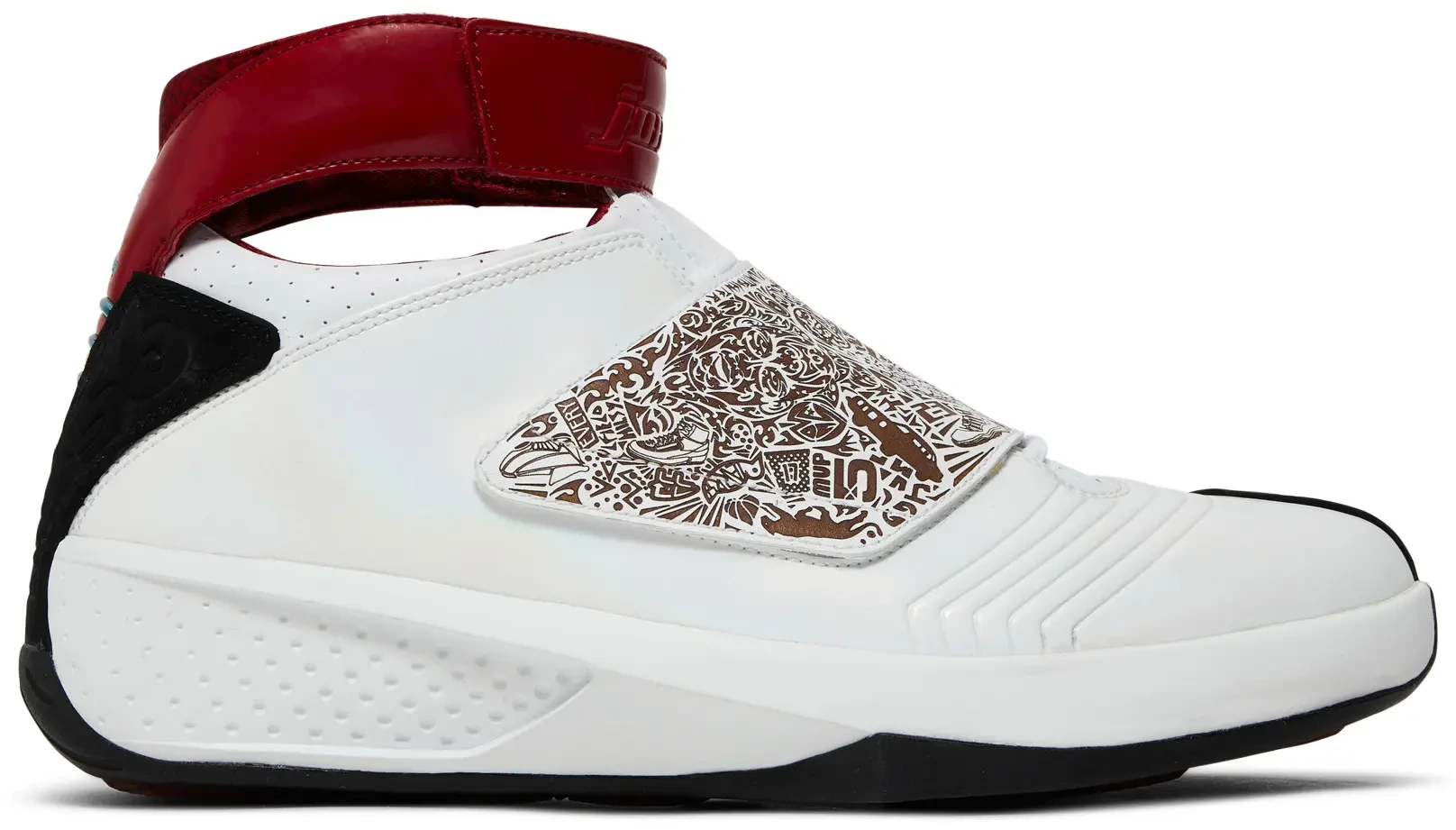
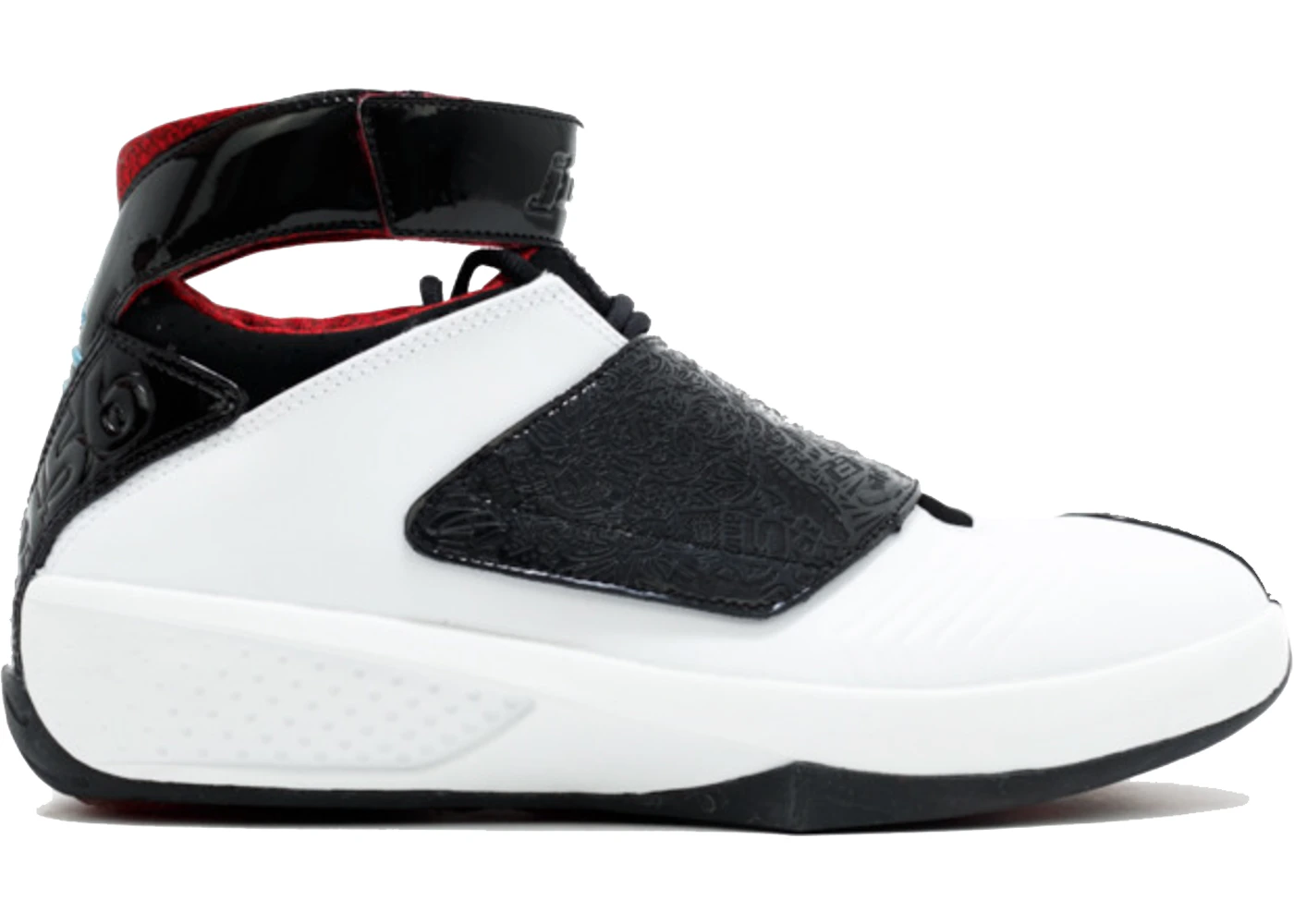
Why Stealth is not the whole history
A dark upper makes the outline and the graphics read differently from the white-based versions. Stealth’s dark treatment and the white-based originals reveal different aspects of the same structure. Each color treatment changes the relationship between strap, upper and sole. It preserves the distinction between the design and its execution.
The anniversary as a design problem
An anniversary product has an obvious temptation: simply display its age. The XX instead invites a closer reading of how biography can become a surface treatment without losing the outline of a basketball shoe. Whether someone enjoys the busy graphics is a matter of taste. What can be examined is how the graphics occupy a specific structural element, rather than floating as an unrelated picture beside the product.
Questions to ask about an original pair
Start by establishing the version, then its color and production era. Ask for clear photographs of both straps and their attachment areas, the outsole, labels and any included packaging. A complete-looking pair is not automatically in playing condition. For a historical collection, the design details may be the priority; for actual basketball, condition and fit require separate assessment. That difference is particularly important on a shoe whose defining features are working parts rather than decoration alone.
XX Low and XX 3/4: two different branches
The XX Low debuted in 2005 in White/Midnight Navy–Neutral Grey, with a June 4 retail date. A separate XX 3/4 followed in December 2005 in White/Metallic Silver–Deep Garnet. Keep the period name 3/4: describing its height as mid-cut does not create an additional model officially named XX Mid. The main ankle-strap XX, the Low and the 3/4 form three distinguishable constructions. The original shoe’s low base and tall strap are part of its design, not evidence that it is identical to the separately sold Low.
Frequently asked questions
Who designed the Air Jordan 20?
Nike’s archive credits Tinker Hatfield and Mark Smith. Keeping both names makes the attribution more complete than crediting Hatfield alone, especially for a shoe whose graphic storytelling is central to its identity.
What does IPS mean on the XX?
Independent Podular Suspension. Nike describes the original system through positioned Phylon cushioning columns. It should not be casually treated as another name for Zoom Air or assumed identical in every later Jordan using the IPS designation.
Were Stealth and Quickstrike the first XX releases?
They followed the initial white/red/black release in 2005. Both are original-year versions, but “original” does not mean that every color was available on the first day.
Are the two white/red/black names interchangeable?
No. The initial and Quickstrike treatments need separate identification despite similar color wording. Compare the actual color placement, model information and photographs rather than shortening both to “Chicago” or “white/red.”
Sources and further reading
- Nike: Air Jordan 20 archive
- SneakerFiles: Air Jordan XX history
- Jordans Daily: Air Jordan XX Quickstrike 2005
- GOAT: XX Low Midnight Navy
- SneakerFiles: XX 3/4 White Garnet
Source access note: references to Nike’s historical franchise document use search-indexed excerpts; the original PDF was unavailable during verification.