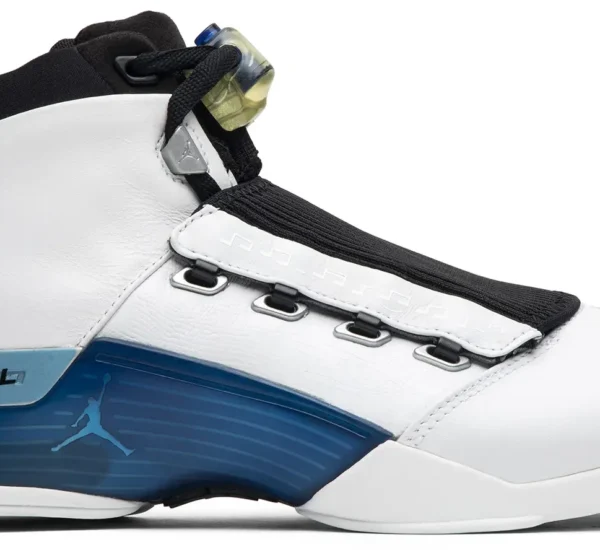
A final chapter that was still a basketball shoe
Tate Kuerbis designed the 2003 Air Jordan XVIII. Michael Jordan wore it in his final NBA game on April 16, 2003. That connection makes the XVIII a closing chapter in his playing career, but it should not reduce the entire model to a commemorative object. It was a new performance design before it became the shoe of a farewell.
Reading the shape
Italian cars and footwear informed the design. A largely uninterrupted upper, concealed laces and a heel shaped around driving-shoe ideas created a deliberately controlled surface. The striking contrast is between that quiet exterior and the technical construction underneath. Contemporary histories describe a carbon-fiber Comfort Control Plate and layered Zoom Air cushioning. Together, the smooth upper and technical platform give the XVIII its distinctive balance of refinement and performance design.
Support and cushioning do different jobs
The carbon-fiber plate and Zoom Air should not be treated as two names for softness. The plate provides structure; the pressurized cushioning unit works under load. Nike explains the general Zoom mechanism through tensioned fibers inside the Air unit. In the XVIII, the layered cushioning arrangement and supporting plate combine those different roles. The design question is not simply how much padding fits into a shoe, but how a cushioned platform can remain controlled under the foot.
A covered shoe without a visually heavy upper
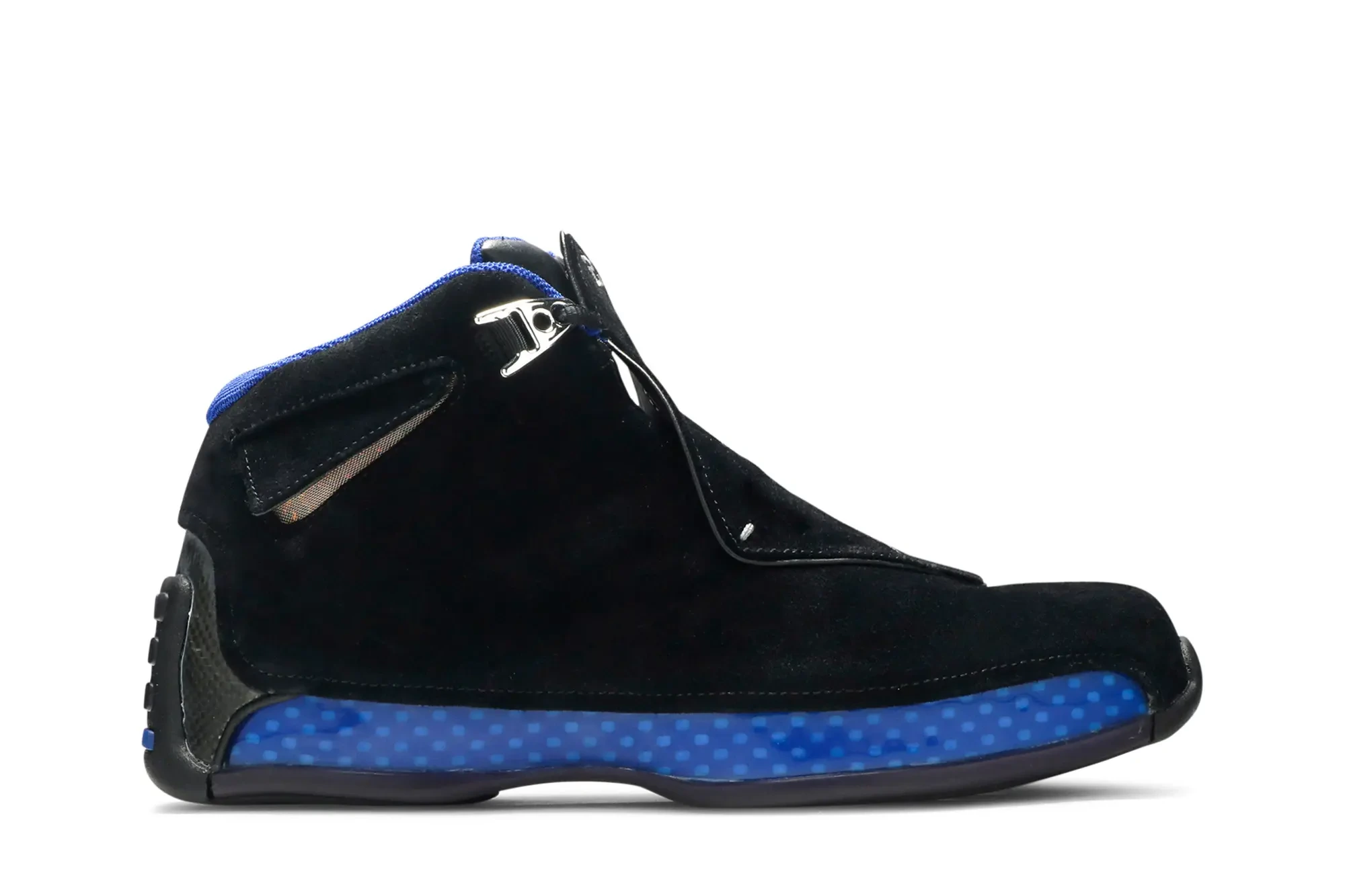
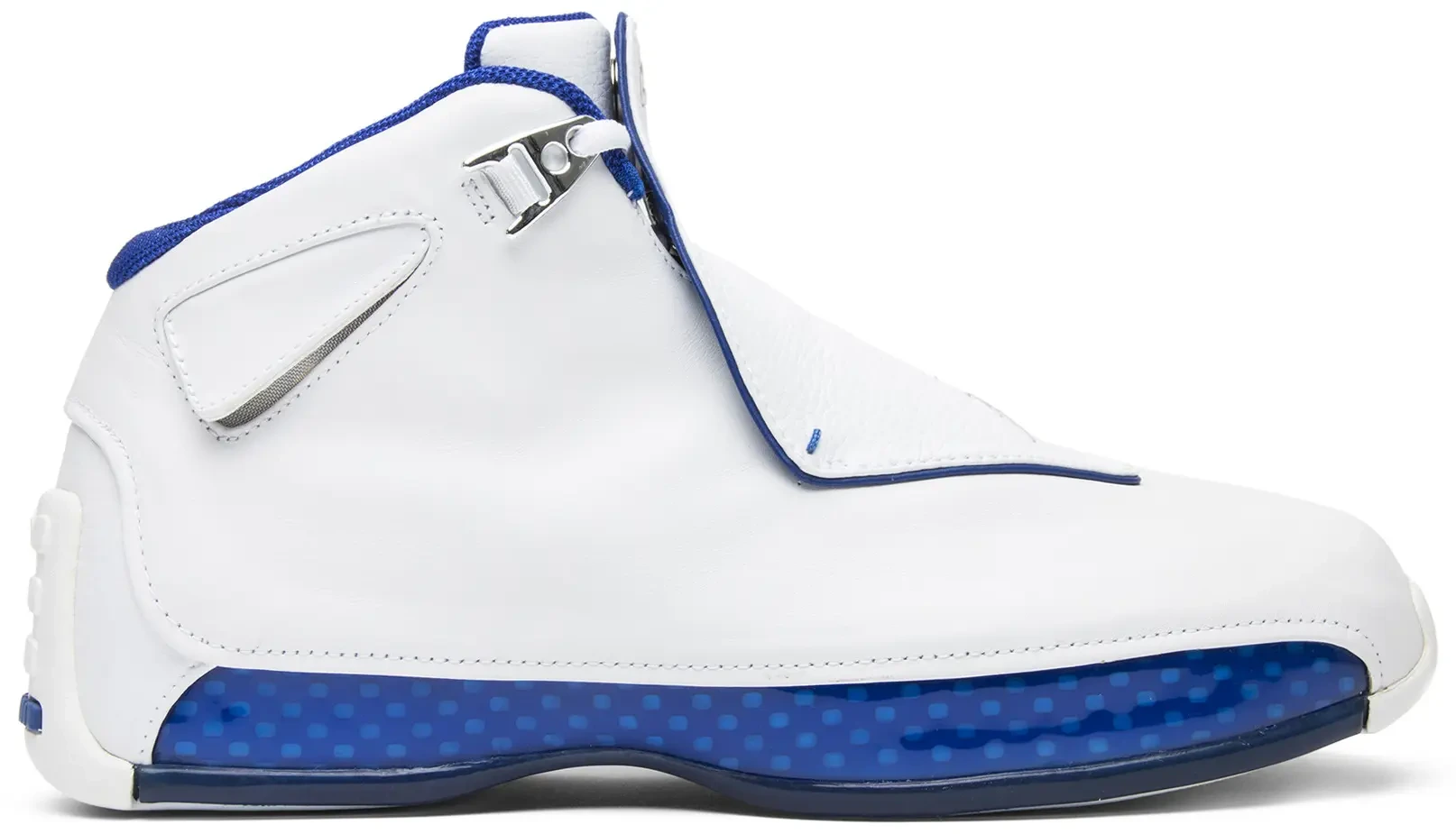
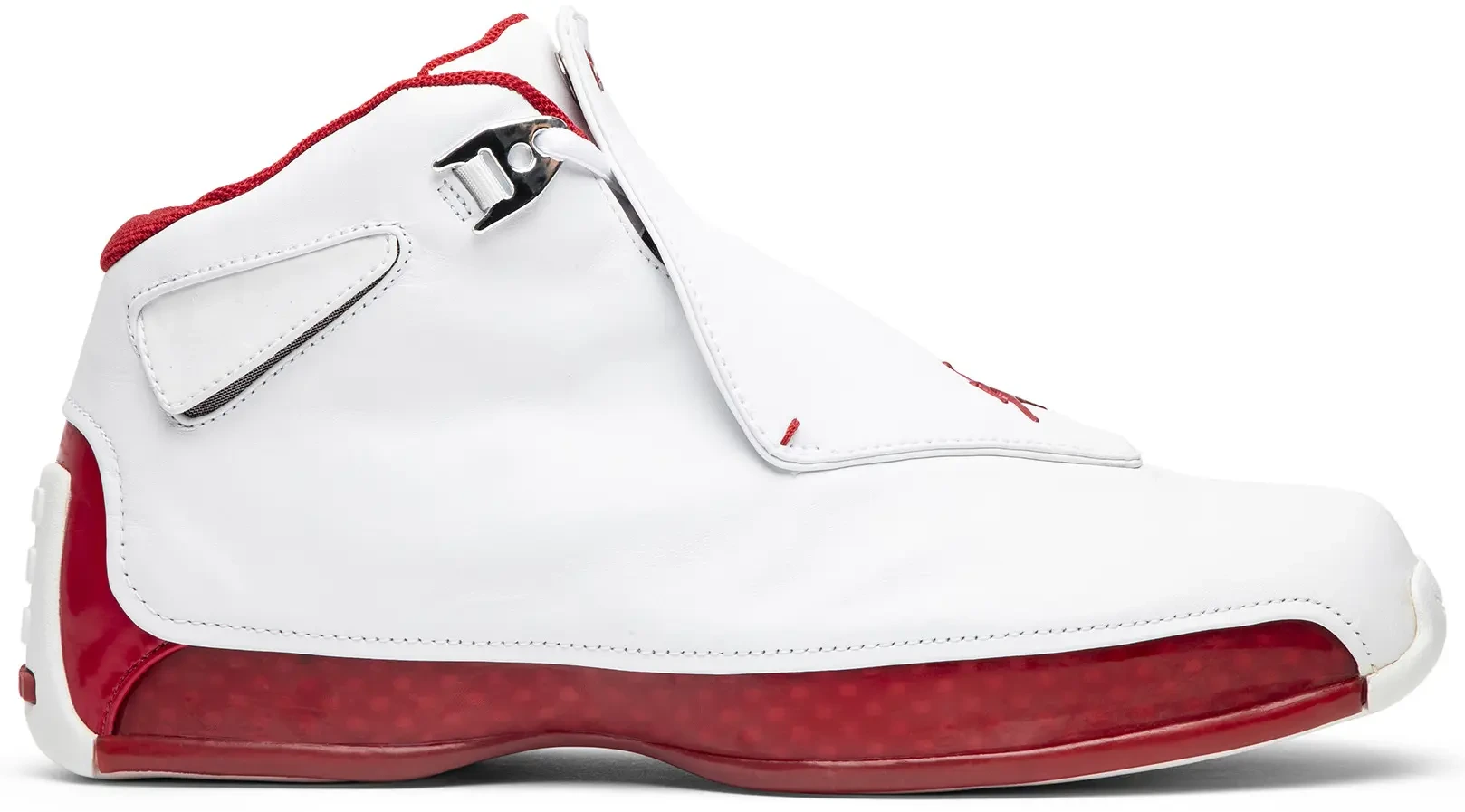
The XVIII makes its technical package less obvious than its smooth appearance suggests. Compare the black suede original with the white leather versions: suede scatters light across a matte surface, while the lighter leather reveals the cover’s edges more sharply. This material difference matters more than calling all three “the same shoe in different colors.” It explains how Kuerbis could keep a consistent outline while giving the original range distinct visual characters.
Three original colorways, three ways to read the model
Black/Sport Royal, released in February 2003, places the emphasis on black suede and blue details. White/Black–Sport Royal offers a lighter treatment of the same original model, while White/Varsity Red brings a different color balance. All three belong to the 2003 original mid-cut range. They are not three names for the first release, nor a list of every version in the XVIII family. The Low and the modified 18.5 need their own labels.
Why the materials matter
The broad surface of the XVIII draws attention before its small logos. With the laces covered, the viewer notices the material, the edges of the cover and the transition into the sole. Black makes that broad surface feel more continuous; white makes the seams and dark interruptions easier to read. That is why comparing original colors teaches more about this model than treating one famous pair as the whole story. The architecture stays recognizable while its visual weight changes.
The farewell and the collector’s object
Black Royal accessories: brush, towel and Driver’s Manual booklet. These accessories reinforced the automotive presentation. They also create a practical distinction for collectors: a shoe can be genuine while its original accessories are missing. Completeness, originality of the color scheme and physical condition answer different questions. None can be established from a nickname alone.
How to avoid the usual identification mistakes
The black-and-red XVIII associated with the 2008 Countdown Pack is a later release, not one of the three 2003 mid-cut originals. When assessing a listing, begin with the model, production era and exact color combination, then ask whether photographs show the matching label and the actual pair. A retrospective colorway can be historically important without being an original-year release.
What the XVIII adds to the larger history
The XVIII stands between closure and continuity. For Jordan the player, the model marks an endpoint; for the product line, it belongs to a sequence that kept developing. Reading the XVIII next to the XIX makes that distinction visible: the story changes from the shoes on Jordan’s feet to the ways later designers translate his identity. That boundary gives the eighteenth model a distinctive place in the series.
Original XVIII and the first Low
The XVIII Low arrived in 2003, beginning with Black/Metallic Silver–Chrome on May 31 in the documented release calendar. The lower version exposes the laces, giving the upper a different rhythm from the covered original. A listing that calls the original XVIII “Mid” refers to that standard shape; it does not establish another release between the original and the Low. The change is easiest to see from the front, where the fastening becomes part of the visible design.
Frequently asked questions
Why compare the XVIII’s original colors side by side?
A shared angle makes differences in surface and contrast easier to see. Compare the cover, its edges and the transition into the sole. This keeps attention on the whole shape instead of allowing one familiar colorway to stand in for the entire model.
Are all black Air Jordan 18s the same release?
No. Black/Sport Royal is an original 2003 colorway, while the black/red Countdown Pack version belongs to 2008. Color details and production era should be checked together rather than relying on a seller’s use of “OG.”
Does a missing brush mean a Black Royal pair is fake?
No. Accessories can be lost or separated from a genuine pair. Their absence changes completeness, not automatically authenticity. Authentication needs a broader examination of the actual shoes, labels, construction and reliable provenance.
Should the 18.5 be counted as another XVIII color?
Identify it as a modified version instead. A model-family list can include it, but readers should not have to infer a construction change from photographs. Keep the original covered XVIII, Low and 18.5 clearly separated.
Sources and further reading
- Nike: Air Jordan 18 archive
- Sneaker News: Air Jordan XVIII history
- SneakerFiles: Air Jordan XVIII history
- SneakerFiles: XVIII Low Black/Metallic Silver–Chrome
- Nice Kicks: 2003 release calendar
Source access note: references to Nike’s historical franchise document use search-indexed excerpts; the original PDF was unavailable during verification.