A calendar name for a twenty-fifth anniversary
The official name is Air Jordan 2010. It is the twenty-fifth signature model, often indexed informally as Jordan 25 or XXV, but neither should replace its original product name. Announced in November 2009 and released in February 2010, it also illustrates why announcement year and retail year must be kept separate. The anniversary belongs to the signature line.
Hatfield and Smith, with a new athlete in the story
Tinker Hatfield and Mark Smith collaborated on the design. The launch announcement positioned Dwyane Wade as the first athlete to debut the shoe. Wade supplied an active-player connection for Michael Jordan’s continuing signature line. The Air Jordan name continued to carry Michael’s identity while active athletes supplied the contemporary on-court connection.
Flex at the front, cushioning from below
The forefoot cover is independent of the layer beneath it, so the protective outer piece need not make the whole front move as one rigid panel. Nike’s archived technical description also identifies full-length, bottom-loaded Zoom Air: the cushioning is incorporated from the underside, a different subject from the window in the upper. Compared with the 2009’s split-heel narrative, the 2010 emphasizes forefoot movement and a low-profile underfoot arrangement.
Why the Outdoor changes more than the color
Nike’s own archive explains that the 2010 Outdoor replaced the window with crossing straps inspired by the Air Raid. That is a construction change, not a new name for the same side panel. Within the main windowed model, the black/red/white debut uses stronger color separation than the Black/Charcoal treatment; University Blue adds a different accent to a dark base. Keep those color comparisons within the same construction before introducing the Outdoor branch.
What the window means
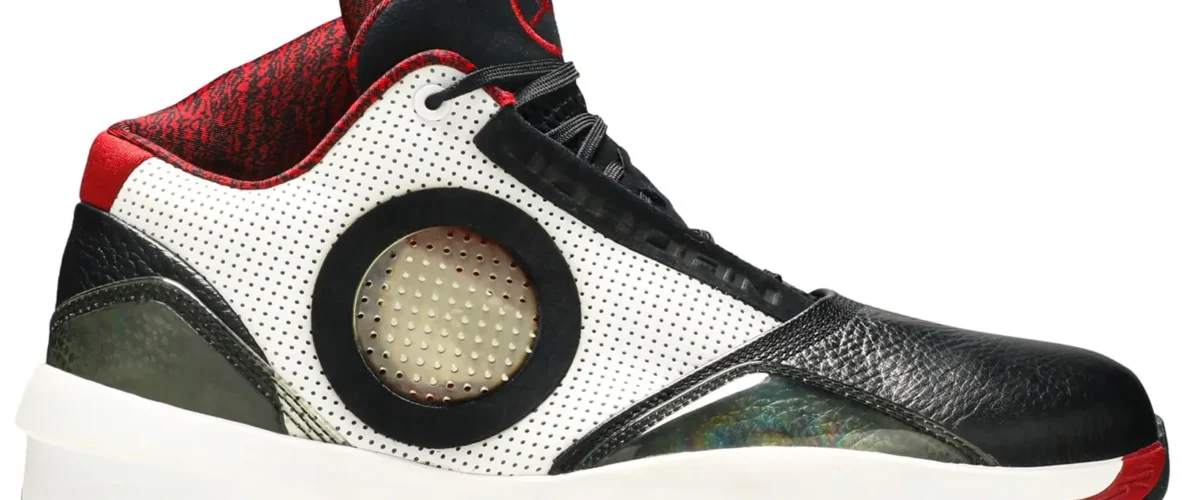
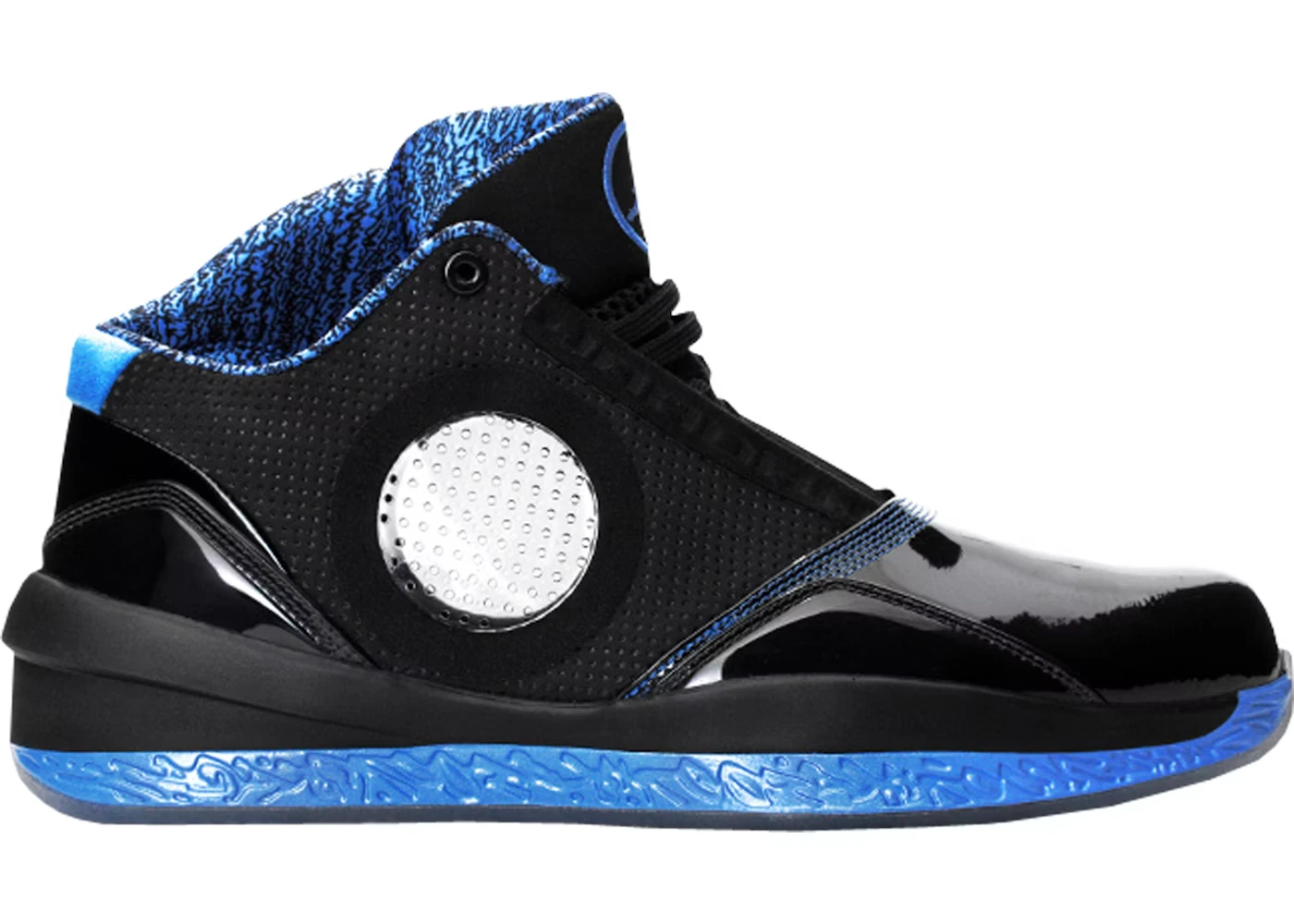
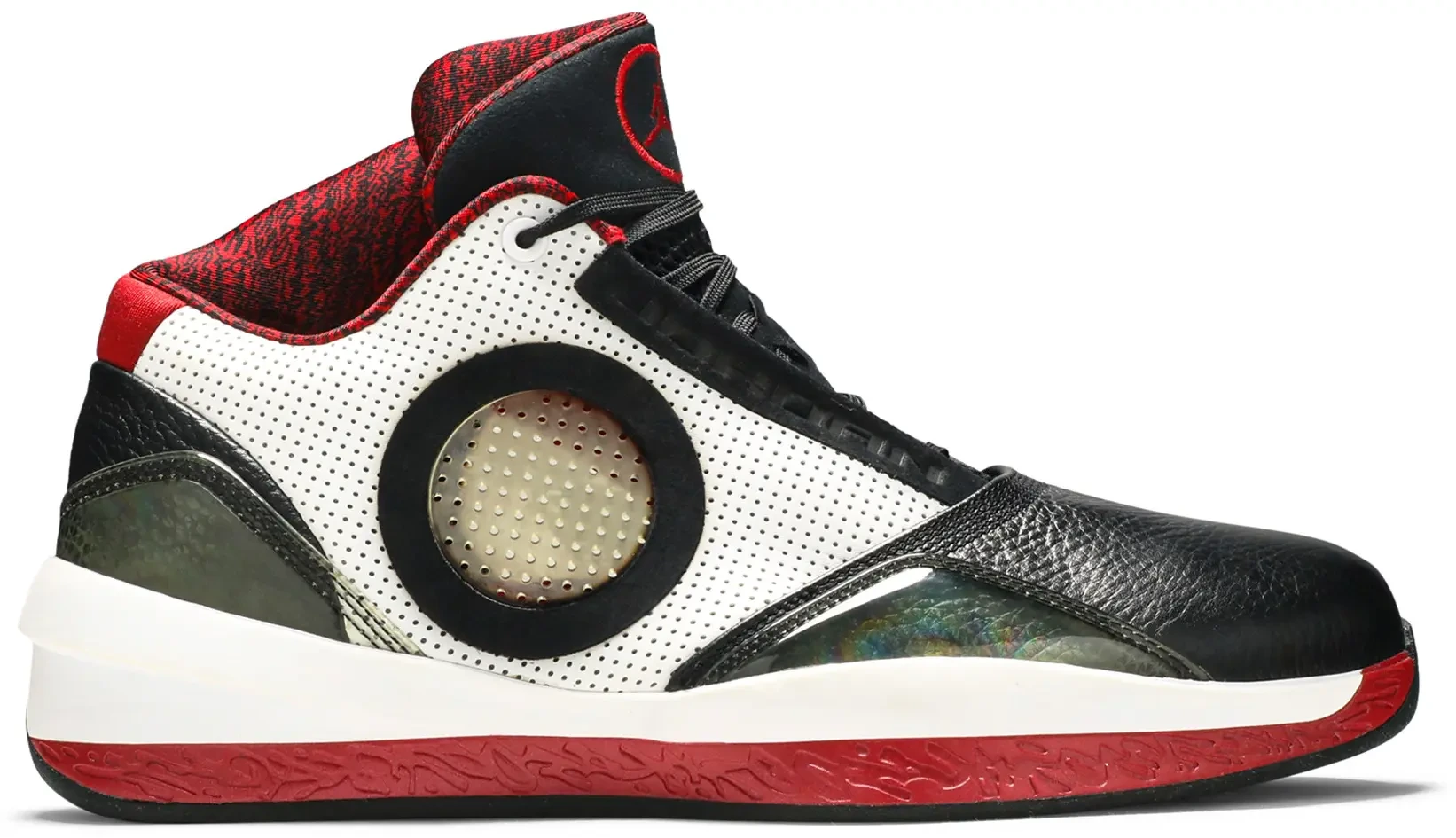
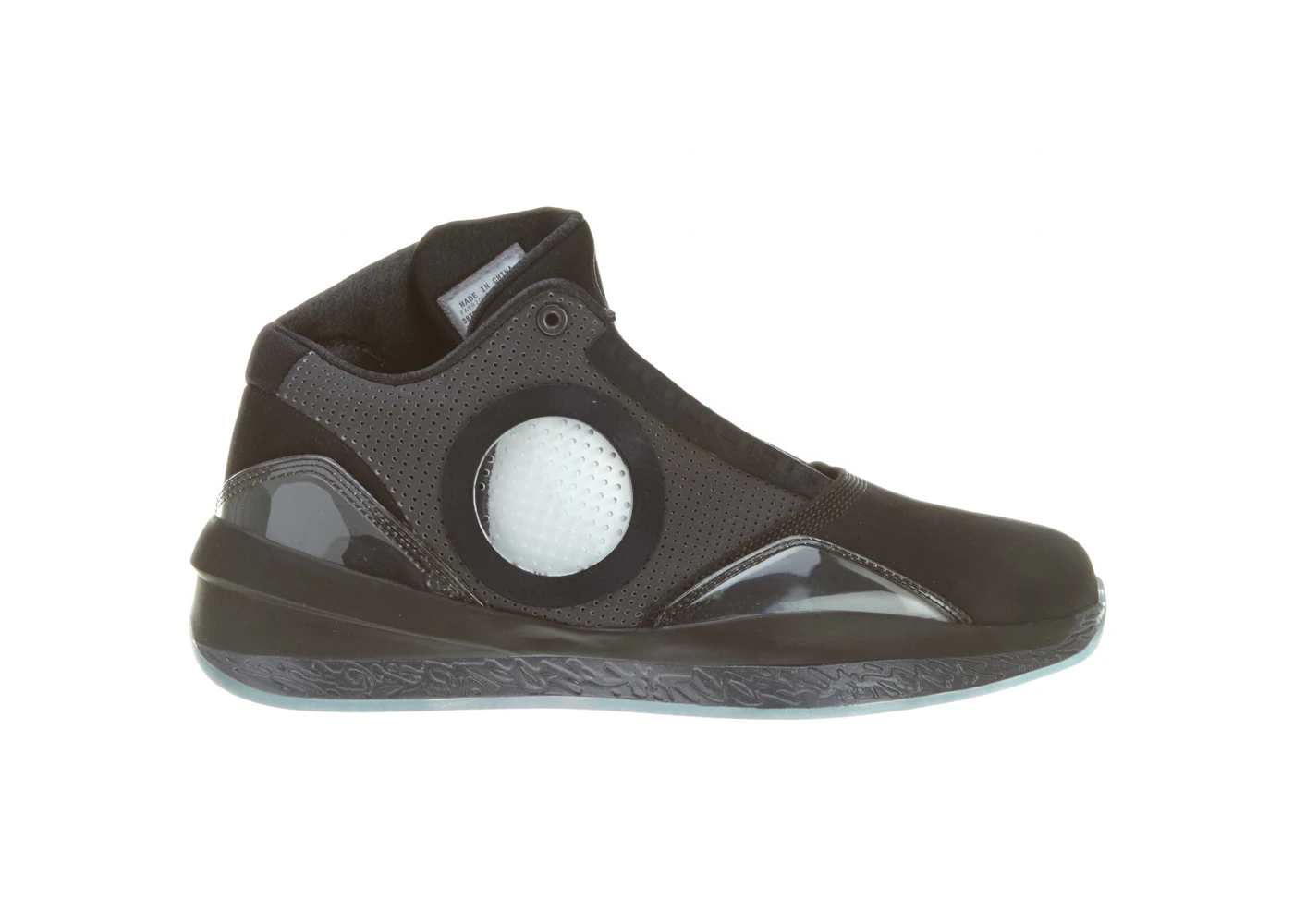
The transparent TPU window is the most immediate identifier. Nike’s launch narrative connected it with Jordan’s ability to anticipate opponents. It is a visible opening through the side of the upper, not an exposed cushioning bubble. A layered toe with an independent forefoot support cover was another documented part of the design. Keeping those features distinct is more useful than calling the entire shoe transparent.
Three colors from the original year
Black/Varsity Red–White was released on February 13, 2010. Black/University Blue followed on April 24. Black/Dark Charcoal–Varsity Red was available in June. These are three original-year treatments of the main 2010 model, with different release moments. Team and Outdoor versions belong to related branches and should not be silently mixed into a list of colors for the windowed main shoe.
A visual feature that involves the wearer
The window makes the wearer part of the shoe’s appearance. A normally concealed layer becomes visible, so styling does not stop at the outer material. It also changes how the product is seen: the shoe’s appearance changes once someone is wearing it.
Why the toe deserves attention too
The window can absorb all the attention, yet a model-wide history should also examine the layered front. Comparing a side view with a top-down photograph helps separate those two ideas. One addresses visibility; the other concerns how the front is built. When a design has one controversial or memorable feature, it is easy for discussion of that feature to replace a description of the product as a whole.
Twenty-five does not mean twenty-five years of Jordan Brand
Anniversary language needs a clear starting point. Here it follows the Air Jordan signature franchise, not the later establishment of Jordan Brand as its own identity within Nike. The distinction is small in wording and large in chronology. Similarly, a 2009 press announcement does not make the 2010 model a 2009 retail release. Good timelines keep the named shoe, its announcement and its sale date in separate fields.
How to place the 2010 in a collection
The 2010 follows the year-named 2009 and belongs in the same continuing signature sequence. For comparison, establish whether a listing shows the main model or a related Team or Outdoor version, then identify the color and production era. A transparent side feature is a design clue, not a stand-alone authenticity test. Condition, labels and the rest of the construction still need to agree. This approach preserves the model’s real place in the history without making its window carry every part of the story.
The 2010 family uses Team and Outdoor names
The original 2010 family expanded through Team and Outdoor constructions. A separately named Low or Mid debut has not been verified for that collection, so neither receives an invented launch year or first colorway. The windowed flagship, Team and Outdoor remain the three branches to compare.
Frequently asked questions
Is Air Jordan 2010 officially called Air Jordan XXV?
Air Jordan 2010 is the official launch name. XXV or Jordan 25 can indicate its position in the signature sequence, but should be explained as numbering rather than substituted for the original name.
Is the transparent window an Air unit?
No. It is a TPU window in the side of the upper. Confusing it with an exposed cushioning unit merges two different parts of a shoe and misdescribes the feature that makes this model recognizable.
Was it released in 2009 or 2010?
The announcement was made in 2009; the main retail launch was in February 2010. Those are different events. The product’s official name and original release year are both 2010.
Is every Jordan with 2010 in its name the same shoe?
No. Team and Outdoor versions need separate identification. Start with the construction shown in photographs before comparing colorways or prices under the broad Air Jordan 2010 family name.