Why the name is 2009, not Air Jordan 24
Air Jordan 2009 is the official product name. It occupies the twenty-fourth position in the signature sequence, but that position should not replace the name printed in its launch material. After the XXIII, Jordan Brand moved to year-based naming. Calling it “Jordan 24” can help explain the sequence; presenting XXIV as its original official name rewrites the history.
Jason Mayden and the next chapter
Jason Mayden designed the Air Jordan 2009. The model was announced in January of that year, after the symbolic twenty-third installment. A limited S23 launch preceded the general release. That staging matters: an announcement, the first limited sale and the broader retail debut are three separate events. An article that supplies only one undifferentiated “release date” can leave the reader with the wrong impression.
APT explained through the split heel
The launch description locates APT in the heel and explains a split that lets one side respond to lateral movement while the other maintains ground contact. That is the intended mechanical idea, not a measured promise that every wearer becomes faster. The carbon arch plate and TPU chassis provide a supporting framework around the system. The 2009 thus shifts attention from the XXIII’s integrated assembly toward the geometry of a heel designed to respond in sections.
Pleating is more than a fencing reference
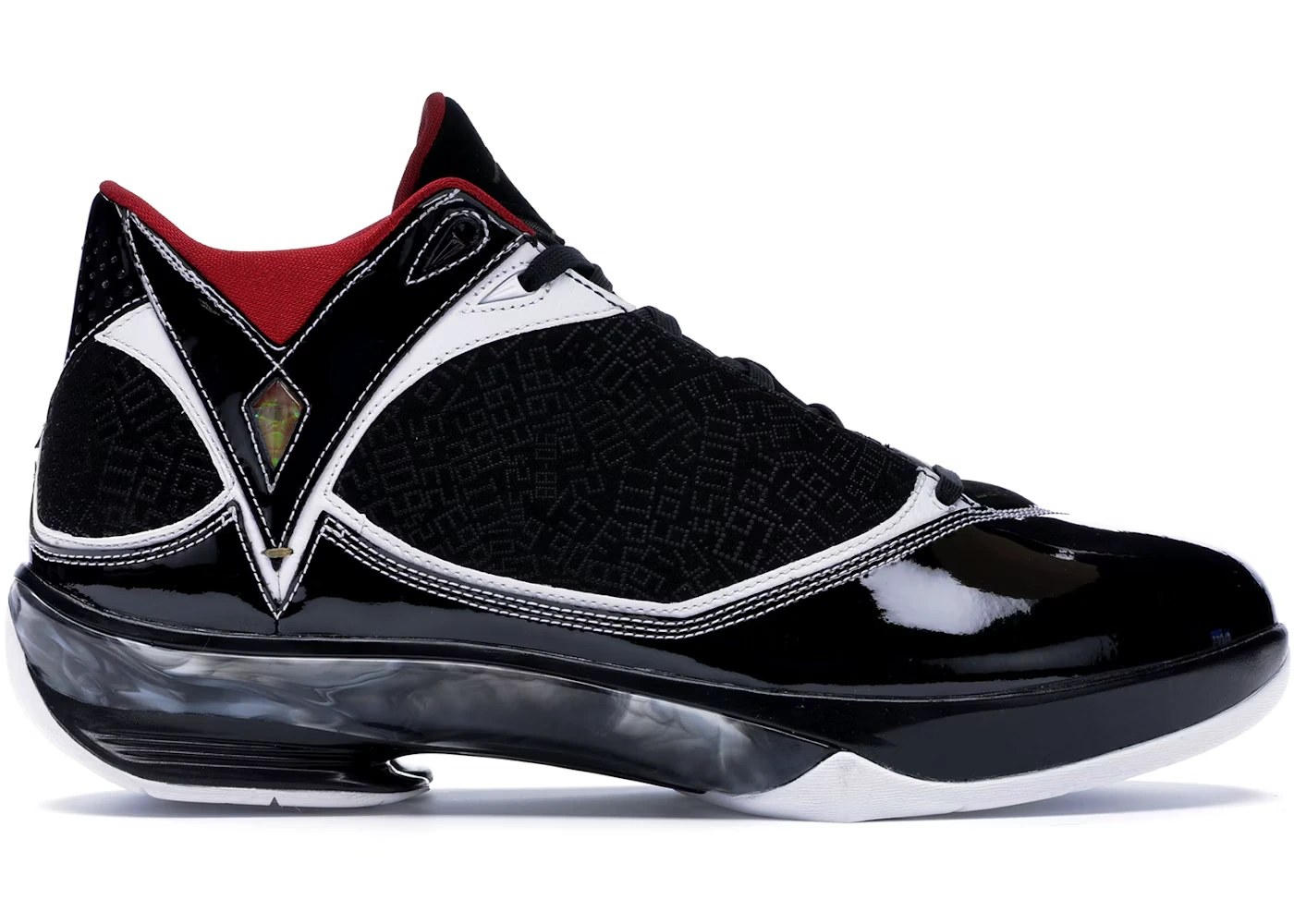
The original technical text describes the pleated satin as part of the upper’s reinforcement and fit. The blown-glass-inspired TPU treatment adds a separate material story beneath it. In the white launch version, the contrast between bright upper and darker chassis makes those layers especially legible. The black/gold S23 reads differently because the palette brings the surfaces closer together. Comparing them connects the launch colors to the construction instead of treating the names as isolated collectibles.
Defense as a design reference
The design narrative connected basketball defense with fencing. Its pleated side treatment is part of that story. Another strand came from Paralympian April Holmes and Articulated Propulsion Technology, or APT. Those references brought footwork, defense and the mechanics of movement into the story of the new model.
Two launch editions and a later 2009 release
Black/Metallic Gold S23 was the limited January 31 debut. White/Metallic Silver–Black followed with the February 14 general release. A third useful original-year reference is the September 5 Hall of Fame edition, Black/Metallic Gold–Varsity Red. It is part of the model’s 2009 history, but it was not a third initial-launch color. Its later position should remain explicit every time these releases are grouped.


How to read the upper
The 2009 model uses contrast between smooth and pleated surfaces to divide the shoe into zones. A distant side view emphasizes the overall shape; a closer view changes the focus to texture and the transitions around it. This is why describing the model merely as white or black misses much of its identity. The materials’ arrangement matters as much as their color.
The naming change is not a break in the lineage
A calendar year looks different from a Roman numeral, but the sequence continues. That makes the 2009 model useful for explaining how a signature line can reorganize its naming without becoming a different product family. Readers should be able to find it next to the XXIII and 2010 in a model index while still seeing its correct official name. Search convenience is no reason to erase the original branding.
Hall of Fame is a chapter, not the whole book
The later commemorative edition creates an easy temptation: to tell the entire model history through that one theme. Doing so would obscure Mayden’s design and the two earlier releases. A model article should establish the silhouette first, then explain where the commemorative treatment fits. The same order helps a collector compare a regular 2009 pair and a Hall of Fame pair without assuming they are interchangeable descriptions of one release.
What to ask when researching or buying
Ask whether a date refers to the public announcement, limited edition or general release. Ask whether “24” is being used as a sequence number or a supposed product name. Finally, ask which edition the photographs actually show. Those three checks resolve much of the confusion around this shoe without relying on a seller’s rarity claims. For an aging original pair, authentication, completeness and condition still require separate evidence; a correct historical description is only the beginning.
Cut, limited edition and the S23 name
The documented original Air Jordan 2009 collection had no separate Low release. S23 names the limited edition, not a different cut. Mid can describe the standard shoe’s height, but no separate Mid debut is established. The original cycle therefore has no additional Low launch year or first colorway.
Frequently asked questions
Is Air Jordan 2009 the same as Jordan 24?
It is the twenty-fourth model in the signature sequence. Air Jordan 2009 is its official name, while Jordan 24 explains its position. Keep that distinction in titles, product records and historical timelines.
Was Hall of Fame one of the initial launch colors?
No. It was a later release within 2009. It can legitimately appear among original-year references, but it should not be moved back into the January or February debut.
Was the designer Tinker Hatfield?
No. The 2009 model is credited to Jason Mayden. The year-based naming transition should not cause it to inherit the design credit of the XXIII before it or the 2010 after it.
Why can two dates both be described as its debut?
A limited edition preceded the general release. Both events matter, but they describe different distribution stages. Specify which edition and which stage a date refers to instead of treating the difference as an error.