The second D’Wayne Edwards chapter
Released in 2007, the Air Jordan XXII followed the XXI with D’Wayne Edwards again responsible for the design. Its original launch fell on February 17, Michael Jordan’s birthday. The period spelling XX2 appears frequently in historical material; XXII and Air Jordan 22 identify the same numbered model. This is a new annual shoe, not a modified colorway of the XXI.
What came from the aircraft
The F-22 fighter jet is the documented inspiration. Sharp transitions and the treatment of the rear make the connection useful to examine. Nike’s franchise history also specifies a titanium-reinforced shank. The reinforcement belongs to the midfoot support structure, where the material serves a different purpose from the cushioning in the heel.
Support is not the same as softness
The shank spans the midfoot to support that area, while the removable heel insert changes the cushioning configuration. Nike’s counsel independently described the inserts sitting inside a heel cavity on both XXI and XXII. The XXII therefore continues a component-based system rather than introducing an entirely replaceable sole. The aircraft connection concerns its design language; the cushioning arrangement belongs to the basketball problem of controlling how the shoe behaves under load.
The differences visible in the original range
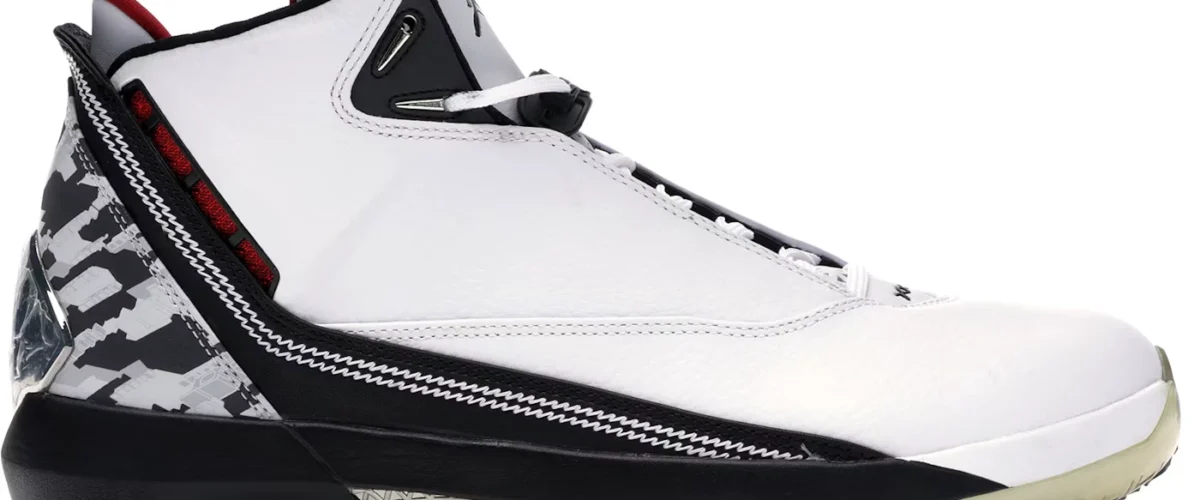
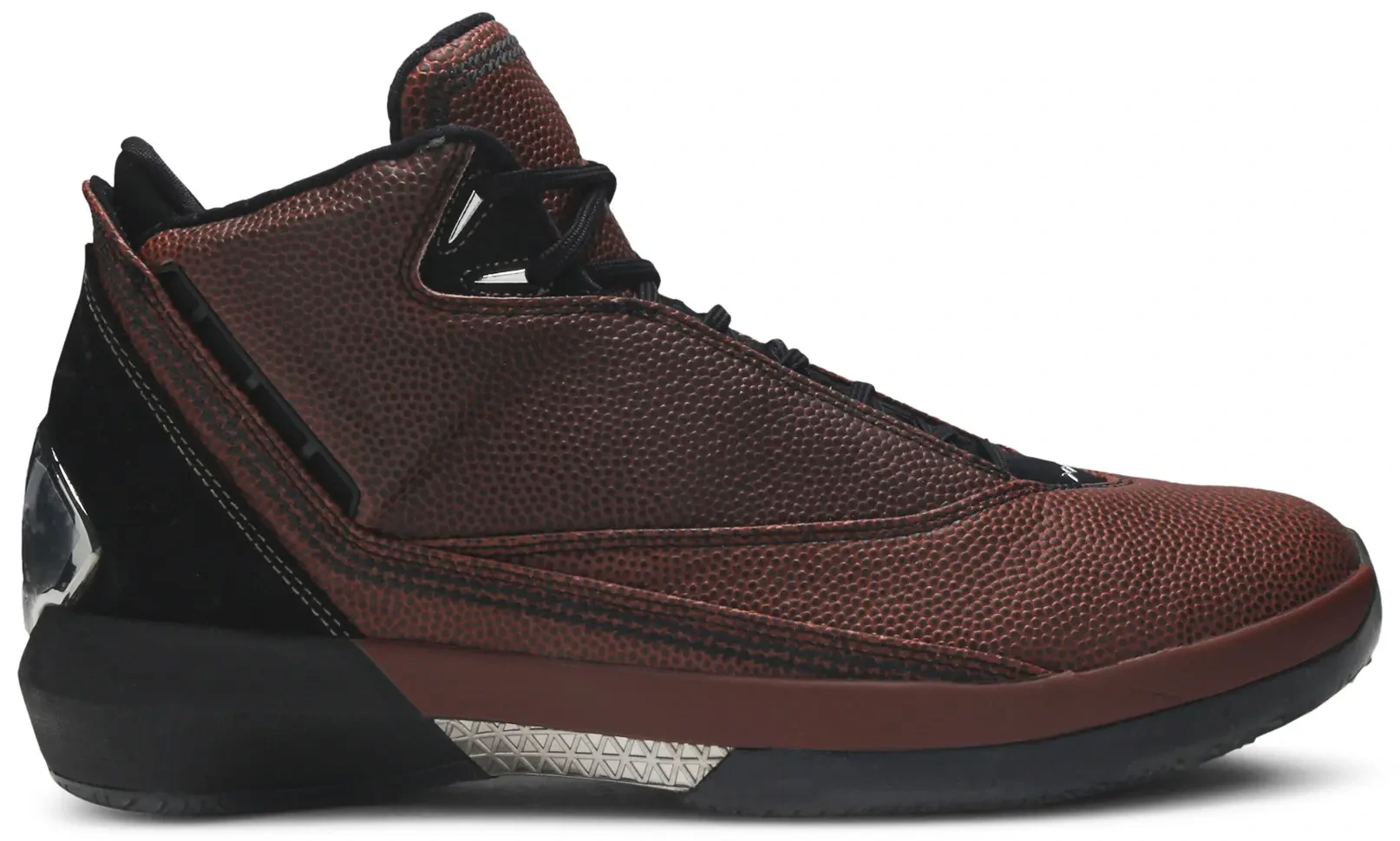
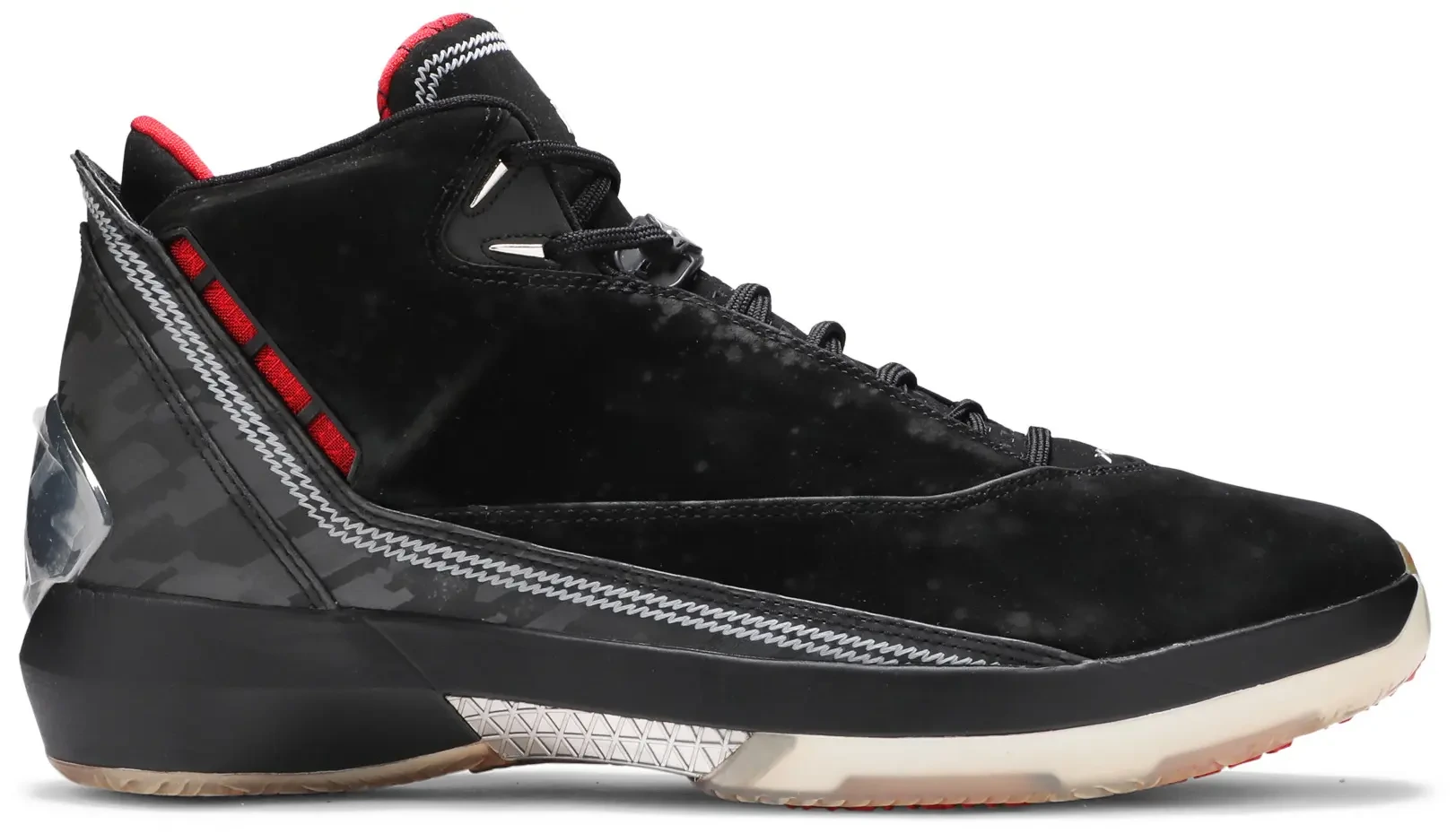
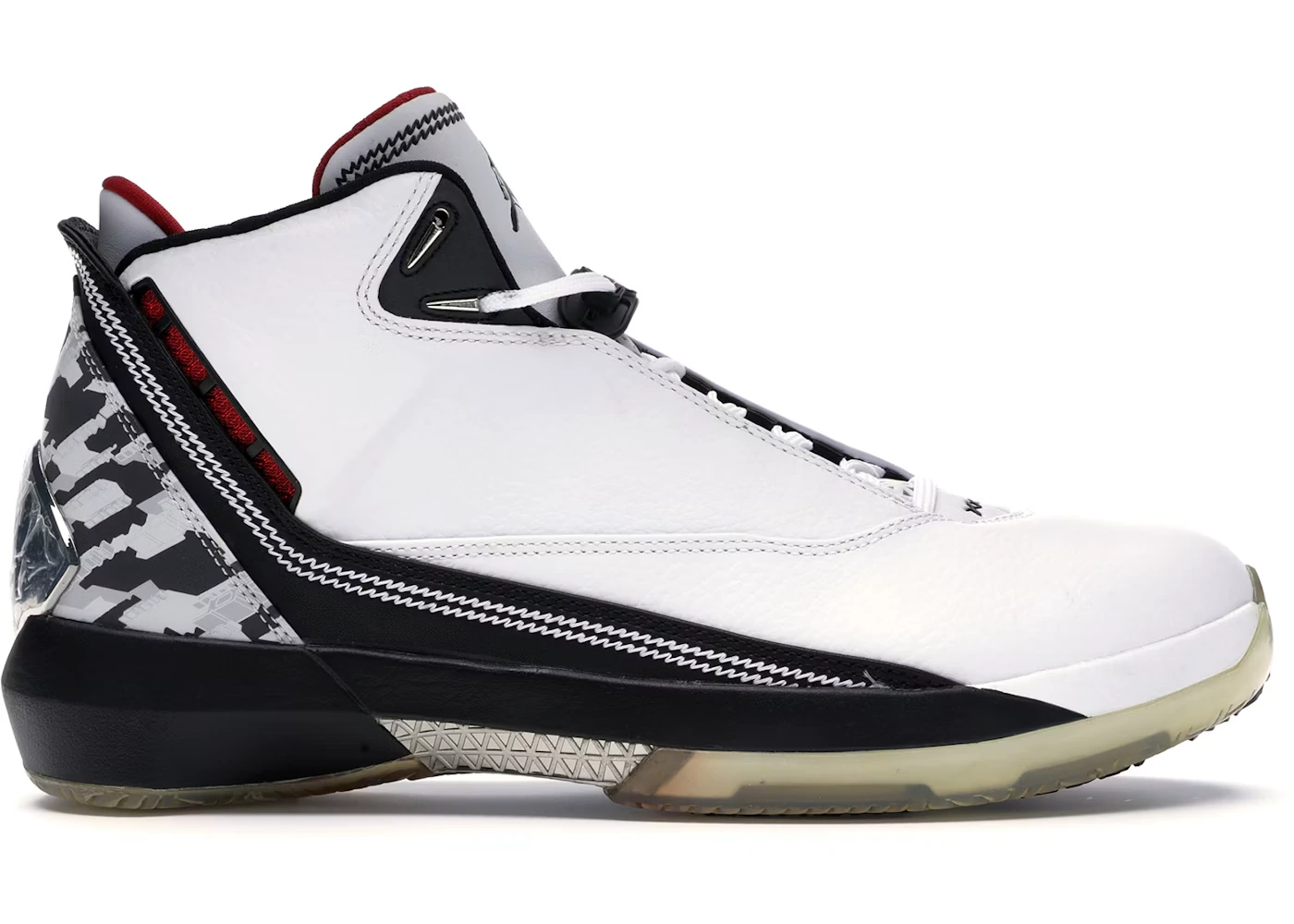
The white/silver/red shoe makes the angular panel boundaries easy to see. The black/red treatment reduces that contrast and lets the reflective-looking and tonal areas carry more of the visual structure. Basketball Leather introduces a pebbled surface reminiscent of the ball itself, changing how light moves across the upper. Together they show why the XXII should be studied through both geometry and texture: a color chart alone would miss the most meaningful variation.
IPS evolves again
Nike describes visible interchangeable cushioning pillars in the XXII’s IPS system. The design therefore continues the customization discussion from the XXI. For a modern reader, the important historical point is choice within one shoe platform. The removable component gives the wearer a way to change the heel setup while keeping the rest of the shoe.
Three original-year releases
White/Metallic Silver–Varsity Red and Black/Amber Basketball Leather are listed for February 17, 2007. Black/Varsity Red–Metallic Silver followed on April 7. The Basketball Leather edition is particularly important to label: it changes the surface character rather than merely adding another color to an otherwise identical-looking upper. These three establish the original-year story without folding later retros into the launch.
Why the basketball-textured version belongs in the comparison
Basketball Leather pulls the design toward the object used in the game, while the aircraft-inspired standard model points toward a machine outside it. Comparing them makes the design tension tangible. The same numbered family can carry both a sporting reference and an industrial one. The contrast gives the original range two different points of reference.
The 5/8 and PE branches
The XXII range also included a lower 5/8 version and PE editions with different upper treatment. Those branches deserve their own identification in a collection or product listing. A city-themed PE is not automatically the same construction as the standard high model. Listing all variants under “original colors” without explaining the cut can make a history look comprehensive while actually making it less clear.
A model history without a victory attached
Michael Jordan was no longer playing in the NBA when the XXII arrived. The XXII belongs to the continuing signature line after his playing career: Edwards’s design, the adjustable cushioning and the expanded range carry its story. It represents a period when new Air Jordans expressed Michael’s identity through materials and construction rather than a new season of his own performances.
How to examine a listing
Ask which construction is being offered before comparing color names. Then compare the upper, the heel area, outsole and labels with documented examples of that version. If interchangeable parts are advertised, ask to see them. Keep historical originality separate from present condition: a pair can be correct for 2007 and still require inspection before wear. This order of questions avoids paying attention to a dramatic nickname while overlooking the version of the shoe itself.
The lower XXII was called 5/8
The lower-cut branch arrived in 2007 under the name XXII 5/8. Its first documented colorway is White/University Blue–Orange Blaze, dated July 21. It is often grouped with low-cut Jordans, but 5/8 is the useful period identifier. The standard XXII and the 5/8 should remain separate when comparing original releases; “Mid” on a listing for the standard shoe does not supply another first colorway or launch year. Keeping the original names makes the difference in cut easier to follow.
Frequently asked questions
Are XX2 and XXII different models?
No. XX2 is period styling for the twenty-second Air Jordan. It should be searchable as Air Jordan 22 and XXII without creating duplicate histories for what is the same numbered model.
Is the whole sole made of titanium?
No. Nike specifies a titanium-reinforced shank in the midfoot. That component is only one part of the sole construction.
Is Basketball Leather a later retro?
No. Black/Amber Basketball Leather appears in the original February 2007 release calendar. It should be distinguished from the conventional white and black color treatments and from later rereleases.
Are 5/8 and PE just color names?
No. They identify related versions with construction differences. Establish the version before comparing a pair with standard XXII photographs. A broad model-family name is not a substitute for exact product identification.
Sources and further reading
- Pursue the Passion: D’Wayne Edwards interview
- Sneaker News: Air Jordan XX2 guide
- SneakerFiles: 2007 release archive
- Banner Witcoff: Nike XXI/XXII removable cushioning inserts
- SneakerFiles: XXII 5/8 White University Blue
Source access note: references to Nike’s historical franchise document use search-indexed excerpts; the original PDF was unavailable during verification.