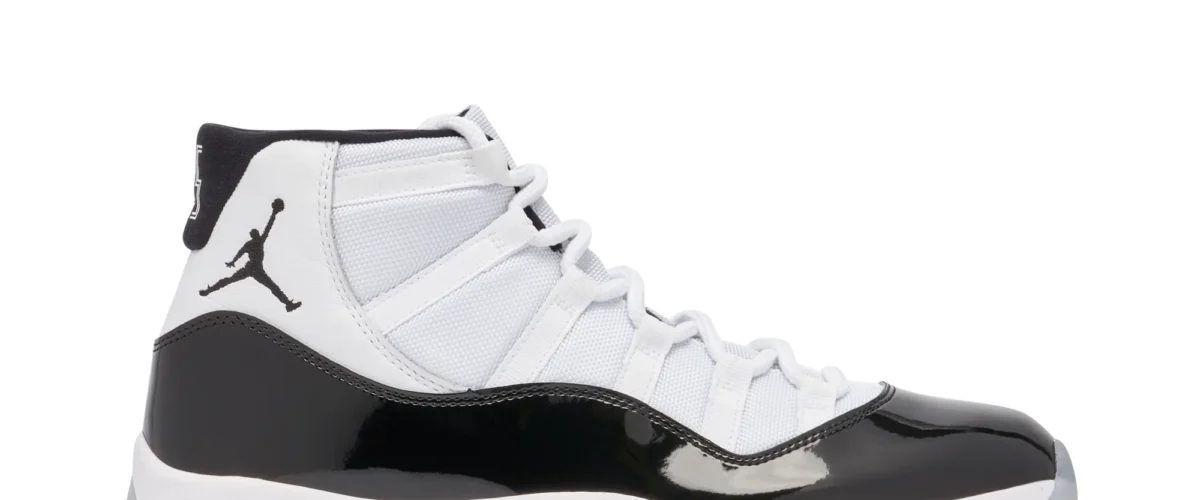
The Air Jordan 11 changed the visual vocabulary of a signature basketball shoe. Its glossy lower panel and textile upper create a clear division between shine and texture. The design can read as sports equipment and dressed-up footwear at the same time. Its history becomes clearer when three separate timelines are kept in view: Jordan’s early on-court appearances, the original retail collection, and the later retros that expanded its cultural reach.
A 1995 model with a 1995–96 original season
Nike’s archive credits Tinker Hatfield and dates the Air Jordan 11 to 1995. The shoe belongs to Jordan’s return to a full NBA season and his fourth championship period. Its signature visual element is the patent-leather band wrapping the lower upper.
Why the construction looked different
The original construction combined a Phylon foam midsole, full-length Air cushioning and a carbon-fiber support plate beneath the midfoot. The glossy overlay was therefore one component of a complete basketball design. Treating the 11 solely as a dress shoe misses the structure underfoot; treating it solely as equipment misses how strongly that surface finish determines its identity.
The three original mid-cut colorways
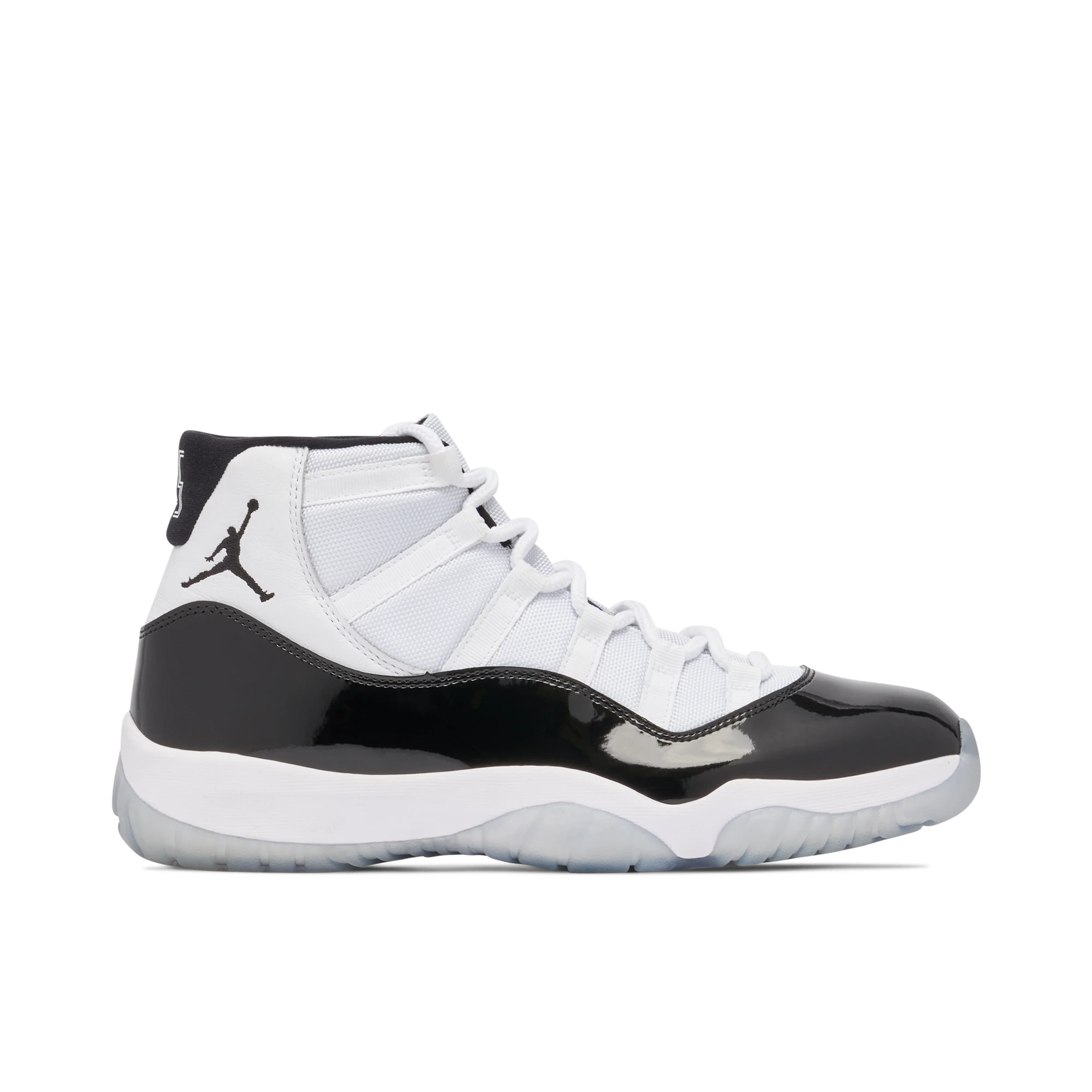
Concord, 1995. White/Black–Dark Concord provides the sharp white-and-black contrast most closely associated with the model’s opening release. Concord names the purple accent color, rather than the black patent panel. A color nickname can therefore point to a small detail instead of the largest visible area.
Columbia, 1996. White/Columbia Blue–Black gives the upper a lighter appearance with blue accents. It belongs to the original season, even though its retail year differs from the model’s debut. The later name Legend Blue should be checked against the specific release rather than automatically applied to every historical pair.

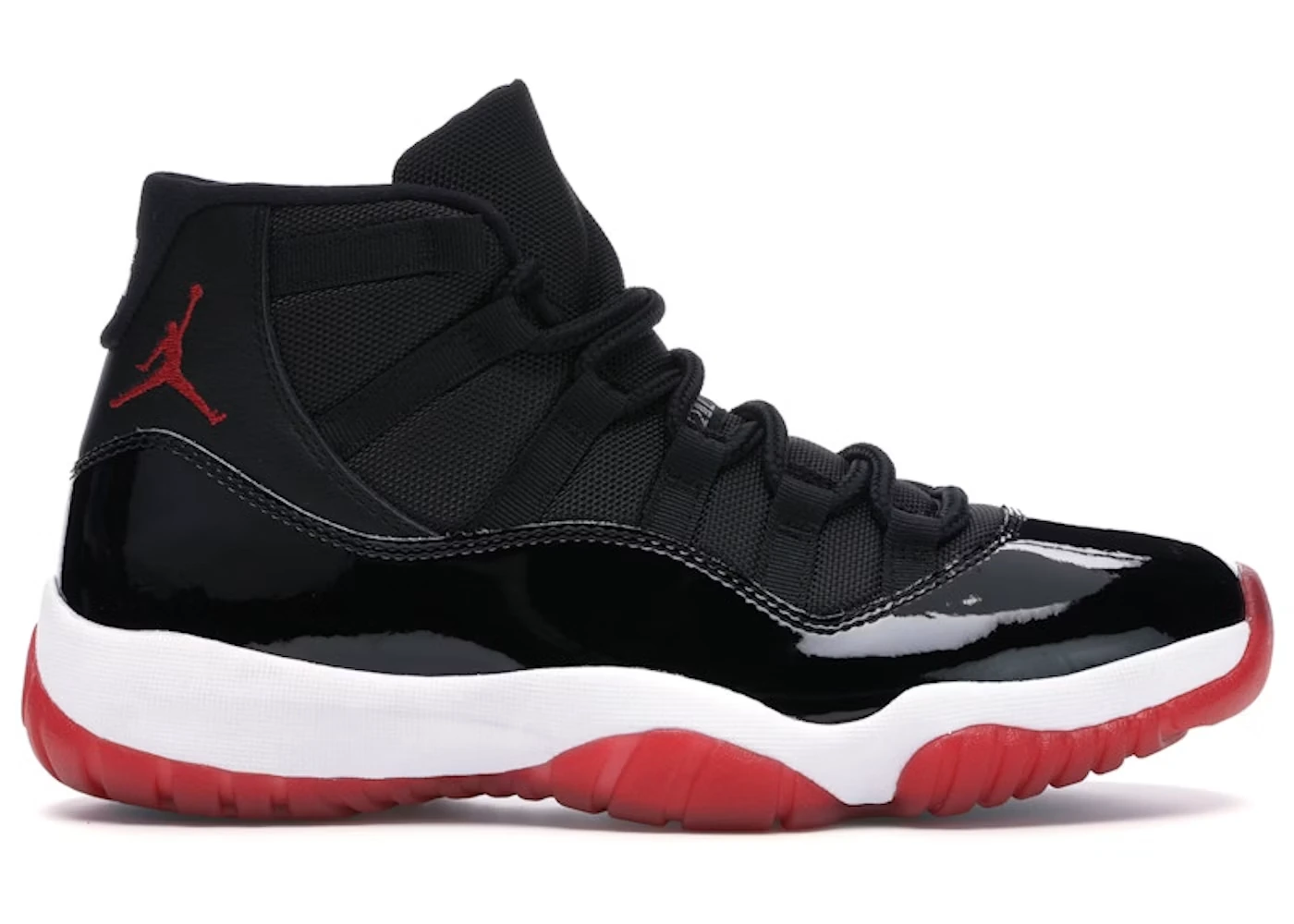
Black/Red, 1996. Black/True Red–White is also known as Bred or Playoffs. The dark upper and red outsole produce a different balance from Concord. Its original retail date is 1996, within the model’s first full release season.
The season that gave the design its sporting setting
Chicago finished the 1995–96 regular season 72–10 and won the title. Nike later used that record as the theme of the separate 72-10 edition. That distinction matters: the commemorative sneaker refers to the season, but it is not one of the three original mid-cut releases.
Space Jam: original-era appearance, later retail release
The black-and-blue look connected to Space Jam had an original-era on-court and movie history. Its first public retail release, however, came in 2000. Cool Grey followed in the early retro period. Neither belongs in a list restricted to the three original 1995–96 retail mids. The Low IE also has its own construction and should be named explicitly rather than treated as a shortened patent-leather mid.
How the model became more than a season
Nike’s 2025 anniversary program treated the 11 as a 30-year design story. That long view helps explain why different generations can connect the silhouette to different releases. Someone who remembers the original season and someone who discovered a later holiday retro can be responding to the same shape through different experiences.
What to compare when researching an edition
Start with the model year, colorway year and manufacturing edition as three separate fields. Then compare patent-leather height, upper material, heel numbering, outsole tint and the exact product identifier for the pair under discussion. Those features are more useful than a nickname alone. A difference from a remembered version should trigger research, not an immediate authenticity verdict.
For a model-wide collection, Concord, Columbia and Black/Red make a concise original-season group. Space Jam is a logical extension when the topic shifts to screen history and the first retros. Keeping that boundary visible gives the collection a coherent chronology instead of making every famous color appear to have launched together.
The lasting design lesson
The 11 shows how one recognizable material treatment can organize an entire silhouette. The lower panel creates a continuous visual line around the foot; the contrasting upper keeps that line readable. Its appeal does not require the claim that it is universally the best Jordan. More useful questions are why the construction looked different, when each version reached stores, and how the same form acquired new associations over time.
Mid and Low: first releases and colors
The original Mid debuted with Concord in 1995. The Low IE followed in 1996, with Cobalt and Black/Red in its opening collection. It traded the patent-leather look for a more ventilated construction. The surviving release calendars do not securely establish a single first color across both IE releases.
The patent-leather Low reached retail on April 14, 2001: White/Varsity Red and White/Columbia Blue for men, White/Silver and White/Citrus for women, plus White/Hot Pink for younger sizes. That was a multi-color launch, distinct from the 1996 Low IE.
Frequently asked questions
What are the three original Jordan 11 mids?
Concord, Columbia and Black/Red. Concord arrived in 1995; the other two in 1996.
Was Space Jam an original retail colorway?
It had original-era appearances, but the first retail release was in 2000.
Is Cool Grey an OG 1995 color?
No. It belongs to the later retro period.
Does the 72-10 shoe date from the 72-win season?
No. It is a later commemorative edition named for the Bulls’ 1995–96 record.
Sources
Nike Air Jordan 11 archive · Sneaker Files Air Jordan XI history · Original Air Jordan XI: Concord · Original Air Jordan XI: Columbia · Original Air Jordan XI: Black/Red · Sneaker News: Air Jordan 11 guide · Sneaker Files: 1996 Cobalt Low IE · Nice Kicks: patent Low debut.