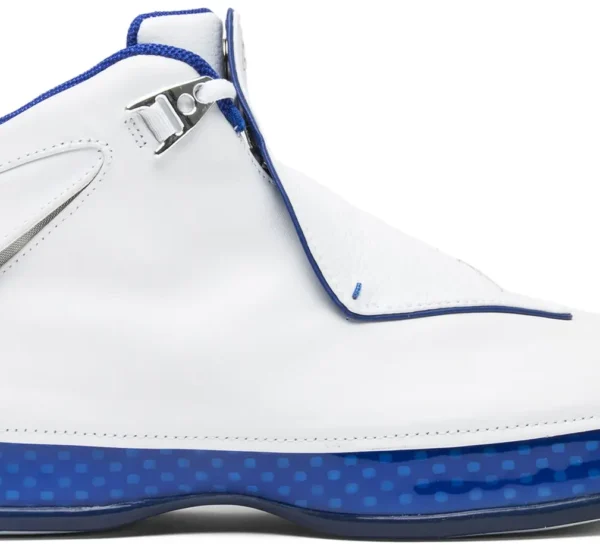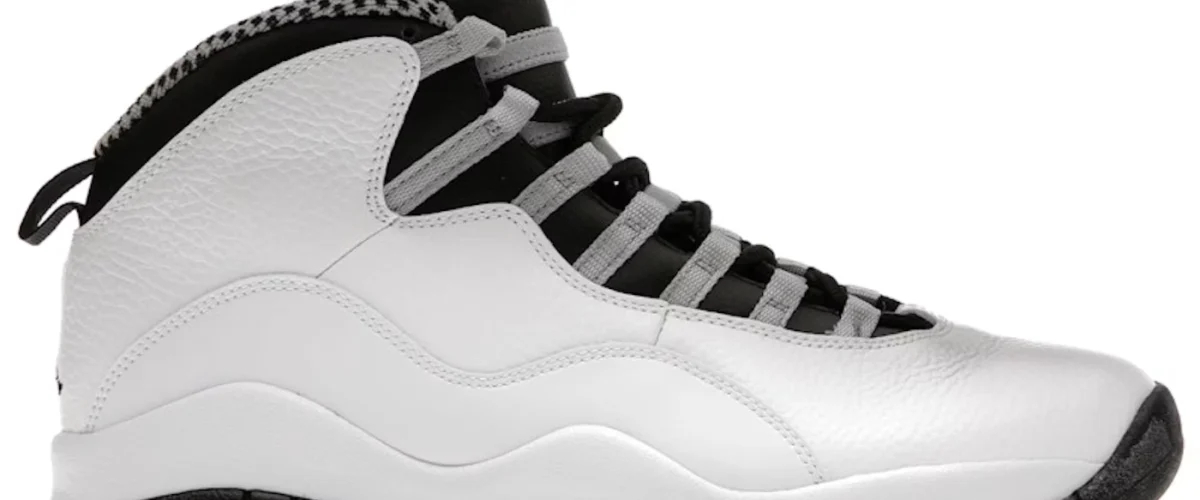
The Air Jordan 10 occupies an unusual place in the series: its design looks backward, while its basketball story points forward. The milestones on the outsole suggest a career being celebrated. The shoes’ association with Michael Jordan’s return changes that reading into something less final. Understanding the model means holding those two ideas together, rather than reducing the tenth signature to one Chicago colorway.
When did the Air Jordan 10 release?
Designed by Tinker Hatfield, the Air Jordan 10 launched in 1994. Jordan scored 55 points wearing it in New York on March 28, 1995.
A career written into the outsole
The outsole carries a sequence of career milestones running from 1985 through 1994. This is the central storytelling device: turn the shoe over and the usual supporting component becomes an illustrated résumé. An inner sleeve and quick-lacing arrangement give the otherwise restrained upper its performance structure. Early Steel pairs also had a leather toe overlay, making the shape of the toe an important detail when comparing versions.
Three original colorways that explain the model
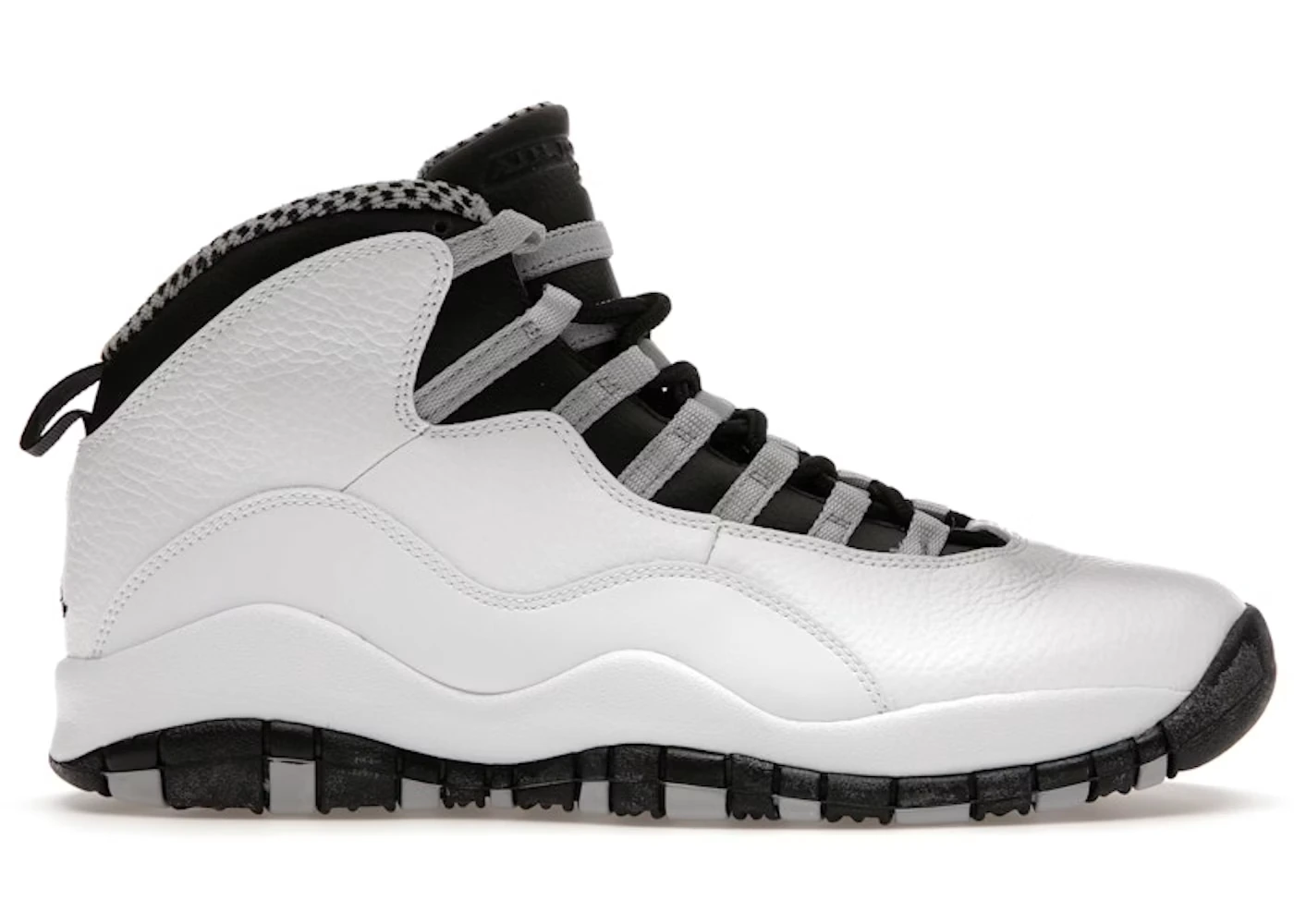
Steel, 1994. White/Black–Light Steel Grey establishes the neutral side of the 10. White dominates the upper, while darker areas articulate the lacing and sole. Its relevance comes from the opening release period and construction details, not from an unsupported claim that it outsold every other color.
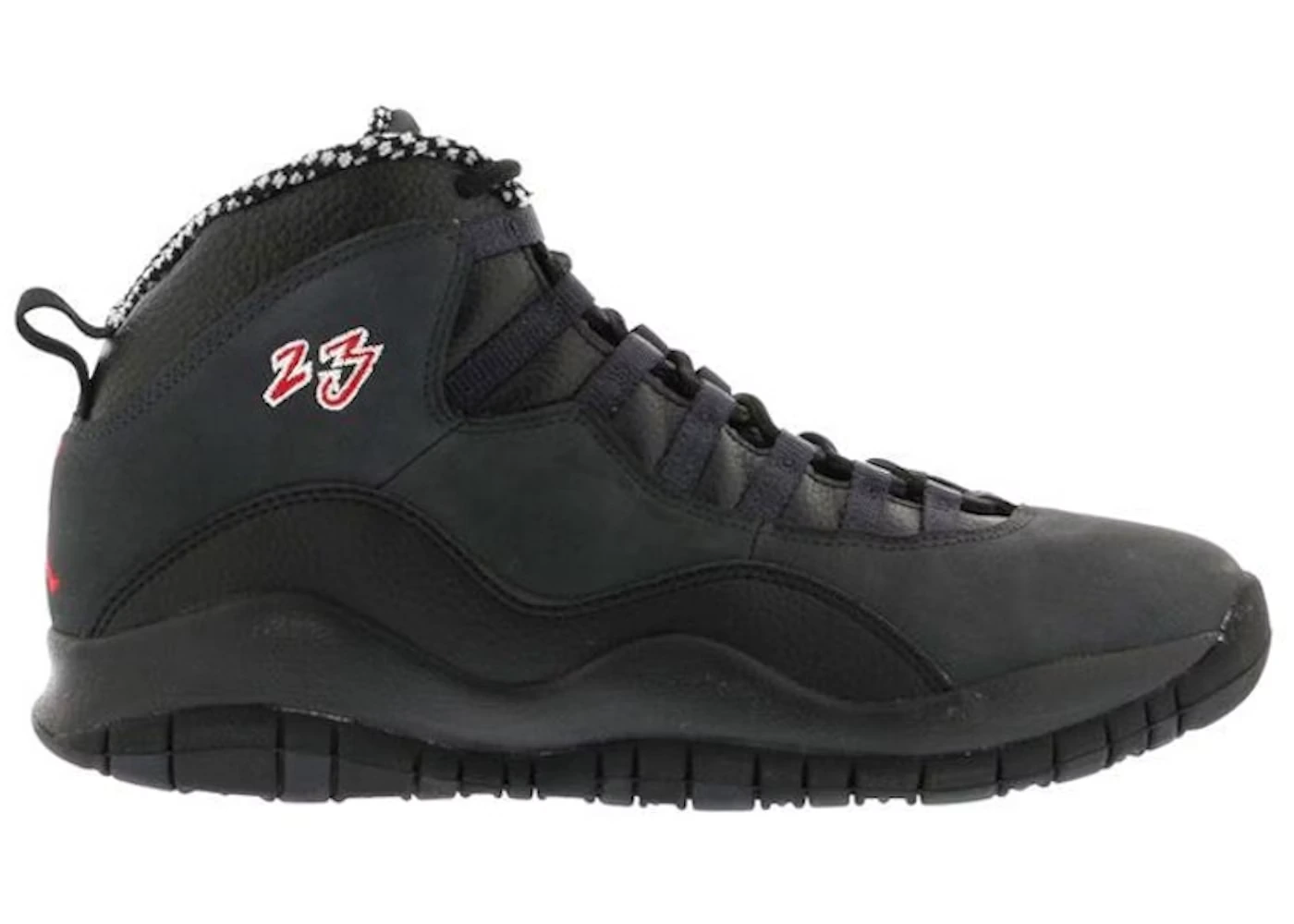
Shadow, 1994. Black/Dark Shadow–True Red gives the same design a much darker reading. It is an original general-release colorway, so a dark palette should not automatically be interpreted as a later fashion reinterpretation. Shadow also helps show how much the model’s appearance depends on tonal contrast.
Chicago, 1995. White/Black–True Red connects the shoe to the Bulls and Jordan’s return. Original player pairs carrying 45 should be distinguished from ordinary retail production and subsequent reissues. Chicago belongs to the original release cycle even though it arrived after the model’s 1994 introduction.
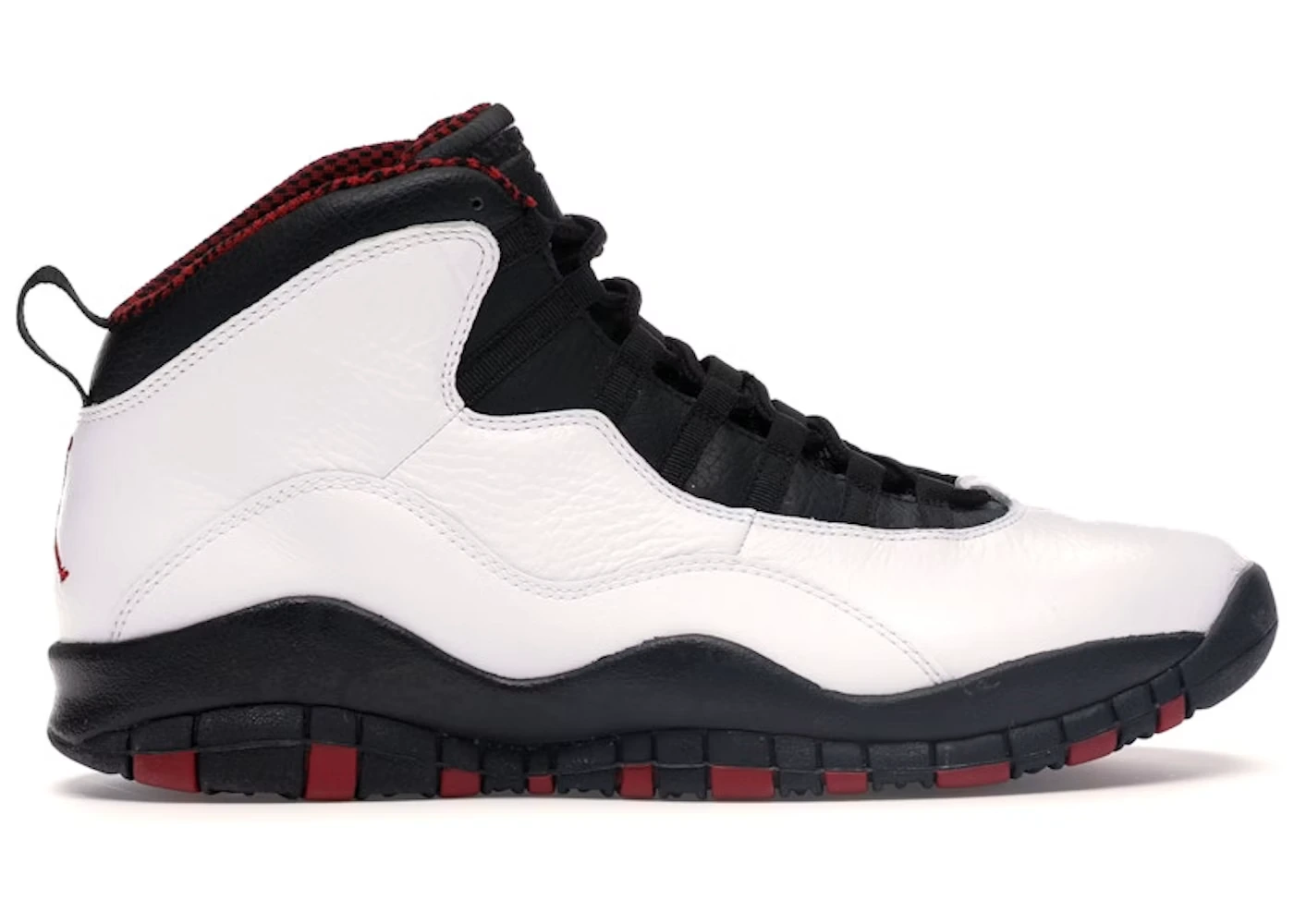
The 1995 City Series
The original regional group represented Chicago, New York, Orlando, Seattle and Sacramento. These team-linked shoes widened the story beyond Jordan’s own uniform. Powder Blue is sometimes folded into lists as an unofficial Charlotte-associated sixth member; that convention should not erase the distinction between the five-city project and the broader original collection.
How to read the design today
Nike identifies full-length Air cushioning and flex grooves as part of the model’s original performance package. Those are useful specifications, but the most distinctive visual decision is where the storytelling lives: underneath the foot rather than across a highly decorated upper.
That layout creates an interesting contrast for a history article or collection display. A side photograph communicates the palette; an outsole photograph communicates the biography. Showing only the side loses an important part of the concept. Likewise, lining up Steel, Shadow and Chicago demonstrates three different uses of the same structure without pretending that three examples exhaust the original catalog.
Original, retro and player exclusive are different questions
For research, begin with the year of the model and then identify the particular release. An original color scheme can appear on a much later manufactured pair. A player-exclusive detail can be recreated on a retail retro. Neither the familiar nickname nor the presence of 45 is enough, by itself, to date a shoe.
The useful questions are specific: which year, which size category, which color description, and which toe construction? Compare the actual pair with documentation for that edition. A historical summary is an orientation tool, not an authentication certificate. It also cannot tell you whether an old pair remains safe for basketball simply because the model once appeared in an NBA game.
Why the 10 matters in the series
The 10 is a strong example of a product whose meaning changed after its design was already established. The commemorative premise and the comeback association can coexist. That makes it a useful bridge between discussions of Jordan’s first retirement and the later championship-era models. Its historical interest is broader than a single game: it also shows how regional color distribution, personal biography and an understated upper can work together.
Frequently asked questions
What are three important OG Jordan 10 colors?
Steel, Shadow and Chicago are the editorial selections here. They are not a sales ranking.
Was Powder Blue an official City Series color?
It is often discussed alongside the series, but the five-city group is Chicago, New York, Orlando, Seattle and Sacramento.
Does OG mean the pair was made in 1994?
Not necessarily. In listings, OG can describe an original color scheme reproduced years later. Check the actual edition.
Sources
Nike Air Jordan 10 archive · Sneaker Files Air Jordan X history · Original Air Jordan X: Steel · Original Air Jordan X: Shadow · Original Air Jordan X: Chicago · Nice Kicks: 1995 City Series.