
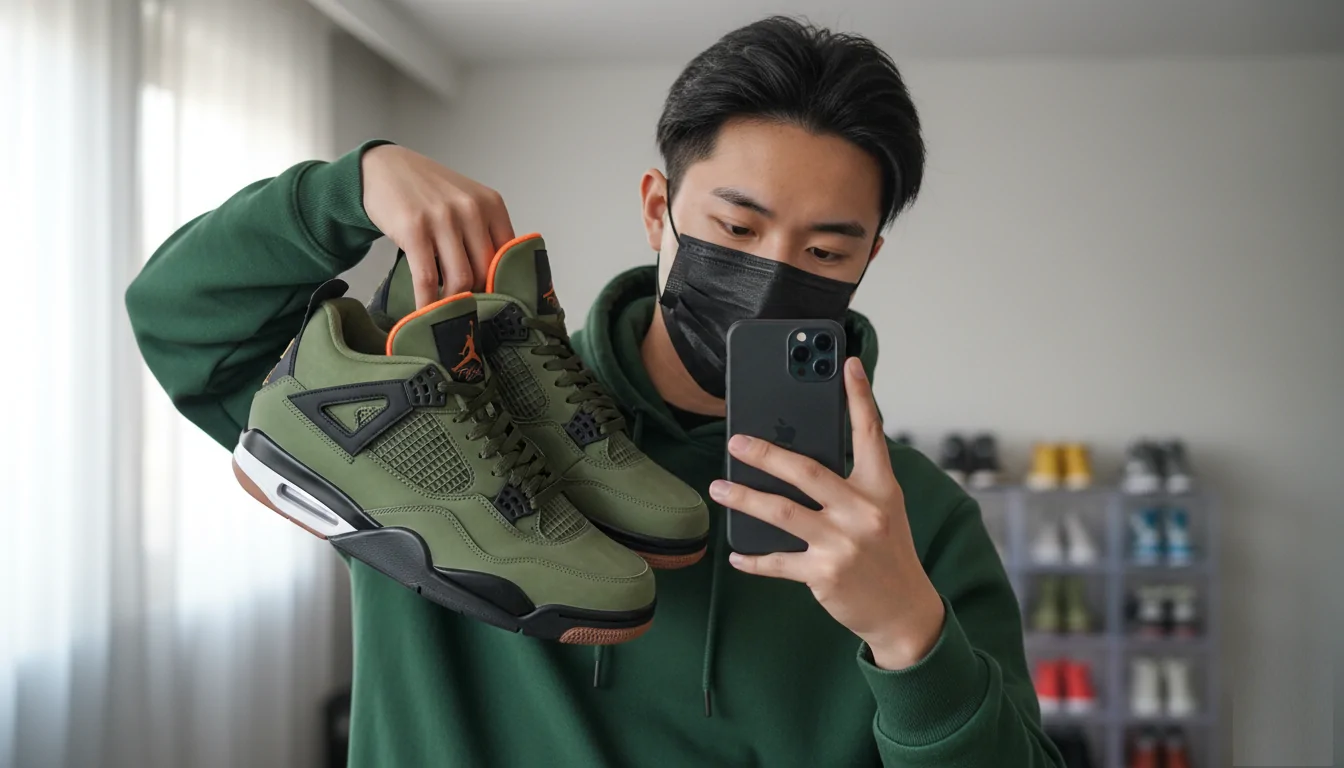
LPU most commonly means Latest Pick-Up in sneaker culture: the newest sneaker or item you recently acquired.
You will see it in collection posts, forums, social media captions, unboxings, and group chats—usually when someone is showing the latest addition to their rotation or collection.
Some people also say “Last Pick-Up,” and the practical idea is similar, but established sneaker dictionaries more consistently document Latest Pick-Up.
What Does LPU Mean?
LPU means Latest Pick-Up.
It refers to the most recent item someone acquired, usually a sneaker when the conversation is happening in sneaker culture. In practice, it functions like a timestamp inside a collection: this is the newest thing that entered the rotation.
The term describes chronology—not condition, rarity, value, authenticity, or how the purchase happened. That makes LPU useful as a social caption but weak as a buying description: if someone is selling the pair, you still need separate information about condition, box, tags, authenticity, and price.
An LPU can be almost anything that became your newest pickup.
- a current release;
- an older resale pair;
- a general release;
- a discounted sneaker.
Does LPU Mean Last Pick-Up or Latest Pick-Up?
Both phrases can be understood, but Latest Pick-Up is the wording more consistently documented in established sneaker glossaries.
“Last Pick-Up” appears as an informal variation because it also communicates “the last pair I bought,” but the natural U.S. sneaker meaning is simply your latest pickup.
How Is LPU Used in Sneaker Culture?
LPU is usually social rather than technical. It belongs to the language of sharing purchases and collection updates rather than the language brands use to classify footwear.
Someone may post “LPU” above a photo, write “my latest pickup finally arrived,” or ask other collectors to share their newest additions.
The acronym works because the object itself supplies the context: a sneaker photo plus “LPU” is enough to mean “this is what I picked up most recently.”
Does an LPU Have to Be Rare or Limited?
No. LPU says nothing about production quantity or hype. A sneaker can be difficult to obtain or completely ordinary and still occupy exactly the same chronological role as someone’s newest pickup.
A sold-out collaboration can be an LPU, but so can a basic everyday sneaker bought on sale.
The only important requirement is that it is the person’s newest pickup at that moment.
- general release;
- limited release;
- retro;
- collaboration;
- outlet purchase;
- used pair;
- vintage pair;
- performance shoe.
Does LPU Describe Sneaker Condition?
No. LPU is not a condition grade. This is important when reading resale captions because a seller can mention LPU while the actual condition still needs its own precise description.
The same LPU can be new, Deadstock, VNDS, used, restored, or customized.
Condition must be described separately.
That distinction prevents LPU from being confused with resale acronyms.
- DS;
- DSWT;
- NIB;
- NWT;
- VNDS;
- used;
- restored.
What Is the Difference Between LPU and DS?
LPU tells you when the sneaker entered someone’s collection; DS tells you claimed condition.
A brand-new unworn sneaker can be both LPU and DS.
A used pair can be LPU without being DS. The words answer different questions, which is why both can appear naturally in the same sentence.
For the condition side, see what DS means.
- LPU: most recent acquisition.
- DS: Deadstock condition terminology.
Do LPU and NIB Mean the Same Thing?
No. NIB means New In Box and describes new condition plus the presence of a box.
LPU only says the item is the latest pickup.
A sneaker can be both LPU and NIB, or LPU and used.
Can a Used Sneaker Be an LPU?
Yes. Buying a pre-owned sneaker does not stop it from being your latest pickup. The source of the purchase changes the buying story, not the meaning of LPU.
LPU does not care whether the pair came from retail, resale, a trade, or a used marketplace.
Is LPU the Same as a W?
No.
A W describes a successful attempt in a release, raffle, draw, or other competitive buying situation.
LPU describes the newest acquisition after you actually obtain something.
A W can become an LPU once the pair is secured.
But an LPU does not require a W because you may buy it from normal inventory, resale, or a private seller.
The terms can overlap without being synonyms.
Does Every LPU Come From a Drop?
No. A sneaker drop is only one way to acquire a pair. Many LPUs come from ordinary retail shelves, delayed deliveries, trades, restocks, vintage shops, or purchases made long after launch day.
An LPU may come from a scheduled release, a restock, an outlet, resale, a trade, or a pair that has been sitting at retail.
For release terminology, see what a sneaker drop means.
Can a Resale Purchase Be an LPU?
Yes. Secondary-market purchases are common LPUs. This is especially true for older releases or sold-out colorways that can no longer be obtained directly from the original retailer.
The term does not judge whether the pair was bought at retail price or resale price.
It only identifies the newest pickup.
- StockX or GOAT purchase;
- consignment-store purchase;
- private sale;
- trade plus cash;
- used-marketplace purchase;
- local sneaker shop;
- collector-to-collector deal.
Do You Need a Collection to Use LPU?
No. Your newest sneaker can be an LPU even if it is the only sneaker you bought this year. The term does not require a dedicated collection room, a long purchase history, or any particular level of expertise.
The acronym is about the latest acquisition, not collection size.
You do not need shelves full of boxes to participate in sneaker language.
Does Every Sneakerhead Use the Term LPU?
No. Sneaker slang changes across regions, generations, platforms, and communities.
Some people simply say “latest pickup,” “new pickup,” or “recent cop.” In older forums and international sneaker communities, spelling and hyphenation also vary, which is normal for slang that developed through conversation rather than a brand style guide.
Understanding LPU is useful, but using it is optional.
Do LPU Posts Show Which Sneakers Are Trending?
They can provide clues, but they are not reliable market data. LPU posts show what people choose to share, which may overrepresent hyped releases, visually striking pairs, or active online communities.
If many people post the same recent release, that may reflect current availability or interest.
Social posts are still a self-selected sample and should not be treated as proof of total sales, rarity, or future resale value.
Do Resellers Use LPU Too?
Yes. A reseller can call a newly acquired pair an LPU just like a collector or casual buyer.
The acronym does not reveal the person’s intent.
Someone may plan to wear, collect, trade, photograph, or resell the pickup.
When Does an LPU Stop Being an LPU?
There is no formal expiration rule.
Practically, your current LPU stops being the latest pickup when you acquire something newer. That new purchase becomes the next LPU even if the previous pair remains more important, expensive, or personally meaningful.
Old LPU posts remain historically accurate because they describe what was newest at the time the post was made.
Is LPU an Official Nike, adidas, or Jordan Brand Term?
No. LPU is community slang rather than an official product category. You should not expect to find it as a standardized condition field on Nike, adidas, Jordan Brand, eBay, or StockX product systems.
Brands may use the ordinary English word “pickup,” but LPU is not a Nike, adidas, or Jordan condition or release code.
Examples of LPU in Sneaker Conversation
- “LPU: Air Max 1 OG.”
- “My latest pickup finally came in.”
- “What’s everyone’s LPU this week?”
- “Resale LPU, but I got a fair price.”
- “Not hype, just a pair I wanted for years.”
Common Mistakes About LPU
- Treating LPU as a condition grade.
- Assuming every LPU is Deadstock.
- Assuming LPU means a raffle W.
- Assuming the pair must be limited.
- Assuming every LPU came from a drop.
- Assuming only collectors with large collections can use the term.
LPU Sneaker FAQ
What Is LPU in Sneakers?
LPU means Latest Pick-Up: the newest sneaker or item someone recently acquired.
Does LPU Mean Last Pick-Up or Latest Pick-Up?
Latest Pick-Up is the more consistently documented sneaker-glossary meaning. Last Pick-Up is an understandable informal variation.
Does an LPU Have to Be New?
No. Used, vintage, restored, or new sneakers can all be LPUs.
Is LPU a Synonym for DS?
No. LPU describes chronology; DS describes claimed Deadstock condition.
Does LPU Mean I Got a W?
No. A W can become an LPU, but many LPUs come from ordinary retail or resale without a competitive release.
Can a Resale Sneaker Be an LPU?
Yes. Resale does not change the meaning of Latest Pick-Up.
Does an LPU Have to Be Expensive?
No. Price, rarity, and hype have nothing to do with the definition.
Conclusion
LPU is one of the simplest sneaker acronyms once the condition terms are separated from it.
It means Latest Pick-Up: the newest addition you acquired, whether it is rare, common, new, used, retail, resale, expensive, or cheap. The term celebrates recency rather than assigning status.
For more community terminology, continue with the Sneakerhead Dictionary.