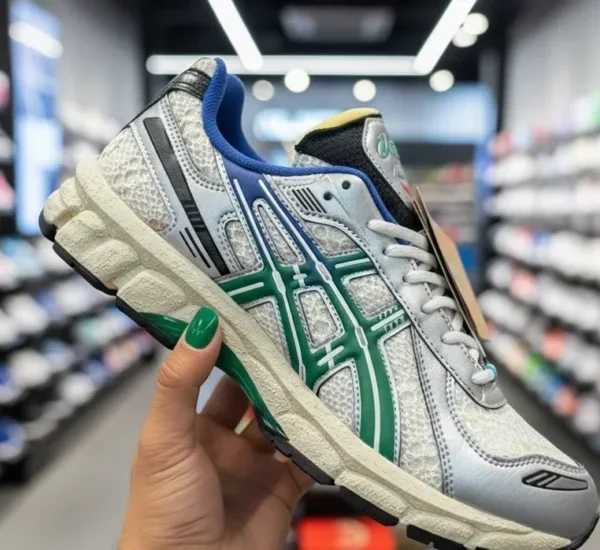
Heat is slang used to praise sneakers that are especially desirable or visually striking. “That pair is heat” can express admiration for the design, the history, or how hard that edition is to find. How much each quality matters depends on who’s talking and the conversation.
There is no official definition or checklist of requirements. The meaning varies by era, community, region, personal taste, and context. A current release can be heat, but a colorway from decades ago can earn the same compliment.
Price, rarity, collaborations, and hype can influence the compliment, but none is required. A general release can be heat, too: the person saying it may simply love the pair on your feet.
What does “heat” mean in sneakers?
The literal meaning of “heat” refers to temperature. In sneaker language, though, the word is figurative. It can convey admiration, desire, or recognition.
When someone says “those are heat,” they might mean:
- “That’s a seriously good pair.”
- “Those sneakers are great.”
- “That’s a pair that deserves respect.”
- “Those shoes really stand out.”
The precise meaning depends on the context. In one conversation, someone might simply be praising the design. In another, they might be acknowledging a historic colorway, a hard-to-find release, or a model that matters to a particular community.
Heat belongs to a broader vocabulary that includes grail, hype, general release, collab, and resale. Find more terms in the Sneakerhead Dictionary.
What makes someone call a sneaker heat?
Design and visual impact
A strong color combination, unusual materials, or a respected design detail can lead someone to call a sneaker heat. In this usage, the word is close to “great-looking,” “striking,” or “well-executed.”
That judgment remains subjective. One community might admire a design that another overlooks.
History and cultural relevance
A colorway tied to a sporting, musical, regional, or historical moment can retain its reputation long after release. Calling that pair heat doesn’t necessarily mean it’s dominating current trends.
Older models can remain respected for their contribution to design, their ties to a particular subculture, or the stories that have developed around them.
Desirability and recognition
When lots of people show interest in a release, heat often comes up in conversation. That recognition can be shared, but it doesn’t have to be unanimous.
The word can also be entirely personal: someone might call a sneaker heat simply because they find its design exceptional.
Rarity and difficulty finding a pair
Limited availability can make a product seem more significant when people are already interested in it. A regional release, an older edition, or a hard-to-find size might attract more attention because it rarely turns up.
Rarity alone, however, doesn’t create desire. A sneaker can be extremely rare and have little demand. Its scarcity doesn’t oblige anyone to consider it heat.
Collaborations
Some collaborations attract attention because of the partner, the concept, or the changes made to the product. Nike x Virgil Abloh’s “The Ten”, announced in 2017, is an example of a collaboration that generated strong interest by visually reconstructing ten Nike, Jordan, and Converse silhouettes.
Pairs from that project might be described as heat in many conversations, but there is no official classification by that name. Nor does every collab receive the same response from the community.
A sneaker doesn’t need to be a collaboration to be heat. Original colorways, retros, general releases, and historical models can also earn the term. Learn more in our guide to sneaker collabs.
Community context
Basketball, skateboarding, running, streetwear, and historical collecting communities may value different products. A pair considered essential among Nike SB fans might not mean the same thing to someone who collects 1990s basketball shoes.
That context shapes the use of heat. No single authority gets to decide what all sneakerheads should admire.
Heat vs. hype: what’s the difference?
Hype is primarily about attention, anticipation, exposure, and buzz surrounding a product or release. It often has a strong connection to a particular moment: something becomes more visible, and many people start talking about it or trying to get it.
Heat describes a sneaker that a person or community considers especially desirable, impressive, or worthy of recognition. The term can apply at the peak of the hype or many years later.
- A sneaker can be hyped and heat at the same time.
- A release can generate plenty of hype and quickly lose people’s interest.
- An older sneaker can be heat without being hyped right now.
- A non-collab release can generate enormous hype.
- A pair collectors consider heat might receive little attention on social media.
Because both terms are flexible slang, their boundaries aren’t absolute. The main point is that temporary attention doesn’t automatically determine cultural recognition.
Heat vs. grail: what’s the difference?
Grail usually describes a shoe that holds a special place on someone’s wish list. It is a deeply personal concept, tied to taste, history, nostalgia, difficulty obtaining a pair, or emotional significance.
Heat is a judgment about how special, desirable, or impressive a pair seems in a particular context. That judgment can be personal or shared by a group.
A grail can be heat, rare, and expensive, but it doesn’t have to be any of those things. Someone’s grail might be inexpensive, easy to find, or unknown to most people. Conversely, a sneaker widely considered heat might hold no personal appeal for another collector.
The grail entry in the Sneakerhead Dictionary summarizes this personal meaning.
Heat vs. fire: are they the same thing?
The meanings can overlap. Fire usually works as a broad compliment: something looks great, makes an impression, is excellent, or is exciting. The word can describe sneakers, clothing, music, and plenty of other things.
In sneaker culture, heat often has a somewhat stronger connection to desirability, recognition, rarity, or significance to collectors. Still, many people use heat and fire almost interchangeably.
There is no official linguistic boundary. The conversation’s tone and the community’s habits matter more than a dictionary rule.
Does the resale market decide what’s heat?
No. The secondary market can reflect demand, increase a release’s visibility, and make its scarcity more apparent. It has no authority to determine whether a sneaker is heat.
Resale prices depend on factors including supply, demand, size, region, condition, restocks, and timing. A high price might indicate difficulty obtaining a pair, but it doesn’t prove quality, design merit, or cultural importance.
There are also admired pairs that trade at accessible prices and expensive products that attract little interest outside a particular group. To understand how prices work, see our guide to sneaker resale and the secondary market.
Can heat describe an entire collection?
Yes. The word isn’t limited to one pair. You might hear:
- “Those are heat.”: a compliment about one pair or several sneakers.
- “That collection has some serious heat.”: the collection includes highly respected or desirable pairs.
- “He brought heat.”: someone showed up with pairs that stand out in that context.
- “She has heat in her collection.”: there are standout sneakers in her collection.
Why do people seek out sneakers considered heat?
Motivations vary. Someone might love the design, collect a particular silhouette, be hunting for an older release, feel nostalgic, or identify with the model’s history.
Status and exclusivity can influence some purchases, but they don’t explain everyone’s behavior. Nor is it accurate to say that scarcity automatically creates desire.
When someone calls a pair heat, the reason behind the compliment can tell you as much about their taste as it does about the shoe.
How can you tell whether a sneaker will become heat?
You can’t know for certain. A collaboration, the silhouette’s history, anticipation, a warm reception, distribution, and social media attention can suggest that a release will get noticed. None guarantees future recognition.
A product can sell out and lose its appeal soon afterward. Another might sit at retail, be overlooked at first, and gain prestige years later. The response can also differ between communities.
Heat shouldn’t be treated as an investment prediction. Calling a sneaker heat doesn’t mean its price will rise or that a buyer will be waiting in the future.
Other documented uses
The Sneaker History Glossary, JD Sports glossary, and Farfetch guide document the term with different emphases. These examples help explain the slang without establishing an official product classification.
Find more stories about models, brands, and communities in Sneaker History and Culture.