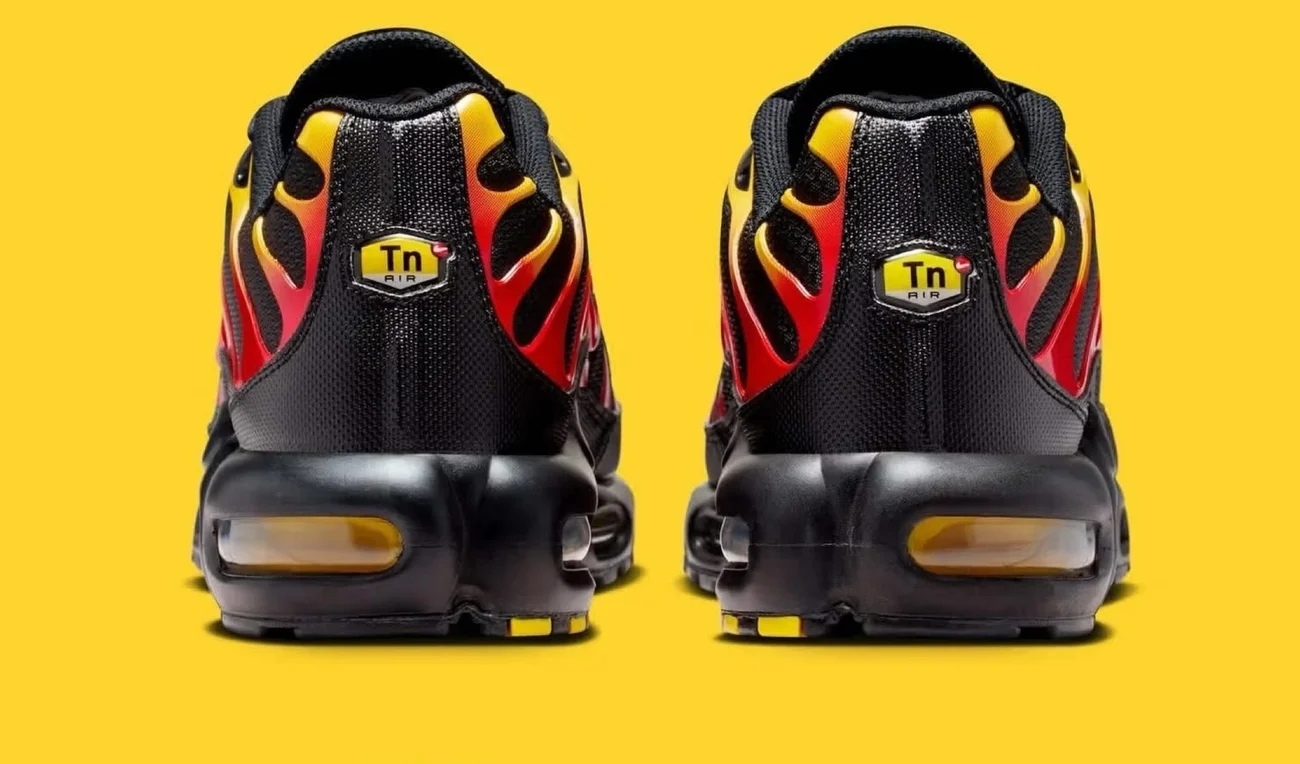
Two letters on the heel helped give the Air Max Plus a second name: TN. They stand for Tuned Air, the cushioning system that debuted with the model in 1998. But the story did not stay inside the midsole. The Air Max Plus became so recognizable that, in many markets, “TN” became shorthand for the shoe itself.
The quick answer is simple: TN means Tuned Air; Air Max Plus is the silhouette. The more interesting answer involves designer Sean McDowell, a Florida sunset, palm trees, ocean waves, a whale tail, Foot Locker, and streets from New York to Paris, London, and Sydney.
What Does TN Mean on Nike Shoes?
TN stands for Tuned Air. The name refers to a Nike Air cushioning setup engineered to provide targeted cushioning, support, and stability in different areas of the sole. The small Tn Air badge used on the Air Max Plus became one of the model’s most recognizable visual signatures.
Tuned Air belongs to the broader Nike Air technology family. It is not a separate brand, and it is not an electronic or digitally adaptive cushioning system.
Is TN the Technology or the Name of the Air Max Plus?
Both uses exist, but they are not exactly the same:
- Tuned Air is the cushioning technology.
- Nike Air Max Plus is the official name of the silhouette launched in 1998.
- Nike TN or simply TN is the popular name the Air Max Plus became known by in several countries and sneaker communities.
So when someone says “I bought a pair of TNs,” they are usually talking about an Air Max Plus. Technically, however, Tuned Air is the system that helped define the model rather than the name of the silhouette itself. Nike has increasingly acknowledged that popular vocabulary: the product remains officially called Air Max Plus, but Nike’s own regional content has used “TN” when discussing the shoe and its cultural identity.
What Is Tuned Air Technology?
Tuned Air combines Nike Air cushioning with mechanical elements configured to influence support and stability in specific zones of the sole. Nike still describes the current Air Max Plus as a Tuned Air experience designed to provide cushioning and stability.
“Tuned” does not mean the sneaker has sensors, software, or an electronic system actively changing the pressure while you walk. The tuning is built into the physical design of the platform.
How Does Tuned Air Actually Work?
The basic idea is that Nike combined Air cushioning with structural components that have different mechanical properties, allowing the sole platform to be tuned for support and stability in selected areas. Historical descriptions often refer to mechanical structures or hemispheres used alongside the Air units.
The exact number, placement, and material of those components can vary by model and generation, so one technical diagram should not be treated as a universal blueprint for every sneaker that ever carried a Tn Air badge.
There is also no simple hierarchy where Tuned Air is automatically “better” than Max Air or every other Nike Air configuration. Nike Air is the broad cushioning family; Max Air covers different visible-Air implementations; Tuned Air is one specific approach within that history.
Where Did the Nike Air Max Plus Come From?
Nike launched the Air Max Plus in 1998 as a performance running shoe, and it became the model most closely associated with the debut of Tuned Air. The designer was Sean McDowell, who was relatively new to Nike at the time. The model was developed in close connection with Foot Locker, which played an important role in its original retail rollout, but the design and technology came from Nike.
Sean McDowell and a Sky Changing Color
McDowell has explained that the Air Max Plus began with memories of sunsets in Florida. He watched the bright blue sky darken toward night as palm trees moved in the wind, and that changing gradient later became part of the shoe’s visual language.
The result is most obvious on early colorways such as Hyper Blue, where the upper shifts through different tones rather than using one flat color across the entire shoe.
Palm Trees, Ocean Waves, and the TPU “Fingers”
The wavy TPU structures wrapping the upper were inspired by palm trees moving in the wind and also echo the rhythm of ocean waves. Those elements became one of the Air Max Plus’s strongest visual signatures while also adding structure to the upper. If you want to identify the upper, midsole, outsole, arch, and other components mentioned here, see our guide to sneaker anatomy.
The Whale Tail Under the Midfoot
The prominent midfoot arch was inspired by a whale tail emerging from the water. Nike still describes the current Air Max Plus in similar terms, noting the whale-tail-inspired TPU arch and the palm-tree-and-wave references in the upper.
That combination helps explain why the Air Max Plus still looks so unusual decades later: its most aggressive-looking parts came from observations of a beach environment rather than from industrial machinery.
Why Did the Air Max Plus Start Being Called TN?
The Air Max Plus introduced Tuned Air very visibly. The Tn Air badge became part of the shoe’s identity, while the design made the new cushioning story easy to recognize.
Over time, the technology name became a shortcut for the silhouette. In some places, “TN” became more common in everyday speech than “Air Max Plus.” The distinction still matters, because not every shoe inspired by the Plus uses Tuned Air, and Tuned Air historically appeared beyond one single model.
From Running Shoe to Street Icon
The Air Max Plus began as a performance-running product, but its aggressive lines, visible Air, gradient colorways, and high retail price gave it a strong presence far beyond sport. The shift into lifestyle culture did not happen the same way everywhere.
That regional variation is part of what makes the TN story unusual. The same silhouette developed different nicknames, cultural meanings, and associations in France, the United Kingdom, Australia, and other markets.
France and “La Requin”
In France, the Air Max Plus became widely known as La Requin, usually translated as “the shark.” The nickname fits the sharp visual language of the shoe and the aquatic feel of early colorways such as Hyper Blue.
The model became deeply embedded in French streetwear, rap, and urban style, particularly in cities such as Paris and Marseille. That history is better understood as local cultural adoption than as a stereotype about who wears the shoe.
United Kingdom
In the United Kingdom, the Air Max Plus entered a market that already had a strong relationship with Air Max, streetwear, club culture, and urban fashion. London appears repeatedly in Nike’s own retrospective storytelling about the model’s international reach.
There is no single British explanation for the shoe’s popularity, but its long presence in retail and youth fashion helped keep the TN vocabulary alive well beyond the original late-1990s running context.
Australia
Australia became one of the strongest markets for the Air Max Plus, and “TN” became an especially recognizable local name for the silhouette. The shoe developed a long relationship with youth style, music, everyday wear, and sneaker collecting. Media coverage has sometimes focused heavily on particular subcultures or negative stereotypes, but that is too narrow to explain decades of use: fashion, identity, local releases, and sustained demand all helped the TN become unusually durable there.
Is the TN the Same Shoe in Every Country?
The core Air Max Plus silhouette can be the same, but popular naming, available colorways, sizing ranges, release methods, and cultural meaning can vary by market. “La Requin” carries a specific French memory, while “TN” has especially strong recognition in Australia and other regions.
Regional editions also exist, so a collector should check the exact release, colorway, style code, and official product page rather than assuming every pair sold under the TN nickname is identical.
The Air Max Plus Family and Its Legacy
The success of the original led to sequels, retros, reinterpretations, and hybrids. The names need to be kept separate:
- Air Max Plus 2 and Air Max Plus III: later members of the Plus lineage rather than simple new colorways of the original.
- Air Max Plus Ultra: a lighter reinterpretation of the silhouette.
- Air Max Plus Drift and later Plus models: newer evolutions that reuse parts of the Plus design language without being identical to the 1998 shoe.
- Air VaporMax Plus: a hybrid that combines an Air Max Plus-inspired upper with VaporMax cushioning rather than Tuned Air.
Nike has continued expanding the Plus family through newer generations and market-specific releases. Each one should be evaluated by its own product specifications rather than assuming every shoe with “Plus” in the name uses exactly the same cushioning system.
Are TN and Dn the Same Technology?
No. TN means Tuned Air. Dn refers to Dynamic Air, the newer cushioning architecture introduced with the Air Max Dn. Both belong to the wider Nike Air Max family, but the systems are not interchangeable.
The similarity of two-letter abbreviations can make the relationship look closer than it is. Always check the full model name and technical description.
Does Nike Still Sell the TN in 2026?
Yes. As of September 2026, the Air Max Plus remains in Nike’s U.S. catalog, with current men’s versions listed at $190 depending on colorway and inventory. Nike still markets the model as a Tuned Air experience with visible cushioning and stability. That continuing official availability is stronger evidence than simply saying the TN is “still trendy”: the Air Max Plus remains an active commercial product nearly three decades after its debut.
Is the Nike TN Comfortable?
Nike describes the current Air Max Plus as offering cushioning and stability, and many buyers like the structured feel. Comfort, however, is personal and depends on foot width, volume, sock thickness, intended use, and fit. Someone who prefers softer or lighter modern cushioning may find the Air Max Plus relatively firm or substantial, while another wearer may appreciate its structure for casual use. Tuned Air does not guarantee all-day comfort for every foot.
Is the Air Max Plus Good for Running Today?
The Air Max Plus was originally designed for performance running in 1998. Nike still acknowledges that history on current product pages.
For running in 2026, however, it makes more sense to begin with a contemporary running shoe designed for your training type, distance, terrain, and biomechanics. Nearly three decades of footwear development separate the original Air Max Plus platform from today’s dedicated road and trail running models.
How Does the Air Max Plus Fit?
Nike’s current U.S. Air Max Plus product page states that the model fits small and recommends ordering half a size up. That is useful guidance for the current adult version, not a universal rule for every historical release, kids’ version, or variation. People with wider or higher-volume feet may experience the structured upper differently, so measure your foot, check the size chart, and follow the guidance on the exact product page you are buying.
Is the Nike TN Worth Buying Today?
It can make sense if you like the aggressive design, the Air Max Plus history, and a structured lifestyle sneaker with visible Nike Air. Before buying, consider the current price, fit, weight, colorway, and how you plan to wear it.
It is not the obvious choice for modern performance running, ultra-light footwear, or someone who prefers understated sneakers. But if you want a silhouette that still looks both unmistakably 1998 and strangely futuristic, very few Nike models tell the same story.
Nike TN FAQ
What Does TN Mean on Nike Shoes?
TN stands for Tuned Air, the cushioning technology introduced with the Air Max Plus in 1998. In popular sneaker language, TN also became a nickname for the Air Max Plus itself.
Are Nike TN and Air Max Plus the Same Thing?
In everyday use, “Nike TN” usually means the Air Max Plus. Technically, Air Max Plus is the silhouette and Tuned Air is the cushioning system.
What Was the First Nike TN?
The Nike Air Max Plus, released in 1998, is the model that debuted Tuned Air and made the Tn Air badge famous.
Who Designed the Air Max Plus?
Sean McDowell designed the Air Max Plus. The shoe’s visual language drew on a Florida sunset, palm trees moving in the wind, ocean waves, and a whale tail.
Is Tuned Air Different From Max Air?
Yes. Both belong to Nike Air history, but Max Air describes various visible-Air implementations while Tuned Air is a specific system that combined Air cushioning with mechanically tuned support elements.
Why Is the TN Called “La Requin” in France?
“La Requin” means “the shark.” The nickname became associated with the Air Max Plus in France because of its sharp, aquatic-looking design and strong place in local street culture.
Does the VaporMax Plus Use Tuned Air?
No. The VaporMax Plus borrows major design elements from the Air Max Plus upper but uses VaporMax cushioning. Similar visual DNA does not mean identical technology.
Does the Air Max Plus Run Small?
Yes, according to Nike’s current U.S. product guidance. Nike recommends ordering the current adult Air Max Plus half a size up. Always verify the exact release and size category you are purchasing.
TN: Two Letters, Many Cities, One Long Story
Understanding Nike TN starts with Tuned Air but does not end with cushioning. The Air Max Plus turned a technical badge into a global nickname, a performance-running shoe into a lifestyle icon, and a beach-inspired design into one of Nike’s most recognizable street silhouettes.
Its cultural story also does not belong to one place. France gave it “La Requin.” Australia made “TN” part of everyday sneaker vocabulary. The United Kingdom folded it into a long relationship with Air Max culture. And the design began with Sean McDowell watching the sky change color.
For more names, technologies, and sneaker-history terms, continue with the Sneakerhead Dictionary.