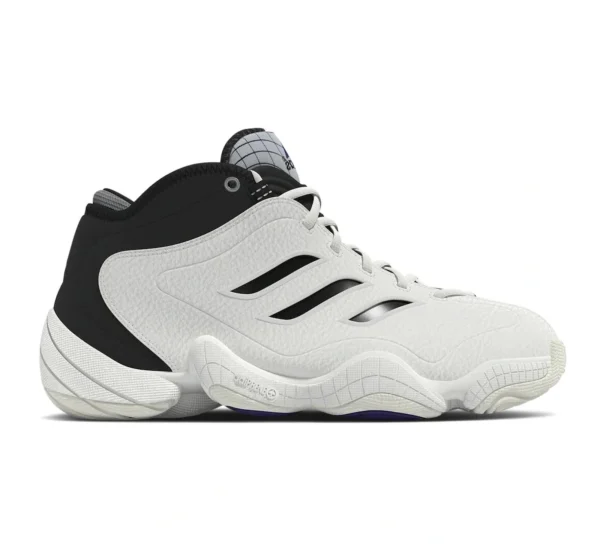
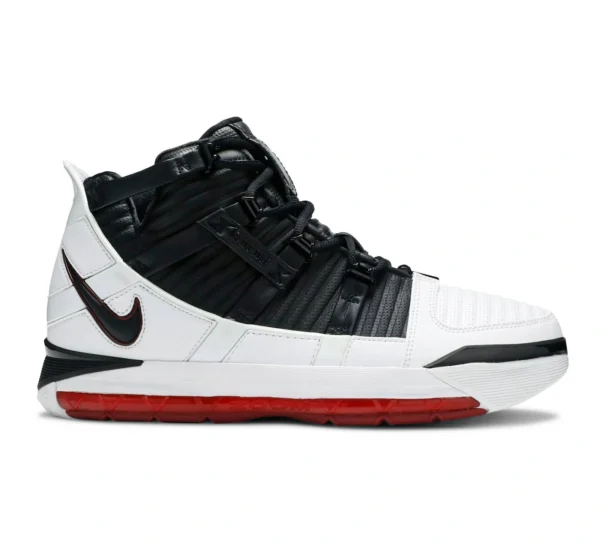
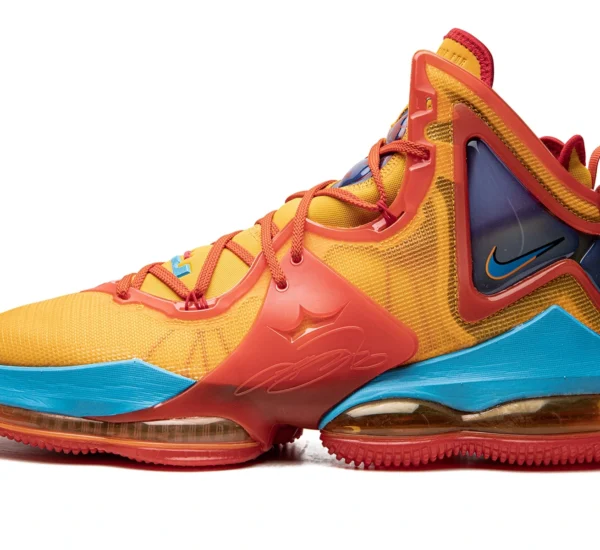
The Nike LeBron line is a history of changing answers to the same demanding question: how should a basketball shoe express the game and identity of LeBron James? Since the Air Zoom Generation in 2003, the series has moved through protective shells, visible Air, expressive knit and compact low-tops. Its identity is not one permanent shape. It is the relationship between an athlete, a design team and the stories a shoe can carry.
A partnership that began before the NBA debut
Nike dates the beginning of its partnership with LeBron to May 22, 2003. That timing gives the first shoe an unusual role: it represented expectation before a professional career could provide a long archive of achievements. The Air Zoom Generation had to introduce a player and establish a product identity at the same time.
Looking back from the XXIII reverses that situation. The newer model can draw on a deep store of memories, while the first had to make a promise. This is one reason the complete line is more interesting than a list of yearly upgrades. The meaning of a signature changes as the athlete’s history grows. A launch color can introduce an unfamiliar name in one era and revisit a shared cultural memory in another.
What belongs in this mainline history
This guide covers 23 released main models: Air Zoom Generation, then LeBron II through XXIII. The first shoe occupies the opening position even though its retail name does not contain a Roman numeral. A model number identifies a chapter, not necessarily a calendar year in isolation.
Soldier, Ambassador, Witness and NXXT Gen are related branches of the broader LeBron catalog. They matter to his footwear history, but counting each as the next main signature would scramble the sequence. Low, P.S. and Elite versions also require their own labels within the relevant chapter. The accompanying model articles explain those distinctions where documentation supports them.
Designers and the changing visual language
The opening Air Zoom Generation brought together Aaron Cooper, Tinker Hatfield and Eric Avar. Ken Link led the II–VI period, and Jason Petrie became the defining design voice from VII onward. For the most recent entries, official Nike statements describe a wider basketball team and quote Ross Klein in a design-leadership role; a quoted spokesperson should not automatically become a sole-author credit.
The early sequence is particularly useful for learning to read silhouettes. Compare the II’s strap, the IV’s molded body and the VI’s more familiar panel arrangement. The same athlete’s identity survives even as the designer changes the balance between enclosure, texture and recognizable everyday-shoe proportions.
VII through X make the sole a powerful visual component. XI through XIV shift attention toward sculpted protection and segmented geometry. XV through XVIII invite a closer look at material texture, while XIX pushes visible construction toward a cinematic scale. XX then reorganizes the line around a low-top outline, with XXI, XXII and XXIII developing distinct ideas within that direction. These are editorial groupings for comparison, not official Nike eras or a claim that every model shares the same technology.
The complete model timeline
Use the original retail year below as the starting point. A season can cross New Year, and a shoe may appear on court before reaching consumers. The individual histories preserve those differences instead of forcing every event into a single date.
Nike Air Zoom Generation (2003)
The beginning: a structured rookie signature whose name introduced a generation. Read its debut and First Game stories separately; they refer to different appearances.
Nike LeBron 2 (2004)
A strap-led design establishes the next chapter. Its clear material contrast makes it a strong reference for understanding the early protective vocabulary.
Nike LeBron 3 (2005)
The upper becomes more sculpted and detailed. Compare its original colors with later archive releases to see how a model can acquire a second audience.
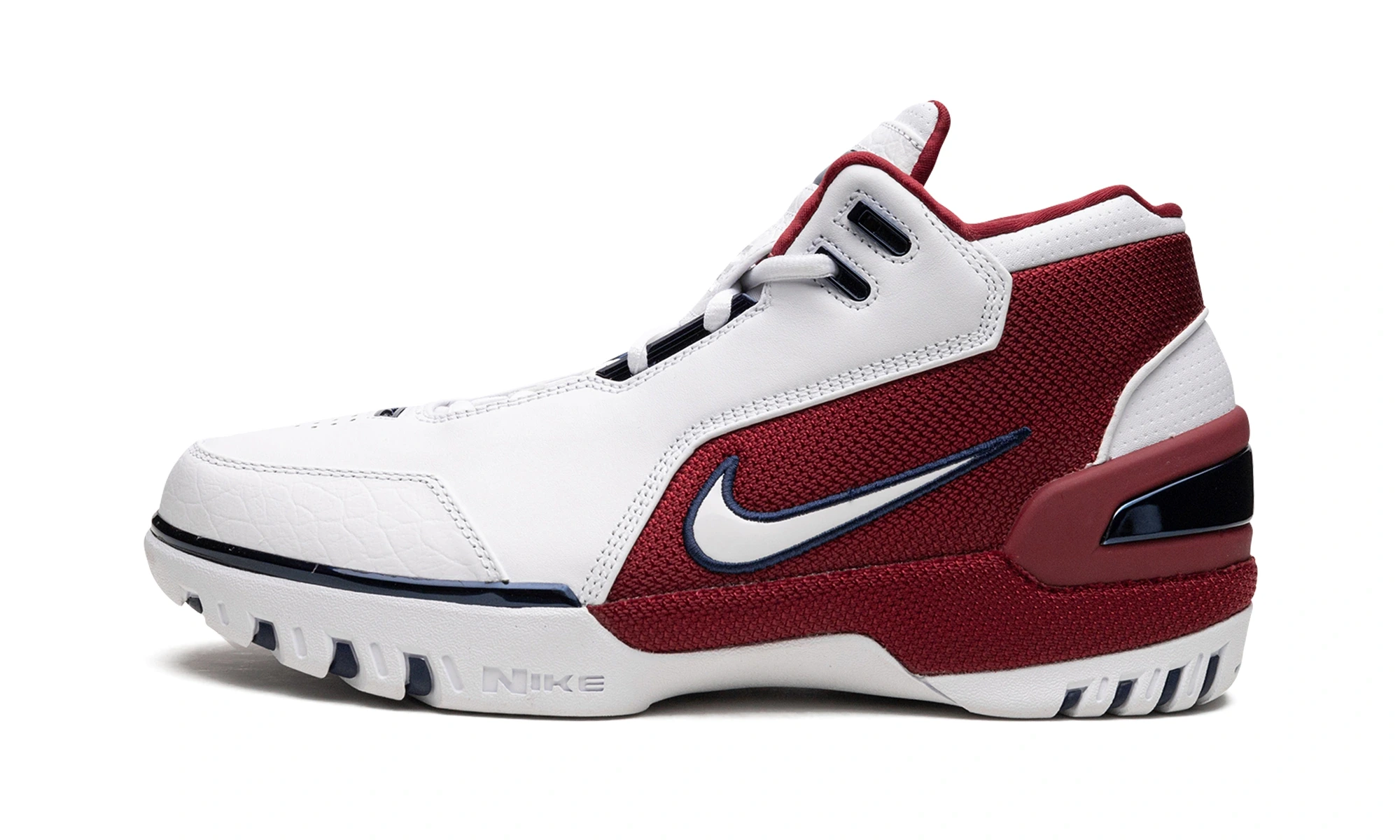
Nike LeBron 4 (2006)
The molded shell creates one of the series’ most immediately recognizable outlines. Its special editions also illustrate the difference between a public image and a retail release.
Nike LeBron 5 (2007)
A return to a more divided upper makes the transition from IV easy to see. The Low belongs to the following calendar year’s family.
Nike LeBron 6 (2008)
The final Ken Link main signature provides a useful counterpoint to IV. More familiar proportions show that the line’s history was never a straight march toward visual complexity.
Nike LeBron 7 (2009)
Jason Petrie’s first main chapter makes visible Air central to the silhouette. It is a natural starting point for comparing the next several generations.
Nike LeBron 8 (2010)
The Miami-era chapter contains multiple constructions, not just a famous color. Keep V1, V2, P.S. and Low distinct when following its evolution.
Nike LeBron 9 (2011)
A busy, layered upper and mixed cushioning identity define the original model. The championship-season family also requires attention to Elite rather than assuming one unchanged shoe.
Nike LeBron 10 (2012)
The tenth chapter combines a strong visible sole identity with a broad release program. Nike+ and the Sportswear Cork edition need their own product context.
Nike LeBron 11 (2013)
Angular protection gives this model an armored appearance. Its Low changes construction, making the family a useful example of why a shared number is not a complete specification.
Nike LeBron 12 (2014)
The Cleveland-return chapter makes segmented sole geometry highly visible. Its delayed NSRL launch shows why an announced lead color is not always first at retail.
Nike LeBron 13 (2015)
Molded reinforcement remains prominent, while the Elite revision changes the construction within the same numbered family. Compare the versions before comparing their color names.
Nike LeBron 14 (2017)
A major strap gives the model its identity between the armored and knit phases. Court debut was in 2016; the original retail year is 2017.
Nike LeBron 15 (2017)
Battleknit turns the upper into an expressive surface. LeBron Watch, Equality and collaboration projects demonstrate how one silhouette can carry very different cultural stories.
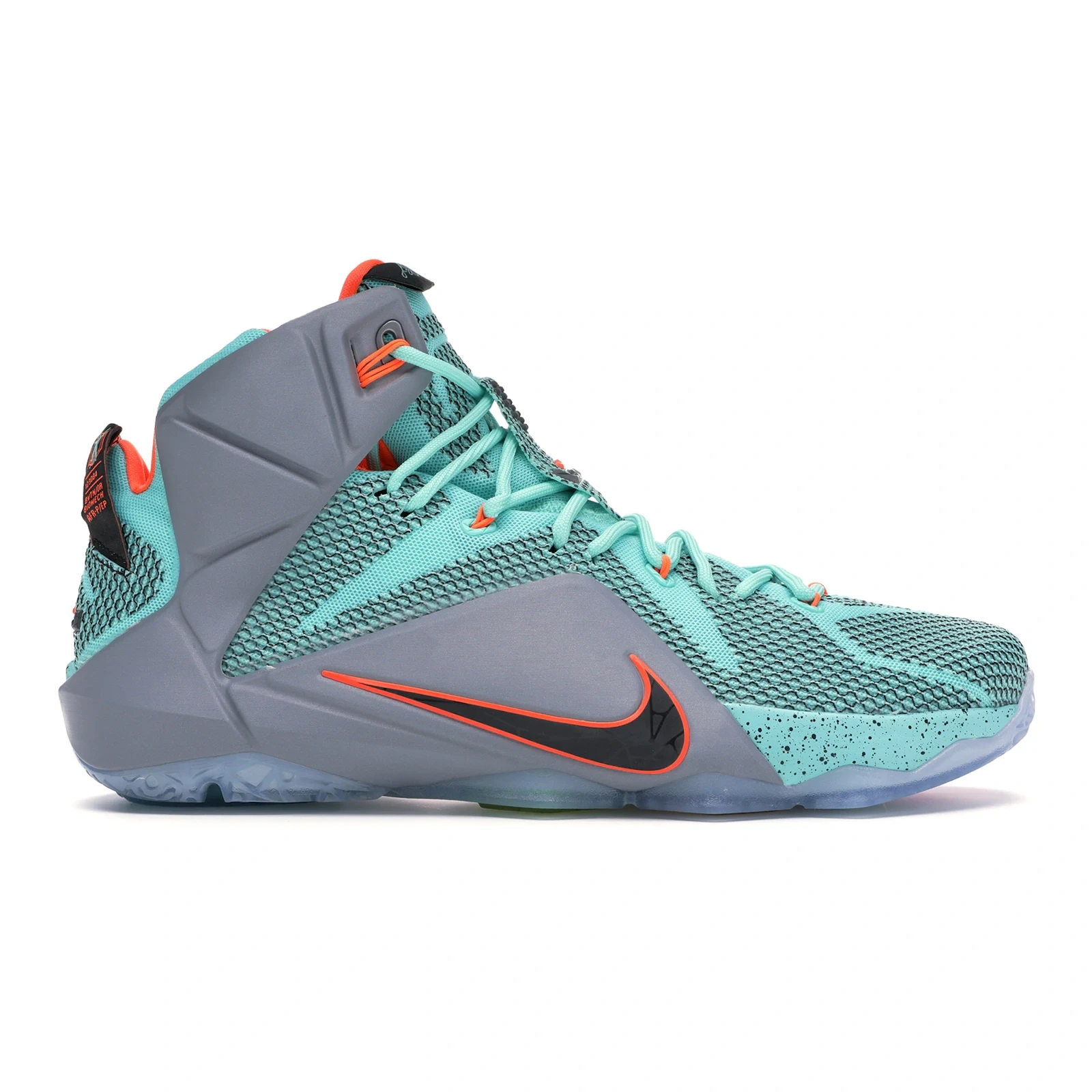
Nike LeBron 16 (2018)
The knit-led idea is refined through proportion and fit architecture. The atmos Low adds a connection to another part of Nike’s sneaker history.
Nike LeBron 17 (2019)
Knitposite gives the upper a distinctive textured identity. Its standard and Low constructions make an especially useful comparison within the same product family.
Nike LeBron 18 (2020)
The material chapter continues, while the cushioning layout changes. Its regional color program also makes the international launch calendar part of the history.
Nike LeBron 19 (2021)
Space Jam introduces the silhouette to a film audience. The retail rollout and subsequent Low show why public reveal, availability and variant introduction deserve separate dates.
Nike LeBron 20 (2022)
The main signature debuts as a low-top, changing the role of that format. It is a reset in proportion, not the first Low anywhere in LeBron’s catalog.
Nike LeBron 21 (2023)
An oyster-and-pearl idea gives the upper a protective metaphor. Later material treatments show how much a silhouette can change without receiving another number.
Nike LeBron 22 (2024)
The midfoot saddle becomes the visual anchor. Crown Jewel and the Monopoly partnership provide different readings of that structure, while kids’ specifications differ from adults’.
Nike LeBron 23 (2025)
The crown becomes a containment framework and the collection revisits career milestones. The later Elite adds another construction within this still-recent chapter.
Colorways as a second chronology
A numbered timeline tells only half the story. Colorways create routes that cross model boundaries: a hometown reference, a championship memory, a recurring family theme or a tribute to another Nike shoe. Following one of those routes can reveal continuity that is not obvious from the silhouettes alone.
South Beach is a useful example of a recognizable visual vocabulary moving through the line. China-themed releases ask the reader to think beyond one domestic retail calendar. The black-and-white Equality XV adds another kind of meaning: the Smithsonian documents LeBron’s game-worn pair and the related charitable initiative. A basketball shoe can become a museum object because of what it communicated, not only how it performed.
Each model article selects three important original-cycle colors. That is an editorial doorway into the model, not a claim that those were the first three sold in every country. Some original cycles extend into the next year. A later retro can repeat an original palette without becoming an original-production pair.
Low, Mid, P.S. and Elite: read the whole name
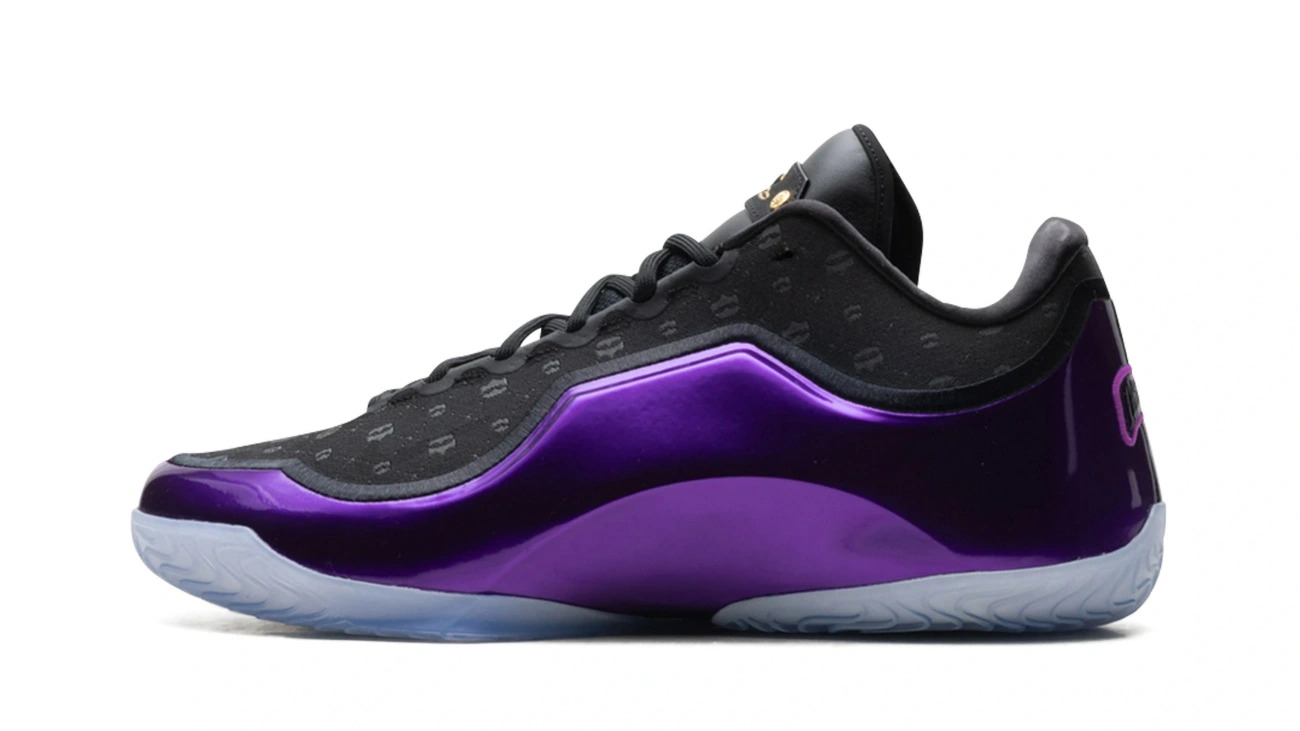
The extra word after a number can change the object substantially. Low may describe a redesigned upper and sole, while Elite can identify a revised performance construction. P.S. belongs to a postseason-oriented branch in the relevant earlier models. A seller’s generic mid-top category does not establish an officially launched LeBron Mid.
The XX is the clearest reminder that collar height and product family are different questions. Its principal model starts low, so the absence of a later Low launch does not mean a missing chapter. Likewise, the XXII’s adult and children’s specifications show that a shared colorway is not enough to establish identical construction.
For a practical comparison, choose two related products and ask three questions: what changed above the foot, what changed underneath it, and when did that version actually reach buyers? Those questions produce a better history than assuming every Low is the original with its collar shortened.
How to read dates and performance claims
This series separates announcement, court appearance, regional retail and later reissue. The XIV’s 2016 appearance and 2017 retail year are a particularly clear example. The XII and XIX show how a planned date can survive online after a schedule changes.
Historical engineering descriptions are also different from current recommendations. The articles explain what Nike built and how it related to neighboring models; they do not pretend to be fresh wear tests of every surviving pair. Player-exclusive use can establish a cultural or game-specific connection without proving that the same construction reached ordinary stores.
What comes after the LeBron 23?
As of October 16, 2026, XXIII is the latest released main model verified here. Nike announced LeBron 24 on October 5 and scheduled global retail for November 17, 2026. It is therefore a forthcoming chapter, not a completed retail release in this guide.
A useful way to explore the series
Read chronologically to follow design changes, or begin with a question. For the evolution of materials, compare IV, XI, XV and XVII. For a change in proportion, place XIX next to XX. For storytelling, examine VIII, XV and XXIII. The goal is not to force one winner out of twenty-three models. It is to understand why each exists, what it changed and which memories it made visible.
Frequently asked questions
What was LeBron’s first Nike signature shoe?
The Air Zoom Generation, introduced in 2003. It occupies the first position before the numbered LeBron II.
How many released main models does this guide cover?
Twenty-three, from Air Zoom Generation through XXIII, verified to October 16, 2026. Separate branches and variants are discussed without increasing that mainline count.
Are the three selected colors always the first three releases?
No. They are documented original-era selections chosen to explain each model. Regional launch orders and size categories can differ.
Does a retro belong in the original launch year?
The design may originate in that year, but the reissued pair has its own production and retail history. Record both.
Selected sources
- Nike: LeBron James and the 2003 signing
- Nike: LeBron James World Tour, 2009
- Smithsonian: LeBron James Donates Equality Sneakers
- Nike: LeBron XX official announcement
- Nike: LeBron XXIII signature collection
- Nike: LeBron 24 announcement
Editorial research checked on October 16, 2026.