A sixth shoe with a different first draft
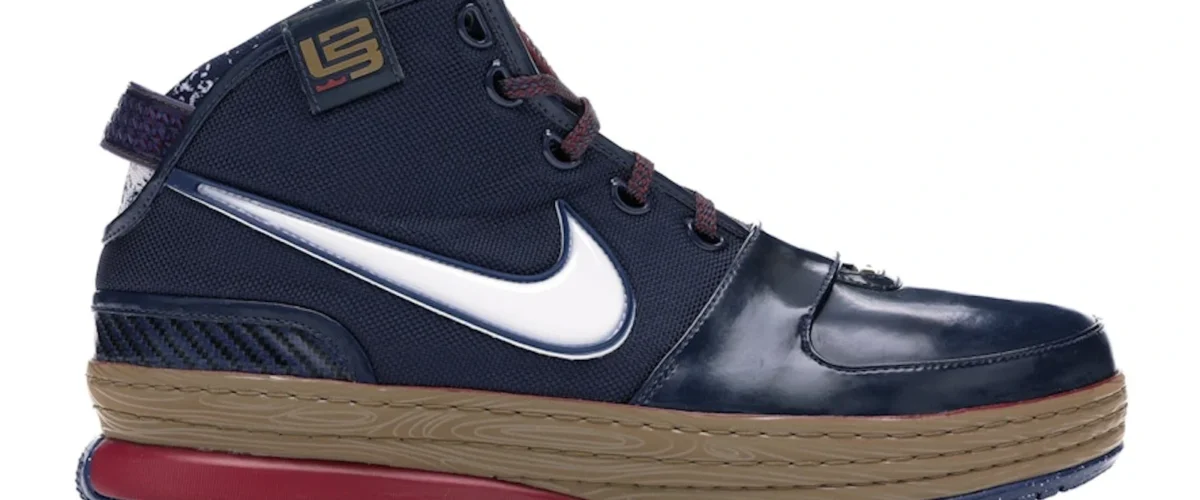
The Nike Zoom LeBron VI reached broad retail on October 31, 2008. Its relatively familiar outline conceals an unusual development story: reporting by Nick DePaula describes an earlier design, known as Zoom Power, being replaced before the final release. The retail VI should therefore be distinguished from that abandoned concept, even when old catalog images place them close together.
Ken Link’s final result was intentionally easier to imagine beyond the court. Interviews with Link and LeBron explain that ambition directly. After years of highly visible structural experiments, the line explored whether a cleaner basketball silhouette could communicate performance and remain comfortable in an everyday wardrobe.
Model at a glance
- Original release: 2008
- Design: Ken Link
The technology moves beneath the surface
Full-length Zoom Air, with additional heel cushioning, kept the performance story substantial. A leather-wrapped, stitched midsole and a clearly defined toe created a more traditional visual rhythm. The shoe’s resemblance to familiar Nike basketball forms is part of its appeal, but it should not obscure the separate signature identity and underfoot construction.
This is an important design distinction: reducing visual complexity does not mean abandoning design work. The VI gives more attention to proportion, the relationship between upper and sole, and the way a simple color block changes the whole object. It marks a different answer to the same question of how to dress a powerful player’s game.
Three colors that show its range
White/Black-Varsity Red, 2008. The broad-launch combination gives the VI a direct team-basketball appearance. Its clear blocks make the toe, side panel and wrapped sole easy to separate visually. It is the most straightforward starting point for understanding the final retail shape.
Big Apple, 2008. Varsity Red with black and Pine Green turns the clean upper into a strong city-themed statement. The color becomes the dominant feature, demonstrating how the VI could support a story without an entirely different construction.
Chalk, 2008. Midnight Navy and crimson supply a darker foundation for the pregame-ritual association. Its place in the original season matters: the VI’s storytelling was already expanding beyond standard home and away palettes before the next generation arrived.
The Low and the MVP chapter
The VI Low appeared in 2009. Original examples include White/White-Medium Grey, White/Gum Light Brown-Midnight Navy and White/Metallic Gold-Pine Green. These lower-cut options extend the everyday-wear conversation already present in the main model. They deserve their own 2009 dates rather than being folded into the flagship’s 2008 launch.
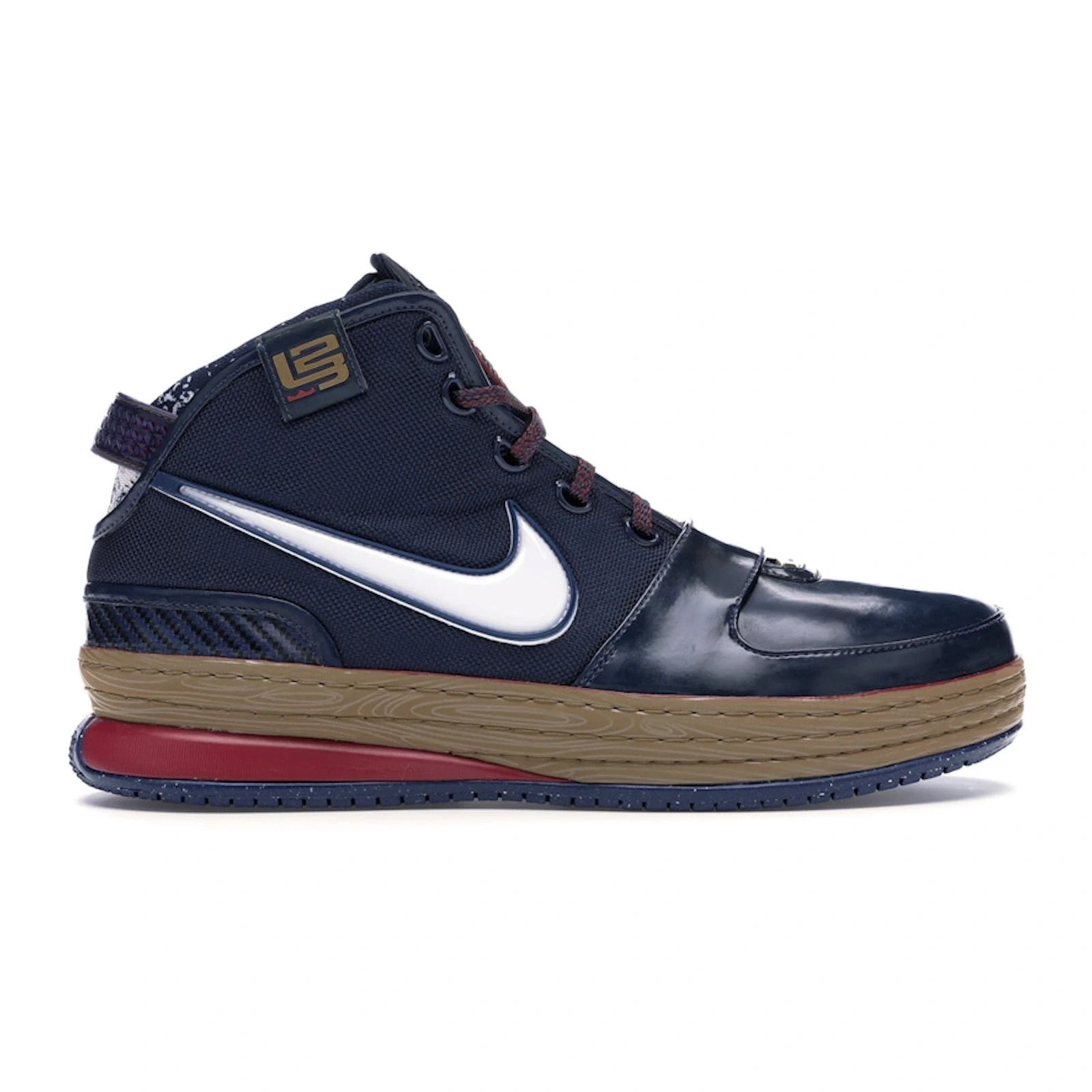
A 2009 MVP edition also connects the VI with LeBron’s first regular-season MVP award. That shoe belongs to the original cycle but is a later commemorative release, not the color that introduced the model. The distinction helps an archive show how a product acquires new meanings during its season.
Why the VI matters in the sequence
The VI closes an early chapter before Jason Petrie’s VII introduced a different visible-cushioning identity. Seen between the V and VII, it supplies a deliberate pause in the escalation of technical appearance. Its importance is not that it forecasts every later LeBron, but that it tests another route.
A useful display would put the final VI beside a documented Zoom Power image, then compare the published shoe with the VII. That three-way comparison explains development choices, the limits of a discarded concept and the freedom of a subsequent designer without treating an unreleased sample as a missing retail generation.
Frequently asked questions
Is Zoom Power another retail LeBron VI?
It is the earlier concept associated with the redesign. It should not be listed as the ordinary released VI.
Who designed the final VI?
Ken Link, concluding his early run as the lead designer of models II through VI.
Was the Low released in 2008?
The verified original Low range is from 2009, following the main model’s 2008 introduction.
Sources and further reading
- Nick DePaula: the original Zoom LeBron VI / Zoom Power
- Nice Kicks: LeBron VI released, 31 October 2008
- Ken Link and LeBron interview in Kicks, reproduced by Nike LeBron
- Sneaker News: Zoom LeBron VI archive
- Sneaker News: LeBron VI triple black
Editorial research checked on October 16, 2026.