The tenth signature takes shape
The Nike LeBron X arrived in 2012, with Jason Petrie continuing a design sequence already marked by visible cushioning. The timing followed James’s first NBA championship and coincided with another major international basketball summer. Gold Medal, one of the early retail editions, was scheduled for September 29 as part of Nike Basketball’s celebration of the London result.
The X is best understood as the tenth signature installment. Its diamond concept connects pressure, development and achievement, giving the shoe a narrative that can operate through shape, color and small details. That theme supplies a framework without requiring every version to look identical.
Model at a glance
- Original release: 2012
- Design: Jason Petrie
The air window now reveals Zoom
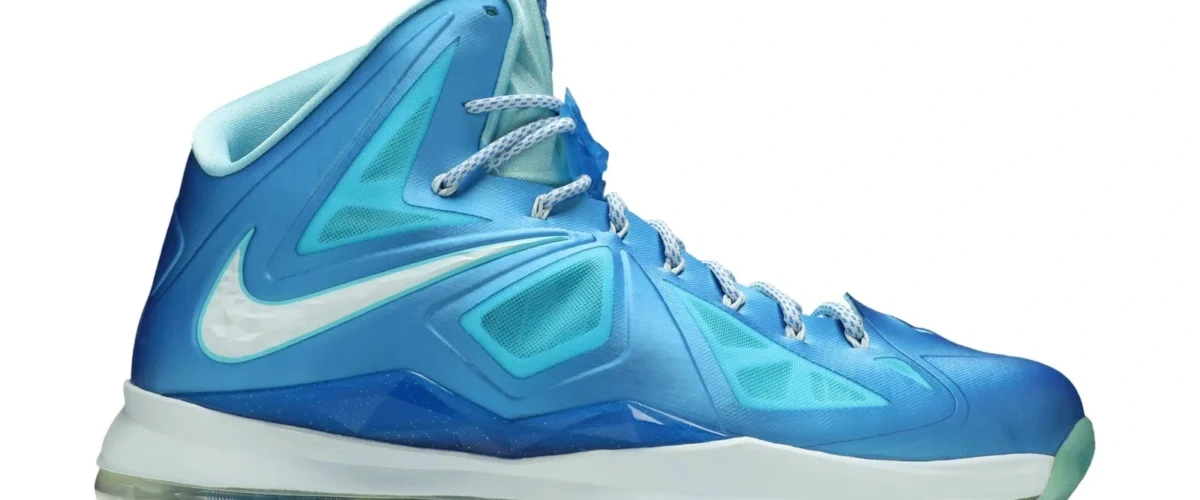
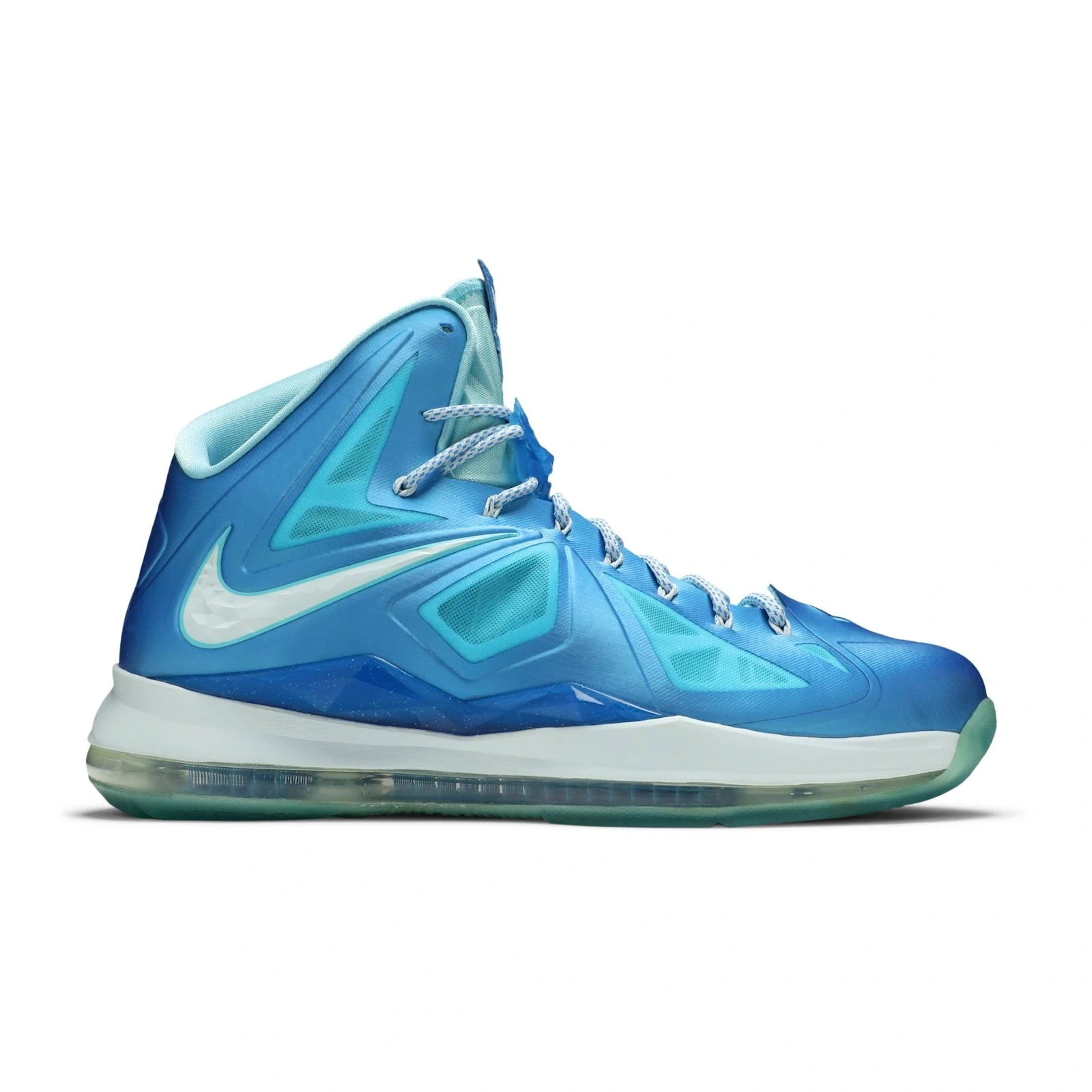
The defining technical change is a full-length visible Zoom Air platform, paired with Dynamic Flywire and Hyperfuse above it. The view through the midsole is therefore different from the Max Air story of earlier models. Similar-looking transparency can conceal a different cushioning system.
The form reinforces the diamond idea through angular lines and a faceted appearance. The upper seems to lean forward over a substantial transparent base. These visual relationships make the X recognizable even when a colorway removes the bright accents associated with its better-known releases.
Selected versions also supported Nike+ Basketball. The launch program distinguished sensor-enabled footwear from packages containing the equipment. An original product listing should be read at that level: a plus sign, a compatible shoe and a complete Sport Pack do not describe identical contents. This is part of the X’s original technology story, rather than a promise that its historical digital features remain available today.
Three colors from the original release year
Gold Medal, 2012. White, navy, red and metallic gold connect the X to an international victory rather than only the Miami uniform. The edition gives the model an early celebratory setting and demonstrates how the same signature can carry different basketball identities.
Blue Diamond, 2012. Photo Blue, Windchill and Tidepool Blue make the design’s mineral theme especially direct. The October 4 release included different Nike+ purchasing configurations. Visually, the cool palette lets the upper and transparent platform read as a closely related whole.
Christmas, 2012. Red and green give the X a holiday identity. The December release is useful for comparing a seasonal color story with Blue Diamond’s connection to the broader design concept. Both belong to the original cycle, but they approach the shoe from different narrative directions.
The 2013 Low and the Cork branch
The LeBron X Low reached its original release cycle in 2013. Easter, in Crystal Mint, Fiberglass and Poison Green, was scheduled for March 29 after a date revision. Its pastel treatment offers a very different visual mood from the standard model’s red Christmas edition. The lower silhouette deserves its own name in a collection or image caption.
Cork, released in February 2013, was a Nike Sportswear lifestyle interpretation celebrating the first championship. Genuine cork translated the champagne-celebration reference into material. Nike explicitly placed this edition in non-performance use, making it important to distinguish Cork from the standard basketball construction.
A model at the intersection of sport and storytelling
The X brings several kinds of innovation into one family: a visibly different cushioning platform, an optional digital system and a material-led lifestyle edition. Its story becomes clearer when those are treated as related but separate decisions. No single colorway needs to stand in for all three.
For a meaningful comparison, pair a standard performance X with the Low and Cork, then record what changed in shape, material and intended use. The diamond idea provides continuity while the variants reveal how broadly a signature model could be interpreted.
The postseason Elite revision
The LeBron X P.S. Elite followed in 2013 as a postseason construction. Nike designer Leo Chang described Jason Petrie’s use of carbon-fiber reinforcement to develop ideas from the standard X. The White/Metallic Gold/Black Elite+ opened the documented US retail program on April 20; Europe followed a different schedule. Its bright gold details create a trophy-like counterpart to the later blue-and-orange Superhero theme. Elite names a revised shoe, while the plus sign identifies the Nike+ configuration.
Frequently asked questions
Is the X’s visible unit the same Max Air used on the VIII?
No. The standard X’s signature feature is full-length visible Zoom Air.
Did every X include Nike+ equipment?
No. Nike offered different configurations; compatible footwear and a complete Sport Pack had different contents.
Was Cork intended as the regular game shoe?
No. Nike Sportswear described the 2013 Cork as a lifestyle edition for non-performance use.
Sources and further reading
- Hoopsfix: Nike introduces LeBron X
- Sneaker News: Nike Basketball Gold Medal release dates
- Sports Illustrated: Nike Christmas Day shoes
- Sneaker Bar Detroit: LeBron X Low Easter revised release date
- Nike LeBron: Nike announces NSW Cork release
- Nike designer Leo Chang on Elite Series 2.0
Editorial research checked on October 16, 2026.