The beginning had more than one date
The Nike Air Zoom Generation opened LeBron James’s signature line in 2003, before numbered LeBrons became an annual institution. Nike confirms that he wore the model in his NBA debut against Sacramento on October 29. The famous First Game colorway instead commemorates his first home appearance in Cleveland on November 5. Keeping those events separate is essential: a nickname on a box is not a complete chronology. Nike’s debut retrospective supplies the basketball date.
The Air Zoom Generation has an unusual naming legacy: its place at the beginning of the numbered series is clear, but its own name foregrounds Nike technology rather than a Roman numeral. That makes the model both the first LeBron and a product with an identity that stands on its own.
Model at a glance
- Original release: 2003
- Design: Aaron Cooper, Tinker Hatfield, Eric Avar
A comfort brief, interpreted as a field boot
Aaron Cooper worked with Tinker Hatfield and Eric Avar on the design. Cooper’s recollections place comfort at the center of his conversations with LeBron. The visual direction drew on a modern-day soldier and LeBron’s Oakland Soldiers connection; SUV details contributed to smaller elements. The familiar claim that the entire shoe was modeled on a Hummer compresses a much richer design process. The designer account is the useful starting point.
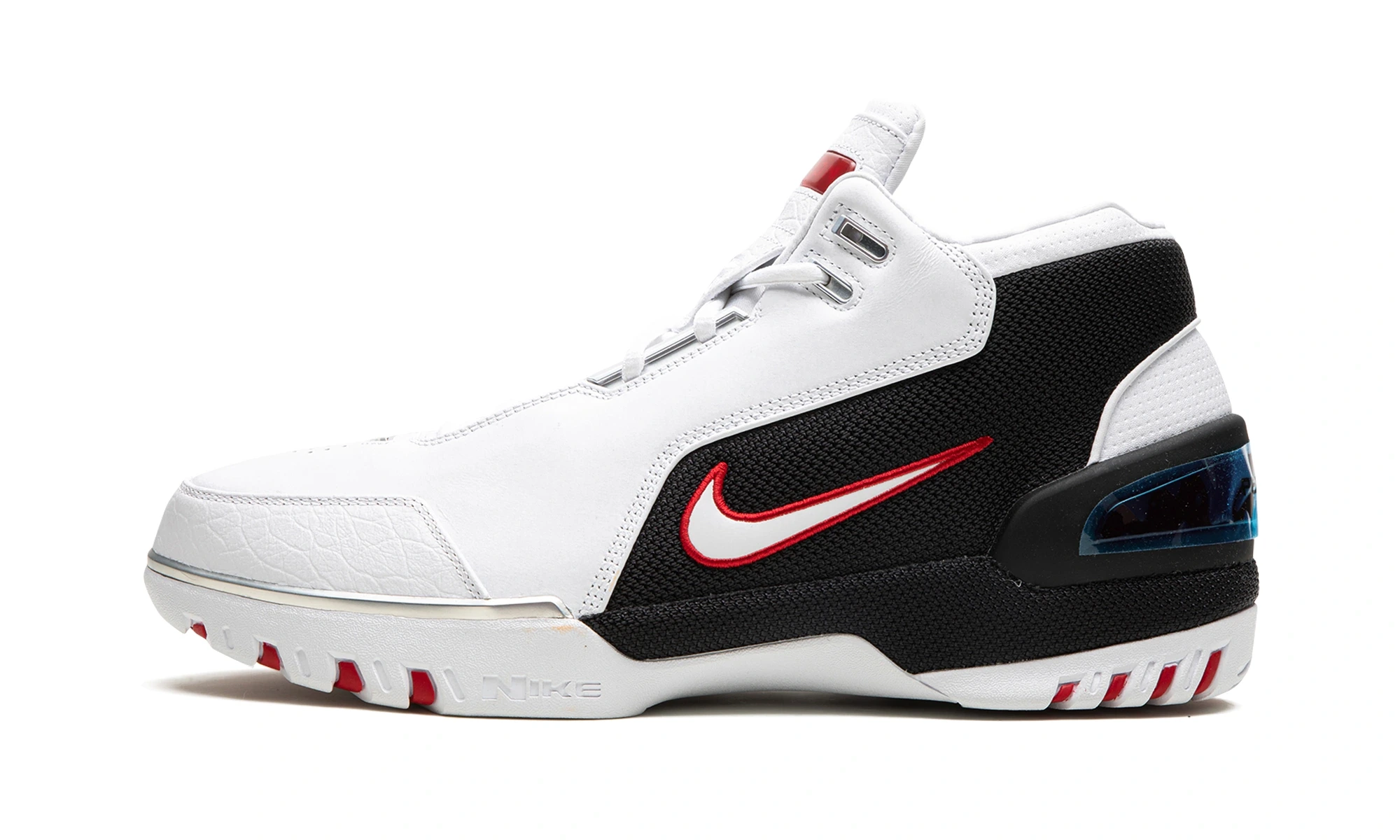
The shape makes that distinction visible. An upright collar, broad panels and substantial heel treatment give the shoe a utility-minded stance. Beneath it, forefoot Zoom Air and an encapsulated heel Air unit provide the cushioning configuration. That combination also explains why calling this a full-length visible-Air shoe would place technology from a later LeBron chapter in the wrong generation.
Three original-era colorways to recognize
Debut, 2003
White, black and crimson frame the shoe worn at the start of James’s NBA career. The contrasting heel and side panels make the original silhouette easy to read. This is the clearest color reference for connecting the design to the Sacramento debut.
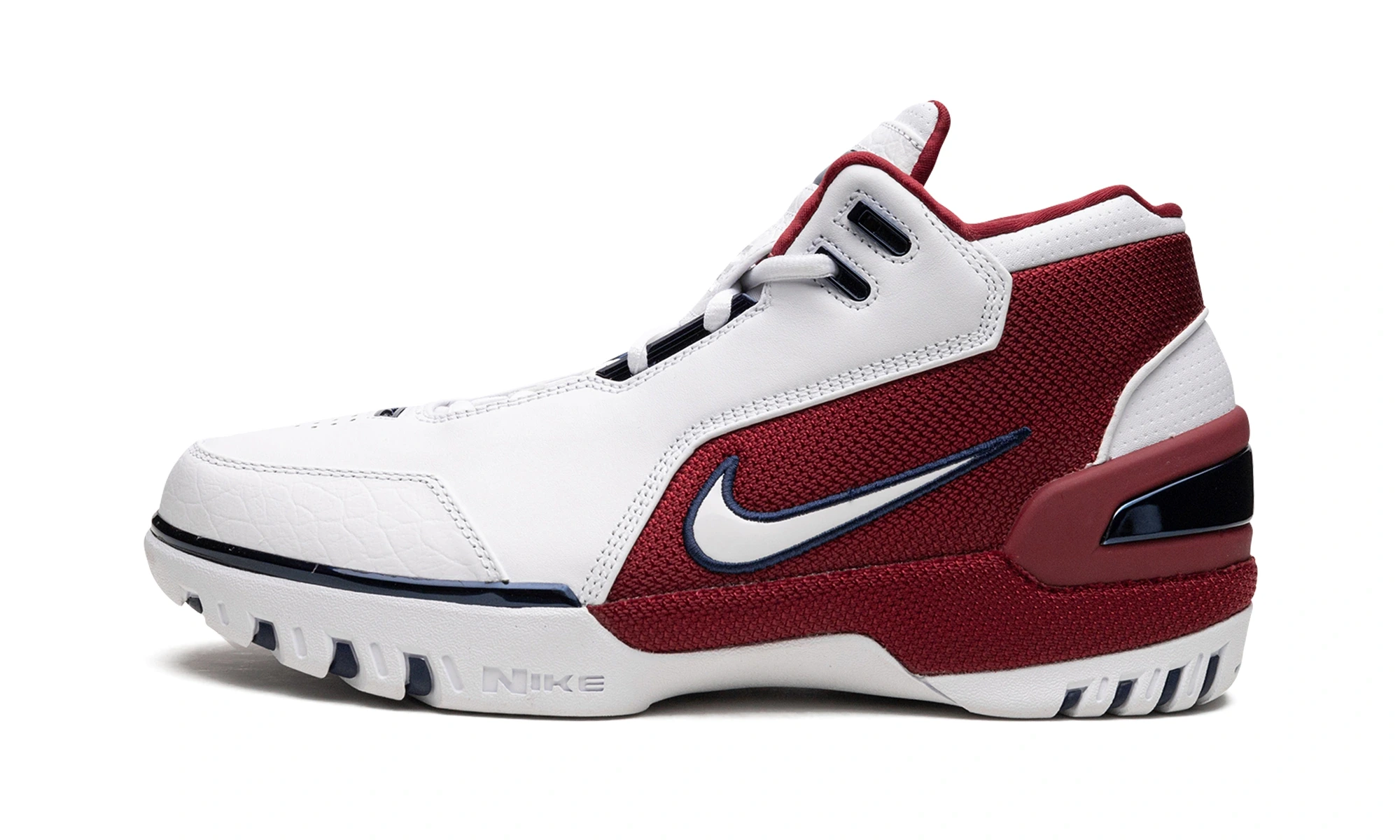
First Game, 2003
White, navy and crimson mark the Cleveland home-opener story. The name belongs to that home appearance, creating a different meaning from Debut. Putting the two together explains why closely related palettes can represent separate moments.
Wheat, 2004
The warm, nearly monochrome treatment brings the design’s field-boot character forward. With fewer strong panel contrasts, the shape and surface texture take greater visual responsibility. Wheat supplies a different lens on the same rookie-season model.
Low versions and the retro chapter
The Air Zoom Generation Low followed in 2004. Documented palettes include White/White-Black-Varsity Royal and White/White-Metallic Silver. The Low should have its own record rather than being dated automatically to 2003.
The retro story began in 2017, returning the founding silhouette to a later sneaker audience. That return creates a useful comparison with the original launch: the same shape can speak to a rookie’s future in one period and to an established career in another. The design’s meaning grew as the player’s story developed.
Frequently asked questions
Is the Air Zoom Generation the LeBron 1?
Yes. It is the first Nike LeBron signature model, although Air Zoom Generation is its original commercial name.
Did LeBron debut in the First Game colorway?
The First Game nickname refers to the November 5 home opener. His first NBA game was October 29, 2003, in Sacramento.
Was Wheat an original release?
Yes, it belongs to the 2004 original season. Later Wheat editions must be identified by their own production year.
Sources and further reading
- Nike design account with Aaron Cooper, reproduced by Sneaker Bar Detroit
- Nike: LeBron XXIII Grand Opening
- Sneaker News: Air Zoom Generation archive
- Nike LeBron: First Game correction
- Andscape: A king’s ransom, first-person design oral history
Editorial research checked on October 16, 2026.