A footwear history with several beginnings
Kobe Bryant’s sneaker history is more than a sequence of numbers. It contains a first signature at adidas, a second beginning at Nike, a radical commitment to low-cut basketball shoes and a post-retirement period in which new designs and updated classics developed alongside one another. Reading those chapters separately makes the whole story clearer.
The central sequence starts with five adidas models: KB8, KB8 II, KB8 III, THE KOBE and THE KOBE TWO. Nike’s numbered line then runs from Zoom Kobe I to Kobe XI. A.D. and NXT describe later branches, while Protro identifies performance-updated versions of existing designs. These labels answer different questions and should not be collapsed into one count. What Is the Kobe Protro?
The adidas years: 1997–2001
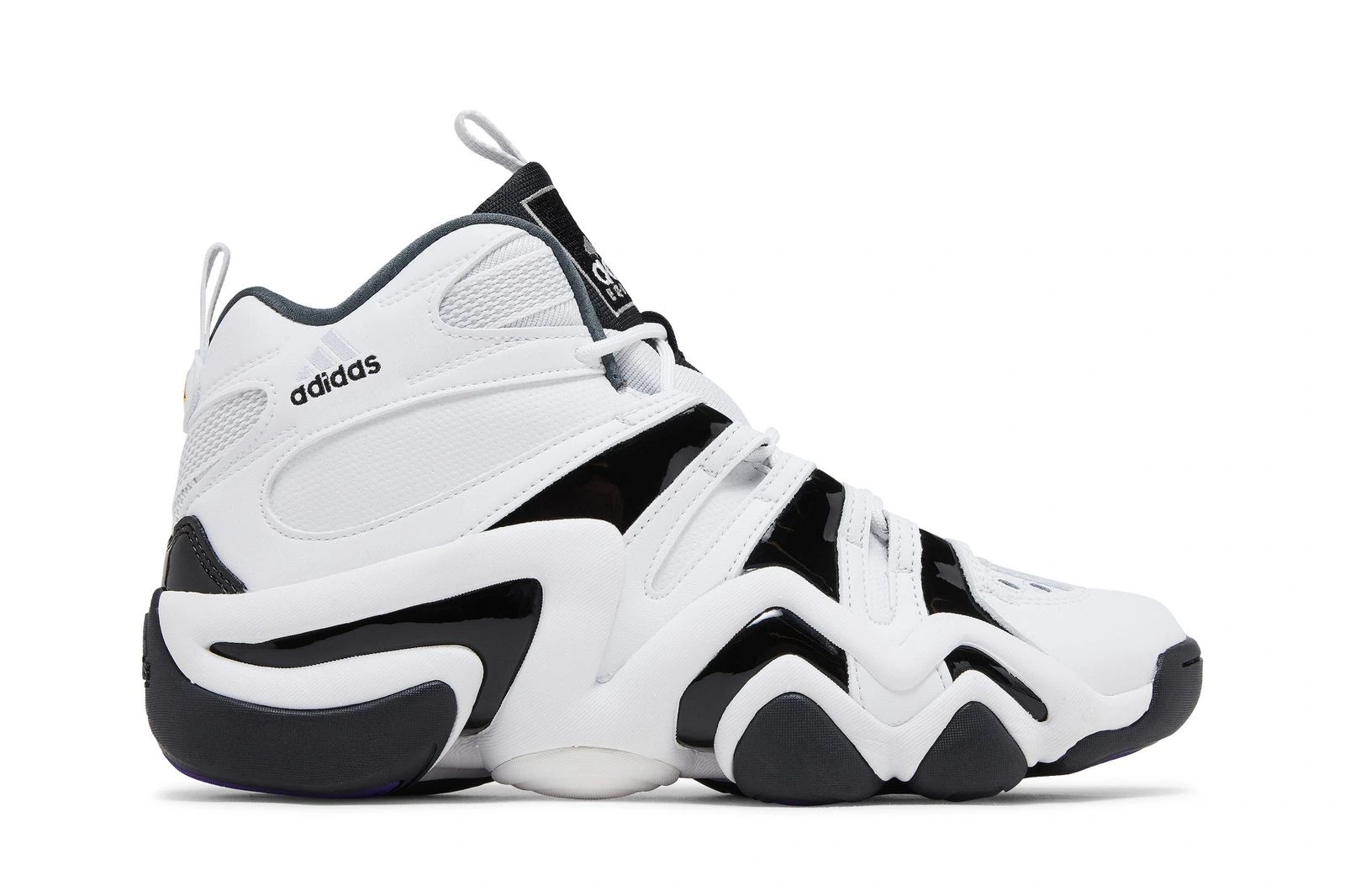
KB8, 1997: the first signature later became Crazy 8. Its broad curves and conspicuous stripes make a forceful opening statement. It is an effective starting point for reading the adidas years because the relationship between the upper and sole is so visible. The History of adidas Basketball
KB8 II, 1998: its 2014 retro was called Crazy 2. The wavy upper develops the earlier shoe’s organic appearance into a more elaborate composition. Read beside the KB8, it represents an expansion of the same visual vocabulary rather than an abrupt change of subject. adidas Crazy 2: Official Release Date
KB8 III, 1999: the model now appears under the Crazy 3 name. Its flowing lines make it a useful conclusion to the KB8 family. Placed beside the next design, it helps explain just how dramatic adidas’s subsequent change in appearance would be. adidas CRAZY 3 JR9683
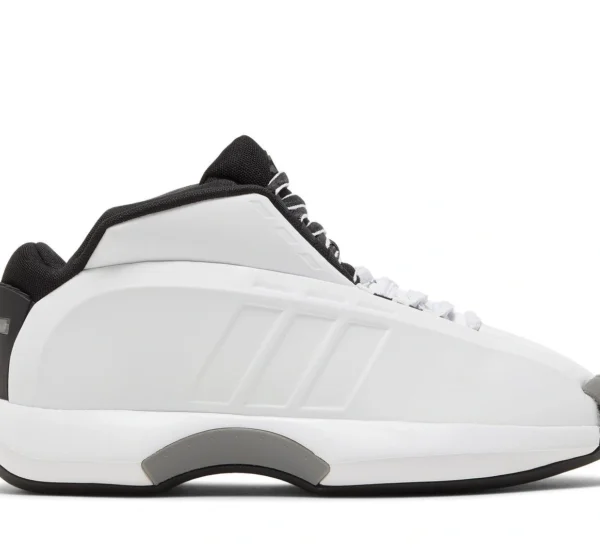
THE KOBE, 2000: later Crazy 1, it changed the visual emphasis completely. The smoother outer shell appears more controlled and enclosed than the preceding KB8 designs. This is where the adidas sequence becomes especially rewarding to compare side by side: the next number tells a very different design story.
THE KOBE TWO, 2001: it returned as Crazy 2/2.0 in 2025. The enclosed appearance carries the previous model’s visual direction to another extreme. Its later naming overlaps with the KB8 II retro, making the original model name a useful companion to any Crazy 2 catalogue entry. adidas Crazy 2 Silver Metallic Just Dropped
The bridge to Nike
Bryant’s Nike partnership began in 2003, but the first numbered Nike Kobe did not immediately follow. The Huarache 2K4 and 2K5 are essential to this transitional period. Their association with him does not make them Kobe I and II: his signature numbering begins with the Zoom Kobe I. The Story Behind Kobe Bryant’s First Nike Signature For the wider company timeline, see our history of Nike.
This distinction keeps an on-court wardrobe from being mistaken for a signature catalogue. A player can wear team models, personal editions and shoes from another product family without adding a new numbered entry. The transition also helps explain why the first Nike Kobe already arrived with a developed design vocabulary rather than starting from nothing.
Nike I–III: establishing the performance language
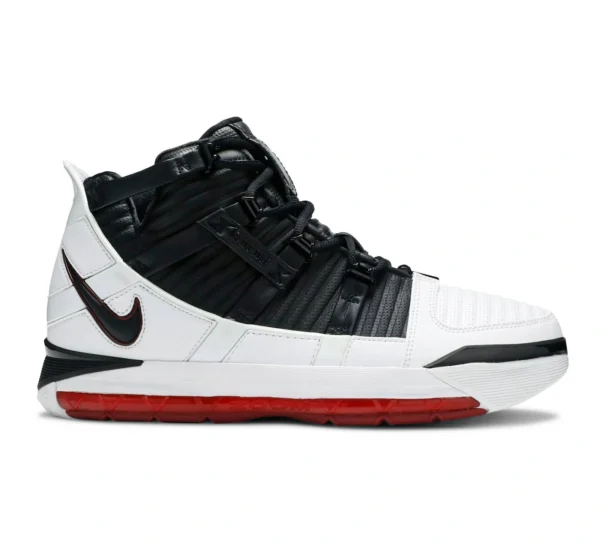
Zoom Kobe I opened Nike’s numbered sequence with a substantial leather design. Its layered exterior makes a compelling contrast with the lower, visually lighter models that followed. Beginning here prevents the later low-top identity from becoming the only lens through which the whole Nike series is understood.
Zoom Kobe II was unveiled in December 2006 and used an ankle strap. The strap makes containment a conspicuous part of its appearance. It is a useful reminder that the line’s early identity emerged through visible structures before later designs made reduction their strongest visual statement. Nike Kobe Vault: Kobe 2
Zoom Kobe III was unveiled in December 2007, distinguished by its diamond-patterned exterior. The repeated geometry gives its surface a strong identity. Seen after I and II, it makes the shift from conventional-looking panels toward a recognizable external framework especially clear. Nike Kobe Vault: Kobe 3
IV–VI: the low-cut turn
Zoom Kobe IV introduced the signature’s low-cut turn in 2008. Its place in the sequence is easy to see even without a technical comparison: the proportions change the impression of the entire shoe. The result reads as a new direction rather than another variation on the earlier collars. Nike Unveils the Zoom Kobe IV
Zoom Kobe V was unveiled in December 2009, continuing the low-cut direction. Its sleeker-looking profile makes it a revealing companion to the IV. The two suggest a distinction between introducing a major idea and refining that idea until it becomes the family’s visual identity. Nike Kobe Vault: Kobe 5
Zoom Kobe VI arrived in December 2010 with a scale-like exterior. Texture now carries much of the visual storytelling. The recognizable surface shows how a shoe can acquire personality through the treatment of its material, rather than depending entirely on color blocking or a separate graphic. Nike Kobe Vault: Kobe 6
VII–VIII: two different answers to customization and lightness
December 2011 brought Kobe VII System and interchangeable cushioning inserts. That premise makes it an interesting interruption in a sequence often summarized through reduced height and bulk. It asks the reader to consider a shoe as a configurable arrangement rather than only a fixed silhouette. Nike Kobe Vault: Kobe 7
Kobe VIII was unveiled in November 2012, with engineered mesh and low-cut proportions. The broad textile surface gives color an unusually prominent role. Beside the VII, its appearance suggests another kind of design answer: a complex-looking platform can be followed by an emphasis on visual simplicity. Nike Kobe Vault: Kobe 8
IX–XI: height, material and the final playing season
Kobe IX Elite was unveiled in December 2013, introducing Flyknit to Nike Basketball. Its tall silhouette interrupts the established low-top image. This contrast makes the IX a useful companion to the IV: both generations changed expectations by making the shoe’s proportions newly conspicuous. Nike Kobe Vault: Kobe 9
Kobe X was unveiled in January 2015 and later expanded into an Elite Flyknit family. The generation is a useful reminder that a single number can contain materially different products. Reading the family through its variants reveals more than treating its most familiar photograph as the whole story. Nike Kobe Vault: Kobe 10
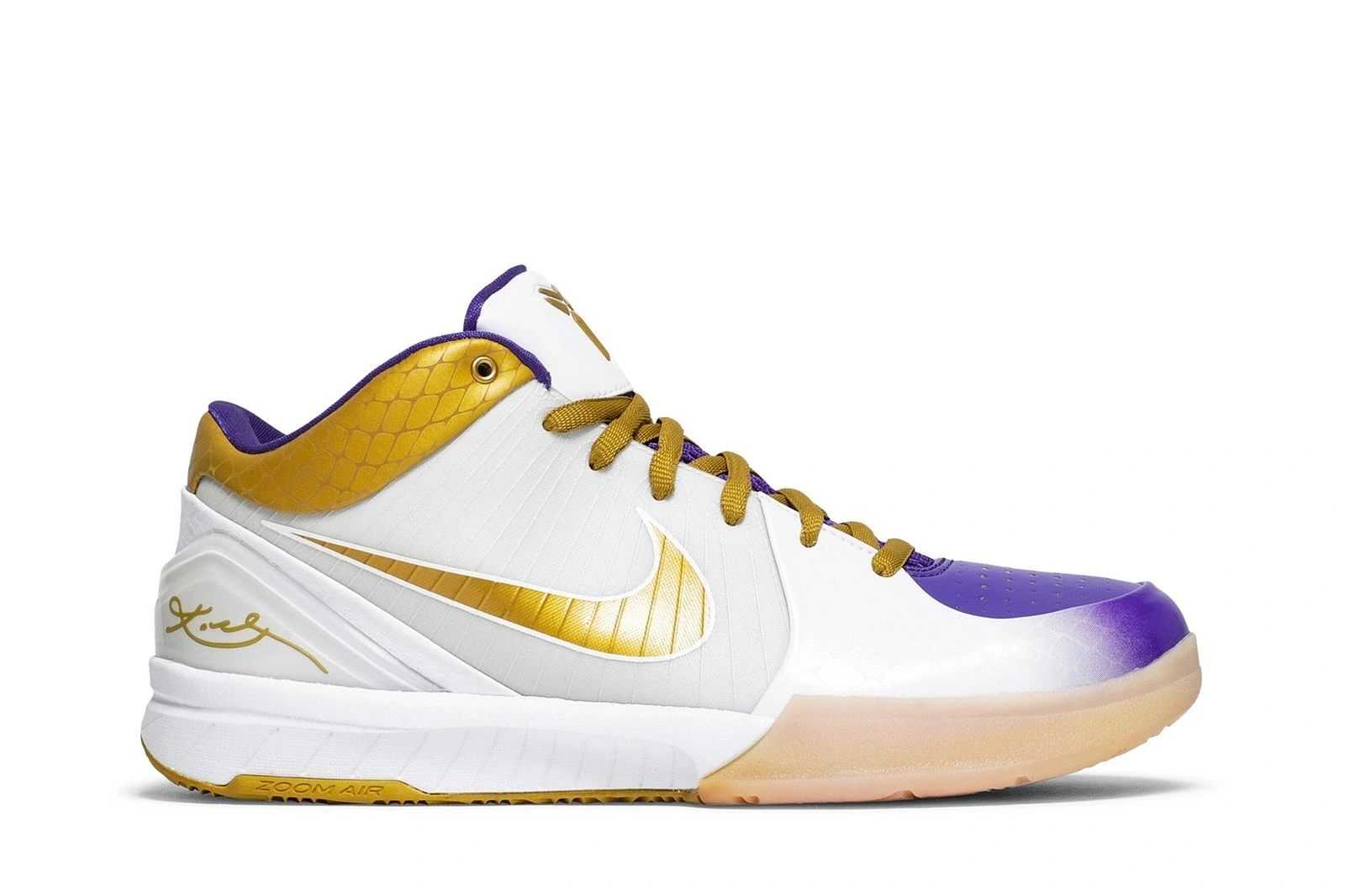
Kobe XI was unveiled in December 2015. Its position at the end of the numbered playing-career sequence gives the familiar low profile added emotional weight. As design history, it also offers a satisfying comparison with the substantial first Nike signature: the beginning and ending belong together precisely because they look so different. Nike Kobe Vault: Kobe 11
After retirement: A.D. and NXT are distinct branches
Kobe A.D., 2016: the first post-retirement signature released in November. Keeping the athlete’s name while changing the naming format made room for a new chapter. It should not be silently renamed “Kobe 12” in a catalogue that aims to preserve official model identities. Nike Kobe A.D.
Kobe A.D. NXT, 2017: a separate design explored an unconventional integrated lacing arrangement. A.D. Mid, also 2017, developed another direction with a higher collar and a renewed focus on hidden support. They are related by family, but one is not simply a colorway of the other. What to Know About the Nike Kobe A.D. NXT Kobe A.D.: Life After Basketball Nike Kobe A.D. Mid Mamba Mentality Pack
Kobe A.D. NXT 360, 2018: a wraparound Flyknit construction pursued a close, flexible relationship with the foot. The later 2018 Kobe A.D. was another distinct silhouette. “Exodus” is widely used as an identifying nickname, while contemporary reporting of Nike’s listing notes that the official product name remained Kobe A.D. Nike Kobe AD NXT 360 Mamba Day Kobe’s Latest Nike AD Gets Confirmed Tech Specs
Kobe A.D. NXT FF, 2019: FastFit introduced a pull-operated containment system. FF describes this manual mechanism, not electronic self-lacing. Taken together, the post-retirement branches show experimentation continuing after Bryant stopped using each new release in NBA games himself. Nike Kobe AD NXT Fast-Fit Release Info Nike Kobe AD NXT FastFit Performance Review
Protro: a second timeline inside the first
Protro means performance retro. A collection arranged by original model number and one arranged by return date will tell different stories; keeping both orders visible makes the gaps and unexpected returns easier to understand.
The verified return sequence begins with Kobe 1 in February 2018, followed by Kobe 4 in 2019 and Kobe 5 in December 2019. Kobe 6 followed in December 2020. This order alone shows why the Protro story needs its own chronology: it does not simply replay the original numbers in order. Nike Zoom Kobe IV Protro
The next major entries were Kobe 8 in August 2023, Kobe 9 in August 2024 and Kobe 3 in August 2025. Kobe 10 and Kobe 11 expanded the Protro lineup in 2026. Each should be read as its own updated product rather than assuming one universal Protro cushioning formula. Nike Basketball Debuts the Kobe 10 Protro Nike Kobe 11 Protro Black and Metallic Gold
Nike also announced the A.D. Protro for October 1, 2026, extending the approach beyond the original numbered line. This overview closes with the brand’s announcements available in October 2026. Lanzamiento de los Nike Kobe A.D. Protro

How colorways help tell the story
A model is a design family; a colorway is one visual version within it. An original retail color, an athlete’s player exclusive and a later tribute can share a theme without sharing the same release history. THE KOBE’s Sunshine and THE KOBE TWO’s USA player special illustrate why colors sometimes need their own chronology. adidas Crazy 1 Sunshine 2022 adidas Crazy 2 USA Returning in 2026
For an engaging collection, the strongest organizing question may be a design idea rather than price or scarcity: the rise of low cuts, the evolution of upper materials, Lakers-era colors or the dialogue between originals and Protros. That approach allows a widely released pair to explain something important alongside a rare one.
The continuity beneath the changes
The shapes changed dramatically, from the curved KB8 to THE KOBE’s shell, from the Nike III’s grid to the IV’s low profile, and from the IX’s height to the NXT experiments. The lasting thread is the willingness to reconsider the object. Kobe’s footwear history is most revealing when those differences are preserved rather than flattened into one uninterrupted line of “better” shoes.
Frequently asked questions
What was Kobe Bryant’s first signature shoe?
The adidas Equipment KB8, released in 1997. His first Nike signature was the Zoom Kobe I, unveiled in December 2005.
How many adidas Kobe signature models were there?
Five principal retail signatures: KB8, KB8 II, KB8 III, THE KOBE and THE KOBE TWO.
Does the Nike Kobe line end at XI?
The numbered playing-career sequence ends at XI, but A.D., NXT and Protro releases continue the broader footwear story.
Are retro and Protro interchangeable terms?
No. Protro is Nike’s performance-update concept; a retro label alone does not establish those changes.
Why do some timelines use two years for one shoe?
Announcement, first on-court wear and retail launch can occur in different calendar years.
Is Crazy 2 the KB8 II or THE KOBE TWO?
Both have used the name in different retro periods. Include the original model and release year to avoid confusion.
Editorial research checked on October 16, 2026.