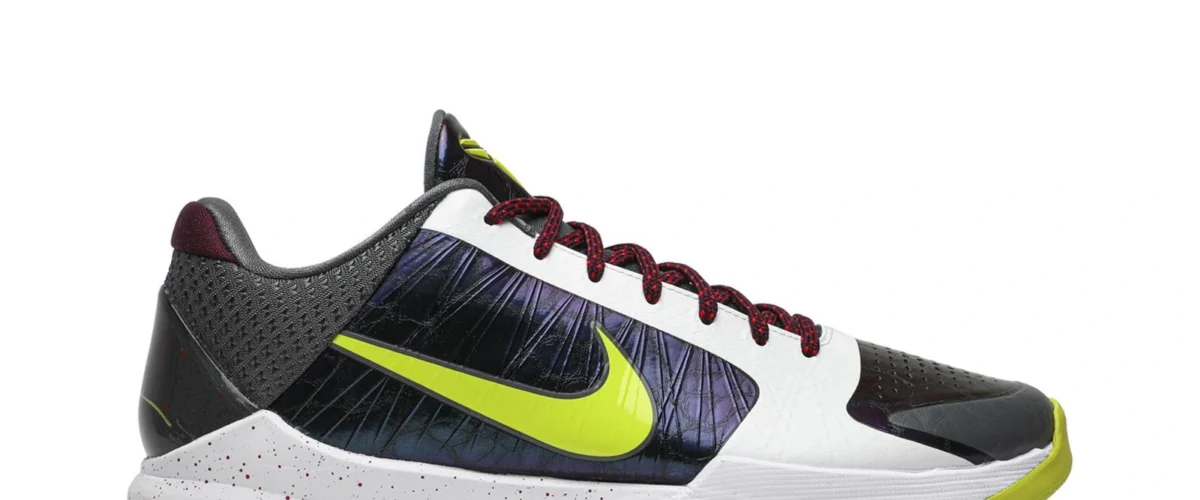
After the IV made its statement, the Nike Zoom Kobe V faced a different challenge: refinement. The question was no longer simply whether Bryant would play in a low top. It was how to remove more bulk while keeping a complete basketball shoe around his foot.
Nike unveiled the V in December 2009, followed by a broader international retail rollout in January 2010. Eric Avar’s design continued the low-profile direction. The 2009–10 description captures both its introduction and the season in which its identity became established. Nike and Kobe Bryant launch the Zoom Kobe V
A smaller-looking shoe with a precise brief
Nike listed a 10.6-ounce reference weight and a 10 mm forefoot profile at introduction. Those numbers belong to the brand’s launch comparison, not every size of every later edition. The original technical sheet documents the brief. Nike original Zoom Kobe V technical sheet
The upper used Flywire and bonded overlays; cushioning came from Zoom Air at the heel and forefoot. The shape looked quieter than the III’s cage or the II’s straps, yet that simplicity was itself a design decision. Fewer visible layers did not mean the shoe had stopped being engineered.
The V is especially instructive beside the IV: the silhouette looks like the same argument tightened rather than replaced. That continuity helped turn a single striking low-top launch into a recognizable family language.
A code hidden in plain sight
The V introduced the Kobe Code, a symbolic sequence placed at the front edge of the outsole. Nike Kobe Vault: Kobe V It added a second reading of the product: a game shoe on first inspection, a collection of encoded details when examined closely.
That approach suits the model’s scale. With a relatively restrained profile, small graphics can carry more narrative weight. The collector’s gaze moves from the overall shape toward the edge of the sole, tongue details and individual color stories.
Three original colors with different jobs
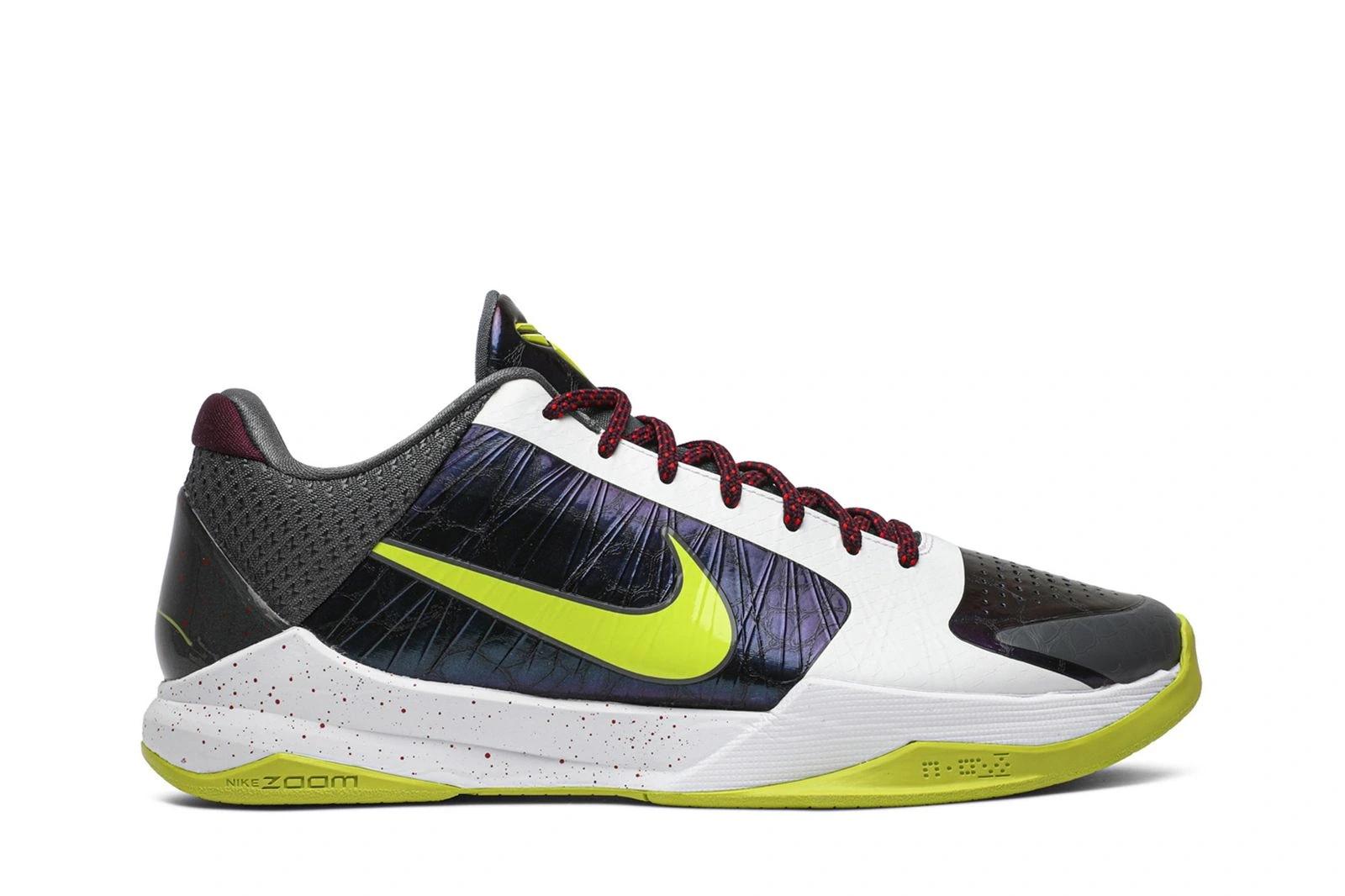
Chaos: the original holiday-era character study, using an unexpected palette rather than a straightforward Lakers uniform match.
Bruce Lee: yellow and black with red scratch details. Its visual references connect Bryant’s basketball identity with martial-arts cinema.
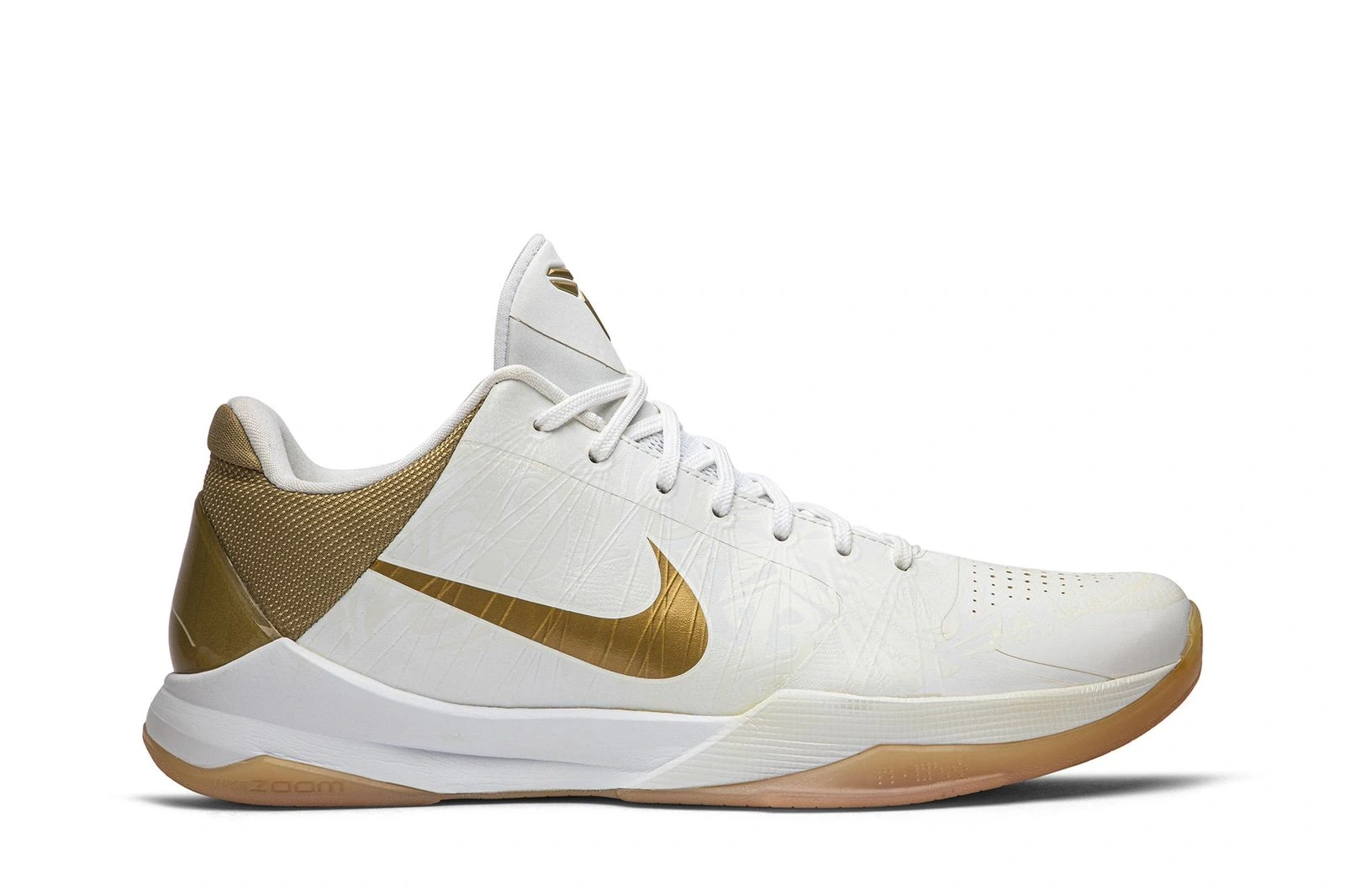
Big Stage Home: a white-and-gold statement from the 2010 Finals period. It makes the idea of the signature shoe as a record of an athlete’s season unusually literal. Kobe Archive: Kobe V catalog Five moments from the original Kobe V season
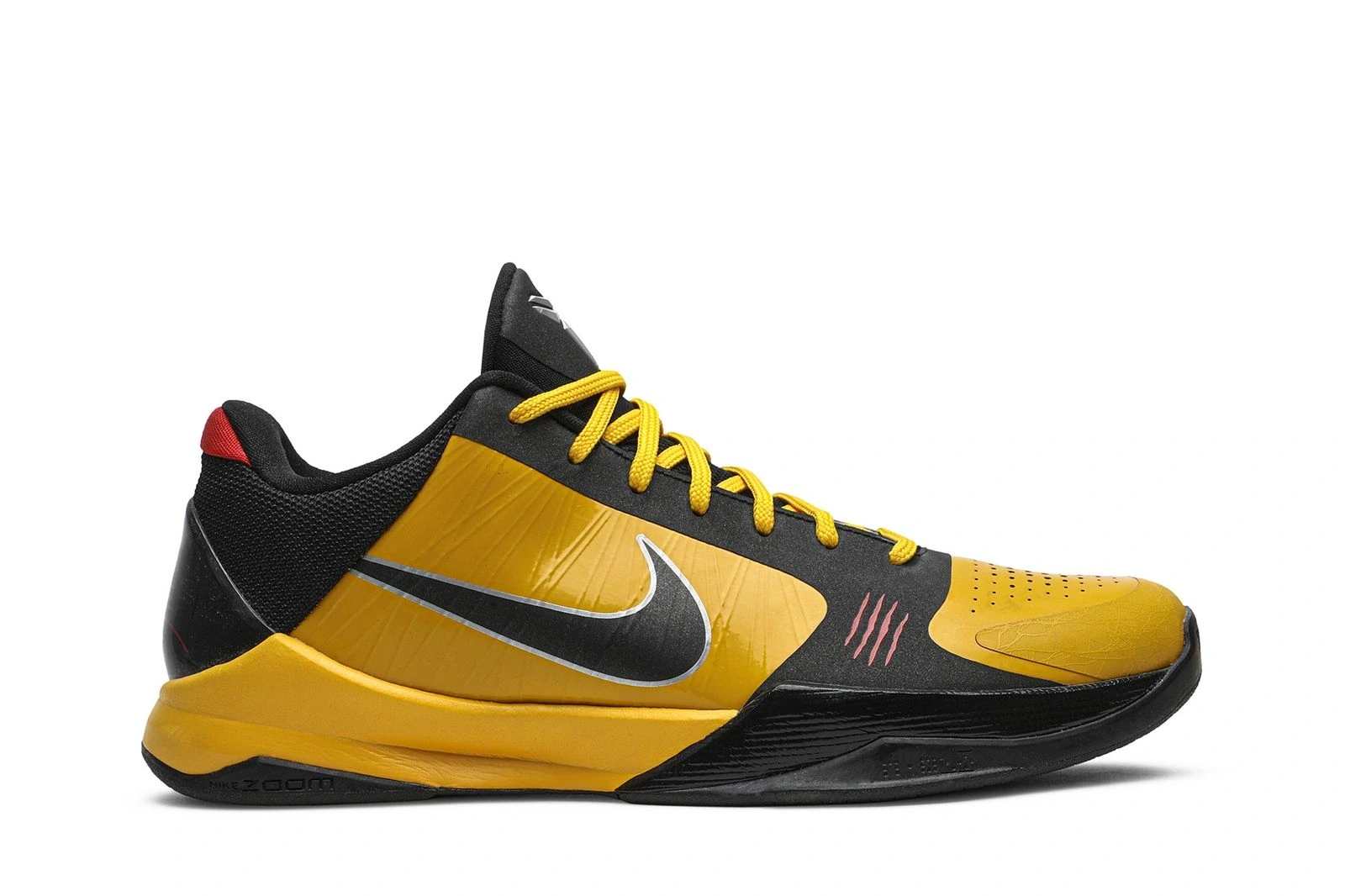
These three examples tell different kinds of stories: a persona, an influence and a career moment. They explain the V’s cultural breadth more effectively than a long list of release nicknames.
The championship connection
Bryant finished the 2010 Finals with another Lakers title, and Big Stage became tied to that conclusion. The shoe’s place in that season gives the V an unusually strong bridge between its original performance life and its later collectible life.
The historical distinction remains important: a color inspired by a film is not a collaboration unless the release documents one, and a championship-associated color is not automatically the exact player-issued pair seen in every game. Naming those categories accurately preserves the story.
The Protro chapter starts in 2019
The V first appeared in Protro form in December 2019 with Chaos. Nike enlarged the forefoot Air unit and revised the midsole foam. Those updates belong to the return, while the original’s two-zone cushioning belongs to the 2009–10 construction.
The December 2019 introduction and the 2020 retail dates are compatible: contemporary reporting placed the North American Chaos release on January 3, 2020. Contemporary Kobe V Protro Chaos launch schedule The rollout crossed both a calendar boundary and different regional schedules.
The return demonstrates how strong a color story can be without requiring the same internal build. An original Chaos and a Protro Chaos share a narrative, but they occupy different points in the product timeline. The V’s legacy includes both the original refinement and that later reinterpretation.
Frequently asked questions
Is the Kobe 5 a 2009 or 2010 model?
It was introduced in December 2009, with the broader retail rollout in January 2010.
Was the first Kobe 5 Protro released in 2020?
Nike dates the first Protro unveiling to December 2019; many subsequent releases followed in 2020.
Are Bruce Lee and Big Stage the same story?
No. One references a cultural influence; the other connects with the 2010 championship season.
Editorial research checked on October 16, 2026.