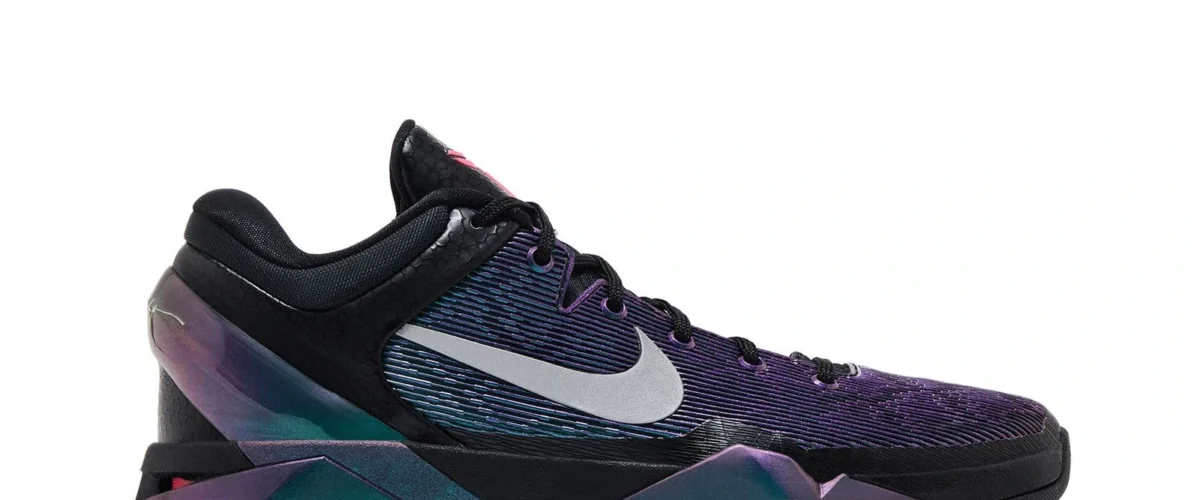
The Nike Kobe VII System asks a different question from the VI. Instead of making one low-profile configuration more distinctive, it asks whether a single outer shoe can support different internal experiences. The word ‘System’ is essential to its history, because the product was conceived as more than one fixed combination of upper and cushioning.
The model arrived in December 2011. Contemporary footage presented Bryant and Eric Avar discussing the project together. Bryant and Avar discuss the Kobe VII Their discussion places the athlete inside the design process rather than treating his signature as decoration added after development.
Attack Fast and Attack Strong
Attack Fast combined Phylon with forefoot and heel Zoom Air and a lower cuff. Attack Strong used full-length Cushlon and a taller cuff; Nike’s original documentation explicitly says that insert did not contain Zoom Air. The Japanese release date was December 22, 2011. Nike Japan: Kobe VII System Supreme
Those are two different underfoot systems, not merely two sock heights. A description that gives every VII both Cushlon and Zoom without explaining the insert can accidentally assemble a specification that no single configuration used.
The removable component also changes how the object is understood. On a conventional shoe, the upper usually dominates identification. With the VII, lifting the insert reveals an important part of the model’s identity. A complete original package is a design document as well as a pair of sneakers.
A shell with a predator theme
Flywire, a molded heel clip and a glass-reinforced composite shank supported the platform. Nike linked the exterior to several predators, extending the Mamba imagery beyond a single snake. Nike Kobe Vault: Kobe VII
That broader theme made the VII an effective surface for varied color stories. The shoe could suggest speed, camouflage or a different animal without abandoning the same outer architecture. The contrast between a shared shell and changeable internal parts is the central visual idea of this generation.
Three original colors
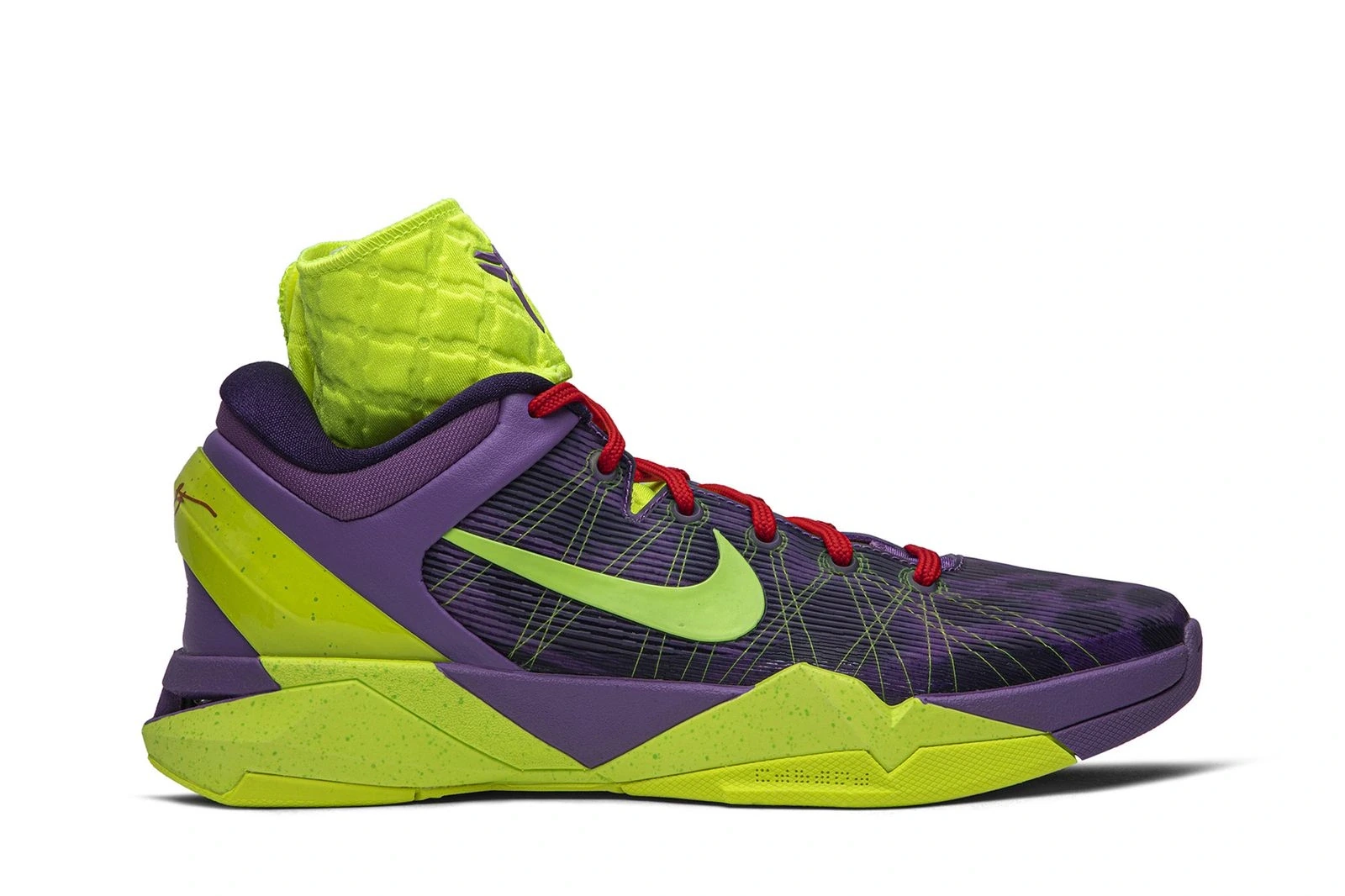
Christmas / Cheetah, 2011: a spotted purple-and-bright-green expression of the predator theme. Contemporary naming also uses Leopard, so the familiar Christmas identifier is useful. Kobe Archive: Kobe VII catalog
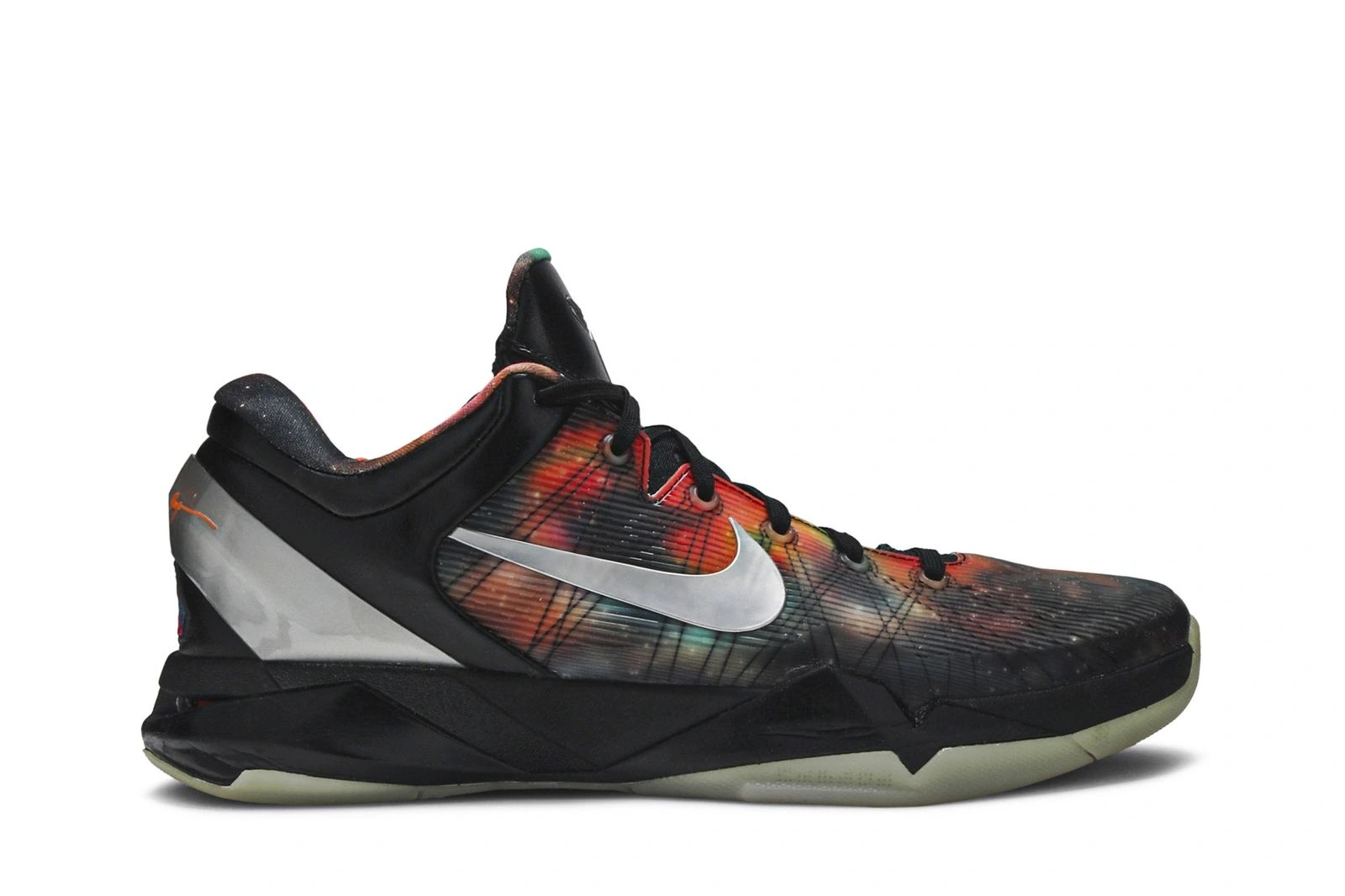
All-Star / Galaxy, 2012: a cosmic print and mission-style imagery placed the VII within the wider space-themed All-Star moment. GOAT: Kobe VII Galaxy
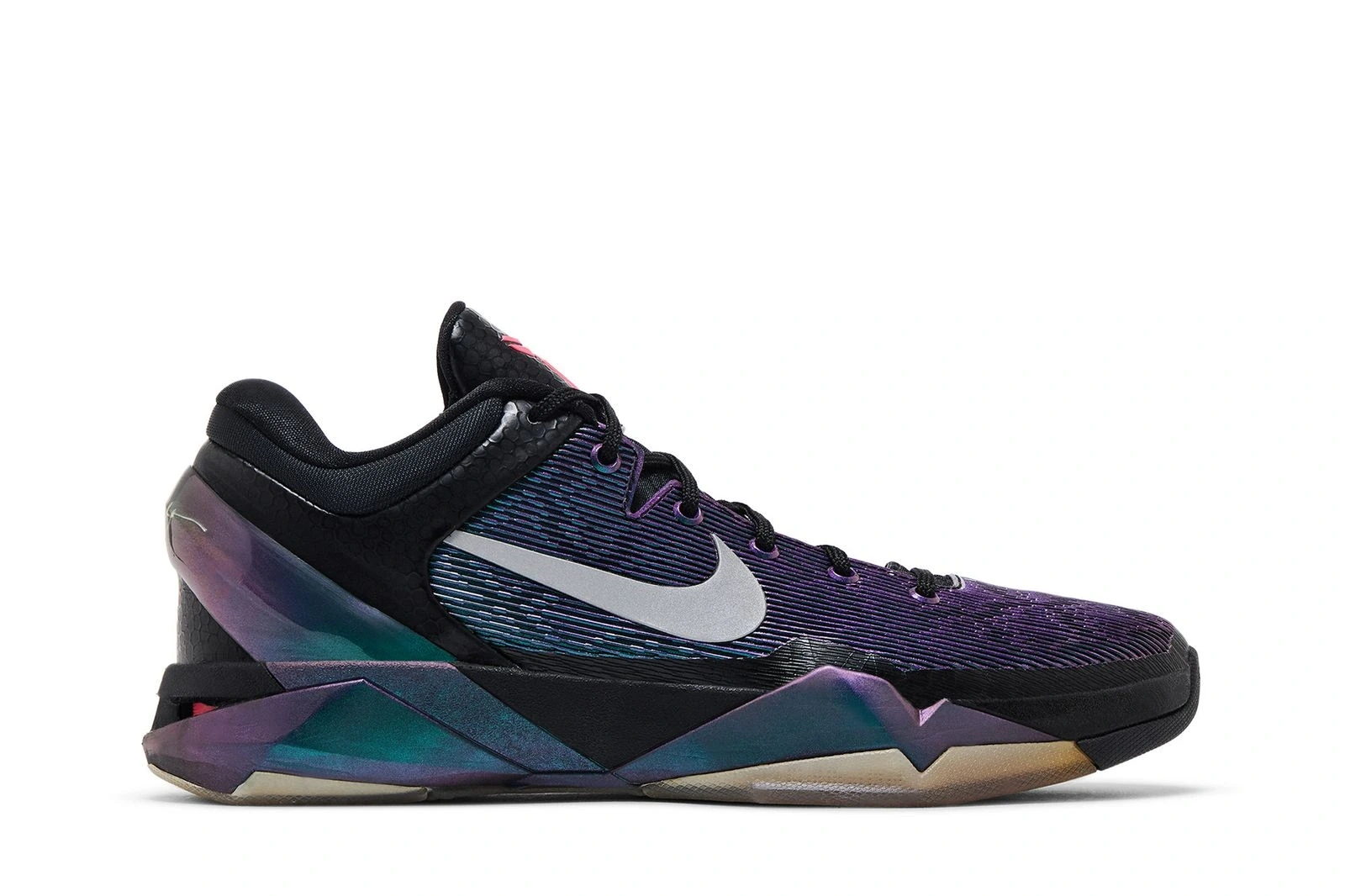
Invisibility Cloak, 2012: an iridescent upper shifts between purple and turquoise. The contemporary release report identifies it as a non-Supreme offering, a reminder that not every color included the same package of inserts. Contemporary Invisibility Cloak release report
The Elite branch follows in 2012
The Kobe VII Elite launched in the 2012 postseason product cycle, with Home and Away editions scheduled for April 28. It joined a broader Nike Basketball Elite collection. Nike Basketball Elite series release update
Elite and System Supreme answer different questions. Supreme describes the modular original offering; Elite identifies a later performance-focused branch. Treating those labels as interchangeable erases the sequence of the product family.
Why the VII complicates the usual story
The VII proves that the Kobe line was never just an uninterrupted march toward fewer parts. At this point, the partnership explored additional choice and a more elaborate relationship between athlete and equipment. That ambition matters even when later models take another direction.
No official VII Protro release was verified at the October 2026 research cutoff. The original System, Elite and later commemorative editions already provide a substantial history without turning rumors into another chapter.
Frequently asked questions
Does Attack Strong include Zoom Air?
Nike’s original release says no. Attack Strong uses Cushlon; Attack Fast includes heel and forefoot Zoom Air.
Did every Kobe 7 include both inserts?
No. Packaging and configuration vary; the Invisibility Cloak launch was described as non-Supreme.
Is Elite the same as Supreme?
No. Elite is the 2012 performance branch; Supreme refers to the original modular offering.
Editorial research checked on October 16, 2026.