The Nike Kobe IX Elite is the great visual interruption in the numbered series. After years of low-cut shoes, the collar suddenly extended far above the ankle. Yet the real story is more interesting than a simple reversal: Bryant and Eric Avar were experimenting with a different way to build a basketball upper.
Nike unveiled the model at Los Angeles’s Museum of Contemporary Art in December 2013. The first global retail release, Masterpiece, followed on February 8, 2014. Nike unveils the Kobe 9 Elite The museum setting suited a shoe whose materials and colors were presented as part of a creative practice.
Flyknit enters Nike Basketball
The IX Elite brought Flyknit to Nike Basketball, combining it with Flywire and Lunarlon. The distinction matters: Nike had already used Flyknit in running. This was a basketball application of the technology, not its invention.
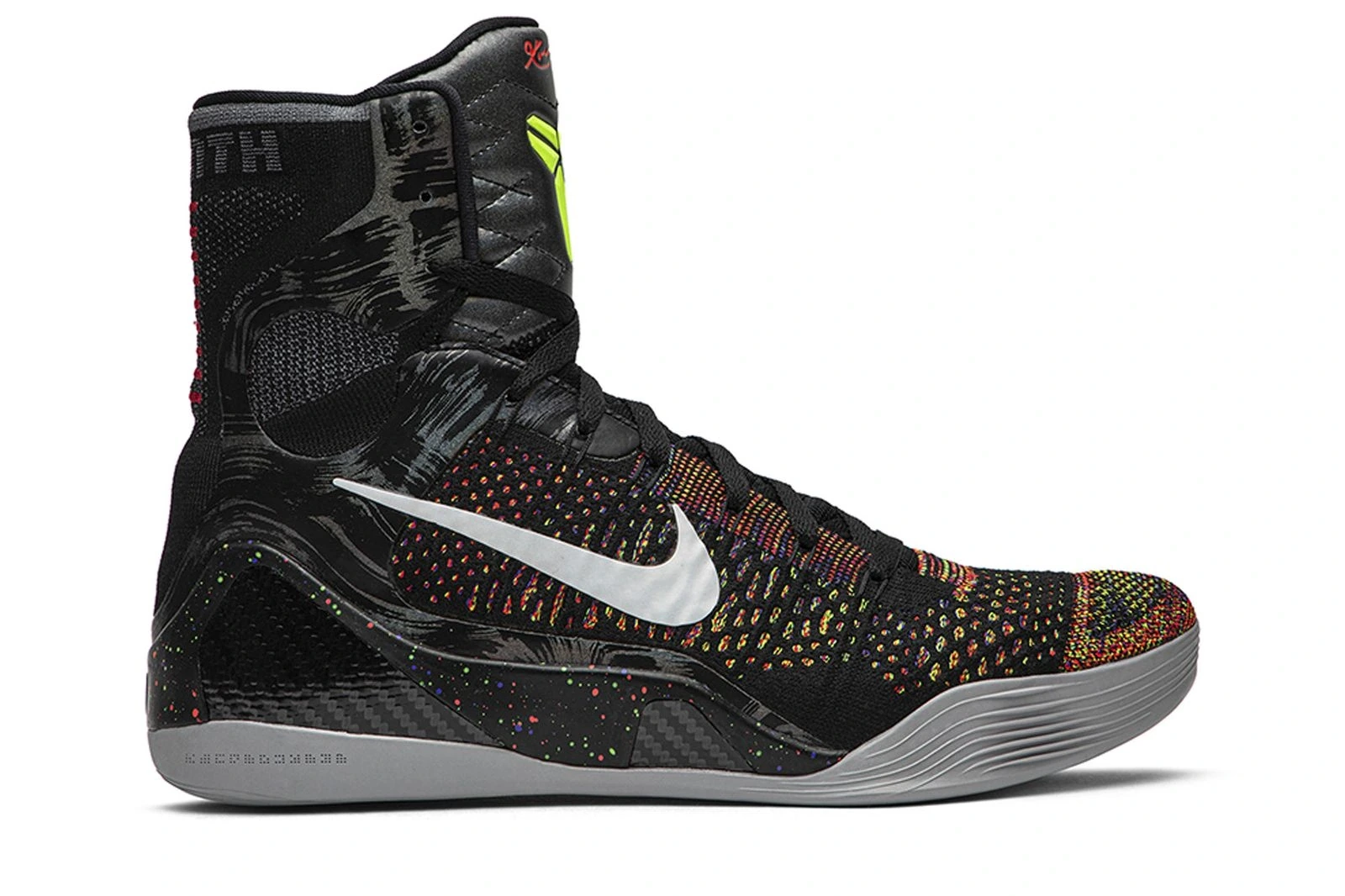
Knitting changed the visual logic of the upper. Color could appear embedded in the fabric rather than printed over a smooth panel. Masterpiece makes that quality particularly apparent: its multicolored surface looks woven into the object’s identity.
The high collar also needs its proper context. Nike traces the idea to boxing and says development lasted more than two years. Nike Kobe Vault: Kobe IX It should not be reduced to an improvised response to Bryant’s Achilles injury. The design process was already underway.
Why the tall shape matters
A high-top usually communicates bulk before anything else. The IX challenged that association by placing a flexible-looking textile above a relatively low platform. Its silhouette is theatrical, but the visual effect comes from height and texture rather than an enormous stack of material underfoot.
That distinction makes the IX a useful companion to the IV. The IV questioned a familiar basketball-shoe height; the IX questioned what a tall shoe had to look like. Read together, they suggest experimentation rather than a rigid commitment to one collar measurement.
Three original-era color stories
Masterpiece, 2014: the multicolored Elite high introduced the model to the public. It makes the knit construction conspicuous and connects directly with the art-centered launch.
All-Star / Maestro, 2014: the original high-top All-Star edition belongs to the same early generation. Its darker multicolored treatment offered another interpretation of the tall knit canvas. Kobe Archive: Kobe IX catalog
Beethoven, 2014: released August 16, this white, black and Wolf Grey Elite Low turned toward a restrained palette. Kobe 9 Elite Low Beethoven release reminder Its importance includes the change of proportions: it demonstrates how differently the IX reads when the knitted upper ends below the ankle.
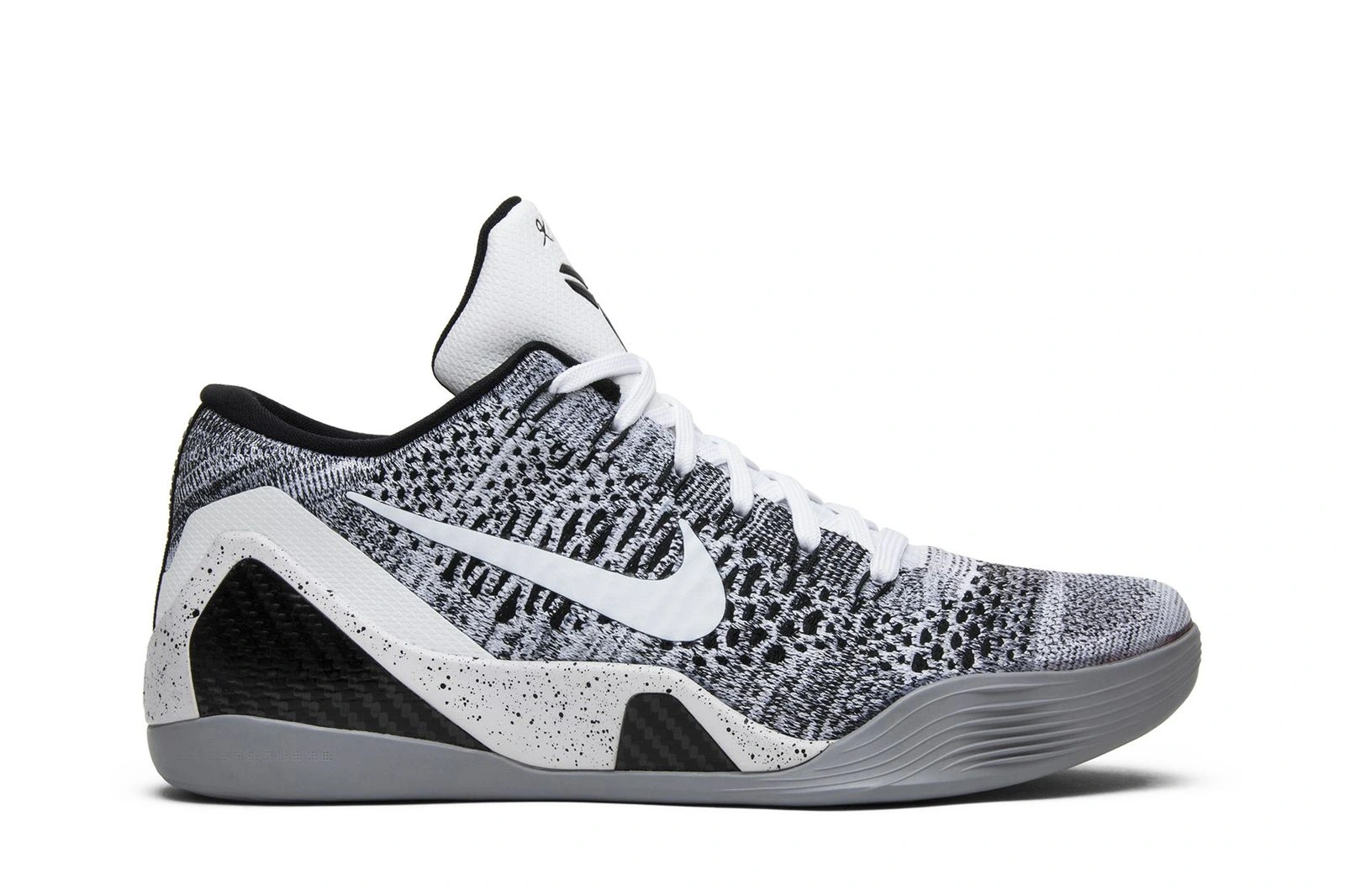
Elite Low, engineered mesh and HTM
The IX family expanded into low-cut Flyknit and engineered-mesh versions. Those constructions deserve their names in a catalog; a photograph of a low collar alone does not establish which material or branch is being shown.
The Kobe 9 Low HTM also appeared during Milan’s 2014 design-week setting. Nike at Salone del Mobile: Kobe 9 Low HTM That connection placed the shoe in a conversation about design culture beyond the basketball calendar. It is a useful reminder that limited design collaborations and wider retail releases can inhabit the same numbered generation. The Nike HTM guide explains the initials behind that collaboration.
The Protro chapter opens in 2024
The IX returned in Protro form in August 2024 with Halo. React replaced the original cushioning approach, and traction was revised. Nike’s product description identifies these updates alongside the Flyknit upper. Nike Kobe IX Elite Protro
A separate Nike launch notice documents the Elite Low Halo’s September 2024 exclusive-access program. Nike Kobe 9 Elite Low Protro Halo launch details The high and low therefore need their own release context rather than one date applied indiscriminately to the entire family.
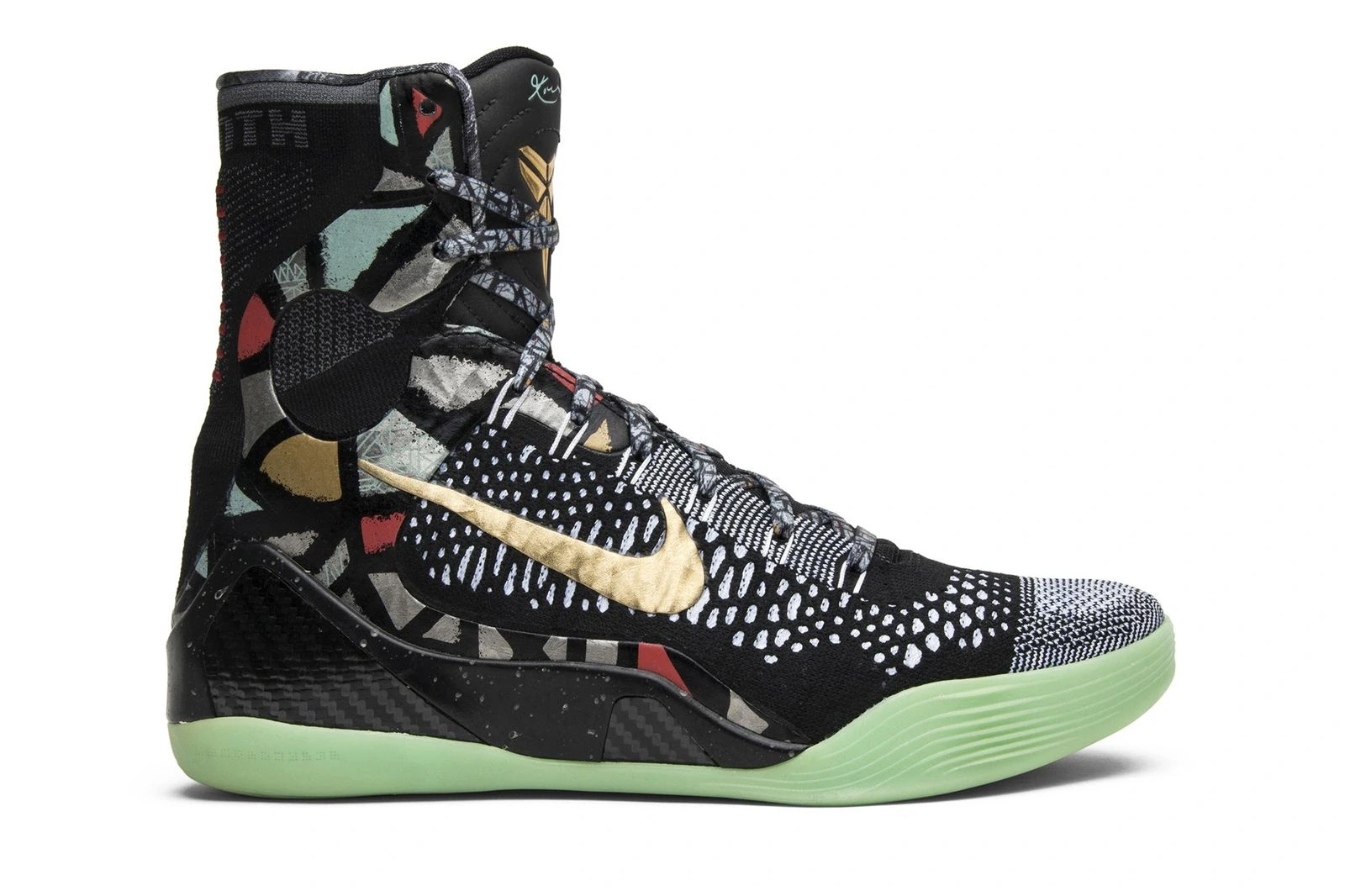
The IX’s lasting contribution is its range. High Elite, knitted low and engineered-mesh low show how one number can contain several distinct silhouettes. That variety is part of the history, not a complication to remove from it.
Frequently asked questions
Was the Kobe 9 the first Flyknit shoe?
No. It was the first Nike Basketball model to use Flyknit; Nike Running had used the technology earlier.
Was every Kobe 9 a high-top?
No. The original generation also included low-cut Flyknit and engineered-mesh versions.
Is Beethoven an original high-top color?
The selected 2014 Beethoven is an Elite Low release, not the original high-cut silhouette.
Editorial research checked on October 16, 2026.