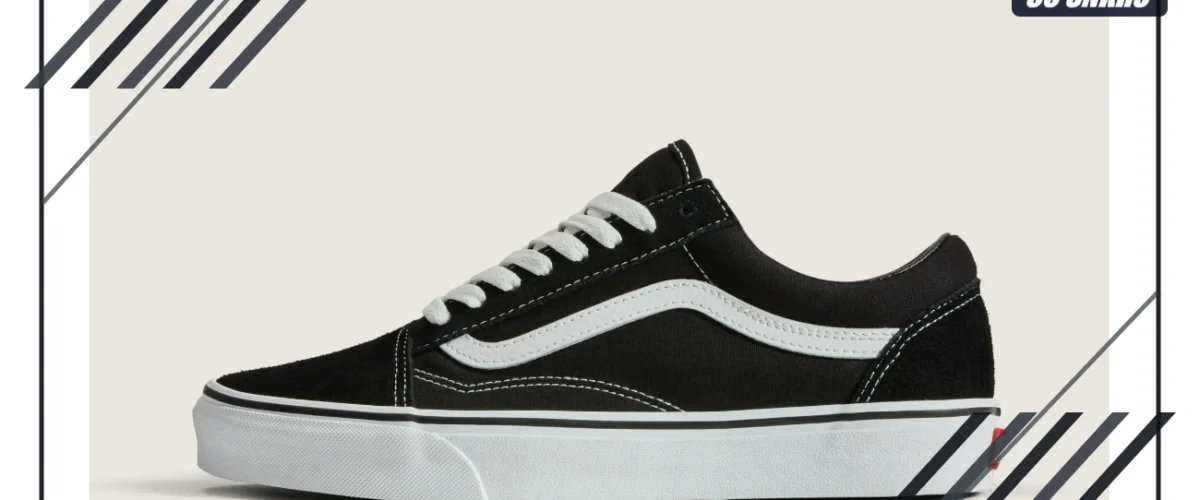
The Vans Old Skool debuted in 1977 as Style 36. It was the first Vans shoe to carry the side stripe that became one of the brand’s defining visual signatures. Yet the stripe is only half the story. The model also belongs to a practical history of skate shoes, reinforced panels, and the abrasive relationship between footwear and grip tape.
Following both threads makes it easier to understand the shoes sold under the Old Skool name today. A recognizable silhouette can contain several distinct constructions. In the wider history of sneaker culture, the model shows how a functional design can acquire meaning beyond the activity that helped shape it.
Where Style 36 fits in the Vans timeline
Vans’ official company history places its opening in 1966, the Style 95 or Era in 1976, Style 36 in 1977, and Style 38 or Sk8-Hi in 1978. That sequence matters: the Old Skool was not the first Vans shoe, and it did not mark the brand’s first contact with skateboarding.
The numbered names were model identifiers. Their later, more familiar names make the catalog easier to discuss, but they can obscure the earlier system. A contemporary shoe using the number 36 is referring to that history; the number alone does not mean every component duplicates a shoe made in 1977.
The neighboring Sk8-Hi also needs its own identity. It shares the stripe and some visual language, but its height and panel arrangement deserve to be read as a separate design. Recognizing a family resemblance is different from collapsing several models into one.
A drawing became the Sidestripe
Vans credits Paul Van Doren’s doodle, originally called the jazz stripe, as the origin of the Sidestripe. Its appearance on Style 36 gave the new shoe a feature that could remain recognizable even when the company name was too small to read.
The placement helps explain its visual effectiveness. A long contrasting shape occupies the side of the shoe, where it remains visible in motion and in a lateral photograph. This is an interpretation of the design’s legibility, not a claim that every part of that reasoning survives in an original design brief.
Once the stripe appeared on more models, it became a brand identifier rather than an exclusive Old Skool identifier. To identify the shoe, look at collar height, panel layout, lacing, and forefoot proportions as well. A logo can establish a connection without identifying the exact product.
Suede reinforcement was part of the proposition
Vans’ Old Skool account explains the reinforced suede toe in relation to grip-tape wear. That detail grounds the history in use. A skate shoe has to interact with an abrasive surface, and a change in the material covering an exposed area can matter independently of branding.
It is useful to distinguish the job of each component. An upper reinforcement does something different from a cushioned footbed or a change in outsole rubber. The sneaker anatomy guide provides that vocabulary and makes seemingly similar product descriptions easier to compare.
Reinforcement is not a promise that a shoe cannot wear through. Technique, the kinds of tricks performed, frequency of use, and the board’s grip tape all affect wear. The historical claim is that the construction addressed a practical issue, not that one material eliminated it under every condition.
Waffle pattern and vulcanized construction are different ideas
The waffle outsole pattern belongs to Vans’ recognizable design language. It describes the contact surface. Vulcanized construction refers to a different aspect of how a shoe is made. Using the terms as if they were synonyms hides distinctions between products.
Vans’ Old Skool product guide describes a low-top lace-up with a multipanel upper. The rubber edge, panel shapes, and Sidestripe combine to create the familiar profile. It is the arrangement that matters, even when one detail gets most of the attention.
A photograph can establish that visual relationship, but it cannot reliably reveal every performance component. Rubber formulations, internal reinforcements, and insoles can change while the external shape stays close. That is why a current specification sheet matters when the question moves from identifying a design to understanding a particular shoe.
Beyond skateboarding, without leaving it behind
Vans connects the Old Skool’s wider adoption with BMX and with punk and hip-hop scenes. The important point is the expansion of an audience. Everyday use and music-related styling added meanings to a shoe that already had a relationship with skating.
It is tempting to tell this as a simple handoff from sport to fashion. The reality is better understood as overlap: casual wear did not require skaters to stop using the model, and a musician’s adoption did not give the silhouette one exclusive identity.
That perspective also makes comparisons with later skate-footwear projects more useful. The Nike SB story concerns a different period and a different approach to the skate community. Reading the two histories side by side reveals distinct routes into the same broad activity rather than a competition to declare one brand the owner of skate culture.
Three names that should not be treated as interchangeable
Old Skool is the familiar family name, but the complete product name can signal a different brief. The key question is what the exact edition contains. This is especially important for someone planning to skate in a pair rather than simply wear its silhouette casually.
Skate Old Skool
The official Skate Old Skool specification consulted lists DURACAP reinforcement, a POPCUSH footbed, SickStick rubber, and internal upper changes. These belong to a modern performance-oriented version. They should not be projected backward onto the 1977 Style 36 or assumed to exist in every basic Old Skool.
Small retail images can make the versions look nearly identical. Read the full name and product code rather than relying on the casual use of the word skate in a description. A shoe with skate heritage and a shoe belonging to the Skate Classics line are not necessarily the same listing.
Premium Old Skool 36
Vans’ Premium Old Skool 36 page highlights archive-related proportions, including a shorter toe cap, alongside modern comfort changes. Here, 36 describes a contemporary interpretation of an earlier design identity. It does not identify decades-old inventory.
The word premium is not a complete historical specification either. Materials and finishes can vary by release. A collector interested in a particular period needs to compare shape and detail, while someone choosing a daily shoe may care more about fit and construction. Those priorities can lead to different choices without either being mistaken.
1995 and 1996: Warped Tour and Supreme
The Vans timeline records its first Warped Tour sponsorship in 1995 and the start of its Supreme partnership, using Old Skools, in 1996. They were different kinds of connection: a music platform for the brand and a collaboration applied directly to this shoe.
The Old Skool supplied an already legible foundation for another company’s identity. A collaboration did not have to invent a new silhouette to be recognizable. The episode places the shoe within skate and streetwear collaboration history long before daily social-media launch cycles became the norm.
The Premium Music Collection revisits that cultural archive
Vans’ Premium Old Skool Music Collection revisited 1970s and 1980s punk and hardcore through leopard patterns and solid colors. Its Japanese campaign presentation paired those references with Los Angeles band The Paranoyds.
This is a concrete distinction between cultural adoption and a later tribute. Musicians can choose an existing shoe; decades later, a brand can translate memories of a scene into a themed collection. That collection documents Vans’ reading of its legacy without proving that every new print existed in the 1970s.
What makes the Old Skool historically important
The model combines a readable functional story with a durable graphic identity. Reinforcement relates to wear, the Sidestripe makes the shoe recognizable, and later interpretations keep the family active. Reducing the history to a logo misses the construction; reducing it to a technical feature misses the way people adopted it.
Style 36 in 1977 is the starting point. It is not a complete specification for every Old Skool that followed. Keeping that distinction in view allows the shoe to be understood as a continuing design family, with both a skateboarding past and a changing present.
Sources and further reading
Vans: Off the Wall since 1966.
Vans: Old Skool history and collection.
Vans: Old Skool product guide.
Vans: Skate Old Skool specifications.
Vans: Premium Old Skool 36 specifications.
Vans Argentina: official history.
Vans Japan: Premium Old Skool Music Collection.
Frequently asked questions
When was the Vans Old Skool released, and what was its original name?
The Vans Old Skool debuted in 1977 as Style 36. It was the first Vans shoe to carry the side stripe that became one of the brand’s defining visual signatures. Yet the stripe is only half the story. The model also belongs to a practical history of skate shoes, reinforced panels, and the abrasive relationship between footwear and grip tape.
Who created the Vans Sidestripe?
Vans credits Paul Van Doren’s doodle, originally called the jazz stripe, as the origin of the Sidestripe. Its appearance on Style 36 gave the new shoe a feature that could remain recognizable even when the company name was too small to read.
Why does the Old Skool have a reinforced suede toe?
Vans’ Old Skool account explains the reinforced suede toe in relation to grip-tape wear. That detail grounds the history in use. A skate shoe has to interact with an abrasive surface, and a change in the material covering an exposed area can matter independently of branding. Reinforcement is not a promise that a shoe cannot wear through. Technique, the kinds of tricks performed, frequency of use, and the board’s grip tape all affect wear. The historical claim is that the construction addressed a practical issue, not that one material eliminated it under every condition.
How is the Skate Old Skool different from the regular Old Skool?
The official Skate Old Skool specification consulted lists DURACAP reinforcement, a POPCUSH footbed, SickStick rubber, and internal upper changes. These belong to a modern performance-oriented version. They should not be projected backward onto the 1977 Style 36 or assumed to exist in every basic Old Skool. Small retail images can make the versions look nearly identical. Read the full name and product code rather than relying on the casual use of the word skate in a description. A shoe with skate heritage and a shoe belonging to the Skate Classics line are not necessarily the same listing.
When did Vans first collaborate with Supreme on the Old Skool?
The Vans timeline records its first Warped Tour sponsorship in 1995 and the start of its Supreme partnership, using Old Skools, in 1996. They were different kinds of connection: a music platform for the brand and a collaboration applied directly to this shoe.