
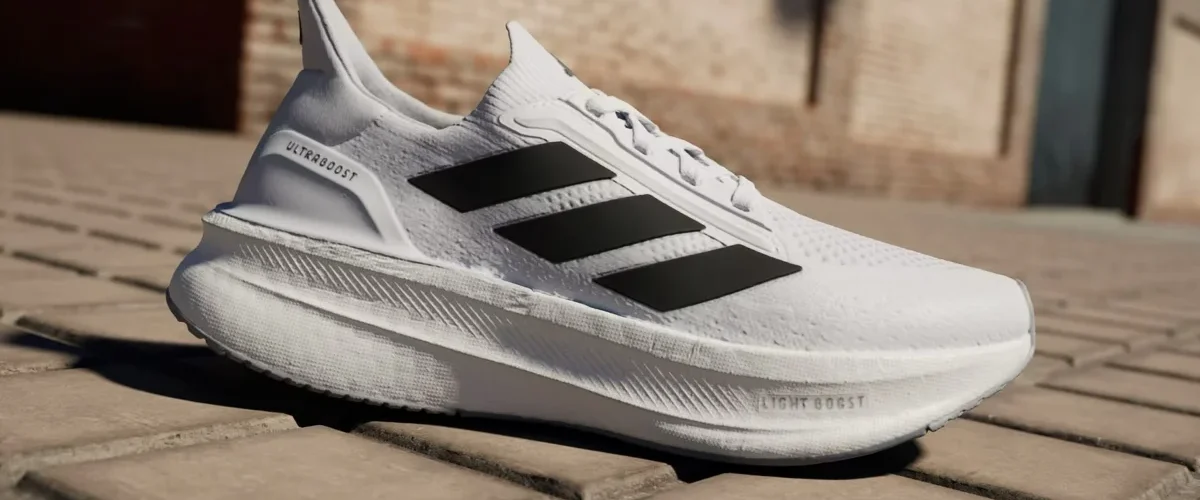
If you spend many hours on your feet, you probably want a shoe that feels cushioned, stable, and comfortable. There is no single “best” model for everyone, though. Foot width, how much you walk, the floor surface, time spent standing still, and a preference for softer or firmer foam all make a big difference to comfort.
The five models below were designed for running. If you plan to wear them at work, try both walking and standing still: a foam that feels pleasant in motion may not provide the firmness you prefer during a shift.
This comparison covers five adidas shoes with different constructions, without promising pain relief or injury prevention. Specifications apply to the versions identified; colors and sizes may be sold out, and a catalog page does not guarantee stock.
Important: if your job requires safety footwear, use the equipment appropriate to the hazards and specified by your employer. A sports shoe does not replace personal protective equipment simply because it has grippy rubber or plenty of cushioning.
Quick answer: which adidas shoes should you consider for long hours on your feet?
- Ultraboost 5X: for people who like the feel of Light BOOST and want a model that also works well for casual wear.
- Supernova Prima 2: for those who prefer a tall, well-cushioned platform with Continental Rubber.
- Supernova Rise 2: a balanced option in terms of cushioning, weight, and structure.
- Response Super: an alternative Dreamstrike+ construction to compare with the Ultraboost and Supernova lines.
- Adizero SL2: for those who prefer a lighter shoe among the versions compared.
“Softer” does not automatically mean “better.” Some people prefer firmer foam because they feel more comfortable on a less compressible base.
How did we choose these five models?
Drop is the height difference between the heel and forefoot. Weight and midsole height help compare construction, but none of those numbers measures all-day standing comfort on its own.
The selection compares design features that can help guide a try-on:
- amount and type of cushioning;
- weight, with the reference size stated;
- drop;
- outsole type;
- fit information provided by adidas;
- availability of the model and size when you buy;
- potential for casual use beyond running.
The technical specifications come from adidas; we did not measure full-shift comfort in a comparative test of these five models.
1. adidas Ultraboost 5X

The Ultraboost 5X is the most straightforward option for someone who likes the Boost family and wants a shoe that moves easily between running and casual use.
Its midsole uses Light BOOST, which adidas describes as a lighter generation of Boost technology. That refers to the material; the complete shoe’s weight also includes its upper, outsole, and structure.
For the men’s Ultraboost 5X JQ2925, adidas lists 275 g, about 9.7 oz, in its Brazilian reference size BR 40. Weight varies with size and version.
- Midsole: Light BOOST
- Structure: Torsion System
- Outsole: Continental Rubber
- Listed fit: regular fit; usual size recommended on the pages consulted
SKU JQ2925’s upper is described as textile and other materials. Do not use the specifications of a different Ultraboost generation to determine this pair’s materials.
To understand the differences between traditional Boost and Light BOOST, see our adidas Boost technology guide.
Who might like the Ultraboost 5X?
Someone who prefers a relatively soft midsole, wants Continental Rubber, and plans to wear the same pair at work and casually. Compare the current price in your size with the other options; fit and your preferred underfoot feel matter most.
2. adidas Supernova Prima 2
The Supernova Prima 2 has a tall platform and a substantial amount of midsole material underfoot. That volume may appeal to people who prefer more separation from the ground, but it is worth trying while standing still as well as walking.
The men’s Supernova Prima 2 JR3195 uses Dreamstrike+ and measures 39 mm at the heel and 31 mm at the forefoot, according to adidas’ specifications.
- Midsole: Dreamstrike+
- Weight: approximately 283 g, or 10.0 oz, in men’s BR 40, the Brazilian reference size
- Drop: 8 mm
- Stack height: 39 mm heel / 31 mm forefoot
- Outsole: Lighttraxion with Continental Rubber
- Listed fit: regular fit; usual size recommended
adidas describes the Prima 2 as a daily running shoe offering “comfort and support.” Here, support refers to shoe construction, rather than orthopedic treatment or postural correction.
Who might like the Prima 2?
Someone who likes a tall, more cushioned platform and does not mind a slightly bulkier shoe. It may be worth considering for routines with plenty of walking, but try it first if you prefer a closer-to-the-ground feel.
3. adidas Supernova Rise 2

The men’s Supernova Rise 2 IH8708 has a lower midsole stack than the Prima 2 and a weight similar to the Ultraboost 5X at the stated reference sizes.
The Rise 2 also uses Dreamstrike+. Its Support Rods are denser foam rods that, according to adidas, help guide the transition through a stride.
- Midsole: Dreamstrike+
- System: Support Rods
- Weight: approximately 275 g, or 9.7 oz, in men’s BR 40, the Brazilian reference size
- Drop: 10 mm
- Stack height: 36 mm heel / 26 mm forefoot
- Outsole: Adiwear
- Listed fit: regular fit; usual size recommended
adidas also states that the Rise 2 received recognition from the American Podiatric Medical Association. That should not be interpreted as a medical prescription or a guarantee that the shoe will prevent pain or injuries.
Who might like the Rise 2?
Someone looking for a middle-ground option: less bulky than the Prima 2, but still designed around cushioning for daily running. It may also appeal to those who do not specifically want the Ultraboost’s Continental outsole.
4. adidas Response Super
The Response Super combines Dreamstrike+ and an OrthoLite insole in a different construction from the Ultraboost and Supernova options in this selection.
The specifications for the men’s Response Super JQ2523 list:
- Midsole: Dreamstrike+
- Insole: OrthoLite
- Upper: mesh or monomesh, depending on the version
- Weight: approximately 320 g, or 11.3 oz, in men’s BR 40, the Brazilian reference size
- Outsole: rubber sections across the base
- Listed fit: regular fit
The JQ2523 specifications do not list a drop. Check the exact product code when comparing measurements, since different versions of the Response family are not interchangeable.
Who might like the Response Super?
Someone who wants to compare another application of Dreamstrike+ with an OrthoLite insole. At 320 g in the reference size, it weighs more than the other four models listed. Try them on to see whether that difference bothers you, then compare the current price in your size.
5. adidas Adizero SL2

The Adizero SL2 differs from the other four options because it prioritizes low weight and speed for running.
The men’s Adizero SL2 IF1157 combines Lightstrike and Lightstrike Pro. Seeing Lightstrike Pro in the description does not mean the entire midsole uses that foam.
- Midsole: Lightstrike + Lightstrike Pro
- Weight: approximately 232 g, or 8.2 oz, in men’s BR 40, the Brazilian reference size
- Drop: 10 mm in the men’s version consulted
- Stack height: 36 mm heel / 26 mm forefoot
- Outsole: rubber
- Listed fit: regular fit in the Brazilian catalog consulted
Do not automatically apply a men’s version’s weight, stack height, or drop to a women’s version; compare the exact SKU and reference size.
Who might like the Adizero SL2?
Someone who prefers a lighter shoe. That difference in feel is why it appears here, rather than any claim that fast running shoes are better for standing at work.
What if you already own a SolarGlide 6?

The SolarGlide 6 was a worthwhile option in its generation, combining Boost with a construction intended for daily running.
As an older generation, its availability depends on remaining inventory. The pair’s age, condition, and fit matter more than finding a box labeled new.
If your SolarGlide 6 remains structurally sound and comfortable, you do not need to replace it simply because newer generations exist.
What about the adidas Ultra 4D?

The Ultra 4D has a different construction and feel from the five models above. If you find an older pair still in stock, try the midsole structure before buying for its looks alone.
Its midsole belongs to the adidas 4D family, developed in partnership with Carbon. Instead of conventional foam, it uses a lattice made through additive manufacturing.
The 4D midsole lattice is not printed Boost foam. It is a different technology with its own geometry and materials. Our Ultraboost vs. 4D comparison explores those differences in construction and use.
Softness and stability: try both
The Ultraboost 5X uses Light BOOST; the Prima 2, Rise 2, and Response Super use Dreamstrike+; the SL2 combines Lightstrike and Lightstrike Pro. These names cannot rank comfort for everyone. Midsole height, base width, and heel hold also change how a shoe feels when you are standing still.
Does Continental Rubber make a difference?
Continental Rubber appears on models such as the Ultraboost 5X and Supernova Prima 2.
The Rise 2 uses Adiwear, while the Adizero SL2 and Response Super use other rubber constructions.
That matters for wear and traction on particular surfaces, but Continental branding does not automatically make a sneaker certified slip-resistant occupational footwear.
Are these shoes suitable for kitchens, hospitals, factories, or workshops?
That depends on your workplace’s requirements.
If the role requires PPE or compliant safety footwear, do not replace the specified equipment with an Ultraboost or Supernova just because the sole offers good traction.
In the United States, OSHA’s foot-protection rule requires protective footwear for specified workplace hazards. Follow your employer’s requirements and check that the footwear meets the applicable protection criteria. Also follow the manufacturer’s storage and service-life guidance; meeting a standard does not give a shoe an unlimited useful life.
This can matter in workplaces involving impact, puncture, electrical, chemical, or other occupational hazards.
Can comfortable shoes prevent foot or back pain?
That is not a promise a shoe guide should make.
A shoe can feel comfortable to one person and unpleasant to another. Persistent pain may involve factors well beyond footwear.
If you experience recurring or intense pain at work, choosing a running sneaker should not replace professional assessment when it is needed.
Footwear is only one part of workplace comfort
Standing motionless for hours cannot be addressed simply by changing sneakers. When your work allows, alternate between sitting, standing, and walking, take scheduled breaks, and report recurring discomfort to the people responsible for workplace safety. CCOHS recommends considering the workstation, floor, changes of position, and individual footwear fit as well.
How to choose your size and width
The Brazilian product pages consulted describe all five main models as regular fit.
That does not mean they have identical forefoot space, volume, or heel hold.
- Measure both feet at the end of the day.
- Wear the socks you normally use during a shift.
- Do not automatically go up half a size because someone did so in a different adidas model.
- If you have wide feet, prioritize a try-on or versions offering an appropriate width.
- Check the return policy before wearing the shoes outdoors.
Authenticity, warranty, and returns
Buying through a trustworthy channel gives you more clarity about:
- the model you are actually receiving;
- materials and construction;
- SKU;
- size;
- warranty and returns;
- authenticity and source.
A replica may not reproduce the materials, fit, or construction of the advertised model. A reliable source lets you compare the correct product and understand its warranty and return terms.
For more comparisons and buying recommendations, visit the 90sneakers Buying Guide. If your main goal is matching a dress code, our selection of casual office sneakers addresses a different need from spending a full shift on your feet.


