In sneaker culture, a drop is a product release—the moment or release window when a sneaker becomes available to buy.
A drop can be a huge limited collaboration, a scheduled general release, a retailer launch, a regional release, a raffle-based release, or a surprise availability event.
The word does not automatically mean “limited,” “sold out,” or “resale profit.” It describes the release event; the supply, launch method, and market reaction are separate questions.
What Is a Sneaker Drop?
A sneaker drop is a release or launch.
When people say “the shoe drops Friday,” they mean the sneaker is scheduled to become available on Friday.
The term is used across sneakers, streetwear, fashion, music, gaming, and other product cultures. That broader use is why U.S. readers will also see “drop” applied to apparel capsules, collectibles, and digital products.
A drop can happen through many different sales mechanisms.
- standard online or in-store release;
- raffle or draw;
- reservation or pickup system.
Do “Drop” and “Release” Mean the Same Thing?
They often overlap in everyday sneaker language.
Release is the broader neutral term for a product becoming available, while drop is the more culture-driven way of talking about the launch.
A brand can publish a release date, and sneakerheads can call that same event a drop.
The words are close enough to be interchangeable in many sentences, but “drop” can carry more emphasis on timing and availability.
Is Every Sneaker Drop Limited?
No. General-release sneakers drop too. A launch does not become a drop only after demand exceeds supply; it is still a drop when stock remains available.
A product can have a drop date even when supply is broad and inventory remains available for weeks.
“Drop” describes the launch, not the production quantity.
Is a Drop the Same as a Raffle?
No. A drop is the release event; a raffle is one possible way to allocate the right to buy.
Some drops are first-come-first-served, some use draws, some use reservations, and some simply become available in normal retail inventory.
The sales mechanism should be identified separately.
- Drop: the release event.
- Raffle: entries compete for purchase access.
- First come, first served: access is based on availability and timing.
- Reservation: selected inventory can be held for pickup.
Are Raffle and Draw the Same Thing?
They are closely related because both allocate purchase access among entrants rather than simply selling to whoever checks out first.
On Nike SNKRS, Draw has a specific platform meaning: eligible members enter during a limited window, choose a size, and are notified after selection.
What Is a Shock Drop?
A shock drop is a release that becomes available unexpectedly or with very little advance notice.
The surprise is the defining feature, not a specific production quantity. A shock drop can involve a highly limited product or a larger release used to create excitement.
A shock drop can create intense demand because buyers have less time to prepare.
It should not be confused with QS/Quickstrike, which is a product/release designation rather than a guarantee of surprise timing.
- short or no public lead time;
- unexpected availability through a brand or retailer.
What Is the Difference Between a Drop and a Restock?
A drop is the release or launch of the product. It describes the availability event itself rather than a later return of inventory.
A restock happens after prior availability when inventory becomes available again.
The new inventory can come from replenishment, cancellations, returns, later allocations, or another release wave.
See what a sneaker restock means for the full distinction.
- Drop: launch/release.
- Restock: inventory returns after prior availability.
- Re-release/retro: can be a later new production event rather than a simple restock.
What Does “Drop” Mean on Nike SNKRS?
On SNKRS, a drop can refer broadly to a product launch appearing through the platform.
Not every SNKRS launch uses the same purchase mechanism. The product page and current launch instructions should be treated as the source of truth for that specific release.
Some products can use a Draw, while others may use different launch flows, reservations, or availability rules.
Nike’s current Draw guidance says entries are open for a limited time and members are charged only if selected.
- check the Upcoming feed;
- enable notifications;
- confirm your Nike Member account;
- select the correct size before submitting;
- read the rules for that specific launch.
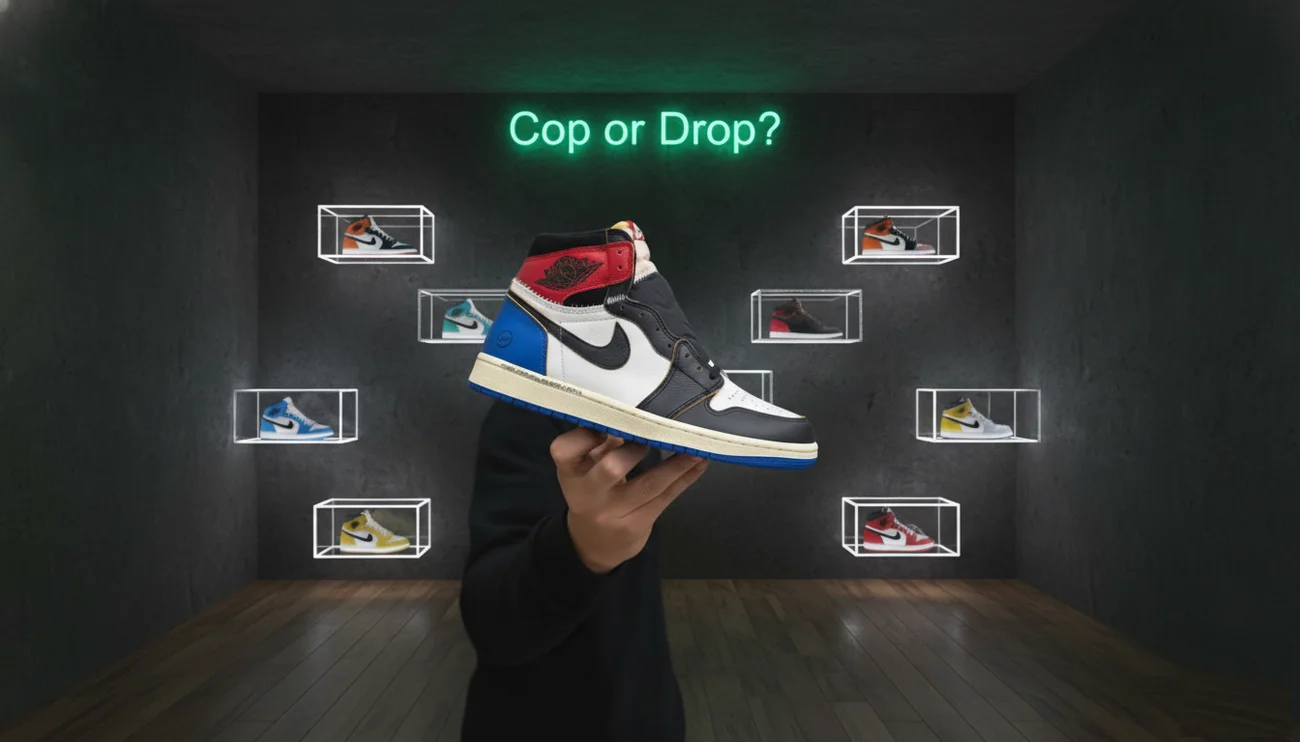
Why Does “Drop” Mean Something Different in Cop or Drop?
Because slang reuses words.
In Cop or Drop, drop means “pass” or “skip the purchase.”
In the shoe drops Friday, drop means “releases Friday.”
The two meanings are easy to separate from grammar.
“When is the drop?” asks about release timing.
“Cop or Drop?” asks for an opinion.
The phrase existed alongside broader streetwear and product-release language, so there is no contradiction.
One word can carry multiple meanings inside the same culture.
See what Cop or Drop means for the opinion side.
Context does almost all of the work.
Does “Drop” Mean the Person Took an L?
No.
A drop is the release event.
An L means someone tried to get the product and did not succeed.
A person can ignore a drop completely and therefore take neither a W nor an L.
If they enter and fail, that outcome can be described as an L.
- Drop: the launch.
- W: successful attempt.
- L: unsuccessful attempt.
- Pass: no attempt at all.
Does Every Drop Sell Out?
No. Some drops sell out immediately, some sell through slowly, and some remain available or reach discounts. A sellout is an outcome, not part of the definition.
Sellout speed depends on supply, demand, price, model, sizes, marketing, distribution, and timing.
Does a Limited Drop Always Increase in Resale Value?
No. Limited supply can support scarcity, but it does not guarantee demand.
Resale value can rise, stay near retail, or fall below retail after launch.
Restocks, later retros, changing trends, fees, and size-specific demand can all change the market.
Never treat “limited drop” as a guaranteed investment thesis.
- production and available supply;
- size demand;
- retail price;
- resale fees;
- restocks;
- future retros;
- market sentiment.
How Does a Sneaker Drop Work in Practice?
The exact flow depends on the brand and retailer, but most launches follow a recognizable sequence.
A buyer usually moves through some version of the following:
- announcement or product discovery;
- release date/time;
- account and payment preparation;
- entry, queue, reservation, or checkout;
- result and order confirmation.
How Should You Prepare for a Sneaker Drop?
Preparation reduces avoidable mistakes even though it cannot guarantee a W. It mainly prevents errors such as wrong sizing, expired payment information, or missing the actual release window.
Focus on legitimate account and payment readiness rather than bots or prohibited automation.
- confirm the exact release date and time;
- check the official product page;
- sign in before launch;
- verify shipping and payment details;
- know your size;
- enable official notifications;
- read raffle or Draw rules;
- avoid duplicate or automated entries that violate platform policy.
Does Every Drop Need Hype?
No. Hype describes attention and demand; drop describes the release event. Many technically important or excellent everyday sneakers launch quietly without becoming social-media events.
A quiet running shoe launch and a heavily promoted Jordan collaboration can both be drops.
What Types of Sneaker Drops Can You See?
Scheduled Drop
The release date and usually the time are announced in advance, giving buyers a defined launch window.
Shock Drop
The product appears unexpectedly or with very little public notice, making speed and alerts more important.
Regional Drop
A product may release in one country, city, or region before—or instead of—another market.
Retailer Drop
A boutique or authorized retailer can receive its own allocation and launch rules separate from the brand’s direct channel.
Raffle or Draw Drop
The release uses entries rather than pure first-come-first-served checkout.
Nike SNKRS Draws, for example, use limited entry windows and selection after entries close.
Sneaker Drop FAQ
What Does Drop Mean in Sneakers?
A drop is a sneaker release or launch—the event or window when the product becomes available to buy.
Does Drop Mean a Limited Release?
No. Both limited and broadly distributed sneakers can have drop dates.
Is a Drop the Same as a Raffle?
No. A raffle is one possible allocation method used within a drop.
Are Drop and Restock the Same?
No. A drop is the launch; a restock is inventory returning after prior availability.
What Is a Shock Drop?
A surprise release with little or no advance public notice.
Is Every SNKRS Drop a Draw?
No. SNKRS can use different launch mechanisms; Draw is one specific format.
Why Does Drop Mean “Pass” in Cop or Drop?
Because the phrase uses a separate slang meaning of drop: leave it or skip it. Context distinguishes it from a release.
Does Every Drop Sell Out?
No. Some remain available or later go on sale.
Does a Limited Drop Always Go Up in Value?
No. Resale performance depends on real supply and demand, not the word limited.
Conclusion
A sneaker drop is simply the release event, but the way that release happens can vary dramatically. Understanding the mechanism helps buyers know whether they need speed, a raffle entry, a reservation, or simply patience.
Separate the launch from the mechanism: drop, raffle, Draw, shock drop, restock, W, and L all answer different questions.
For more release language, continue with the Sneakerhead Dictionary.