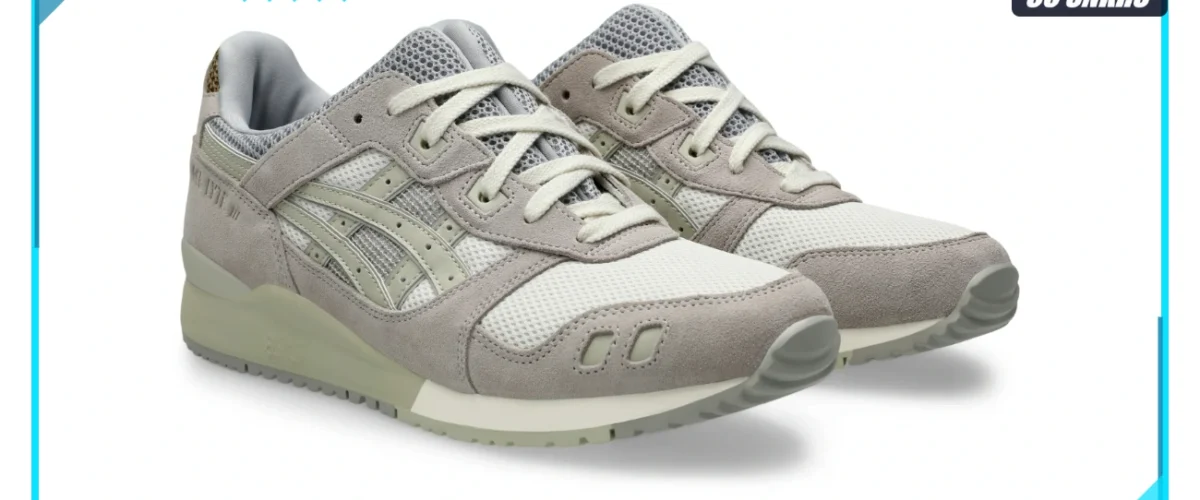
The ASICS GEL-LYTE III is recognizable before you read the name on its heel. Instead of a conventional central tongue, two padded sections meet over the top of the foot. That split-tongue arrangement became the signature of a running shoe introduced in 1990 and designed by Shigeyuki Mitsui. Its unusual appearance grew from a specific concern about fit.
The division is only the beginning of the story. The GEL-LYTE III combines an articulated upper, a carefully considered sole and a capacity for expressive color that later collaborators would explore extensively. Looking at those relationships helps recover the running-shoe project beneath its collectible identity. Our sneaker anatomy guide provides a reference for the individual components discussed here.
The problem the split tongue was intended to solve
In his Sneaker Freaker interview, Mitsui explained that a conventional tongue can move sideways as the foot moves. The divided arrangement was intended to maintain a more consistent fit while running. He also identified easier entry as a secondary aim. These are the designer’s explanations of the original brief, rather than conclusions from a present-day wear test.
The arrangement changes how the pieces meet. Instead of one central strip attached at the bottom and covered by laces, two sections approach from the sides. The opening down the center changes access to the interior and the surface beneath the lacing. From above, a component that often receives little attention becomes the shoe’s most distinctive feature.
Design intention should still be separated from an individual wearer’s experience. Instep height, foot width, socks and lace tension all influence the result. A split tongue does not guarantee a pressure-free fit for every foot. Nor should the intention of easier entry be read as advice to force the shoe on while crushing its heel structure. The practical question is how a specific pair fits you.
An important predecessor: the GEL-LD RACER
ASICS’ official GEL-LYTE III OG description confirms the 1990 date and Mitsui’s authorship while identifying a frequently overlooked predecessor. The tongue application was inspired by the GEL-LD RACER. It is therefore more accurate to say that the GEL-LYTE III made the solution central to its identity than to credit it with inventing the first split tongue outright.
That distinction does not diminish the design work. Moving an existing idea into a different product can require changes to proportions, padding, patterns and the relationship between neighboring pieces. One isolated feature cannot explain a complete shoe. The lasting association between the GEL-LYTE III and its tongue comes from integration, recognition and the repeated preservation of that relationship in later editions.
It also helps separate authorship of a silhouette from invention of every technology inside it. Mitsui is the designer associated with this model. That does not make its cushioning materials and manufacturing processes individual inventions of his. Athletic footwear is developed through research, testing, engineering and production as well as the visible work of design.
GEL and the triple-density midsole
The model name emphasizes GEL, but that word does not describe the entire platform. In his GREATEST interview, Mitsui discussed internal GEL beneath the heel area and its relationship to a triple-density midsole. The three densities concern the construction underfoot. They do not refer to the divided tongue or to a count of visible windows on the upper.
The two small windows at the lateral forefoot are reflective elements. Mitsui explained that splitting the detail into two slanted shapes helped preserve the design’s flow during assembly. They are not two visible GEL capsules: upper detailing and cushioning use different solutions. The explanation shows how a small manufacturing decision can influence a component’s appearance.
Visually, the sole gives the shoe another layer of complexity. Changes of color and volume make the platform readable as connected sections rather than a neutral strip beneath the upper. That is a formal observation. Identifying the precise formulation or density of every material in a particular release would require specifications for that edition, not simply an interpretation of a photograph.
How the upper organizes a complex silhouette
The GEL-LYTE III depends on relationships between front, side and rear views. The toe area offers a comparatively broad field. Along the side, the ASICS stripes occupy a substantial part of the composition. Overlays lead toward the heel, while the divided tongue disrupts familiar expectations when the shoe is viewed from above.
Seams establish boundaries that can receive different colors without making the overall structure disappear. A designer can isolate the toe, darken the stripes or emphasize the rear section. Those boundaries help explain why the same silhouette accommodates very different visual treatments. Changing the character of an edition does not necessarily require changing its entire pattern.
Mitsui’s interviews discuss details ranging from the heel’s appearance to small reflective elements. For someone studying the object, the broader lesson is to look beyond the standard side photograph used by stores. A sneaker is three-dimensional. Front, overhead and three-quarter views reveal connections and interruptions that a profile image conceals.
Color was part of the original design thinking
In his conversation with END., Mitsui connected his approach to color with a desire to challenge expectations about the appearance of running footwear. The structure needed to allow different combinations. That helps explain why the GEL-LYTE III became so adaptable: its material layout already provided separate regions for color to work across.
The original Citrus treatment is a concrete example. In the Sneaker Freaker interview, Mitsui recalled developing his own swatches to reach the desired yellow with a touch of green. The name identifies a particular color decision associated with the model’s beginnings. Visually, that acidic note contrasts with neutral areas and makes small details more noticeable.
The original concept should still be separated from stories attached to later releases. A collaboration might refer to a city, retailer or cultural reference that had no place in the 1990 brief. That narrative belongs to the specific edition. Reading it backward into the initial development confuses the history of the silhouette with the history of its subsequent interpretations.
From running shoe to collaborative platform
A recognizable shape with multiple distinct sections gives collaborators considerable room to work. They can adjust the relationship between materials, emphasize particular construction lines or introduce details that become apparent only at close range. Even when most of the palette changes, the split tongue remains an immediate identifier.
In January 2020, Mitsui’s collaboration with mita sneakers’ Shigeyuki Kunii offered a particularly direct reinterpretation: a white base, red forefoot and zipper applied to the split tongue. The Japanese-flag reference focused attention on the rounded toe. Meanwhile, the zipper worked with the very feature that made the shoe recognizable, instead of limiting the partnership to an additional logo.
Our sneakerhead dictionary can help distinguish an original colorway, retro release and collaboration. These terms describe different aspects of a product. None should be treated as an automatic synonym for quality, authenticity or historical accuracy. A faithful-looking release and an inventive reinterpretation may pursue different, equally legible goals.
OG releases, remastering and the importance of dates
The anniversary GEL-LYTE III OG looks back to early-1990s construction. Remastering can target a different moment: in February 2023, Ronnie Fieg’s ASICS Super Orange returned to the dimensions of his first 2007 collaboration. Kith described adjustments to collar padding, debossed marks, heel counter and toe cap. That 2007 reference explains the historical meaning of 07 within the Remastered family.
When examining a pair, record its style code and production period. Do not use the release date of a collaboration as the birthday of the whole silhouette. Equally, a material update does not erase the model’s 1990 origin. Separating the original launch, later editions and construction revisions gives each part of the story a clearer place.
The GEL-LYTE III’s legacy connects a specific design problem with a lasting visual identity. The split tongue attracts the first look; panels, proportions and color explain why there is more to investigate. Within the wider history and culture of sneakers, it demonstrates how a functional detail can become a visual language while retaining a meaningful connection to the project that produced it.
Sources and further reading
- ASICS: GEL-LYTE III OG
- Sneaker Freaker: Shigeyuki Mitsui interview, 2019
- GREATEST: Shigeyuki Mitsui interview
- END.: The Eternal Appeal of the GEL-LYTE III with Shigeyuki Mitsui
- ASICS: Mitsui x mita sneakers GEL-LYTE III OG, January 2020
- Kith: Ronnie Fieg x ASICS GEL-LYTE III Remastered Super Orange, February 2023
Frequently asked questions
When was the ASICS GEL-LYTE III released, and who designed it?
The ASICS GEL-LYTE III is recognizable before you read the name on its heel. Instead of a conventional central tongue, two padded sections meet over the top of the foot. That split-tongue arrangement became the signature of a running shoe introduced in 1990 and designed by Shigeyuki Mitsui. Its unusual appearance grew from a specific concern about fit.
Why does the GEL-LYTE III have a split tongue?
In his Sneaker Freaker interview, Mitsui explained that a conventional tongue can move sideways as the foot moves. The divided arrangement was intended to maintain a more consistent fit while running. He also identified easier entry as a secondary aim. These are the designer’s explanations of the original brief, rather than conclusions from a present-day wear test.
Was the GEL-LYTE III the first shoe with a split tongue?
ASICS’ official GEL-LYTE III OG description confirms the 1990 date and Mitsui’s authorship while identifying a frequently overlooked predecessor. The tongue application was inspired by the GEL-LD RACER. It is therefore more accurate to say that the GEL-LYTE III made the solution central to its identity than to credit it with inventing the first split tongue outright.
What cushioning does the original GEL-LYTE III use?
The model name emphasizes GEL, but that word does not describe the entire platform. In his GREATEST interview, Mitsui discussed internal GEL beneath the heel area and its relationship to a triple-density midsole. The three densities concern the construction underfoot. They do not refer to the divided tongue or to a count of visible windows on the upper.
Are the two small forefoot windows visible GEL units?
The two small windows at the lateral forefoot are reflective elements. Mitsui explained that splitting the detail into two slanted shapes helped preserve the design’s flow during assembly. They are not two visible GEL capsules: upper detailing and cushioning use different solutions. The explanation shows how a small manufacturing decision can influence a component’s appearance.