
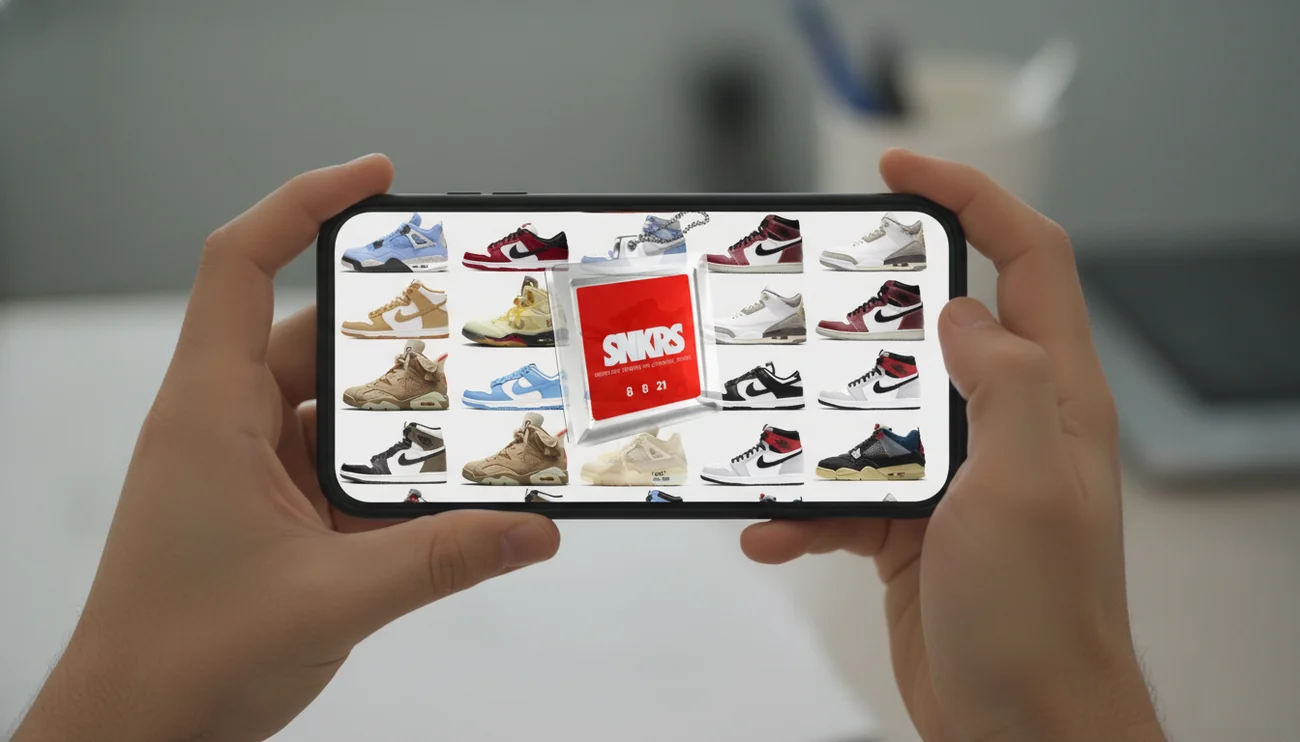
A sneaker restock happens when a product or size that was unavailable becomes available again at a retailer or platform. Sometimes that means a meaningful new allocation. Other times it can be a single pair returning after a canceled order, failed payment, return, or inventory correction. That is why “restock” does not automatically mean a full second release. It can last for days—or disappear before you finish checkout. In sneaker culture, the word describes the return of inventory, not a guaranteed quantity, duration, price, or size run.
For U.S. shoppers, understanding the difference between a restock, a drop, and a re-release is useful because each creates a different kind of buying opportunity.
What Does Restock Mean in Sneakers?
Restock means inventory has returned. A sneaker, colorway, or size that had become unavailable is offered for sale again through that store or platform.
The important word is inventory. A restock can involve the same release and style code as before. It does not necessarily mean Nike, Jordan Brand, adidas, or another company created a brand-new edition.
A restock can be broad, with many sizes returning, or extremely narrow, with one size or even one pair becoming available. That range is why sneakerheads often react quickly to restock alerts.
For more release terminology, see the Sneakerhead Dictionary.
Why Can a Sold-Out Sneaker Come Back in Stock?
“Sold out” describes the inventory visible at that moment. Retail inventory can change after checkout attempts, returns, warehouse updates, canceled reservations, or new deliveries.
Several different events can therefore create what shoppers perceive as a restock.
- canceled or failed orders returning to inventory;
- approved customer returns;
- unclaimed reservations or pickup orders;
- later warehouse shipments or second allocations;
- planned replenishment of an ongoing product.
Canceled Orders or Failed Payments
A unit can return when a customer cancels, a payment fails, fraud screening rejects the transaction, or the retailer cancels an order before fulfillment.
If only one order is released back into inventory, a single size may suddenly reappear without any broader restock.
Approved Returns
A returned sneaker may be placed back into sellable inventory if the retailer determines that it meets the required condition and policy.
Not every return automatically comes back as new inventory. That depends on the product condition and the retailer’s procedures.
Unclaimed Reservations
Some launches use reservations or pickup windows. If a reserved pair is not collected, the store may later release that inventory.
That can create a small local restock even when the product remains sold out elsewhere.
A New Delivery or Second Allocation
A retailer may receive inventory in more than one shipment. The first allocation can sell out while another shipment is still moving through the distribution network.
For the shopper, that later allocation looks like a restock even though the retailer may have expected the second delivery from the beginning.
Planned Replenishment
Some products are intentionally replenished. Core lifestyle models, popular general releases, and continuously produced colorways can return several times.
A planned replenishment is very different from one canceled order reappearing, even though both can display the same “Back in Stock” message.
Can a Cancellation and a New Shipment Look the Same to the Buyer?
Yes. From the customer side, both can look like the same thing: the product page changes from unavailable to available.
Unless the retailer explains what happened, shoppers often cannot know whether the returned inventory came from canceled orders, a warehouse correction, returns, or a completely new allocation.
That is why a restock alert should be treated as evidence that inventory is available now—not as proof of how many pairs exist or why they returned.
Restock vs. Drop vs. Re-Release: What Is the Difference?
Drop
A drop is the release or availability event when a product is offered for sale. It can be the initial launch or another scheduled launch event.
Restock
A restock is the return of inventory after the product or relevant size became unavailable. It can happen quickly after launch or much later.
Re-Release
A re-release, reissue, or later release generally involves a new launch cycle or later production rather than simply inventory from the existing release returning to a store.
The exact language varies by brand, so the safest approach is to identify the release year, style code, and official product documentation.
Restock and Retro Are Not the Same Thing Either
A retro is a later edition of a previously released design. A restock can be the same current release returning to inventory without any new retro generation being created.
For example, if an Air Jordan Retro sells out on Saturday and the same release returns to stock on Tuesday, that Tuesday availability is a restock—not automatically another retro edition.
See what retro sneakers mean for the distinction between release history and inventory availability.
Do Restocks Always Happen Without Warning?
No. Some restocks are announced through retailer newsletters, apps, product pages, calendars, social posts, or push notifications. Others appear with no public warning.
The phrase “shock restock” is often used informally for unexpected returns, but surprise is not part of the definition of restock itself.
Rumors should also be separated from confirmed information. A social post claiming that “a huge restock is coming” is not equivalent to an official retailer announcement.
How Long Does a Sneaker Restock Last?
There is no fixed duration. A restock can last seconds, minutes, hours, days, or longer.
Duration depends on how much inventory returned, which sizes are available, how many shoppers receive the alert, demand for the product, purchase limits, checkout speed, and whether more units continue entering inventory.
Does a Restock Bring Back Every Size?
No. A restock can include a full size run, a few sizes, or one isolated size.
Small restocks are especially common when inventory comes from cancellations, failed payments, unclaimed reservations, returns, or reconciliation between systems.
Do not assume a “restocked” product means your size is included.
Why Does a Shoe Show as Available but Fail at Checkout?
High-demand restocks can create a gap between what the product page displays and what is still truly available when checkout is completed.
Another shopper may secure the last unit first, inventory systems may update at slightly different times, or a product can enter a temporary cart or checkout hold.
An “Add to Bag” button is therefore not the same as a confirmed order. The purchase is only secure after the retailer successfully accepts and processes it according to its own system.
How Do Sneaker Restock Alerts Work?
Restock alerts usually monitor or communicate changes in inventory. Depending on the source, they may come from an official retailer, brand app, newsletter, wishlist, third-party inventory tracker, social account, or sneaker community.
- Use official retailer and brand notifications first.
- Save the correct product or size when wishlist features are available.
- Enable only the alerts you actually care about so important notifications are not buried.
- Check that the alert applies to the U.S. store or region you can actually buy from.
- Confirm the product, style code, size, retailer, price, and return policy before checking out.
A restock alert is not a reservation. By the time you open it, the inventory may already be gone.
Does SNKRS Restock Sneakers?
Products can return to Nike and SNKRS channels after becoming unavailable, but Nike does not promise that every sold-out release will restock. Nike’s current U.S. help guidance tells shoppers to monitor the SNKRS Feed and Upcoming section, use the Notify me feature, enable push notifications, and also watch the Nike App and Nike.com for drops. Those tools help with launches and availability but do not guarantee a restock.
Nike also states that some releases happen only in SNKRS, some only through the Nike App or Nike.com, and others across multiple Nike channels. That is one reason a shoe can appear unavailable in one place while still being released or replenished somewhere else.
My Experience With the Nike SB Dunk Low StrangeLove
One experience captures how much attention a tiny restock can create. I was on my phone when an email arrived saying that the Nike SB Dunk Low StrangeLove had returned to stock. The official Nike SB archive confirms that the StrangeLove Skateboards collaboration released in February 2020 and used crushed velvet underlays, embroidered StrangeLove branding, and a translucent outsole filled with heart confetti.
When I opened the restock page, only one size was left—and it was not mine. I still tried to buy it, thinking I could trade for my size later or resell the pair, but the unit disappeared before I could complete checkout.
That moment is a good example of a small, partial, competitive restock. One pair can create a real second chance and still vanish almost immediately. Not every restock is a massive new allocation.
How Can You Improve Your Chances Without Turning Restocks Into an Obsession?
There is no method that guarantees a purchase, but preparation can remove unnecessary delays.
- Create accounts only with brands and retailers you trust.
- Save your shipping address, preferred size, and payment information when the retailer securely supports it.
- Keep official apps updated and enable relevant push notifications.
- Use wishlists or favorites when available.
- Follow authorized retailers because allocations can arrive on different dates.
- Set a spending limit before the notification arrives.
- Do not use bots or automation that violates retailer rules.
Nike’s current launch guidance specifically recommends completing your profile and payment details in advance to make checkout faster. Nike also says it does not condone bots or automation methods that provide an unfair purchasing advantage and may refuse or cancel orders placed that way. You do not need to refresh a product page all day. A small number of reliable channels is usually more useful than dozens of noisy alert accounts.
Does a Restock Return at the Original Retail Price?
In primary retail, a restocked product generally returns at the retailer’s current selling price. That may be the same as the original launch price, but it is not guaranteed. Prices can change because of markdowns, price adjustments, regional differences, taxes, shipping, or a later retail decision. “Restock” describes inventory returning; it does not freeze MSRP or checkout cost in time.
Can a Restock Affect Resale Prices?
Yes, because additional supply—or even the expectation of additional supply—can change buyer behavior. But there is no rule that every restock automatically crashes resale value.
- A large new allocation can reduce short-term scarcity.
- A handful of isolated sizes may have almost no market effect.
- Rumors of future restocks can make some buyers wait instead of paying resale.
- Size-specific demand can produce different price reactions within the same release.
Historical StockX research has shown that some restocks were followed by lower resale prices while others produced much smaller or even unusual reactions. The useful lesson is not a fixed percentage; it is that market response depends on the release.
If you are deciding whether to wait or buy on the secondary market, use a current sneaker price check based on the correct release, size, condition, and recent completed sales.
Is It Worth Waiting for a Restock?
Waiting can make sense if you do not want to pay resale, you are not in a hurry, and there are credible signs that more inventory may arrive. Waiting may also be reasonable for models that are regularly replenished or broadly distributed.
The risk is uncertainty. No rumor can guarantee that a sold-out sneaker will return in the United States, at the retailer you want, in your size, or at the price you expect. Decide how long you are willing to wait and what your maximum price is before urgency takes over.
Why Did Restocks Become Such a Big Part of Sneaker Culture?
Restocks make the word “sold out” feel less final. A product can disappear, become a resale target, and then unexpectedly open a second retail opportunity. Apps, push notifications, group chats, sneaker communities, and inventory trackers made those changes visible almost in real time. Retail inventory always moved, but now thousands of people can discover a single returned size at nearly the same moment.
That speed created the familiar emotional cycle: alert, rush, cart, checkout, success—or another near miss. Restock culture is partly about shoes and partly about how digital retail turned inventory movement into an event.
For more stories about how releases, collecting, and shopping behavior shaped sneaker culture, explore Sneaker History & Culture.
Sneaker Restock FAQ
What Does Restock Mean?
Restock means inventory has returned. In sneakers, a product or size that was unavailable becomes available again through that retailer or platform.
Is a Restock the Same as a Drop?
No. A drop is a release or availability event. A restock is inventory returning after the product or size had become unavailable.
Is a Restock a New Release?
Not necessarily. It may be the same release, style code, and commercial inventory returning. A later production cycle is closer to a re-release, reissue, or retro depending on the brand and model.
Can a Canceled Order Create a Restock?
Yes. If the unit was reserved but never fulfilled, the retailer can return it to available inventory. That may cause only one size or one pair to reappear.
Can a Return Go Back Into Stock?
Yes, depending on condition and retailer policy. Not every return is automatically resold as new inventory.
Are Restocks Always a Surprise?
No. Some are announced through apps, email, calendars, product pages, or social channels; others appear with no warning.
How Long Does a Restock Last?
There is no fixed duration. It can last seconds, minutes, hours, or days depending on inventory, sizes, demand, and how many shoppers receive the alert.
Does a Restock Bring Back Every Size?
No. A restock can include a full size run, selected sizes, or a single unit.
Does a Restock Return at the Original Retail Price?
Not necessarily. At primary retail, the product normally returns at the retailer’s current price, which can be the same, higher, or lower than the original launch price.
How Can I Know if a Sneaker Will Restock?
Watch official brand and retailer channels, apps, wishlists, newsletters, and trusted sneaker communities. Even then, a rumor or alert cannot guarantee future inventory.
Does SNKRS Restock Sneakers?
Nike products can return to Nike or SNKRS channels after becoming unavailable, but Nike does not promise that every sold-out release will come back.
Does a Restock Always Lower Resale Prices?
No. The effect depends on the amount of supply added, demand, size, region, timing, and expectations of future inventory.
Is It Worth Waiting for a Restock?
It can be if you want to avoid resale prices and have reason to believe more inventory may arrive. There is still no guarantee that your size will return.
Can a Restock Happen Months or Years Later?
Yes, but terminology matters. A retailer can discover or release older inventory, while a later new production cycle may be better described as a re-release or retro rather than a simple restock.
Is Every Restock Limited or Competitive?
No. Some high-demand restocks disappear almost immediately; others involve broadly available products that remain in stock for long periods.