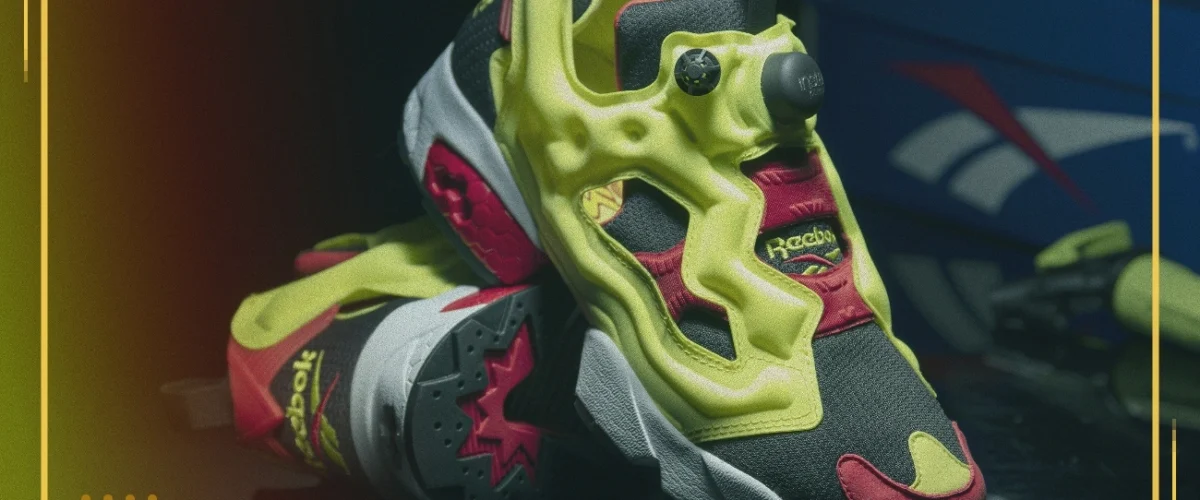
A New Balance 1500 and a Reebok Instapump Fury seem to answer very different expectations. One organizes layered panels within a familiar running-shoe vocabulary. The other exposes openings, visually divides its platform and uses an inflatable fit system. Steven Smith’s place in both histories reveals a less obvious connection: investigating how the product works before deciding what it should look like.
His career crosses brands and footwear categories, but understanding it does not require a list of superlatives. Documented projects and first-person interviews offer a more useful route. They allow us to discuss proportion, component reduction, materials and collaboration while distinguishing a designer’s contribution from sole invention of an entire technology.
An industrial-design approach to footwear
In his DeFY New York interview, Smith dated his arrival at New Balance to 1986, after college. Discussing his early career, he described working on models including the 574 and 995. That wording matters. Contributing to a product does not mean that every component within it was independently created by one person.
Industrial design provides a useful framework for understanding the approach. A product raises questions about assembly, durability, unnecessary parts and the way someone interacts with it. Appearance develops through those decisions, even if it later becomes the feature most familiar to the public. The drawing has to connect with an object that can actually be produced.
This does not eliminate aesthetic judgment. Two technically possible solutions can result in very different silhouettes. Designers still decide how proportions, lines and contrasts should work together. Smith’s projects are interesting because those choices appear to engage with construction, rather than simply acting as a graphic layer applied after the technical decisions have been made.
New Balance 1500: identity through relationships
The 1500 is among the projects associated with Smith in his Highsnobiety interview. New Balance’s historical archive dates its launch to 1989. That is the date of the commercial product, not necessarily the moment it was drawn. Development has its own timeline and should not be confused with a designer’s hiring or departure date.
Visually, the 1500 arranges relatively small sections within a continuous overall silhouette. Its restrained N leaves room to follow the overlays. Forefoot, lace area and heel have distinct roles without appearing completely detached from one another. The midsole offers another level of design instead of reading as an undifferentiated strip underneath the upper.
The important relationship is balance. If every panel competed equally for attention, the composition could become fragmented. Material and color hierarchy gives the eye an order to follow. A tonal edition emphasizes texture and stitching, while a contrasting edition can reveal boundaries that are otherwise less apparent. These are different readings of the same construction, rather than proof that one treatment is inherently better.
New Balance 997: looking beyond the upper
The 997 also appears in Smith’s documented interview portfolio. New Balance records its introduction in 1991. When comparing it with the 1500, pay attention to the transition between upper and midsole. The way the base receives the volume above it contributes as much to the shoe’s character as the size of the side logo.
Both silhouettes allow us to examine a recurring running-shoe problem: how to suggest support without making a product look static. Angled lines, overlays and changes in thickness can establish direction. This is not a way of calculating speed from a photograph. It is a way of understanding how a design communicates its intended sporting role.
The original model should also be separated from subsequent reinterpretations. A hybrid, replacement sole or collaboration may involve a different team. The presence of 997 in a product name is not enough to assign every later change to Smith. Our sneakerhead dictionary explains terms commonly used to describe these different relationships with an archive.
Instapump Fury: asking a different question about the upper
Released in 1994, the Instapump Fury is a particularly radical expression of this investigation. In his interview published by Public, Smith described removing unnecessary material around the Pump system. Rather than building a complete conventional upper and inserting an adjustment mechanism, the project asked how the fit system itself could take on a more substantial structural role.
The distinction matters because this is more than a traditional shoe decorated to look futuristic. It reconsiders the relationship between coverage, adjustment and support. Open spaces become part of the identity. An opening is no longer simply the area left between components; it becomes something the viewer notices immediately.
From the side, the visual separation between the front and rear of the platform also interrupts the expectation of a continuous base. The design creates a kind of visual tension as the eye tries to understand how the sections connect. Our sneaker anatomy guide helps keep the terminology clear: upper, midsole and outsole are related components, not interchangeable labels.
Separate the fit system from the cushioning
The inflatable system adjusts the upper around the foot. That function should be distinguished from cushioning underneath it. Describing every technical-looking part of the Fury as an air bag mixes systems occupying different positions and serving different purposes. A futuristic appearance still requires an accurate explanation of the construction.
It would also be misleading to present Smith as the lone inventor of the entire Reebok Pump family. His account identifies collaboration with Paul Litchfield and Peter Foley in the development group. The designer’s contribution belongs within a team capable of turning a challenging visual proposal into a manufactured product.
Fewer components can produce a more unusual shape
The Fury’s appearance often dominates discussion. The industrial logic Smith describes suggests another question: how many jobs can each component perform? Removing redundant parts can make the remaining component more important, more exposed and more visually assertive. A reduction in hidden material does not necessarily lead to a quiet exterior.
Constructional simplicity and understated appearance are therefore different ideas. A product can rely on relatively few major elements while looking unfamiliar. It can also look clean from the outside while concealing many layers. The number of colors and the number of components address different questions, even though both influence the impression a shoe makes.
This distinction provides a useful connection between the Fury and Smith’s New Balance work. Their external forms differ, but both can be studied through the distribution of functions. The link does not have to be a repeated line or logo. It can lie in asking what each part does and how that purpose contributes to the final shape.
Nike and later projects: keep attribution specific
The portfolio accompanying the DeFY interview includes the Nike Zoom Spiridon Caged and Air Max 2009. Those references broaden the picture beyond the association with New Balance and the Fury. When studying them, identify the complete model name rather than transferring a credit to every shoe in a family that shares part of that name.
A later Highsnobiety interview feature also documents Smith’s Yeezy-era work and describes the 700 as a co-designed project. That reference belongs to the period covered by the article. It should not be used to establish his present employer or assign sole authorship of an entire line to him.
The same care applies to technology. Working on an Air Max does not mean inventing Nike Air. Integrating an existing system into a product can still involve substantial decisions about geometry, construction and appearance. Recognizing the difference allows the actual contribution to be appreciated without making it artificially larger.
Drawing as a way to explain manufacturing
In interviews, Smith describes drawing as both a thinking tool and a way to make ideas understandable to other people. A small sketch can capture a relationship between volumes. A developed drawing needs to explain more about how the pieces will be made. Moving between those stages means translating a concept into information that others can use.
That process highlights why footwear design cannot be judged entirely from a finished side profile. A convincing outline may leave unanswered questions about assembly, material transitions or interaction with the foot. The completed product depends on resolving those questions. Development is part of design history, even when it is less immediately visible than a bold colorway.
When examining Smith’s career, look at what each shoe retains and what it removes. Where is the material continuous? Where is there an opening? Which piece carries adjustment, support or identity? These questions offer more information than simply calling a product classic, strange or futuristic. They also make differences between projects easier to explain.
Within the wider history and culture of sneakers, Steven Smith represents an approach to footwear as both an industrial object and a cultural one. His legacy appears across different-looking products because continuity can lie in a method. Understanding that method does not erase the teams involved. It makes the work required to put an unusual idea on someone’s feet more visible.
Sources and further reading
- DeFY New York: Steven Smith interview, 2013
- Public: The World According to Steven Smith
- Highsnobiety: Meet Designer Steven Smith
- Highsnobiety: Steven Smith, Master Sneaker Designer
- New Balance: The New Balance Story
Frequently asked questions
Did Steven Smith design the New Balance 1500?
The 1500 is among the projects associated with Smith in his Highsnobiety interview. New Balance’s historical archive dates its launch to 1989. That is the date of the commercial product, not necessarily the moment it was drawn. Development has its own timeline and should not be confused with a designer’s hiring or departure date.
Which year did the New Balance 997 associated with Smith launch?
The 997 also appears in Smith’s documented interview portfolio. New Balance records its introduction in 1991. When comparing it with the 1500, pay attention to the transition between upper and midsole. The way the base receives the volume above it contributes as much to the shoe’s character as the size of the side logo.
What was Steven Smith’s idea behind the Instapump Fury?
Released in 1994, the Instapump Fury is a particularly radical expression of this investigation. In his interview published by Public, Smith described removing unnecessary material around the Pump system. Rather than building a complete conventional upper and inserting an adjustment mechanism, the project asked how the fit system itself could take on a more substantial structural role.
Did Steven Smith invent the entire Reebok Pump system?
It would also be misleading to present Smith as the lone inventor of the entire Reebok Pump family. His account identifies collaboration with Paul Litchfield and Peter Foley in the development group. The designer’s contribution belongs within a team capable of turning a challenging visual proposal into a manufactured product.
Which Nike and Yeezy projects are associated with Steven Smith?
The portfolio accompanying the DeFY interview includes the Nike Zoom Spiridon Caged and Air Max 2009. A later Highsnobiety interview feature also documents Smith’s Yeezy-era work and describes the 700 as a co-designed project. It should not be used to establish his present employer or assign sole authorship of an entire line to him.