Family footwear shopping joins several kinds of time: a child outgrows a size, a new school term approaches, an adult needs a pair for work or a weekend. Famous Footwear’s history becomes clearer through those recurring occasions. Its identity has developed around making familiar brands part of ordinary household decisions, with advertising, store design and community programs extending the relationship beyond an individual purchase.
From Madison to a wider family audience
Caleres traces Famous Footwear to Neil’s Shoes, a single store opened in Madison, Wisconsin, in 1960. The parent’s account positions the later chain around casual and athletic footwear for the whole family. That starting point gives the national name a local foundation, while the broad customer description explains why several generations can fit inside its retail story.
The parent company’s Famous Footwear history
A 2009 campaign gave everyday shopping an imaginative frame. MakeTodayUnexpected.com combined interactive and social features with a short film comparing enthusiasm for shoes to the arrival of an ice-cream truck. The project extended the Make Today Famous campaign online, presenting a purchase as a small occasion for enjoyment in a recognizable neighborhood setting.
The first Canadian location was announced for August 1, 2013 at Toronto Premium Outlets in Halton Hills, Ontario. Brown Shoe Company already operated Naturalizer stores in Canada and described that experience as useful preparation. Famous Footwear’s expansion thus carried an established family-retail proposition into a neighboring market with a different local retail context.
In May 2015, Brown Shoe Company became Caleres. The announcement retained Famous Footwear within the group’s family-oriented retail business, alongside the parent’s other footwear activities. Distinguishing those names keeps the history readable: a corporate identity changed while the familiar name above the store door continued to address its own audience and occasions.
Repeat visits and the space for children
The rewards program added more flexible and personalized benefits in 2019, including birthday rewards and special points days, as recalled in a 2021 company release. These devices gave repeat visits a calendar and a memory. A customer relationship could continue between purchases through reminders and recognition, alongside the practical need for another pair.
The scale of that relationship appears in the fiscal 2024 filing: approximately three quarters of Famous Footwear’s net sales came from loyalty-program members. The figure documents how central returning customers were to the business at that moment. It supports reading the chain through repeated household routines rather than treating every sale as an isolated encounter.
The fiscal 2023 report placed children at the center of the store experience, describing investment in kids’ departments and attention to finding the right fit. This is a concrete expression of the family focus. A growing child brings different questions from an adult replacing a favorite shoe, and the sales floor needs to accommodate both.
By the end of fiscal 2024, the company reported 34 FLAIR stores, a redesigned format emphasizing selected brands and a more engaging presentation. In its March 2025 earnings discussion, management described the concept as a way to showcase elevated styles. This was a measured stage of store evolution, not evidence that every location had the same design.
Family language beyond the purchase
Community partnerships extended the family theme. In 2013, Famous Footwear marked a relationship with March of Dimes dating to 2001 and supported March for Babies through customer donations, employee participation and selected Dr. Scholl’s styles. The campaign linked footwear with a walking event and fundraising, giving a familiar product a role in organized public participation.
The Ticket to Dream partnership began in July 2020. By November, Famous Footwear announced its first million dollars raised from customer contributions and donations of shoes and other items for foster youth. The reported effort brought practical needs into the checkout relationship, connecting the idea of new shoes with children whose access to everyday essentials could be uncertain.
The beginning of the Ticket to Dream partnership
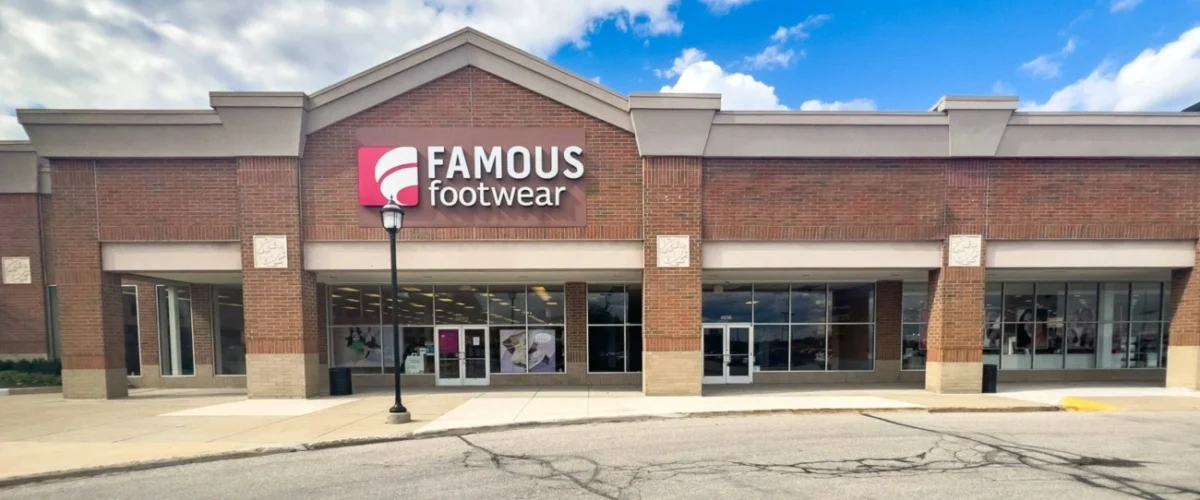
On October 13, 2026, the official locator listed Madison East at 4725 East Towne Boulevard in Madison, with store and pickup information. The location keeps a present-day connection to the founding city. It should be read as a contemporary branch, without assuming that it occupies the original Neil’s Shoes site or reproduces its early format.
The current Madison East location
Taken together, these episodes describe a retailer organized around familiarity that must continually be renewed. Children grow, preferred styles change and families develop different ways of shopping. The name remains recognizable while the setting and messages adapt. Famous Footwear’s historical interest is in that everyday work of continuity: bringing brands, occasions and household needs into a repeatable place, then finding fresh ways to make the next visit matter.
Related store histories
Explore sneaker history and culture
Frequently asked questions
What was Famous Footwear originally called?
Caleres traces Famous Footwear to Neil’s Shoes, a single store opened in Madison, Wisconsin, in 1960. The parent’s account positions the later chain around casual and athletic footwear for the whole family.
When did Famous Footwear enter Canada?
The first Canadian location was announced for August 1, 2013 at Toronto Premium Outlets in Halton Hills, Ontario. Brown Shoe Company already operated Naturalizer stores in Canada and described that experience as useful preparation.
Why does the name Caleres appear in Famous Footwear’s history?
In May 2015, Brown Shoe Company became Caleres. The announcement retained Famous Footwear within the group’s family-oriented retail business, alongside the parent’s other footwear activities. Distinguishing those names keeps the history readable: a corporate identity changed while the familiar name above the store door continued to address its own audience and occasions.
What is the Famous Footwear FLAIR store format?
By the end of fiscal 2024, the company reported 34 FLAIR stores, a redesigned format emphasizing selected brands and a more engaging presentation. In its March 2025 earnings discussion, management described the concept as a way to showcase elevated styles. This was a measured stage of store evolution, not evidence that every location had the same design.
When did Famous Footwear begin working with Ticket to Dream?
The Ticket to Dream partnership began in July 2020. By November, Famous Footwear announced its first million dollars raised from customer contributions and donations of shoes and other items for foster youth.